• Skip to primary navigation
  • Skip to main content
  • Skip to primary sidebar
  • Skip to footer

Petsium - Veštačka Inteligencija | AI

Vestacka Inteligencija Aplikacija i Chat

  • Vestacka Inteligencija
  • Kontakt
  • Uslovi Koriscenja

Horses

Breeds of Horses

септембар 17, 2020 By liv parmel

There are many breeds of horses, and for centuries on end horse breeders have selectively chosen the best specimens to fulfill a variety of important human needs. From the endurance of Arabian horses to the speed of the thoroughbred to the sturdiness of the pony, horses have been serving mankind for nearly as long as humans have existed.
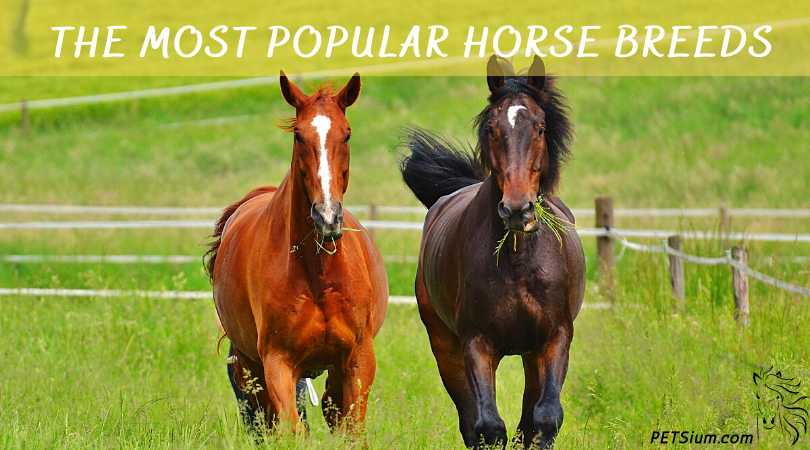
Most Popular Horse Breeds

The Major Horse Breeds:

  • American Saddlebred
  • Morgan Horses
  • Andalusian Horses
  • Mustangs
  • Appaloosa Horses
  • Palomino Horses
  • Arabian Horses
  • Ponies
  • Friesian Horses
  • Passo Fino
  • Gypsy Vanner Horses
  • Quarter Horses
  • Miniature Horses
  • Shire Horses
  • Missouri Fox Trotter
  • Thoroughbred Horses

A list of other horse breeds: American Cream, American Paint Horse, Anglo Arabian, Appendix, Arappaloosa, Ardennes, Azteca, Belgian, Boulonnais, Brandenburg, Camargue, Canadian, Carthusian, Cleveland Bay, Colonial Spanish, Colorado Ranger, Russian Don, Dutch Warmblood, Finnish, Fleuve, Fjord, Furioso, Groningen, Hackney, Icelandic, Irish Draught, Konik, Latvian, Lippizaner, Marwari, Messara, Morab, Murgese, Nez Perce horse, Oldenburg, percheron, Rocky Mountain, Salemo, Selle Francais, Tennessee walker, Tinker, Waler, Walkaloosa, Westphalian, Yili, …

The height of horses is measured in hands:

1 hand = 4 inches = 10,16 cm

For nearly as long as humans have existed, all breeds of horses have been there by our side, pulling our plows and wagons, serving as brave mounts during time of war, or just providing companionship for all members of the family.

Whether your idea of the perfect horse is a black horse, a white horse, a brown horse or a spotted horse, there are horse breeds available for your taste. In addition, there are types of horses that are perfect for dressage, great at show jumping, or just perfect for hacking around on the trails. No matter which horse breeds you look at, there will be something at which they excel.

Part of the reason for the versatility of various breeds of horse is the result of genetics. For example, the strong hindquarters and compact nature of the Andalusian horse make it perfect for the world of dressage, and for many years the Portuguese have used the power of this strong white horse in their training and breeding programs.

Other types of horse, like the Friesian, are perfectly suited to pulling carriages, and in ages past they also served as the sturdy warhorses of knights as they rode into battle. These are just but two examples of the versatility of the many breeds of horse.

And then there is the Dala horse… a very special kind of breed.

There is no doubt that all breeds of horses have their own unique place in history, and that they have played an important role in virtually every kind of human progress. Many modern advances, from taming the earth through farming, to conquering the west, would have been impossible for humans without their equine companions.

From the mustangs and appaloosas favored by the Indians, to the speedy and strong quarter horses ridden by the earliest cowboys, all these breeds of horse have helped make the human race what it is today.
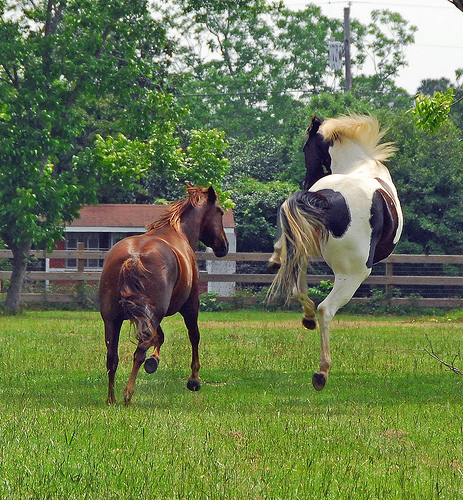
American Paint Horse

Common Uses of Horses

The equestrian activity the horse is commonly bred or used for. If you want to do a specific type of riding, it can be beneficial to choose a horse breed that excels in that particular discipline.

Dressage – While many breeds are suitable for dressage, some are better for it than others. Consider Thoroughbreds, Hanoverians, and any warm-blooded horse.

Endurance Riding – Most breeds can be used in endurance rides and races, but Arabians tend to dominate this style of riding due to their stamina and agility. Rocky Mountain horses and Trakehners are also known for their endurance capabilities.

General Riding – Any breed can be used for pleasure, but if you are an inexperienced rider, you may want a Pinto, Mustang, Tennessee Walking horse, or any cold-blooded horse.

Hunting – Hunting horses need to be well-trained and capable of handling loud noises and varying terrain. Quarter horses and Thoroughbreds are the most popular breeds used for hunting.

Jumping – Though many breeds would be appropriate for this equestrian style, some are more athletic than others. Thoroughbreds and Arabians, for example, make great jumping horses due to their agility and endurance. However, beginners should stay away from hot-blooded horses because jumping can increase their excitement level. Instead, opt for a Quarter horse or Appaloosa. These breeds are also excellent jumpers, but are easier to handle for non-experienced riders.

Mounted Athletics – Those who want to play polo or try their hand at archery should consider Morgans, American Saddlebreds, Quarter horses, or pony breeds.

Racing – If you want to race, you will need a breed that boasts speed and endurance. Quarter horses, Arabians, and Thoroughbreds make world-class racing horses due to their agility and stamina.

Rodeo – Whether you want to participate in barrel racing, calf roping, or reining events, the best breeds for rodeos are the Quarter horse, Appaloosa, and Paint.

Work – Those in need of a work horse should consider draft horses, such as Belgians or Shires. Big and muscular, these horses are best for hard, labor-intensive tasks like ploughing, pulling, and farming. In addition to their strength, they are patient and docile.

arabian-horse

What to Watch for in Horse Breeds

Impulse Buy

Don’t buy a horse without carefully thinking through your decision. Horses are a huge responsibility and require a major commitment of time and money. You need to ensure you will have adequate time to ride and care for your horse. It is also important for you to confirm that you can afford the long-term costs that come with your purchase.

In addition to the upfront payment of the horse, you will need to weigh the costs of monthly boarding (at a stable or barn), grooming equipment, farriers, vaccinations, horse feed, tack, etc. In short, it is expensive to own a horse, so make sure you will be able to handle the monetary demands.

Going Green

Do not buy a horse that is very young (also referred to ‘green’). Green horses are usually much cheaper than other horses, making it tempting to buy one. However, they are not trained and tend to be temperamental, making them very unsuitable for first-time horse owners. Even if you can find a qualified trainer, you will end up paying much more to have the horse trained than you would have originally paid, had you spent the money on the more expensive yet more appropriate horse for you.

Life Expectancy

This figure is an estimate of many years the horse breed is expected to live. When considering horse breed options, it’s important to think about how long you’ll be willing and able to own a horse. A horse that is well maintained and stays in good health can usually be expected to live between 25 and 30 years. However, both breed and lifestyle can greatly alter a horse’s life expectancy.

As a general rule, the two horse breeds that are likely to live longer than most are ponies and draft horses. These horses usually live past 30, and it is not uncommon for ponies to reach 35 years of age. The horse breed with the shortest life expectancy, on the other hand, is the Thoroughbred. These horses have a more delicate constitution, and when that is combined with the rigors of racing or competitive showing, they do not age as well and usually only live for 20 to 25 years.

Категорије: Horses

Facts About Horses

септембар 13, 2020 By liv parmel

Horses have been an important part of human history for ages, and documented horse facts depict how their presence has assisted mankind in advancing progress.

Some of the most interesting facts about horses lie in the way they have helped man to carve the history of the world. Often seen calmly grazing in fields, it is amazing to think of how these docile creatures have made a vast difference in the world.

Interesting Facts About Horses

Fossils dating back millions of years show the beginning of the evolution of the horse. Its ancient ancestor, Eohippus, was quite small at approximately two feet tall and was an herbivorous creature, feasting upon tree and bush leaves. Over time, scientific findings show that the genus developed into larger versions as it spread across the continents and became a grass grazer instead of a leaf browser.

The genus evolved from Eohippus to Mesohippus, and then to Hyphohippus which is believed to be the horses which inhabited the Old World. Through history, the species continued as it traveled from North America to Africa, South America and Eurasia, although the original Native American breed disappeared perhaps due to diseases.

European history derived from cave dwelling evidence shows that horses were plentiful during the early Stone Age; undoubtedly used as a source of nourishment for the people of the time. The number of horses in Europe dwindled during the Neolithic period, or latter Stone Age. Later, during the Bronze Age, evidence shows that the horse became a domesticated animal, with remnants of ancient harnesses and such found during explorations.

Horses were recognized and famed in different cultures for their capabilities; for example, Spanish horses were known for speed while European horses were famed for their strength. Breeding for specific purposes was not a recognized activity, however, until the late 17th century when the Arabian horse, facts show, was imported to England and France to merge breeds with native horses. The horse did not reappear on North American soil until the 16th century when the Spanish conquistadors brought them in on ships.

Improving and developing breeds over the last 300 years has resulted in major differences between breeds. There are over 250 breeds of horses now over the world, and can be broken down into classes of “bloods” to differentiate the breeds.

Coldbloods

These horses are generally of large stature, gentle by nature and are utilized for working or hauling tasks. Often called draft horses, the category includes such breeds as Clydesdale, Belgian and the Shire. Large bodies and heads are features.

Warmbloods

Easily trainable, warmbloods are used in competitions and equestrian sports. These horses were the breeds used during the Old West for cattle ranching.

Hotbloods

Horses that are known for great speed, these equines are utilized for racing. More highly strung and excitable than other breeds, streamlined bodies exemplify this type.

Different breeds enable the species of horse to be utilized in multiple ways. For example, the Clydesdale or Belgian breeds are well known for their strength and endurance, making them ideal work horses for farming and exhibition.

Horse facts show that, in contrast, Arabian horses are swift runners perfectly adept as racehorses, while the warmblood Palomino or Tennessee Walker are great personalities for personal mounts.

Interesting Facts about Horses Throughout History

These interesting facts about horses throughout history show their undeniable value. Though appearing to be a docile and unassuming animal while grazing in the field, their ancestors have contributed a great deal to forming the world as we know it now.

A few horses have been instrumental in forming the shape of the world’s history, whether real or fictional.

historical facts about the horses

Bucephalus

Possibly the most famous horse facts that are documented involve the steed named Bucephalus. In history, Bucephalus was the horse ridden by Alexander the Great through numerous battles and over thousands of cumulative miles as his empire was built. Bucephalus began life as a wild horse which was captured and offered as a gift to Phillip II, the father of Alexander.

Unbroken, Bucephalus exhibited many characteristics that Phillip II viewed as unbalanced. Alexander, however, saw great promise in the horse and worked gently and closely with Bucephalus until finally, the horse submitted to Alexander’s attempts to mount it.

The name “Bucephalus” was bestowed upon the horse by Alexander, who noted that the horse’s head was “as broad as a bull’s” head. The horse accompanied the boy, who became famous as Alexander the Great, throughout battles to acquire land, treasures and servants. Finally, in 326 BC, the horse died as a result of injuries sustained through the last battle fought by Alexander, who named a city after his beloved companion.

Comanche

In western history, there can be little doubt that the horse Comanche stands out as a famous figure. However, stories surrounding the horse, facts or fiction, still swirl in controversy. Purported to be the only survivor of the Battle of Little Bighorn back in 1876, Comanche retired from service and, upon his death in 1891, was mounted by a renowned taxidermist so he could be displayed at a museum at the University of Kentucky as the famed mount of General Custer.

The only problem was that General Custer never once sat Comanche, even though the horse has gone down in history as such. The actual owner of Comanche was Captain Keogh, a member of the 7th Calvary who rode into battle on the bay gelding for Custer’s Last Stand. Comanche was indeed found standing near his owner after the group had been killed by a combination of Sioux, Cheyenne and other Indian tribes. The horse had been severely wounded, and after healing, was revered to the ranks of parade forerunner; never to be ridden again.

The Trojan Horse

The tale of the Trojan Horse is one that has endured through the centuries. It has long been debated as to whether the event was an actual one or fictional, with no historic evidence supporting the occasion other than Homer’s reference to the war in his fictional works “Illiad”. The people of Greece, however, have full belief and confidence in the Illiad as a series of events from 450 BCE.

Occurring around the Bronze Age in Troy, the war trudged on for nine years without the Greeks having the ability to break down the walls of Troy. A large, hollow wooden horse was built, into which numerous Greek soldiers climbed and hid. The Greek ship sailed away in feigned defeat, leaving one man behind.

This man, Sinon, convinced the Trojans that the horse was of no threat but would actually bring luck to the people. Bringing the horse within the compound, the people marveled at the sight until they retired at nightfall. With the onset of darkness, the soldiers were released from the horse by Sinon and they commenced to slaughter the Trojans.

Trigger

Trigger is the horse made famous in the movies starring Roy Rogers; considered to be his co-star in film and TV fame alike. Beginning his Hollywood career in 1938, the horse was first designated to star in the “Adventures of Robin Hood”, however, when the lead character failed to appear, Trigger was delegated to another movie, “Under the Western Stars”, starring Roy Rogers. It was the beginning of a long career for the intelligent steed.

While perhaps not famous, many horses have assisted humans in many walks of life. Working horses pulled plows, cleared lands and transported families to church and town through drawn carriages and wagons. Providing means of transportation for Native Americans and early cowboys, horses became the backbone of American history, and forerunners of modern day postal services through the Pony Express.

While all horses are members of the Equus family, they are found in a variety of species and breeds. The zebra, wild ass and donkeys are all members of the same order. Like humans, horses can be of many colors, sizes and shapes.

There are some very interesting horse facts that apply to all horses, historic or modern:

  • Horses can sleep standing up. Their tendons and ligaments are designed so that they can lock their knees to be able to sleep standing up.
  • Horses only sleep 2 to 3 hours a day. Those hours are then split up to a few minutes throughout the day. They will lay down to sleep for less the an hour. The rest is spent sleeping standing up. Horse will only lay down if they are sure of their surroundings and feel comfortable.
  • Horses will graze in the pasture all day because their stomachs empty out about every 30 minutes. This happens to protect horses in the wild. If a predator comes after them they can run without being weighted down with a full belly.
  • The American Quarter Horse is the fastest horse and has been clocked at nearly 50 mph. The American Quarter horses are known for their fast speeds in short distances. They are the fastest at the quarter mile in horse racing. Hints the breed name „Quarter“ horse.
  • The „unofficial“ world record horse jump is 8ft, 3 1/2 inches.
  • Female horses are called a filly when under four years old, a mare when older than four but has not yet produced offspring, and a dam when she has produced offspring.
  • Male horses are called a colt when under four years old, a stallion when older than four but has not yet produced offspring, a sire when he has produced offspring, and a gelding when castrated.
  • All young horses, male or female, can be called foals before age 1; after its 1st birthday, it becomes a yearling.
  • The age of a horse can be determined by counting the teeth; adult females have 36, while adult males have 40 to 44 teeth. Younger horses have only 24 deciduous, or temporary, teeth.
  • The tail serves to protect the horse from insects, and to some extent as a rudder in rapid motion. The tail is also considered an ornament of the horse.
  • Gallop is the fastest and most natural type of horse walking.
  • Horses live for approximately 25 to 30 years.
  • Falabella is the horse breed with the longest life expectancy of 45 years.
  • Shire horse is the biggest horse breed with an average height of 21.2 hands.
  • Falabella is the smallest horse breed with an average height of 8 hands.

Today, horses are mainly used for exhibition and pleasure with the introduction of vehicles that are capable of traversing rough terrain. A number of horse varieties have evolved over the centuries; there are currently over 250 known breeds that fall typically into two different categories.

There are work horses, such as Clydesdales, which perform work of rodeo riding and pulling carriages. Thoroughbreds are the second category, and are generally a cross between Arabians and English mares. They are found on race tracks and in exhibitions.

The horse has been an integral part of the world’s history since the beginning of time. Evolving through the ages from a small fox-like animal to the modern steed used today for a multitude of purposes, there is no doubt that the horse has made its imprint on the progress of mankind.

Категорије: Horses

  • « Go to Previous Page
  • Страница 1
  • Страница 2
  • Страница 3

Primary Sidebar

Small Fish Tank

Glass Fish Tank

Категорије

  • Animals
  • Birds
  • Cats
  • Dogs
  • Fish
  • Goldfish
  • Guinea Pig
  • Hamster
  • Horses
  • Name Inspiration
  • Parrot Pet
  • Rabbits
  • Reptile Names

Скорашњи чланци

  • Hoppy Naming! Adorable and Funny Easter-Inspired Guinea Pig Names
  • Purr-fectly Adorable: Valentine’s Day Cat Names for Your Feline Friend
  • Astronomy Inspired Cat Names
  • James Bond Cat Names: Purr-fectly Suave Options for Your Feline 007
  • 170 Authentic Greek Names For Cats
  • Hippie Cat Names
  • Ladybug Facts For Kids
  • Unique White Horse Names with Meanings: From Majestic to Mystical
  • Disney Turtle Names: 160+ Names For Turtles From Disney Movies
  • 100+ Names For Black Horses With Meanings

Guinea Pig Cage

Large cage for your guinea pig

Ознаке

Best family parrots Best Gifts for Cat Lovers Best Hamster Toys Best parrot for beginners Best parrot for kids Best Small Dogs For Kids Boy Cat Names Can Guinea Pigs Eat Celery Cat Names Cat names for pairs Dog Behavior Dog Throwing up Dog Vomiting eat Female Bengal Cat Names Female guinea pig names Funny goldfish names Goldfish aquarium Goldfish names Gold Fish Names Goldfish tank Goldfish varieties Guinea Pig Guinea pig names Guinea pigs Male guinea pig names Manx Cat Names Names for Goldfish Names for guinea pigs Names for pink fish persian cat personality Siamese cats Small curly haired dogs Small dog breeds Sounds Twin cat names Types of goldfish Undigested food Unique guinea pig names What can guinea pigs eat Winter White Hamster Care Winter White Hamster Colors Winter White Hamster Diet Winter White Hamster Facts Winter White Hamster Life Span

Disclaimer:

This website „PETSIUM“ is not liable for any outcome or damage resulting from information obtained from these articles.

The articles provided here are for information and entertainment purposes only. The decision to use, or not to use, any of this information is the sole responsibility of the reader.

Any medical related content in any articles is not intended as diagnosis, treatment or prescription. It is not intended to be a medical advice and is not a substitute for professional medical advice. Please consult with a licensed health care practitioner if you are dealing with a serious medical problem.

Hamster Cage

Hamster Cage

Footer

Petsium – Veštačka Inteligencija

Dobrodošli na Petsium, vašeg novog saputnika za brzo, precizno i potpuno besplatno AI iskustvo. Ovde možete da postavite bilo koje pitanje – od pisanja eseja, preko tehničkih izazova u kodiranju, do saveta za svakodnevne zadatke – i dobićete odgovor prilagođen upravo vama. Sve to bez registracije, bez komplikovanih menija i bez skrivenih troškova.


© 2026 Petsium · Privacy Policy