• Skip to primary navigation
  • Skip to main content
  • Skip to primary sidebar
  • Skip to footer

Petsium - Veštačka Inteligencija | AI

Vestacka Inteligencija Aplikacija i Chat

  • Vestacka Inteligencija
  • Kontakt
  • Uslovi Koriscenja

Horses

Unique White Horse Names with Meanings: From Majestic to Mystical

јануар 13, 2025 By liv parmel

190+ Inspiring Names For White Horses

Traditionally owned by royalty and aristocracy, white horses have fascinated mankind since the dawn of time, partly owing to their immaculate beauty and partly to their association with mysticism and metamorphosis.

What makes white horses true white ( or albino) horses are the lack of skin pigmentation throughout their life, a pure white coat, and the fact that they were born this way, all-white; these horses are, however, very rare.

On the other hand, Dominant white horses, also known as “greys” are quite common and carry off-color genes; no matter the breed and the color of their coat at birth, these horses turn white gradually as they age.

An easy way to tell whether a white horse is one or the other is to look at the skin around their eyes – true white horses have unpigmented, pink skin, while Dominant white horses have pigmented, typically greyish skin that doesn’t become lighter with age.

White Horse Names

White horses, with their ethereal beauty and striking presence, have captivated hearts and inspired stories for centuries. Finding the perfect name for your gleaming steed is an important task, one that reflects its unique personality and evokes a sense of wonder.

Whether you’re looking for something regal, playful, or downright magical, this guide offers a plethora of unique white horse names to perfectly suit your equine companion.

We’ll explore a range of categories, from the humorous to the highly symbolic, ensuring you find a name that resonates with you and captures the spirit of your white horse.

The Timeless Appeal of White Horses

Before diving into the names, it’s important to acknowledge the enduring appeal of white horses. They symbolize purity, grace, and power. In mythology and folklore, they often represent good fortune, heroism, and even divine intervention.

Therefore, the name you choose carries a certain weight, reflecting not only the horse’s appearance but also its intrinsic qualities.

Find many more horse names like these racehorse names.

Famous White Horse Names

Pegasus – the son of Poseidon, a mythical winged white horse morphed into a constellation by Zeus
Marengo – Napoleon I of France’s famous white horse named after the victorious Battle of Marengo
Palomo – Simon Bolivar, El Libertador’s notorious white horse
Billy – ridden by George Scorey, this white horse was the savior of the 1923 FA Cup final
Asfaloth – Glorfinder’s incredibly fast white horse (from Tolkien’s trilogy “Lord of the Rings”)
Felarof – the first white horse of the long-lived breed called the Mearas ( same trilogy)
Shadowfax – his sire was Felarof and he was “the lord of all horses” ridden by the wizard Gandalf
Snowmane – a descendant of Lightfoot and probably also one of the Mearas
Falcon – Actor and Olympic swimmer Buster Crabbe’s white horse
Topper – the white horse ridden by the fictional cowboy Hopalong Cassidy, played by W. Boyd
Phantom – Zorro’s true white horse in the Disney series
Raider – the white horse of Durango Kid, played by Charle Starrett in the eponymous western series
Dessie ( Desert Orchid) – a famous grey racehorse from England
Silver – The iconic character Lone Ranger’s albino white horse
Yuki-chan – a Dominant white thoroughbred racehorse from Japan ( Yuki is Japanese for “snow”)
Pecas – A grey Percheron gelding adopted by actor Brendan Fraser; his name means”freckles” in Spanish
Milton – John Whitaker’s showjumping white horse
White Flash – actor and country music icon Tex Ritter’s white horse
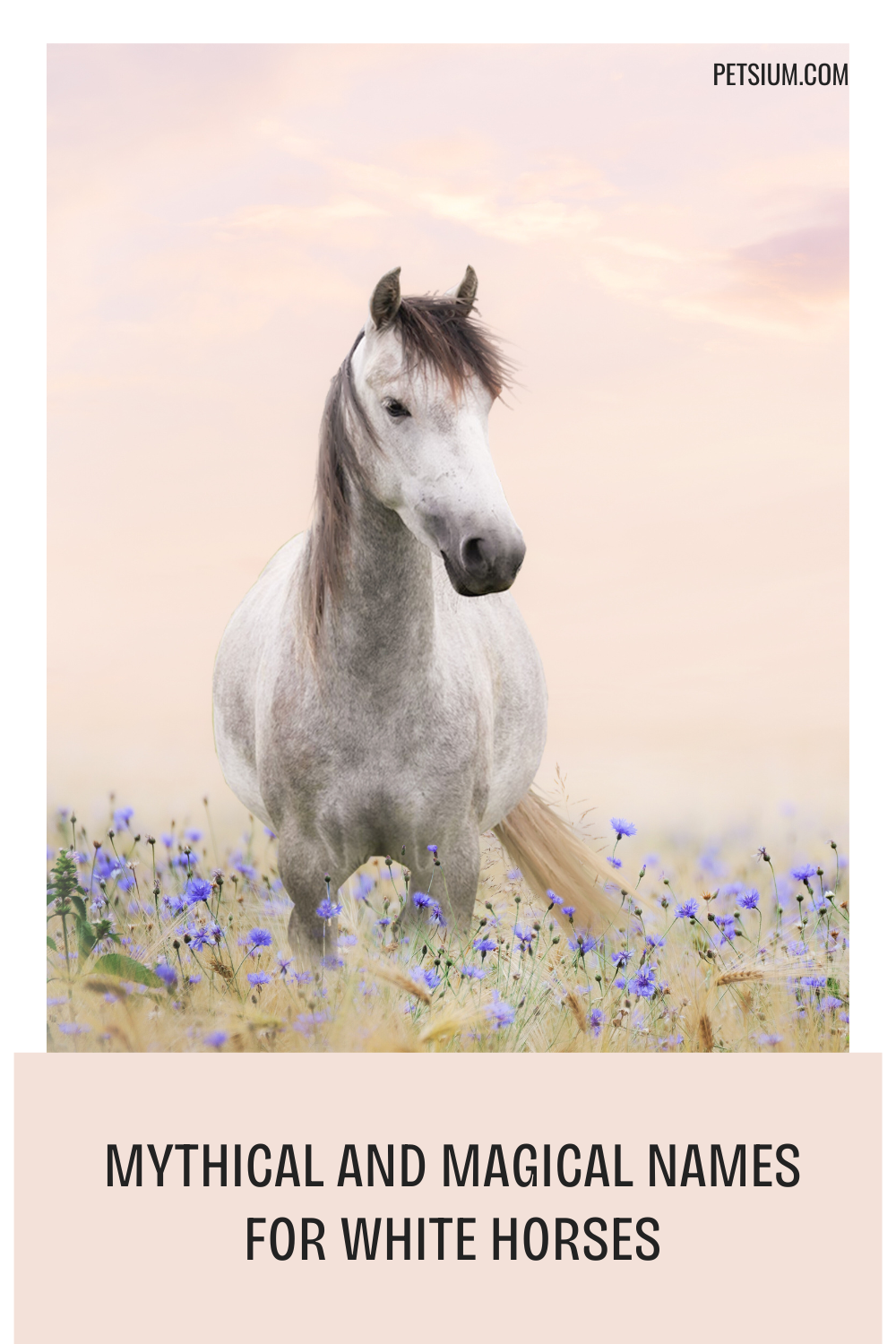
Mythical and Magical Names for White Horses

White Horse Names Female

Angela, Angelica, Angelina, Angelique – angels and the divine are part of white horse symbolism
Anna, Anna-Marie, Annabella, Annie, Hanna, Hannah – the meaning of the name Anna is “full of grace”
Anemone
Alaska
Astrid (means”beautiful goddess”)
Ballerina
Belle, Bella, Bellissima, Bellatrix
Blanche, Blanca, Casablanca, Bianca,
Camellia
Candace
Celeste
Claire, Clara, Chiara
Crystal
Daisy
Dahlia – stands for dignity, elegance, and purity
Davina ( means “beloved”)
Diva
Divina ( Italian for “divine”)
Esperanza ( Spanish for “hope”), Hope
Faith
Fiona
Gardenia – a white flower symbolizing purity and beauty
Gabrielle, Gabriella
Grace, Grazia
Gwen, Guinevere – Welsh for “pure”, holy”
Heidi
Hermosa ( Spanish for “beautiful”)
Hibiscus – stands for delicate beauty
Irene, Irina, Eirini ( means “peace”)
Iris, Jasmine
Jennifer ( means “white wave”)
Jolie ( French for “cute”)
Lily, Liliana, Lilac
(La) Luna – Spanish for “the moon”
MaryChris, Chrissy, Maria, Marianne, Maryann
Magnolia – white magnolia symbolizes purity
Milky, Milky Way
Misty
Moon, Moonlight – Earth’s moon appears white during daytime due to the excess sunlight that it reflects
Morning Glory
Nadia, Nadya ( means “hope”) Nadiyyah (Arabic for “delicate”)
Neve ( Irish for “snowy”, “bright” ), Neva
Opal ( as in the white gemstone)
Orion ( inspired by the bright constellation)
Paloma ( Spanish for “dove”)
Pearl
Peony – inspired by the white flower
Periwinkle
Princess
Raffaella
Rosalba ( Italian for “white rose”)
Sierra
Shiloh ( means “peace”)
Snowwhite
Stella, Star
Stephanotis ( a white flower also known as Madagascar jasmine)
Swan
Venus – the brightest planet in our solar system and the Roman goddess of beauty
Whitewater

White Horse Names Male

Alba – a unisex name standing for “white”
Albus, Alban ( Saint Alban)
Angel, Angelo
Arjun ( Sankrit for ” bright”, “shining”)
Aspen, Alpine
Amaryllis – a white flower that stands tall
Arion – a mythical talking white horse endowed with eternal life
Avalanche
Beau, White Beauty
Blanc, Blanco, Mont Blanc
Bouvardi – a star-shaped white flower
Calla (Lily) – a symbol of purity and holiness
Casper
Champagne
Cirrus – stands for the cloud that forms the so-called mare’s tails
Clematis
Cloud
Coconut,Coco
Cotton
Cream, Creamy, Custard
Custard
Daffodil – a white flower symbolizing metamorphosis and rebirth
Dazzle
Diamond
Dove, Palomo
Edelweiss – Switzerland’s national flower
Feather
Finn, Finley, Finnigan ( means “fair/white”)
Fjord
Gabriel ( the archangel)
Gandalf
Glacier
Haukea ( Hawaiian for “white snow” )
Hioni ( Greek for “snow”)
Hyacinth
Heron, Hero
Heaven
Ice, Icecream
Iceberg Rose
Ivory
Lisianthus – a white flower standing for innocence and purity
Lefko – ( Greek for “white”, masculine)
Lotus
Marble
Marshmallow, Milkshake
Michael ( the archangel)
Miracle
Moonbeam, Moondance
Moonstone. Moonshine
Nova ( standing for the super bright star)
Orchid
Oreo ( Greek for “handsome”)
Pheonix
Polar, Arctic
Powder
Prince
Quartz
Raphael ( the archangel)
Riverstone
Shahaka ( Native Americans refer to “big white one”)
Snowdrop
Snowflake, Snowy
Starlight
Sugar
Sweet William – a white flower also called dianthus with a masculine symbolism
Theo, Theodore ( Greek for “God”)
Thunder
Uriel ( the archangel)
Vanilla
Velvet
Yucca
Yuki

Majestic & Classic Names for White Horses

For a white horse that exudes elegance and power, consider these classic and majestic names:

Avalon: Evokes a sense of mystical beauty and ethereal grace.
Argent: Derived from the French word for silver, perfectly capturing the shimmering coat.
Bianca: Italian for „white,“ a simple yet elegant choice.
Ivory: A creamy, luxurious name that highlights the horse’s pristine color.
Nimbus: Refers to a luminous cloud or halo, representing the horse’s radiant appearance.
Pearl: Resonates with purity and preciousness.
Snowdon: Inspired by the majestic mountain, suggesting strength and resilience.
Sterling: Denotes high quality and silver-like brilliance.
Zephyr: A gentle breeze, suggesting grace and agility.

Cute White Horse Names

If your white horse has a playful and endearing personality, these cute names might be the perfect fit:

Cotton: Soft, fluffy, and undeniably adorable.
Coconut: A tropical treat, a refreshing and playful name.
Frosty: Captures the wintry essence of a white horse.
Marshmallow: Sweet, soft, and incredibly cuddly.
Moonbeam: A gentle ray of moonlight, capturing a sense of enchantment.
Sugar: A sweet and affectionate name.
Vanilla: A classic and comforting choice.
Snowflake: Unique and delicately beautiful.

Funny White Horse Names

Inject some humor into your horse’s identity with these lighthearted and amusing names:

Bleach: For a truly snow-white horse with a touch of irony.
Casper: A friendly ghost, adding a playful vibe.
Mayo: A funny and unexpected choice referencing the pale colour of the horse
White Lightning: A humorous contradiction that highlights the horse’s speed and color.
Yeti: A mythical creature, perfect for a large and imposing white horse.

Mystical White Horse Names

Tap into the spiritual and enchanting aura of white horses with these mystical names:

Astral: Connecting to the stars and celestial realms.
Celeste: Meaning „heavenly,“ evoking a sense of divine beauty.
Ethereal: Representing lightness, grace, and otherworldly beauty.
Luna: The Roman goddess of the moon, symbolizing femininity and intuition.
Mystic: Captures the enigmatic and enchanting nature of the horse.
Shimmer: Reflecting the magical sheen of the horse’s coat.
Whisper: Suggesting secrets and hidden wisdom.

Mythical White Horse Names

Draw inspiration from folklore and mythology with these powerful and symbolic names:

Alsviðr & Árvakr: The horses who pull the chariot of Sol (Sun) in Norse Mythology.
Pegasus: The winged stallion of Greek mythology, representing freedom and inspiration.
Sleipnir: Odin’s eight-legged horse in Norse mythology, symbolizing power and speed.
Unicorn: The legendary creature known for its purity and healing powers.

Beyond the List: Finding YOUR Perfect Name

Ultimately, the best name for your white horse is one that resonates with you and reflects its individual personality. Consider its quirks, temperament, and the bond you share. Try saying the names aloud to see how they feel and imagine them being announced at a show or competition.

With a bit of imagination and this helpful guide, you’re sure to find the perfect name to bestow upon your magnificent white steed!

More Horse Names

These are just some horse names for inspiration. If you are still not inspired and feel that you need more, take a look at our names for black horses as well. Who knows, maybe that ideal name is sitting right there.
Категорије: Horses, Name Inspiration

100+ Names For Black Horses With Meanings

јануар 9, 2025 By liv parmel

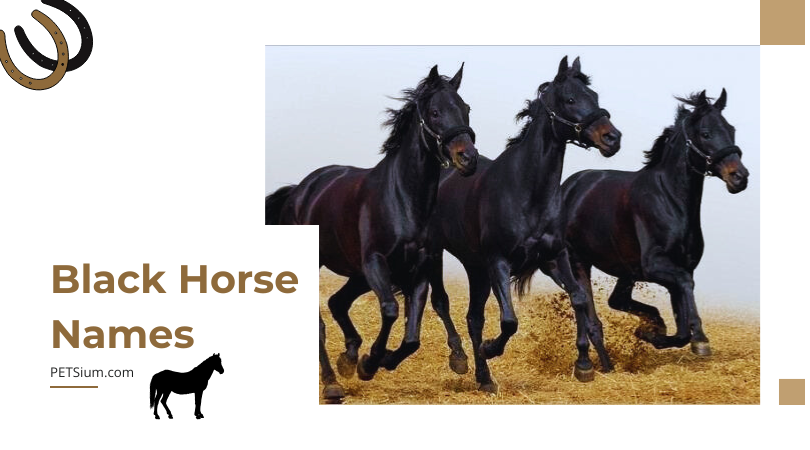
Black Horse Names

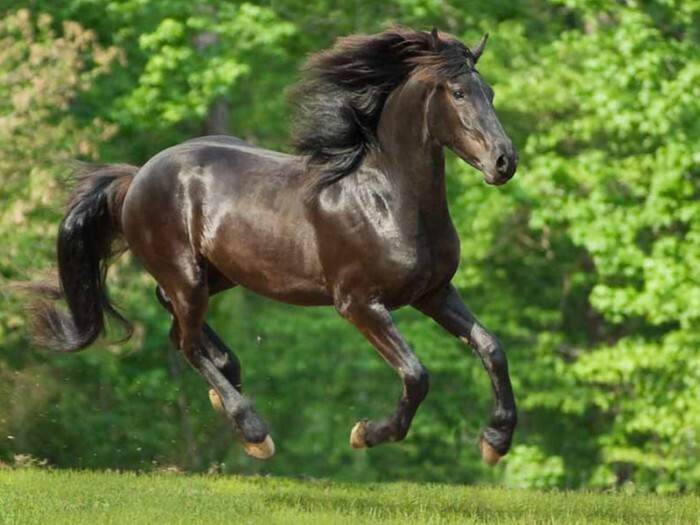
Black horses are regarded as the black pearls of the equine world and that’s because solid black is not a common coat color in horses.

True black or non-fading black horses are uniformly covered with blue-black, glossy hairs throughout their lives, as the sunlight does not affect the color of their coat, although they may get sun-bleached manes over time.

There are certain breeds associated with this color, and the most renowned is the Friesian, whose impressive beauty is undeniable. These distinctively majestic black horses with a non-fading solid black coat are also known for their intelligence, friendliness, and adaptability.

Fading black horses can become dark brown or bay after prolonged exposure to sunlight. It should also be noted that the term bay can include, in most studbooks, shades that approach black. Black horses are born either stark black or light grey.

If you own a black filly or colt but you haven’t found the perfect name for him/her, we’ve put together a list of male black horse names and dark horse names female, respectively as well as a list of famous black horse names so that you can get inspired from and choose a name that reflects both his/her luxurious, rather unique appearance and character.

Famous Black Horse Names

Black Beauty (Darkie) – the protagonist and narrator of Anna Sewell’s 1877 best-selling book of the same name that explored animal welfare
Rob Roy – Black Beauty’s half-brother foaled by Dutchess ( “Pet”), he was killed along with his rider in a hunting accident
Ruffian – touted the Queen of Fillies, she was a black champion Thoroughbred racehorse who died in 1975 at the age of only 3 in a match race
Burmese – a black Royal Canadian Mounted Police mare given as a gift to Queen Elizabeth II; she died in 1990, at the age of 28
Femma – the first Friesian mare who achieved the model status, in addition to becoming Overall Friesian Breed Champion in the UK in 2008
Anja – the first UK bred Friesian mare who became Overall Breed Champion, Champion Mare, and Model Mare in 2018
Berber – along with Anja, she was the first Friesian mare who achieved the Kroon title in 2014
Bucephalus – Alexander the Great’s famous black horse that carried him in battles against Persians and was one of the most famous horses in history
Black Gold ( the Indian Horse) – a black Thoroughbred racehorse, winner of the 1924 Kentucky Derby
Goliath – the black Friesian stallion ridden by Navarre in the 1985 medieval dark movie “Ladyhawke”
The Black Stallion – the animal protagonist of Walter Farley’s 1941 book and the film adaptation, a black Arabian stallion also called Shetan or the Black
Black Hawk Morgan – born in 1833, this famous black Morgan stallion influenced 80% of the Morgan breed, as well as Saddlebreds and Standardbreds
Midnight Sun – A World Grand Champion for two consecutive years, this black stallion was one of Black Hawk’s descendants foaled in 1940
Byerley Turk – foaled in the late 1600s, this black stallion along with Godolphin and Darley (Arabians) founded the modern Thoroughbred horseracing bloodstock

Black Horse Names Male

Aristocrat ( befitting a member of the equine aristocracy)
Ash, Ashton
Batman
Blackheart
Black Geranium
BlackJack
Calla ( black)
Charcoal, Coal
Cosmos
Dark Chocolate
Duke or Duc ( if you prefer in French)
Ebony ( works for a female black horse too)
(Sun/Moon) Eclipse
Glory ( befitting their glorious appearance)
Gypsy
Hades ( the god of the underworld in Greek mythology)
Hollyhock ( inspired by the black hollyhock flower)
King, or Le Roi ( in French)
Jet Black
Licorice
Lucifer
Majestic
Marquis
Mavro (Greek for black, masculine)
Midnight Sun, Midnight Express
Mystical
Mystery, Mysterious
Negro ( Spanish for black, masculine)
Nero ( Italian for black, masculine), Moro
Nightshade
Noir ( French for black, masculine)
Onyx ( can also be used for a female black horse)
Pallas
Pheonix
Pluto ( in Western astrology, this planet is associated with metamorphosis and rebirth)
Prince
Raven
(Black) Sabbath
Shadow
Smokey
Vicomte
Vlad ( Tepes)
Wouter ( Dutch for “ruler of the army”)

Black Horse Names Female

Ashley
Bat Orchid ( a black flower of the orchid family that looks like a bat in flight)
Black Baccara Rose, Black Rose
Black Beauty
Black Diamond ( works for a male, too)
Black Dahlia
Black Calla Lily ( inspired by the flower that symbolizes rebirth and faithfulness)
Black Iris
Black Pansy ( inspired by the black flower)
Black Pearl
Chicory ( used as a substitute for coffee)
Chocolate Cosmos ( after a blackish flower native to Mexico)
Chocolate Lily
Cinderella
Coffee
Dutchess
Espresso, Nespresso
Elvira
Felicity, Felicita ( Italian for “happiness”)
Gemma
Gloria
Grandee
Hecate ( the goddess of the underground, earth, and moon in Greek mythology)
Hellebore ( inspired by the rare black hellebore flower)
Hera ( the Queen of Heaven, she was the wife of Zeus)
Marquise
Mavri ( Greek for black, feminine)
Mora ( Italian for dark haired)
Nera ( Italian for black, feminine)
Negra ( Spanish for black, feminine)
Noire ( French for black, feminine)
Olive ( black), Olivia
Queen of the Night ( Tulip)
Panther ( Black Panther)
Princess
Royale
(Black) Velvet Petunia ( inspired by the rare black flower)
Veronica ( after the saint who wiped Jesus Christ’s face with her veil; means “perfect image), Vera
Viola Molly Sanderson ( inspired by the black viola)

Black Horse Names Conclusion

If you still haven’t found that perfect name for your American Quarter Horse or your Friesian, be sure to take a look at our white horse names, or why not checking name ideas for other pets as well.

For example, you can search for guinea pig names, there are some really awesome names which could be used for horses. Or maybe try searching for black dog names or black cat names online for more unique ideas. Maybe you will find that perfect name right there.

Категорије: Horses, Name Inspiration

80 Appaloosa Horse Names | Best Names For Spotted Horses

децембар 27, 2024 By liv parmel

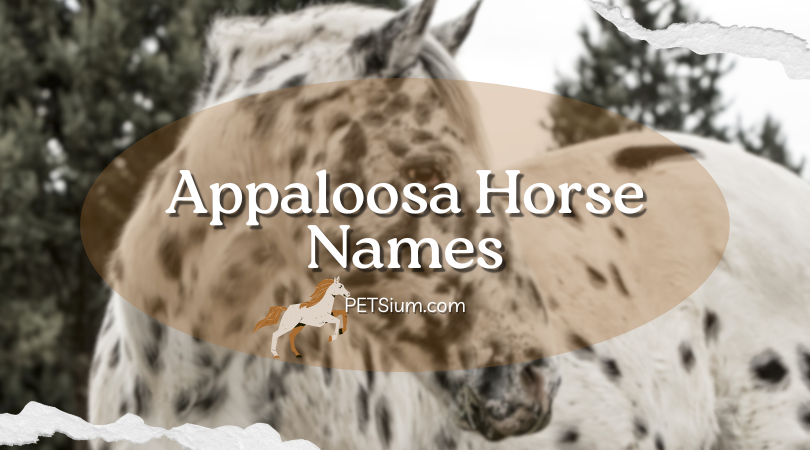
Appaloosa Horse Names

Searching for Appaloosa Horse Names? Browse through our female and male Names For Appaloosa Horses to find your perfect match.

Appaloosa Horse Breed

Appaloosa is a breed of horse derived from the Spanish horse that was imported to North America in the 18th century. Their development is said to originate from the Nez Perce in North America. They are work horses as well as leisure horses, which are particularly popular in the western sector.

Appaloosa have a typical body structure for western horses in a mostly square frame. This includes a small head that fits the horse with large, alert eyes and a straight nose line, then a sloping, well-muscled shoulder, then a short, strong back and a sloping croup, also heavily muscled.

These qualities enable the horses to be fast and agile, especially over short distances, as was particularly needed in the past on ranch work in America.

Nowadays, however, specialized types are also bred, depending on the purpose for which you want to use them. Otherwise, the horses stand out due to their characteristic color patch pattern. The Appaloosa is often a tiger piebald.

However, from mixed-heirloom / heterozygous parents there are also foals without characteristics and without typical coat markings. The characteristic features by which one can also recognize many monochrome Appaloosa are the “human eyes” and the spotted skin, which can be recognized wherever it is not covered by fur, for example on the nostrils, around the eyes or on the genitals.

The striped hooves with a dark crown edge are also caused in this way. These characteristics are also used as a criterion for the regular registration of the horses. Appaloosa have perseverance and motivation.

Now that we know who Appaloosa horses are, let’s take a look at some unique Appaloosa horse names and spotted horse names both for female and male horses.

For more horse names take a look at Black horse names or White horse names and Racehorse names.

Male Appaloosa Horse Names

Great spotted horse names for Appaloosa males.

Back Splatter
Blanket Hog
Confetti King
Count Hot Spot
Dot Dot Dash
Dotstream
Dotted My Eyes
Fancy Pants
Freckled Francine
Galaxy Cruiser
Great Red Spot
Harlequin Romance
Hindsight
Hot Spot
I Is Dotted
I Spotted You
Jester
Johnny On The Spot
Jokers Wild
Polka Dot Prince
Rear Admiral
Security Blanket
Sir Spot A Lot
Spot On
Spotted Eagle
X Marks The Spot

Female Appaloosa Horse Names

Velvet Blanket
Spotlight Diva
Satin Blanket
Plashy Pony
Freckles
Freckled Francine
Fanny
Bubbles
Beach Blanket Baby
Baby Blanket
Big Bang Theory
Blanket Immunity
Celestial Collision
Confetti Confection
Connect The Dots
Constellation
Cozy Blanket
Dept Of Transportation
Dots And Dashes
Dotted Dream
Dotted Note
Dotted Rest
Great Red Spot
Harlequin Romance
Hindsight
In The Spotlight
Indian Blanket
My Electric Blanket
Ocellation Fascination
Ocellation Foundation
Polka Dot Party
Polka Dot Patty
Solar Spots
Spangled Glamour
Spagledesh
Splatter Back
Splatter Painted

Spotted Horse Names

Appaloosa horses are famous for their spotted body. Therefore, here are spotted horse names perfect for Appaloosa.

Spot Check
Spot Goes Hollywood
Spot Market
Spot Price
Spot Race
Spot Test
Spotted Speeder
Spotopia
Spotorama
Spotsylvania
Star Spangled Banner
Star Power
Sweet Dotted Swiss
Map Of The Stars
Hot Spot
When Stars Collide

More Horse Names

We have many more horse name ideas. We recommend grey horse names for even more name inspiration.

Категорије: Horses, Name Inspiration

Grey Horse Names | 90+ Grey and Dapple Grey Names For Horses

децембар 24, 2024 By liv parmel

Grey Horse Names

Searching for a name for your dapple grey mare or stallion. We have compiled a list of most interesting dapple grey horse names for both female and male horses. You can choose a name that suits your horse color the most.

Female Grey Horse Names

Arctic Fox
Arctic Queen
Ashly
Bridle Veil
Chantilly Lace
Crystal
Ice Princess
Innocence
Lady Gray
Magnolia
Milky Way
Mimosa
Pearl
Queen Annes Lace
Snow White
Snowflake
Winter Solstice
Winters Embrace
Luna
Grey Eye
Grey Queen

Male Grey Horse Names

Ash
Bugs Bunny
Cream Of The Crop
Fallen Snow
Ghost Rider
Glacial Pace
Greased Lightening
Great White
Gunsmoke
Gray
Jack Frost
Marshmallow
Mercury
Moonlight Serenade
Moonshine
Moonwalk
Pearl’S Buck
Pearly Gaits
Pegasus
Platinum Record
Quick Silver
Silver
Silver Bullet
Silver Flute
Silver Silence
Silver Sword
Silversmith
Smoke And Mirrors
Smoke Ring
Smoke Signal
Smokey
Snowman
Starlight Express
Steely Gaze
Sterling Silver
Thunder Cloud
Thunder Clap
Whipped Cream
White Cloud
White Tornado
Whitewater
Lunar
Greyskull

Here are grey horse name ideas which resemble the color grey.

Concrete
Mist
Cementatious
Cement
Mortar
Cloud Dapple
Grey Sky
Grey Scull
Grey Star
Grey Wall
Grey Stallion
Grey Wood
Grey Gallop
Moon Gazer
Grey Matter
Grey Quartz

Funny Grey Horse Name

Grey Economy
Grey Eminence
Grey Worm
Grey Mosquito
Grey Throw
Grey Tuxedo
Grey Yukata
Grey Under
Grey Pull
Grey Area
Grey Market

If this is your first horse there are things you should be aware of. There are a lot of information on how long does a horse live, how to take good care of your horse, how to train and much more. So make sure to educate yourself as much as possible and do it everyday and you will have a great time with your first grey horse.

Категорије: Horses, Name Inspiration

Race Horse Names – 110 RaceHorse Name Ideas

децембар 15, 2024 By liv parmel

How to Name a Racehorse

We have built a pool of race horse names for you to browse. Horse racing is not only a great form of entertainment, it is a great source of horse names.

The increasing popularity of horse racing results in a constant influx of new racing horse names.

When selecting a name for your horse, it is important that you have plenty of potential horse names at your disposal.

One of the best places to find racehorse names is from other racing horses.

If you think about it, someone has already decided that these names are worthy of a horse on at least one occasion. This alone adds some credibility to a horse name.

This list was created to help harness the power of these names.

Race horse names range from the simple and effective, to the bizarre and funny race horse names, and everything in between.

The race horse names list is interesting because the degree of names has such a great variation.

This variation might include just what you need to accomplish horse naming perfection.

Race Horse Names

  • Achilles
  • Admiral
  • Aesop
  • Ajax
  • Alex
  • Bailey
  • Balboa
  • Bandit
  • Banner
  • Beamer
  • Belle
  • Boots
  • Bubbles
  • Calamity
  • Cassidy
  • Cassius
  • Cerise
  • Chopper
  • Copper
  • Cutie
  • Daiquiri
  • Daisy
  • Derby
  • Diablo
  • Diesel
  • Doppler
  • Durango
  • Elvis
  • Energizer
  • Epcot
  • Excalibur
  • Fenway
  • Fiesta
  • Fizz
  • Fuji
  • Gaspode
  • Genesis
  • Geronimo
  • Gigantor
  • Gonzales
  • Hercules
  • Hershey
  • Houdini
  • Hurricane
  • Ice
  • Izzy
  • Jackal
  • Jackpot
  • Jingles
  • Jitterbug
  • Jupiter
  • Kaleido
  • Kellogg
  • Kinesis
  • Lancelot
  • Lexi
  • Lightning
  • Lucky
  • Lunatic
  • Madgie
  • Majestic
  • Marlboro
  • Marshmallow
  • Matchbox
  • Maverick
  • Maximus
  • Miata
  • Michi
  • Napoleon
  • Nikita
  • Nova
  • Onyx
  • Outlaw
  • Pacman
  • Paloma
  • Paradise
  • Penelope
  • Phoenix
  • Pronto
  • Queen
  • Quicksilver
  • Quigley
  • Qwerty
  • Raven
  • Razz
  • Remington
  • Renegade
  • Ripple
  • Rocket
  • Rodeo
  • Samurai
  • Scamper
  • Seabreeze
  • Shiva
  • Sprocket
  • Stoney
  • Stormy
  • Stripes
  • Sundance
  • Sunshine
  • Tango
  • Tequila
  • Terminator
  • Tornado
  • Vaquero
  • Viper
  • Winston
  • Wrangler
  • Wrigley
  • Xerox
  • Zepellin

Категорије: Horses, Name Inspiration

The Best Horse Names A-Z

април 18, 2022 By liv parmel

Horse Names from A to Z

Find the perfect name for your new horse or pony. The best horse names alphabetically ordered from A-Z.

Sweet and cute pony names, cool horse names and pretty names for horses and ponies. Just stroll down our list.

Horse Names Starting with Letter A

  • Abacus
  • Able
  • Accapella
  • Adagio
  • Admiral
  • Adrian
  • Africa
  • Aidan
  • Amanda
  • Amaretto
  • Amazon
  • Amber
  • Amigo
  • Angelina
  • Angelo
  • Annabel
  • Apollo
  • Aquarelle

Horse Names Starting with Letter B

  • Baccara
  • Bandit
  • Banjo
  • Baron
  • Basil
  • Baxter
  • Baymont
  • Bella
  • Bilko
  • Blossom
  • Bobby
  • Breezy

Horse Names Starting with Letter C

  • Canada
  • Cappuccina
  • Cappuccino
  • Cappy
  • Captain
  • Carmen
  • Carrie
  • Carrousel
  • Cassandra
  • Clint
  • Conan

Horse Names Starting with Letter D

  • Dancer
  • Darwin
  • Diablo
  • Diamond
  • Dolly
  • Donna
  • Dreamer

Horse Names Starting with Letter E

  • Ebba
  • Ed
  • Eddy
  • Edward
  • Ella
  • Ellen
  • Eva

Horse Names Starting with Letter F

  • Fabella
  • Fabian
  • Fabiana
  • Felicia
  • Felix
  • Fiona
  • Fury

Horse Names Starting with Letter G

  • Gaby
  • Gala
  • Garry
  • Gayle
  • Gayla
  • Ginger
  • Ginny
  • Goldie
  • Grover
  • Gruber

Horse Names Starting with Letter H

  • Hamlet
  • Hanna
  • Harry
  • Henny
  • Henry
  • Hobo
  • Hugo

Horse Names Starting with Letter I

  • Ida
  • Indra
  • Inga
  • Ingo
  • Inschi
  • Isabelle
  • Ivan

Horse Names Starting with Letter J

  • Jabo
  • Jacob
  • January
  • Jenna
  • Jenny
  • Jiffy
  • Jinni
  • Juwel

Horse Names Starting with Letter K

  • Kantos
  • Kara
  • Karina
  • Karino
  • Kasandra
  • Kaska
  • Kato
  • Kenny
  • Kissme
  • Kolby

Horse Names Starting with Letter L

  • Lara
  • Larissa
  • Laster
  • Lilly
  • Lisa
  • Lola
  • Lucy
  • Lukas
  • Luna
  • Lupus

Horse Names Starting with Letter M

  • Mandy
  • Maya
  • Melvin
  • Mike
  • Milani
  • Milano
  • Mocky
  • Molly
  • Monti
  • Moonshine

Horse Names Starting with Letter N

  • Napoleon
  • Nato
  • Nero
  • Niko
  • Nilo
  • Nirvana
  • Norbert
  • North Star

Horse Names Starting with Letter O

  • Oliver
  • Olivia
  • Olli
  • Onion
  • Onja
  • Opal

Horse Names Starting with Letter P

  • Pam
  • Pamina
  • Paris
  • Pascha
  • Pascal
  • Patina
  • Petra

Horse Names Starting with Letter Q

  • Quando
  • Quanta
  • Quattro
  • Queen
  • Queeny
  • Quito

Horse Names Starting with Letter R

  • Rabano
  • Raby
  • Ramon
  • Ramona
  • Randy
  • Reeba
  • Rio
  • Roger
  • Roman
  • Romina
  • Rose

Horse Names Starting with Letter S

  • Sally
  • Sam
  • Sandy
  • Shary
  • Silas
  • Silver
  • Silvester
  • Smoky
  • Starla
  • Stormy
  • Summer
  • Sunny

Horse Names Starting with Letter T

  • Tabacco
  • Tabasco
  • Tabe
  • Tamina
  • Timo
  • Tinka
  • Tinkerbelle
  • Toby
  • Topas
  • Tornado
  • Troja
  • Troll
  • Tuesday

Horse Names Starting with Letter U

  • Ulanda
  • Ulando
  • Ulfy
  • Ulla
  • Uno

Horse Names Starting with Letter V

  • Vera
  • Verona
  • Veronika
  • Vicky
  • Violet
  • Viva

Horse Names Starting with Letter W

  • Walter
  • Wanda
  • Wendy
  • Wicky
  • Wollie
  • Wotan

Horse Names Starting with Letter X

  • Xaver
  • Xavier
  • Xenia
  • Xiao
  • Xylo

Horse Names Starting with Letter Y

  • Yago
  • Yari
  • Yogi
  • Yury

Horse Names Starting with Letter Z

  • Zack
  • Zadok
  • Zilla
  • Zippo
  • Ziska
  • Zoe
  • Zorro

Категорије: Horses, Name Inspiration

How Long Can a Horse Run Safely

март 10, 2021 By Janine Tusk

Horses are born to run and the mere sight of horses running free is bound to lift anyone’s spirits. Yet these majestic creatures are still made out of flesh, blood, and bone, and their endurance abilities, although downright impressive, are by no means supernatural.

How Long Can a Horse Run

Whether you are a horse owner and/or rider with your horse’s best interest at heart or you’re just curious about how long can a horse run exactly, read on to learn more about horses’ endurance abilities and the effects of prolonged physical exertion on their health.

How long horse can run

Horse Vs Man

Horses’ amazing capacity to bolt when sensing predators is a key adaptation mechanism that has facilitated the survival of the species throughout the ages.

According to specialists in equine veterinary medicine, a horse’s heart rate during a high-speed gallop has been associated with even a whopping eight-fold increase.

Whoa, Nelly! To better understand how phenomenal horses’ fitness level really is, simply compare it to that of people – The heart rate of top athletes ( think marathon runners) increases only four-fold or less. Voila!

Natural Born Runners

Horses are born this way, partly thanks to the spring-like tendons of their limbs.

According to the Roman poet Ovid’s famous quote, catching up and outpacing other horses nurtures their endurance abilities.

Now the answer to how long can a horse run actually depends on multiple factors, including the pace the horse is running at ( e.g. galloping, cantering, trotting – and this is a crucial factor), whether the horse is carrying a rider (and the tack, obviously), rider skills, terrain, the horse’s physical condition, stamina, training, age, and, of course, breed.

Galloping Vs Trotting

With that being said, in a high-speed gallop, a healthy and fit horse can run up to 2.5 miles without stopping, before fatigue sets in. Possibly even 3 miles, considering that in Europe, back in the 18th century, many horse race tracks exceeded this distance. Eclipse was a famous racehorse in England that won 18 races, including a 4-mile one.

It’s worth noting that mammals use 2 different types of gallop – the rotary gallop ( epitomized by the cheetah) and the transverse gallop.

The latter has become synonymous with the horse, and it’s initiated by a hindlimb contact with the ground ( as opposed to the forelimb contact in cheetahs) and it’s carried out in a way that resembles skipping stones on a river.

This distinct directional transition in horses is a major source of momentum and energy loss.

With a proper break that would allow the horse to rest and lower his/her heart rate, galloping can safely continue.

At a trot, on the other hand, a horse in good physical condition can travel up to 30-40 miles in one day, but again, some breaks are in order to prevent potential heart issues.

Note that these may develop later in life, but sudden death due to heart failure or heart explosion ( when a horse runs too fast and too long) can occur when pushing the horse’s limits.

Horse running

In general, a horse can trot for about 4 hours before needing a break ( walking is a sort of break). When carrying a rider on a plain terrain, a horse that is trotting can take 8-9 hours to travel 20 miles, breaks included.

Racehorses Vs Other Horses

The endurance abilities of a horse bred and trained for racing are obviously superior to other horses’. The speed of racehorses when galloping also differs from others – 55 mph vs 25-30 mph. Good stamina also differentiates one horse breed from another when it comes to sprinting. In general, lighter breeds have better stamina than heavier breeds.

Thoroughbreds are known for their superior endurance abilities and speed, which is why they are the number one choice in racing, followed by Quarter horses and Arabians ( the latter breed is the equine king of stamina).

Other horse breeds with impressive endurance abilities include Mustangs, Andalusians, Morgans, Rocky Mountain, Tennessee Walker, and Hanoverian horses.

Final Thoughts

We hope that the above facts have satisfied your curiosity about how long can a horse run safely without stopping or, have helped you. If you’re a responsible rider/ own a horse, know his or her limits so as to prevent you from unwittingly causing your horse harm. If your horse exhibits signs of fatigue when galloping, cantering, or trotting, you should know that rest is needed to get his/her heart rate down to normal.

Категорије: Horses

Foal Training Tips

фебруар 16, 2021 By liv parmel

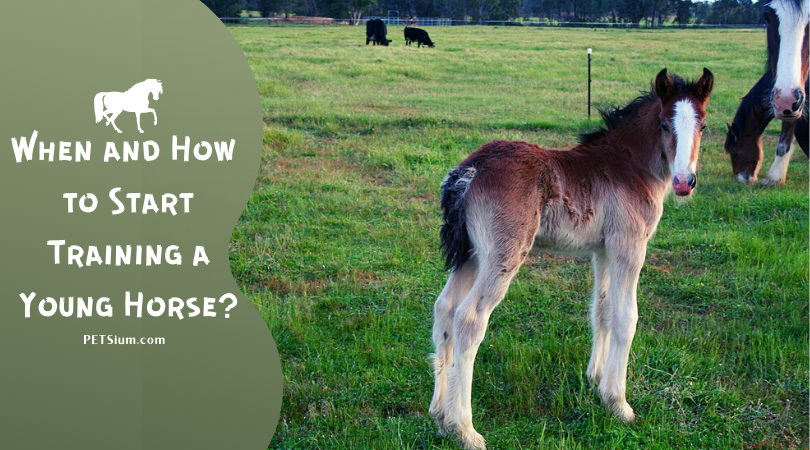
The training of a horse starts at the beginning with the foal. Handling begins as early as possible. Believers of this method of handling foals from birth use the concept of foal imprinting. A foal being imprinted will let a human touch it all over, pick up its feet, and become aware of the human voice.

A cute baby horse is called a foal for the first twelve months of his life. The mare carries the foal on average for 335 days. It can be anytime between 320 and 350 days. Usually within an hour the foal is on his feet and trying to suckle from the udder.

foal training

Foals that are handled within twelve hours of birth must be treated quietly but also firmly. All foals are different; some are very friendly others are timid and shy.

To catch the foal you will need two people, one to hold the mare while you catch the foal. It can be quite tricky and he may try to escape by going in front or underneath the mare.

He should be caught with one hand around his quarters and the other hand around the front of his chest. Once you have caught him, give him some attention by gently stoking him.

Foals stay close to their mother until approximately six months old, after that they are weaned. Weaning is separating the foal from its mother.

When it is Best to Start Training the Horse

Horse training is something should start as a foal. You’re probably thinking about some of the horses that start off as two year old without a hand ever being laid on them and they turned out fine. That’s true.

But I would almost bet that even though they never had a hand laid on them their whole life, they’ve also never had a cruel hand laid on them. That’s different.

If a horse is started with cruel treatment it will take a fair amount of kindness and patience to get it over that. With horse training you have to have the patience and affection to give it when needed but you also have to have the wisdom and care to be firm when necessary.

Horse training is like training your kids. They will do what they want if you let them but you have to steer them in ways that are constructive and needed for a good relationship.

There is not a lot of horse training that you can do with a foal that includes a saddle but there is so much more that you can do. I like to start with the horse training as soon as possible.

Teaching a foal to lead is the first I suggest. Making sure that they know you are a friend and not a foe should have already been established. To train a foal to lead you get a small foal halter and place it on them with a long lead.

A long lead is good so that way you can take the excess lead and loop it around their rear (right below their tails but above their hocks) so that way when you pull on their halter it also applies a little pressure to their rear to let them know that it is time to step forward.

While the equine foal is far too young to be ridden, it is still able to learn skills it will need later in life.

By the end of the foal’s first year it should be:

  • Well handled
  • Foal-slip trained
  • Stand tied up
  • Halter trained
  • Weaned

Foal Handling

An infant pony or horse is known as a foal. By handling the foal you will teach it good manners and it will develop into a horse or pony that respects you but is not afraid of you.

The foal ideally should be handled every day, spending as much time as you can with it. Run your hands all over him, rubbing, scratching and stroking every part of his body.

Handling foal’s legs

When you stroke the legs, start at the shoulder or hindquarters and work your way down. So in other words start from top to bottom.

Lifting the foot

When the foal is used to you touching his legs, try picking up his feet using your voice command saying “up!” Lift the foot a few inches off the floor to begin with.

If the foal struggles with you, hold it gently but firmly until he accepts this. Waite for a second and slowly release the foot.

Each time you practice, try keeping the foot up for a longer period.

Problems lifting a horse’s leg.

It is unnatural for a horse to stand on three legs. It is not uncommon for a horse to plant their legs firmly on the ground and refuse to allow them to be picked up.

Ask a helper to turn the horse’s head in the opposite direction, thus shifting the weight and making it easier and lighter for you to lift the leg.

Safety measures:

  • Foal handling must be done with care.
  • Some foals are bold, while others are timid.
  • Sudden moves might frighten it.
  • Stroke a foal; do not pat it, as this will scare it.
  • When lifting a leg, horses have been known to rear and also kick out.

Foal-slip Training

While the equestrian foal is far too young to be ridden, it is still able to learn skills it will need later in life. Once the animal is used to you being around it, you can introduce it to a foal-slip, this is also known as a head collar.

Let the foal get used to it first, he may want to sniff at it. A head collar with an adjustable noseband is the easiest to use especially if the animal is nervous.

Place it around the foal’s neck with the lead rope attached, then move it up slowly towards the top of his ears and do it up. Finally fasten the noseband.

Repeat this exercise a couple of times a day until it accepts this as part of a daily routine.

Safety precautions:

  • Do not pull on the its head when putting on the head collar. It is easily frightened.
  • Never turn it out with a foal-slip on. A foal is curious and can easily get caught up on fences and posts by rubbing and scratching.

Train Foal to Stand Tied Up

At this stage in foal training he should be well handled and familiar with the foal-slip. Firstly tie the mare up so she doesn’t get in the way. Put the head collar on the foal.

Next put the lead rope through the metal ring that should be attached to the stable wall in order to tie the horse up.

Keep the end of the rope in your hand and stand to the back of the foal with your other hand on its quarters, this way you will be able to encourage it to move forward each time it leans back on the rope.

The foal will gradually learn that by taking a step forward it takes pressure off its head. When the foal accepts this tie it up using a quick release knot.

When the foal pulls back on the lead encourage it to go forward by standing near its hindquarters and putting your hand behind it.

Stay with the foal until it is calm. When you decide to leave it, make sure you’re in earshot of it in case there is a problem.

When you untie the foal, make it stand for a short while before you let it go; as you don’t want the foal developing a bad habit like moving off quickly the moment you release it.

  • There should be nothing in the stable that can get in the way, like buckets or hay nets.
  • The metal ring should be set high enough up the wall in order to prevent foal problems occurring like getting a foreleg over the rope.
  • Loop a piece of baling cord to the attached ring first.

Tie to the cord as it is easier to cut in an emergency if you have problems with untying the knot.

Leopard-Appaloosa-Foal

Halter Train a Foal

How do I train a foal to lead? The cute foal should be well handled, foal-slip trained and should stand tied up before you teach it to lead.

You will need to put the head collar on the foal and attach a lunge line to it. A lunge line is a very long lead rope, which has many uses.

You will need someone to lead the mare out of the stable and the foal will follow with you holding the line on a light contact and long rein standing some distance behind it, so it remains calm.

The next step is to try and get the foal to stand still and ask the mare to walk on a few feet. When the mare is standing still ask the foal to move forward towards her.

Following on from the above halter training is to teach the foal to lead away from the mare.

It is easier to get someone to help you, as one needs to lead and the other encouraging it forward by putting their hands on its hindquarters.

You can encourage the horse forwards by using a long stick or schooling whip, held behind your back. Remember to use your voice commands first “walk on!” followed by a gentle touch with the stick.

My foal will not move forwards!

If the foal braces itself and you are on your own, stand to its near side holding the lead rope closely to the head collar.

Then take hold of the end of the rope in your right hand and pass it over to the other side, by the foal’s withers allowing the rope to fall down around its hocks.

Slowly take up the slack with your right hand. Encourage it to go forward with your left hand.

If the foal is not responding apply gentle pressure to the lunge line around its hocks. If gentle pressure has no effect you may need to be quite firm.

Safety precautions:

  • Train in a quiet area where there are no distractions. If the mare is upset and stressed the foal will react to this situation.
  • Never pull, tug or drag the foal, it will end up leaping in the air or running backwards.

Foal Weaning

When a foal reaches the age of six months it is usually separated from its mother.

It is much easier if the foal has been well handled, be able to lead on his own and been introduced to hard feed before it is weaned.

The majority of foals are born in the spring time, so weaning time is most likely to be in the autumn. If the foal is not of a hardy type, it is probably better to bring it in during the night for its first winter.

This will also give you the opportunity to handle it on a regular basis.

If you do decide to keep the foal out at night, a field with shelter is important. You also need to visit the foal at least twice a day.

If the foal is already used to hard feed like foal pellets, then it is less likely to loose condition when taken away from its mother. The foal needs to be brought in to a stable with a quiet companion horse to act as a “nanny”.

They will need to be kept in for at least 24hrs. Afterwards they can be turned out into a small, well-fenced paddock out of earshot of the mare.

If the mare or foal can hear each other, it can be very stressful for both.

If it is not possible to remove the mare out of earshot, then ride the mare out while the foal is shut in with the companion horse. After a week or two the foal and companion can be turned out separately from the mare.

Training a Young Horse

The best way to train anything is to start from the beginning. It’s hard to get a big dog and have it know everything that you want for it to know.

But if you get it as a puppy you can raise it the exact way that you like and make sure that it knows every single thing that you want it to know. It’s the same with horses.

If you start with your horse training with a colt you can make sure that it knows everything that you want it to know before it ever has a saddle on its back.

With horse training a colt you can’t just pull and pull until they come. You have to try the pull and release method.

You tug until they take a step forward and then release them and repeat over and over with praise after a while. It is also good if you can do this with someone else leading their momma so that they really want to follow you.

You can also work on the horse training of your foal by desensitizing it to many of the things it will see when it’s old enough to be saddle trained. Take it for walks when you go trail riding on your horse, take the lead and gently move it around their feet.

You can even take a feed sack or trash bag and rub it all over them to let them know that the weird sound is nothing to worry about. And mess with their heads. Literally. Mess with their ears, inside and out. Rub them as it actually is really relaxing to a horse.

Some might not be lucky enough to get a horse that they can raise from a foal all the way up to riding age to begin their horse training. You might get a horse that is three or four or even ten and hopefully broken in.

These are only some of the few suggestions I have in horse training your foal. They will give you a good head start for when it gets old enough for that saddle.

Категорије: Horses

Horse Behavior

фебруар 1, 2021 By Janine Tusk

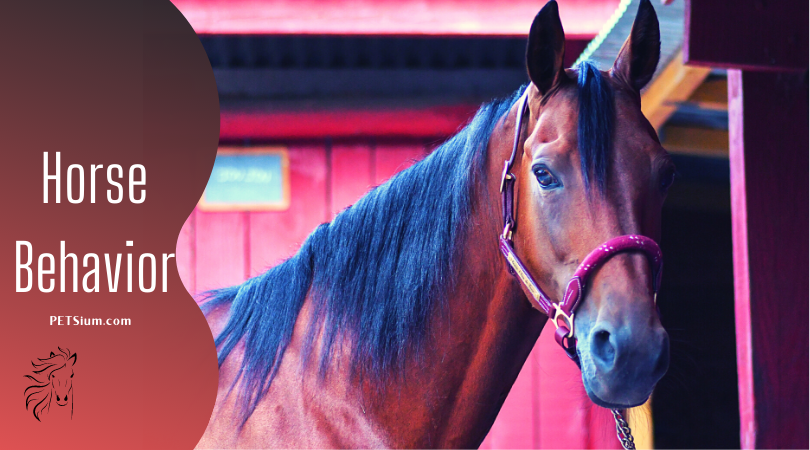
Behavior is a unique characteristic of any animal, and horses are no exception. Although, some habits might be common to a specie, individual behavior might differ. It is a very confusing aspect.

Horses that share a similar trait might not have similar habits. If we can understand a horse’s behavior then it would enhance our relationship with the animal. In this chapter, we would read some common habits that horses have.

Equine Behavior

Group Activity

Horses prefer to stay in groups. They tend to build up a strong relationship amongst each other when they live together. They do not fight amongst each other for food or water but live very peacefully when kept together. It is because of their social nature that they go along well with human beings and can prove to be faithful companions.

Communication

Like any other animal, horses too have their own ways of communicating. They communicate through sounds and actions and by looking at their behavior we can come to know what they are trying to say. The sounds and actions vary and we can know when the horse is frightened or alarmed or if the horse is in a friendly mood or unfriendly mood. These vary from animal to animal and these behaviors can be understood only when there is a close interaction with the animal.

A Sound and its meaning:

Neigh: This is the most common and familiar sound that a horse makes. The horse uses this sound to greet a passerby and if the sound is high pitched and loud then it means that the horse is trying to locate a missing foal.

Whinny: This is a softer form of a neigh and this sound is used by the horse to show affection or greet friends. Whinny can also mean that the horse wants a treat.

Nicker: This sound is a low and soft one and this is also used for greeting friends and the horse also uses this sound as a thank-you sound when a treat is given to him.

Squeals and screams: These are unfriendly sounds and a signal of anger or unhappiness. The horse often uses this sound along with slapping the ears and wrinkling his nostrils. If the horse makes such a sound and action, then it can be a sign of a probable bite from the horse.

When a horse is in a confronting mood he will start screaming and also make some actions like shaking the head and continual stomping of his hooves.

Horses respond rapidly to touch. They can feel the type of contact that other humans or animals make and react accordingly. For example a horse responds to the touch of the riders feet and runs accordingly. Smelling sense of horses is very strong. They often recognize individuals by the smell.

Control Your Horse / Horses

We would now see as to how you can control your horse. Before that let us see how horses instinctively behave.

As mentioned earlier, horses prefer to be in groups or herds, to be precise. This basic nature of horses comes because horses feel insecure. Due to insecurity, they are very repulsive and tend to react with the slightest disturbance. Such behavior is very important to understand to be able to coordinate with your horse. Give them safety, and they are yours!

Horses easily accept dominance as long as they feel secure. Body language is an excellent way to communicate with horses. They can sense your way of movement, speech, tone of voice and decide whether you can control him or not.

You have to be dominant over your horse. Never go back when your horse is approaching you. This would make him feel that you would not be able to provide security and will try to be dominant over you.

Dominance on your part should not bring along harshness or cruelty to your horse. Be firm but polite with your horse. This would enhance the relationship between you and your horse, and the horse will learn to respect you and obey to all your orders.

Horses express their feelings through their own body language. If your horse moves his feet rapidly, he is feeling insecure. One distinct behavior is that a horse feels safer in moving his feet.

A horse that fears something would have flaring nostrils, head held high, stiff tail, and ears held against the head. However, similar expressions can be seen when the horse is under aggression. On the other hand, a relaxed horse will have his head down, and ears relaxed.

Bad habits that should be taken care of by experts

Horses can get frustrated at times. This could be due to boredom or improper physical conditions; sometimes created by human beings. Some of the most common actions that horses do when they feel neglected are cribbing and weaving. Cribbing would mean that the horse would start biting solid objects. Weaving mans that the horse would rock his body and head.

Rearing Horse

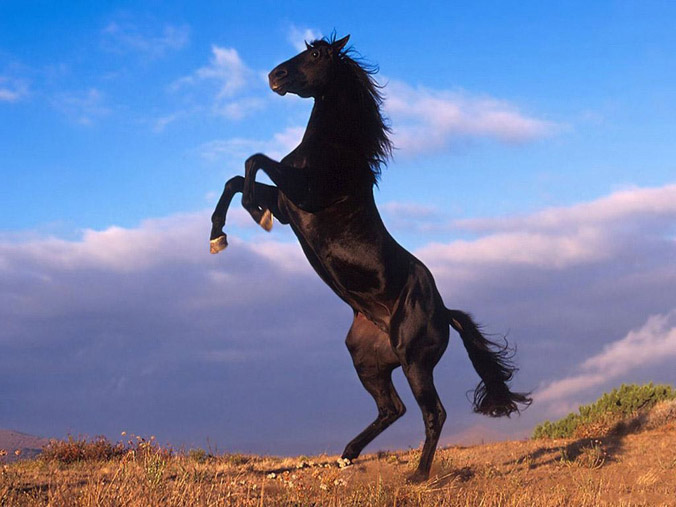
Some horses even tear rugs out of boredom. Some actions like bolting, bucking and rearing could be due to an improper saddle. Bolting is a result of improper tacking. This is very dangerous as the horse tends to get rid of what causes him trouble.

A horse bucks in order to get rid of predators and strangers. This could also be due to improper tacks that trouble the horse. Rearing means rising on the rear legs. This is very dangerous and should be taken care of by expert riders.

Behavior – Likes and Dislikes

Horses like friends, so be as friendly as you can. Provide comfort to your horse both emotionally and physically. Horses love to eat! Your horse loves to be brushed. So don’t forget brushing your horse properly.

Horses never like pain. Try to avoid injuries and hurting saddles. Horses hate to be confined. They love to explore. Give room to your horse and sometimes, leave it alone (but not for too long).

Behavior – Some Other Factors

There are some other factors that influence the behavior of a horse.

One most important factor is the age. Although, different horses tend to mature at different ages, many of them are matured enough at around seven years. When horses reach their level of maturity, they tend to be more obedient and sober.

Another important factor is the gender of horses. Mares show more maturity than their male counterparts. However, geldings are the most suitable when it comes to calmness. They are the most suited for children and novice riders.

A lot of your horse’s behavior would depend upon the training that it receives. Sometimes, the horse’s behavior will greatly influence the style of training to be imparted to the horse. Make sure that proper training is imparted to make your horse a pleasure to be with!

Warning! Make sure you stick to the following rules when it comes to horses:

  • Always approach a horse from the front side and not the rear side.
  • Feed the horse in front of the owner.
  • Avoid sudden movements and unusual sounds in front of horses.

Категорије: Horses

Winter Horse Blankets

јануар 12, 2021 By Janine Tusk

Nowadays horses are highly domesticated; they have adapted themselves to live in an environment surrounded by humans. The owners provide them with extra care and protection from danger, hunger and weather.

So whenever winter season arrives, equine owners pull out their winter horse blankets to protect their horses from cold and give them warmer environment.

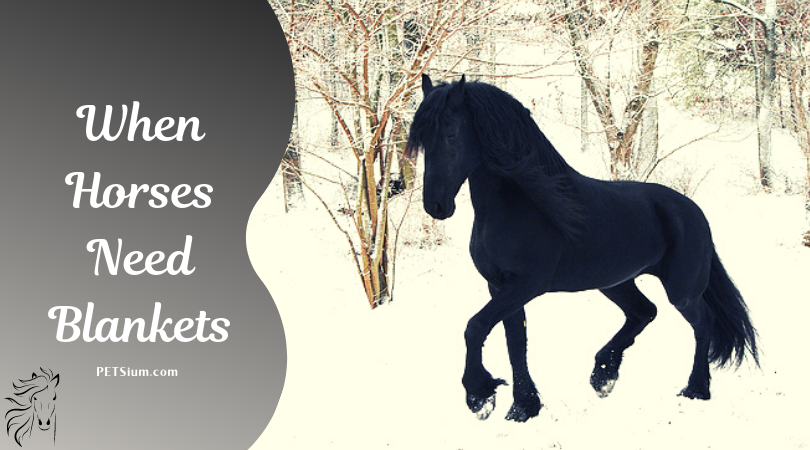
When Horses Need Blankets

Winter horse blankets are very useful to equine owners, although not all horses need this kind of protection. By nature the horses are adapted to survive different weather conditions. That is why there are rare cases wherein some horses might actually feel colder when blanketed. Especially, if the material used in making blankets are not that good.

That is very important when choosing winter horse blankets: When obtaining a winter horse blanket one must consider different factors like material, style and fit of the blanket, condition of the horse, cage and weather.

What You Need to Know About Winter Horse Blankets

There are two major types of winter horse blankets: the stable blanket and turnout rugs.

Stable blankets are designed to give maximum warmth and comfort. These are pretty thick and are used mostly when the horse is stable inside or outside, thus the name.

On the other hand, turnout rugs are more durable and are designed for maneuverability. These are best for horses that are active and more athletic.

Horse blankets can be made from different materials. Unlike older versions, modern horse blankets can be made from synthetic materials like nylon or natural fibers like wool or combination of both.

Most blankets have different layers: outer shells, inner shells and the insulation in between. The inner layer is smooth and soft against horse’s skin and hair. This layer gives extra warmth and at the same time can keep the horse’s hair clean, soft and beautiful.

The insulating part, on the other hand keeps the warmth in while keeping cold temperature outside; this part must be light enough to prevent the horses’ coat from being flattened. The outer shell provides resistant and additional insulation, usually made of nylon fiber, making the blanket waterproof or water resistant.

Also, there are waterproof, water resistant and breathable horse blanket. Waterproof and water resistant are two totally different words when it comes to horse blankets, although it may sound as if that means the same thing.

  • Water resistant horse blankets can resist water and prevent it from entering the blanket but the inner part can absorb moisture and sweat.
  • On the other hand waterproof horse blankets can prevent outside water from coming in and at the same time the inside part is made not to absorb or hold moisture and sweat.
  • Breathable blankets on the other hand, let the air circulate to avoid moisture build up between the horse skin and the blanket while keeping the cold out and the warmth in.

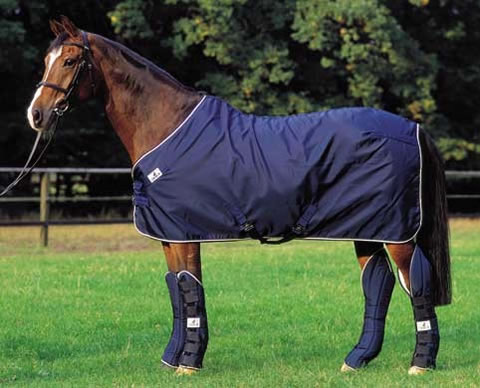
Horse-Blanket-with-Shipping-Boots

Choosing the Proper Winter Horse Blankets

Although the fiber and the type of the winter horse blanket are both very important, they could be quite worthless if the size of the blanket will not fit your horse properly. Tight fitting blankets can cause irritation and abrasion while loose fitting blankets can cause leg tangling and accidents and additionally it can’t serve its purpose of keeping your horse warm.

So before buying winter horse blankets cautiously get your horse’s measurements. With your measuring tape and a friend, measure your horse’s chest, hips, flank, shoulder and barrel. You may get odd measurements but the best solution is to get the next even size.

The next thing to do is to look for the nearest store where you can find the perfect winter horse blanket for your equine. You can find it in different niche stores online or within your community; other leading retailers also carries these products. Prices can go as low as $30 to as high as $250, depending on the manufacturer and materials.

But owner’s responsibilities don’t stop in buying the perfect blanket. Make sure that you monitor your horses when you put on their blankets. Since temperature might change once in a while so as your horses body temperature; so watch out for sweats and irritation for it may lead to bigger problems.

Also, if you have multiple horses, remember not to let them share blankets. And lastly, make it a habit to wash and clean those blankets, to protect your horses not just from cold but from other hazards.

Protect Your Horse with Horse Turnout Blanket

Knowing and understanding your horses is the best way to protect them. That means knowing their body chemistry and activities. If your horses spend most of their times outside, running or playing around even at extreme low temperatures or heavy rainfall, you might want to consider buying a horse turnout blanket. Turnout blankets are especially made to protect and warmth active horses while letting their skin breathe.

They are durable and specifically designed for maneuverability. They are made with rip-stop fabrics and usually have water proof outer layer. Most horse turnout blankets come with tail guard and neck guard to protect the tail and the neck of your equines from the wind and weather.

one piece horse blanket from ears to tail
See the Price on Amazon

And since a horse turnout blanket is designed for maneuverability, it can withstand common wear and tear, and it will stay in place as your horse plays, runs and rolls. For that reason such a horse blanket has surcingle and straps to make sure it won’t slip, and its linings is made of materials durable enough to prevent it from ripping yet comfortable enough not to cause irritation and abrasion to the horse.

To protect the shoulder, manufacturers add up shoulder gussets to alleviate pressure while giving it enough room to move and avoid bald spots.

There are different manufacturers and retailers of turnout blankets and you can find them online or in specialty store near you. Popular brands are Rambo, WeatherBeeta and Rhino. Those brands provide high quality and world class designs although they command higher prices you will be getting your money’s worth.

Choosing the Best Horse Turnout Blanket

Horse turnout blankets can cost as low as $70 to as high as $400. The recommendation is not to base your buying decision on the price or brand of the horse blankets but rather on what your horses need and which blankets will protect them best.

Saying that you must remember to measure up your equines so, you will get the perfect fit for your horse. Take your measuring tape and a friend to help you. Start measuring from the chest all the way back to the tail. Make sure that you get the exact measurement of your horse for tight fitting blankets can cause irritation and abrasion while loose fitting blankets can slip out and cause tangling and accidents.

Finally, when you already bought turnout blanket for your horse, make sure that you clean and wash them often. And never share blankets to avoid skin diseases and contamination. Plus, always check your horses; blankets can cause your equines to sweat so watch out for your horses can get sick if you let their sweats dry out. Remember, responsible ownership doesn’t end on providing food and shelter but proper care, love and protection are also a must.

Horses are naturally born to run around and although domesticated, they still have the instinct to explore. So during the cold season active horses might need some extra protection like horse turnout blanket. Although there are different factors to consider before buying such a blanket, factors like horse breed, average time spend outside and weather conditions or to know if your horse really needs a horse blanket at all.

Horses are not created equal, there are breeds that can protect and keep themselves warm during cold season while there are other breeds that cannot adopt well in cold environment and needed extra protection. In the same manner, there are horses that are active all year round while there are those that semi-hibernate and stay stable during winter season. These characteristics help in determining whether your equines need extra warmth from turnout blankets or not.

Waterproof Horse Blanket

Equine owners are always finding ways to protect their horses from natural elements like cold, wind and rain while keeping them comfortable and at ease. One of the greatest inventions for equines is horse blankets. Although not all blankets are created equal, most of equine owners are in favor of waterproof horse blanket. Why use waterproof blankets?

The Facts about Waterproof Horse Blanket

Waterproof horse blankets are made of natural and/or synthetic fibers. These fibers are coated with “waterproofing” materials. These coating gives the fabric special properties that can repel water from outside while allowing the moisture and air from inside to pass through to avoid condensation or build up.

Different manufacturers have developed different “waterproofing” materials. The materials being used are rubber, silicon, and wax, PVC (polyvinyl chloride) and/or PU (polyurethane).

Saxon Standard Neck Horse Blanket
See the Price on Amazon

Equine owners use waterproof blankets to protect their horses from rain, wind and cold weather while keeping them dry and warm. Of course horses are mammals and therefore warm-blooded animals. As all mammals they sweat not only when they run around or play but also when they stationary. Naturally they sweat in warm and in cold weather.

That is why waterproof horse blankets are in demand. The main aim of waterproof horse blanket is to keep a horse protected from outside elements while directing sweat away from its body. This is to avoid the possibility of catching pneumonia and other complications.

There are different types of waterproof horse blankets:

  • day sheet
  • turnout
  • coolers
  • flysheets
  • stables.

Day sheets are made from lightweight materials and are use to protect your horse from mild weather. The price are various depending on the brand and are from $30 to as much as $200.

Turnouts are used for horse’s outdoor activities and are made of sturdy materials that are wear and tear resistant. They are pricier, too: cost could be between $60 to even $400.

Coolers, on the other hand are used after your horse has betrothed in physical activities like shows and competitions. They are made specifically to cool down the horse. This is also explanation for the name of those waterproof blankets. They cost from around $40 to as much as $250.

Stables waterproof blankets are used to protect horses in undercover areas from cold weather and wind. They can cost from $40 to $300.

The flysheets waterproof horse blankets are used to protect the horses from insects. If you want one for your equine friend, count with spending something between $40 and $250.

Basically the prices of waterproof horse blankets vary because of the brand or features. Quite often the prices of waterproof blankets depend on the dealer or store selling the products.

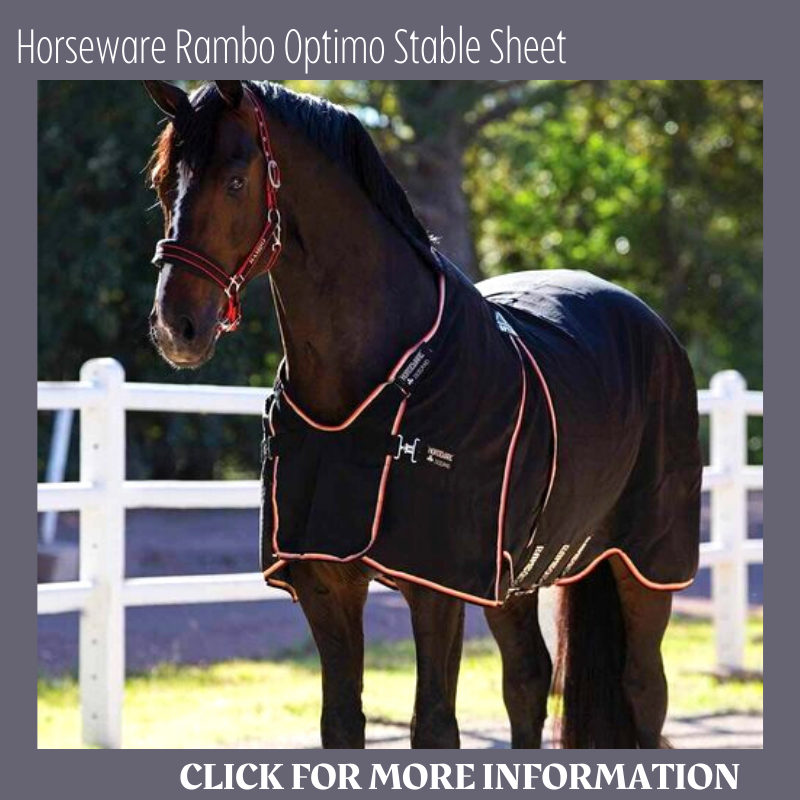
Horseware Products LTD. They created Rambo Originals. But there are different manufacturers trying to beat and surpass Horseware merchandise: WeatherBeeta, Kensington, Saxon and others.

Horseware Rambo Polyester Stable Sheet Horse Blanket
See the Price on Amazon

Caring for Horse Blankets

When it comes to cleaning and caring for your horse blankets you must always pay attention and be keen. Make it a hobby to clean the blankets to avoid irritation, infection and allergies the blanket may cause on your horse.

Rub away unwanted elements like mud, manure, stray hair, grime and dust. Shake it off few times before washing. Use warm water and mild detergent to avoid destroying the waterproof coating.

Well, just read washing instruction to know if your blankets are hand or machine washable. Air-dry your blankets. Do not ever machine dry for them as the dryer can ruin or shrink the fabric, especially synthetic one. Fold the blanket neatly and store in self-sealing plastic bags.

The ideal way is to have a spare blanket. It is always good to be ready when things get rough.

Категорије: Horses

  • Страница 1
  • Страница 2
  • Страница 3
  • Go to Next Page »

Primary Sidebar

Small Fish Tank

Glass Fish Tank

Категорије

  • Animals
  • Birds
  • Cats
  • Dogs
  • Fish
  • Goldfish
  • Guinea Pig
  • Hamster
  • Horses
  • Name Inspiration
  • Parrot Pet
  • Rabbits
  • Reptile Names

Скорашњи чланци

  • Hoppy Naming! Adorable and Funny Easter-Inspired Guinea Pig Names
  • Purr-fectly Adorable: Valentine’s Day Cat Names for Your Feline Friend
  • Astronomy Inspired Cat Names
  • James Bond Cat Names: Purr-fectly Suave Options for Your Feline 007
  • 170 Authentic Greek Names For Cats
  • Hippie Cat Names
  • Ladybug Facts For Kids
  • Unique White Horse Names with Meanings: From Majestic to Mystical
  • Disney Turtle Names: 160+ Names For Turtles From Disney Movies
  • 100+ Names For Black Horses With Meanings

Guinea Pig Cage

Large cage for your guinea pig

Ознаке

Best family parrots Best Gifts for Cat Lovers Best Hamster Toys Best parrot for beginners Best parrot for kids Best Small Dogs For Kids Boy Cat Names Can Guinea Pigs Eat Celery Cat Names Cat names for pairs Dog Behavior Dog Throwing up Dog Vomiting eat Female Bengal Cat Names Female guinea pig names Funny goldfish names Goldfish aquarium Goldfish names Gold Fish Names Goldfish tank Goldfish varieties Guinea Pig Guinea pig names Guinea pigs Male guinea pig names Manx Cat Names Names for Goldfish Names for guinea pigs Names for pink fish persian cat personality Siamese cats Small curly haired dogs Small dog breeds Sounds Twin cat names Types of goldfish Undigested food Unique guinea pig names What can guinea pigs eat Winter White Hamster Care Winter White Hamster Colors Winter White Hamster Diet Winter White Hamster Facts Winter White Hamster Life Span

Disclaimer:

This website „PETSIUM“ is not liable for any outcome or damage resulting from information obtained from these articles.

The articles provided here are for information and entertainment purposes only. The decision to use, or not to use, any of this information is the sole responsibility of the reader.

Any medical related content in any articles is not intended as diagnosis, treatment or prescription. It is not intended to be a medical advice and is not a substitute for professional medical advice. Please consult with a licensed health care practitioner if you are dealing with a serious medical problem.

Hamster Cage

Hamster Cage

Footer

Petsium – Veštačka Inteligencija

Dobrodošli na Petsium, vašeg novog saputnika za brzo, precizno i potpuno besplatno AI iskustvo. Ovde možete da postavite bilo koje pitanje – od pisanja eseja, preko tehničkih izazova u kodiranju, do saveta za svakodnevne zadatke – i dobićete odgovor prilagođen upravo vama. Sve to bez registracije, bez komplikovanih menija i bez skrivenih troškova.


© 2026 Petsium · Privacy Policy