• Skip to primary navigation
  • Skip to main content
  • Skip to primary sidebar
  • Skip to footer

Petsium - Veštačka Inteligencija | AI

Vestacka Inteligencija Aplikacija i Chat

  • Vestacka Inteligencija
  • Kontakt
  • Uslovi Koriscenja

Janine Tusk

Best 280+ Orange Fish Names: Unique, Cute, and Funny Ideas

јун 29, 2023 By Janine Tusk

Names for Orange Fish

Dive into our extensive list of orange fish names, covering unique, cute, and creative ideas that match the sensational colors and personalities of your finned friends.

Choosing a name for your pet can be difficult. But when your fish has a color as vibrant as orange, the color itself can be a great starting point. Orange fish names are a great way to personalize your fish and show how much you care about their unique qualities. Orange is a vibrant, warm color that brings energy to any environment. It’s no wonder that orange fish can brighten up your day with their playful antics and bubbly personalities.

Whether you’re looking for a name for an orange Goldfish, Koi fish, Bettas, Tiger Barbs, Swordtails, Guppies, our list of orange fish names has plenty of ideas to choose from.

Unique Orange Fish Names

These unique orange fish names take inspiration from various orange-hued aspects of nature, food, pop culture, and even humor, offering plenty of unique choices to consider when naming your vibrant orange fish.

  • Citrus
  • Caramel
  • Mandarin
  • Tangerine
  • Gingersnap
  • Saffron
  • Clementine
  • Amber
  • Paprika
  • Persimmon
  • Marmalade
  • Cheeto
  • Persimmon
  • Solar Flare
  • Papaya
  • Nemo
  • Creamsicle
  • Cantaloupe
  • Cheddar
  • Zinnia
  • Snapdragon
  • Butterscotch
  • Flame
  • Darwin (a nod to the famous Galapagos island)
  • Orangina
  • Goldfinger
  • Firecracker
  • Tiger Lily
  • Carrot Top
  • Bonfire

Cute Orange Fish Names

These sweet and charming names would be perfect for any cute, orange fish.

  • Fanta
  • Goldilocks
  • Blossom
  • Butterball
  • Pumpkin Spice
  • Apricute
  • Melon
  • Sunny-D
  • Biscuit
  • Toffy
  • Gingerbread
  • Pudding
  • Sorbet
  • Sherbie (short for sherbet)
  • Shortcake
  • Cuddlefish
  • Jelly Bean
  • Honeybun
  • Sweet Potato
  • Clementini
  • Sunny
  • Pumpkin
  • Honey
  • Peaches
  • Mango
  • Apricot
  • Goldie
  • Buttercup
  • Nectarine
  • Marmalade

For those seeking an adorable and memorable name, this list includes cute orange-themed options that will capture the essence of your delightful fish.

Male Orange Fish Names

These orange fish names names range from traditional, to more contemporary, to whimsical, offering a wide array of options to find the perfect name for your male orange fish.

  • Angus
  • Blaze
  • Brandy
  • Bruce
  • Chester
  • Clifford
  • Copper
  • Cosmo
  • Denver
  • Dorito
  • Ember
  • Ferris
  • Floyd
  • Foxy
  • Garfield
  • Hades
  • Heath
  • Hobbes
  • Inferno
  • Jack (as in Jack-o-lantern)
  • Jasper
  • Julius (like the orange drink, Orange Julius)
  • Lava
  • Leo (short for lion)
  • Nacho
  • Naranjo (Spanish word for orange)
  • Oran (means light in Gaelic)
  • Pippin (a variety of apple)
  • Redford (as in Robert Redford, the actor)
  • Rojo (Spanish word for red)
  • Russet
  • Samson
  • Sangria
  • Simba (Swahili word for lion)
  • Sol (Spanish word for sun)
  • Sunny
  • Tigger (from Winnie the Pooh)
  • Topaz
  • Vulcan (Roman god of fire)
  • Zesty
  • Rusty
  • Cinnabar
  • Rufus
  • Flame Rider
  • Phoenix
  • Mars (Roman god of war, associated with red color)
  • Scorcher
  • Sunny Jim
  • Apollo (Greek god of light and sun)
  • Firefly

names for orange fish

Female Orange Fish Names

These orange fish names showcase a delightful blend of different languages, cultures, and nature-inspired elements to help you find the perfect name for your female orange fish.

  • Amber
  • Autumn
  • Blazing Bella
  • Candy Corn
  • Carmella
  • Ceri (Welsh for ‘cherry’)
  • Coralie
  • Crimson
  • Dahlia
  • Fiery Fiona
  • Flame
  • Flora
  • Freya
  • Fuchsia
  • Ginger
  • Giselle
  • Golda
  • Isla (Spanish for ‘island’)
  • Joli (French for ‘pretty’)
  • Lani (Hawaiian for „heavenly“)
  • Lava Girl
  • Leilani (Hawaiian for ‘superior garland’)
  • Lola
  • Lucy (short for ‘Lucifer,’ a name associated with light-bringing in Latin)
  • Marigold
  • Melina (a Greek name meaning ‘manuka honey’)
  • Mia
  • Ora (Spanish for ‘golden’)
  • Oriana (a Latin name meaning ‘dawn’)
  • Orla (an Irish name meaning ‘golden princess’)
  • Pele (Hawaiian goddess of fire and volcanoes)
  • Poppy
  • Rayna (a Yiddish name meaning ‘queen’)
  • Rhea (a Greek name meaning ‘flowing’)
  • Rosie
  • Ruby
  • Saffron
  • Salma (an Arabic name meaning ‘peace’)
  • Scarlet
  • Selena (a name of Greek origin meaning ‘moon’)
  • Sierra
  • Simi (a Nigerian name meaning ‘joy’)
  • Solara (a name with a Latin origin meaning ‘sun’)
  • Solstice
  • Soraya (a Persian name meaning ‘jewel’)
  • Summer
  • Sunflower
  • Valencia (a city in Spain known for its oranges)
  • Vega (a star in the Lyra constellation)
  • Willow (a type of tree with golden branches in autumn)

Funny Orange Fish Names

These punny, pop-culture, and off-beat orange fish names provide plenty of chuckles and could be a lighthearted way to name your orange fish.

  • Agent Orange
  • Annoying Orange
  • Bobber
  • Captain Carrot
  • Citruspeed
  • Clamito
  • Clownfish Jr.
  • Coral Kardashian
  • Dr. Squash
  • Fin Diesel
  • Finn McFishface
  • FishStick
  • Fizz Pop
  • Floaty McFishface
  • Gillbert
  • Gilly Wonka
  • Ginger Swimmer
  • Gold Digger
  • Gummy Bear
  • H2Orangio
  • Hooked Hank
  • Julius Squeezer
  • Koi George
  • Lord Swimula
  • Meryl Steep
  • Moby Quick
  • Nathan Finnion
  • Nemo’s Cousin
  • Nicolas Scale
  • Orange McFishpants
  • Orange Roughy
  • Orangebowl
  • Prawnald Trump
  • Punsicle
  • Salmon P. Chase
  • Scalelextric
  • Scaley Minogue
  • Sea Biscuit
  • Sherlock Gills
  • Sir Finley McFisherton
  • Sir Swims-a-Lot
  • SpongeBob Finsquare
  • Squirt (a nod to Finding Nemo)
  • Stream Puff
  • Submarine Sandwich
  • Swim Shady
  • The Aquarium Avenger
  • The Finisher
  • Tuna Turner
  • Orangutan (don’t ask how he ended up underwater)

Cool Names for Orange Fish

These cool names for orange fish reflect elements of heat, speed, brightness, and fiery colors, evoking a sense of strength and excitement. Perfect for an orange fish with a lot of personality!

  • Apollo
  • Blaze
  • Bold
  • Cheetah
  • Comet
  • Copperhead
  • Dynamo
  • Ember
  • Fierce
  • Fireball
  • Firefly
  • Flash
  • Flame
  • Flare
  • Glow
  • Ignite
  • Inferno
  • Iron Lion
  • Lava
  • Lightning
  • Magnum
  • Mars
  • Meteor
  • Mirage
  • Molten
  • Monarch
  • Neon
  • Nova
  • Phoenix
  • Prowler
  • Pyro
  • Racer
  • Radical
  • Radiant
  • Rafale
  • Red Hot
  • Rocket
  • Scarlet
  • Scorch
  • Solstice
  • Spitfire
  • Sun Blaze
  • Sunburst
  • Sunfire
  • Sunrise
  • Sunset
  • Torch
  • Turbo
  • Viper
  • Volcano

Badass Names for Orange Fish

These badass names for orange fish evoke power, majesty, and a rugged, adventurous spirit. They are great options if you’re looking for a name that commands respect and showcases your orange fish’s rebellious nature.

  • Armageddon
  • Blaze
  • Brimfire
  • Conan
  • Crimsun
  • Czar
  • Diesel
  • Dragon
  • Fang
  • Firefist
  • Gunner
  • Havoc
  • Hawk
  • Helix
  • Ignitus
  • Khaos
  • Kraken
  • Magnus
  • Majestic
  • Orion
  • Pyrodex
  • Riptide
  • Shogun
  • Sith
  • Slasher
  • Thor
  • Titanium
  • Trident
  • Vandal
  • Zeus

How To Choose The Perfect Name For Your Orange Fish

While exploring the perfect name for your orange fish, consider their species and specific shade of orange. Goldfish are undeniably popular, but other orange fish like Koi fish, Tiger Barbs, Swordtails, Bettas and Guppies deserve acknowledgment as well. Reflecting on your fish’s unique characteristics can further inspire naming choices.

With these 280+ name ideas, finding the perfect moniker to compliment your orange fish’s personality and appearance should be much easier. Remember, naming your pet is a delightful process and the opportunity to form a special bond. Don’t hesitate to comment below with your own creative orange fish name ideas!

Related:

Goldfish Names

Pink Fish Names

Категорије: Fish, Name Inspiration

Pink Fish Names: 175+ Cute, Unique and Funny Suggestions

јун 26, 2023 By Janine Tusk

Pink Fish Names

When it comes to choosing the perfect name for your pink fish, you’ll want to pick something that reflects their unique personality and vibrant appearance. It can be difficult to find the perfect name, especially with so many pink fish names available.

That’s why we’ve compiled a list of best unique, cute and funny names for pink fish, guaranteed to make your aquatic friend stand out in the underwater world. Plus, we’ll give you some tips on how to choose the best name for your pink fish.

Best Names for Pink Fish

Here are some of our top picks for the best pink fish names:

  1. Rosie: A classic name that highlights your fish’s pink color, Rosie is a popular choice for pet owners who want a cute and timeless name for their pink fish.
  2. Fuchsia: Named after the vivid purplish-red color, Fuchsia is a unique and eye-catching name for any pink fish.
  3. Coral: Inspired by the stunning underwater ecosystems, Coral is a beautiful name that captures the essence of your fish’s vibrant hue.
  4. Flamingo: This playful name is perfect for a pink fish with a fun and energetic personality, just like the iconic pink birds.
  5. Cherry Blossom: A nod to the delicate and beautiful pink flowers, Cherry Blossom is a lovely and poetic name for your fish.
  6. Pinkie Pie: For fans of My Little Pony, Pinkie Pie is a fun and whimsical name choice for a pink fish with a bubbly personality.
  7. Strawberry: Sweet and colorful, Strawberry is a delightful name for any pink fish that brings joy to your aquarium.
  8. Blush: A subtle and elegant name, Blush is perfect for a fish with a soft pink hue.
  9. Aurora: Named after the mesmerizing natural light display, Aurora is a magical and enchanting name for a pink fish that captures the attention of all who see it.
  10. Bubblegum: A playful and nostalgic name, Bubblegum is perfect for a pink fish with a fun-loving personality.
  11. Peony: Inspired by the lush, fragrant pink flowers, Peony is a charming and sophisticated name for your pink fish.
  12. Cotton Candy: A sweet and whimsical name, Cotton Candy is perfect for a fish with a fluffy, cloud-like appearance and a light pink hue.
  13. Rose Quartz: Named after the beautiful pink gemstone, Rose Quartz is a unique and elegant name for a fish with a soft, rosy color.
  14. Raspberry: A vibrant and fruity name, Raspberry is perfect for a fish with a bold, bright pink hue.
  15. Magenta: A striking and modern name, Magenta is perfect for a fish with a vivid pink color that truly stands out.
  16. Blossom: A simple and sweet name, Blossom is perfect for a fish that brings a touch of beauty and grace to your aquarium.
  17. Cupcake: A fun and playful name, Cupcake is perfect for a fish with a sweet personality and a love for swimming around the tank.
  18. Amethyst: Named after the stunning purple gemstone, Amethyst is a unique and mystical name for a fish with a pinkish-purple hue.
  19. Pixie: A magical and enchanting name, Pixie is perfect for a tiny, delicate fish with a playful spirit.
  20. Sherbet: A sweet and refreshing name, Sherbet is perfect for a fish with a cool, pastel pink hue that brings a touch of summer to your tank.

Names For Pink Fish

Cute Pink Fish Names

If you’re looking for a name that will bring a smile to your face, consider these cute pink fish names, along with descriptions:

  1. Pink Pearl: A precious and adorable name, suitable for a fish with a delicate and elegant pink hue.
  2. Fluffy Puff: A cute and whimsical name, suitable for a fish with a soft and fluffy pink color.
  3. Petal: Inspired by the delicate pink petals of flowers, suitable for a fish with a soft and enchanting presence.
  4. Pink Popsicle: Inspired by the frozen pink treat, suitable for a fish with a cool and refreshing pink hue.
  5. Blush: A sweet and charming name inspired by the rosy pink color that appears on one’s cheeks when they’re feeling shy or embarrassed, perfect for a fish with a bashful and endearing nature.
  6. Bubblegum: A fun and playful name inspired by the sweet, pink chewy candy, suitable for a fish with a vibrant and lively personality.
  7. Cotton Candy: A name inspired by the fluffy, sugary treat that melts in your mouth, perfect for a fish with a soft and delicate appearance.
  8. Cupcake: A cute and delightful name inspired by the small, frosted dessert, suitable for a fish with a sweet and charming demeanor.
  9. Fluffy: A name inspired by the soft and cuddly texture of plush toys, perfect for a fish with a round and adorable appearance.
  10. Giggles: A cheerful and lighthearted name inspired by the sound of laughter, suitable for a fish with a playful and happy personality.
  11. Jellybean: A name inspired by the small, colorful, and sweet candy, perfect for a fish with a bright and cheerful appearance.
  12. Lollipop: A fun and whimsical name inspired by the sweet, hard candy on a stick, suitable for a fish with a playful and vibrant demeanor.
  13. Marshmallow: A name inspired by the soft, pillowy, and sweet confection, perfect for a fish with a gentle and delicate appearance.
  14. Peaches: A sweet and fruity name inspired by the juicy, pink-orange fruit, suitable for a fish with a warm and inviting presence.
  15. Pink Lemonade: A refreshing and summery name inspired by the sweet-tart pink beverage, perfect for a fish with a bright and lively personality.
  16. Pinky: A cute and affectionate name inspired by the color pink, suitable for a fish with a charming and endearing appearance.
  17. Pixie: A name inspired by the tiny, magical creatures from folklore, perfect for a fish with a whimsical and enchanting presence.
  18. Puff: A cute and playful name inspired by the light, airy texture of puffed foods, suitable for a fish with a round and adorable appearance.
  19. Sprinkles: A fun and colorful name inspired by the tiny, sugary decorations used on desserts, perfect for a fish with a vibrant and lively personality.
  20. Sugar: A sweet and charming name inspired by the granulated sweetener, suitable for a fish with a delightful and endearing demeanor.
  21. Sweet Pea: A cute and affectionate name inspired by the small, green legume, perfect for a fish with a gentle and loving nature.
  22. Tickled Pink: A playful and lighthearted name inspired by the phrase used to describe someone who is very pleased or amused, suitable for a fish with a happy and cheerful personality.

Tinny Pink Fish Names

The following are examples of tinny pink fish names:

  1. Pinky-Poo: A cute and cuddly name for a sweet and loving fish.
  2. Pinky-Dinky Dink: A funny way to say „pink dinky,“ suitable for a lively and energetic fish.
  3. Pinklet: A cute and tiny name, perfect for a small fish with a charming and lovely pink appearance.
  4. Rosebud: Inspired by the small budding flowers, suitable for a tiny fish with a delicate and elegant pink hue.
  5. Petite Peony: A sweet and small name, perfect for a little fish with a beautiful pink color and a cheerful personality.
  6. Mini Blush: A tiny and endearing name, suitable for a small fish with a subtle and charming pink hue.
  7. Little Coral: Inspired by the small pink coral formations, perfect for a tiny fish with a vibrant and lively pink appearance.
  8. Pink Sprinkle: A playful and small name, suitable for a little fish with a fun and energetic pink demeanor.
  9. Tiny Tulip: A cute and delicate name, perfect for a small fish with a graceful and enchanting pink hue.
  10. Baby Rose: A tender and affectionate name, suitable for a tiny fish with a gentle and loving pink appearance.
  11. Little Fuchsia: Inspired by the bold pink color, perfect for a small fish with a striking and eye-catching pink hue.
  12. Pink Pebble: A cute and tiny name, suitable for a little fish with a smooth and charming pink appearance.
  13. Pink Spark: A tiny and vibrant name, suitable for a small fish with a lively and energetic pink demeanor.
  14. Pink Puff: A cute and fluffy name, suitable for a little fish with a soft and tender pink hue.
  15. Pink Droplet: A tiny and delicate name, suitable for a small fish with a subtle and enchanting pink hue.
  16. Pink Speckle: A small and endearing name, suitable for a little fish with a delightful and cheerful pink demeanor.
  17. Pink Morsel: A cute and tiny name, suitable for a little fish with a charming and lovable pink appearance.

Unique Pink Fish Names

Unique Names For Pink Fish

For those who want a name that stands out from the crowd, consider these unique and creative pink fish names, along with descriptions:

  1. Amaranth: A name inspired by the deep pink-purple color of the amaranth flower, perfect for a fish with a rich and vibrant appearance.
  2. Azalea: A name inspired by the bright and showy azalea flower, suitable for a fish with a bold and eye-catching presence.
  3. Carnation: A name inspired by the ruffled and fragrant carnation flower, perfect for a fish with a delicate and elegant demeanor.
  4. Cerise: A name inspired by the rich, cherry-red color, suitable for a fish with a bold and vibrant appearance.
  5. Fandango: A name inspired by the lively and passionate dance, as well as the deep pink-purple color, perfect for a fish with an energetic and spirited personality.
  6. Flamingo Feather: A unique and creative name inspired by the soft, pink feathers of the flamingo bird, suitable for a fish with a graceful and elegant appearance.
  7. Mauvelous: A playful and whimsical name inspired by the soft, pink-purple color, perfect for a fish with a charming and delightful presence.
  8. Persimmon: A name inspired by the sweet, orange-pink fruit, suitable for a fish with a warm and inviting demeanor.
  9. Pink Sapphire: A name inspired by the precious gemstone with a vibrant pink hue, perfect for a fish with a dazzling and captivating appearance.
  10. Pink Topaz: A name inspired by the rare and valuable gemstone with a pink hue, suitable for a fish with a unique and striking presence.
  11. Rosé: A name inspired by the popular pink wine, suitable for a fish with a sophisticated and refined appearance.
  12. Rouge: A name inspired by the French word for red, often used to describe a deep pink color, perfect for a fish with a bold and vibrant presence.
  13. Sangria: A name inspired by the fruity and refreshing wine punch, suitable for a fish with a lively and spirited personality.
  14. Sorbet: A name inspired by the smooth, fruity, and refreshing frozen dessert, perfect for a fish with a cool and delightful demeanor.
  15. Taffy: A name inspired by the chewy, sweet, and colorful candy, suitable for a fish with a playful and vibrant appearance.
  16. Thulian: A name inspired by the pink-purple color also known as Thulite, perfect for a fish with a rich and captivating presence.
  17. Wild Orchid: A unique and exotic name inspired by the diverse and captivating family of orchid flowers, suitable for a fish with a striking and enchanting appearance.

Related: Orange Fish Names
Male Names For Pink Fish

Here are 30 original male names for pink fish, along with brief descriptions:

  1. Floyd: Inspired by the iconic rock band Pink Floyd, perfect for a fish with a cool and artistic vibe.
  2. Crimson: A strong and bold name inspired by the deep red-pink color, suitable for a fish with a striking appearance.
  3. Valentino: A romantic and elegant name, perfect for a fish with a charming and sophisticated demeanor.
  4. Romeo: Inspired by the passionate and poetic character from Shakespeare’s play, suitable for a fish with a loving and affectionate nature.
  5. Blaze: A fiery and energetic name, perfect for a fish with a lively and spirited personality.
  6. Roscoe: A playful and friendly name, suitable for a fish with a cheerful and outgoing demeanor.
  7. Marlin: Inspired by the popular game fish, perfect for a fish with an adventurous and athletic nature.
  8. Magenta: A name inspired by the deep pink-purple color, suitable for a fish with a vibrant and bold appearance.
  9. Razzle: A fun and whimsical name, perfect for a fish with a lively and entertaining personality.
  10. Zephyr: A name inspired by the gentle and soothing breeze, suitable for a fish with a calming and peaceful demeanor.
  11. Finnegan: A playful and charming name, perfect for a fish with a friendly and endearing nature.
  12. Bramble: A name inspired by the thorny, fruit-bearing plant, suitable for a fish with a resilient and strong spirit.
  13. Caspian: Inspired by the majestic and vast sea, perfect for a fish with an adventurous and curious personality.
  14. Dante: A name with literary and poetic roots, suitable for a fish with a deep and introspective nature.
  15. Garnet: A name inspired by the deep red-pink gemstone, perfect for a fish with a rich and captivating appearance.
  16. Harley: A cool and edgy name, suitable for a fish with a rebellious and daring personality.
  17. Jasper: A name inspired by the pink variety of the quartz mineral, perfect for a fish with a gentle and soothing demeanor.
  18. Lorenzo: A sophisticated and elegant name, suitable for a fish with a refined and distinguished nature.
  19. Orion: Inspired by the famous constellation, perfect for a fish with a celestial and mysterious personality.
  20. Percy: A playful and friendly name, suitable for a fish with a cheerful and outgoing demeanor.
  21. Rafferty: A unique and charming name, perfect for a fish with a distinctive and endearing nature.
  22. Santiago: A name inspired by the adventurous and spirited character from „The Old Man and the Sea,“ suitable for a fish with a courageous and determined spirit.
  23. Tiberius: A strong and regal name, perfect for a fish with a commanding and powerful presence.
  24. Ulysses: A name with epic and heroic roots, suitable for a fish with a brave and adventurous personality.
  25. Vernon: A charming and friendly name, perfect for a fish with a warm and inviting demeanor.
  26. Winston: A distinguished and elegant name, suitable for a fish with a refined and sophisticated nature.
  27. Xander: A cool and modern name, perfect for a fish with a trendy and stylish personality.
  28. Yves: A sophisticated and chic name, suitable for a fish with a fashionable and polished appearance.
  29. Zane: A bold and edgy name, perfect for a fish with a daring and adventurous spirit.
  30. Beau: A charming and attractive name, suitable for a fish with a handsome and alluring demeanor.

Female Pink Fish Names

Here are beautiful female names for pink fish, along with brief descriptions:

  1. Aria: A musical and harmonious name, perfect for a fish with a graceful and elegant demeanor.
  2. Bella: A beautiful and charming name, suitable for a fish with an alluring and captivating appearance.
  3. Coralie: Inspired by the vibrant and colorful coral reefs, perfect for a fish with a lively and spirited personality.
  4. Dahlia: A name inspired by the showy and vibrant dahlia flower, suitable for a fish with a bold and eye-catching presence.
  5. Ella: A sweet and melodic name, perfect for a fish with a gentle and soothing demeanor.
  6. Felicity: A cheerful and happy name, suitable for a fish with a joyful and optimistic nature.
  7. Giselle: A graceful and elegant name, perfect for a fish with a poised and delicate appearance.
  8. Hazel: A warm and earthy name, suitable for a fish with a comforting and nurturing presence.
  9. Iris: Inspired by the colorful and delicate iris flower, perfect for a fish with a vibrant and enchanting demeanor.
  10. Jade: A name inspired by the precious gemstone with a pink hue, suitable for a fish with a unique and striking appearance.
  11. Kiera: A strong and bold name, perfect for a fish with a courageous and confident personality.
  12. Lilac: A name inspired by the soft and fragrant lilac flower, suitable for a fish with a gentle and calming presence.
  13. Mira: A bright and shining name, perfect for a fish with a radiant and dazzling demeanor.
  14. Nadia: A name with hopeful and optimistic roots, suitable for a fish with a positive and uplifting spirit.
  15. Ophelia: A name with poetic and tragic roots, perfect for a fish with a deep and introspective nature.
  16. Penelope: A charming and endearing name, suitable for a fish with a friendly and affectionate demeanor.
  17. Quinley: A unique and modern name, perfect for a fish with a trendy and stylish appearance.
  18. Rosalie: A name inspired by the delicate and fragrant rose flower, suitable for a fish with a romantic and enchanting presence.
  19. Serenity: A calming and peaceful name, perfect for a fish with a soothing and tranquil demeanor.
  20. Talia: A name with joyful and uplifting roots, suitable for a fish with a cheerful and optimistic spirit.
  21. Uma: A name with balance and harmony at its core, perfect for a fish with a centered and peaceful nature.
  22. Violet: Inspired by the soft and fragrant violet flower, suitable for a fish with a gentle and calming demeanor.
  23. Waverly: A name with a rhythmic and flowing quality, perfect for a fish with a graceful and elegant presence.
  24. Xanthe: A unique and vibrant name, suitable for a fish with a lively and spirited personality.
  25. Yara: A name with strong and powerful roots, perfect for a fish with a courageous and confident nature.
  26. Zara: A stylish and fashionable name, suitable for a fish with a chic and polished appearance.
  27. Aurora: Inspired by the colorful and ethereal aurora borealis, perfect for a fish with a magical and captivating presence.
  28. Briar: A name inspired by the thorny and resilient briar plant, suitable for a fish with a strong and determined spirit.
  29. Celeste: A celestial and heavenly name, perfect for a fish with a mysterious and enchanting demeanor.
  30. Delphine: A name inspired by the graceful and intelligent dolphin, suitable for a fish with a playful and intelligent nature.

Funny Names For Pink Fish

If you’re looking for a funny name for your pink fish, here are some ideas to get you started.

  1. Pink Fin-cess: A playful combination of pink and princess, perfect for a fish with a regal and elegant demeanor.
  2. Rosefin: A pun on the color rose, suitable for a fish with a romantic and charming nature.
  3. Fintastic Pink: A fun play on the word fantastic, perfect for a fish with an impressive and extraordinary pink appearance.
  4. Swim Berry: Inspired by the pinkish hue of strawberries, suitable for a fish with a sweet and delightful personality.
  5. Bubblegum Fin: A pun on the popular pink chewing gum, perfect for a fish with a playful and fun-loving demeanor.
  6. Cotton Swish: A twist on cotton candy, suitable for a fish with a fluffy and vibrant pink appearance.
  7. Pinkie Fin: Inspired by the nickname „Pinkie,“ perfect for a fish with a friendly and endearing pink nature.
  8. Raspberry Ripple: A pun on the pinkish-red fruit, suitable for a fish with a lively and energetic personality.
  9. Flaminglow: A playful combination of flamingo and glow, perfect for a fish with a radiant and glowing pink appearance.
  10. Pinkfin Chill: A pun on the phrase „pink and chill,“ suitable for a fish with a relaxed and laid-back demeanor.
  11. Swim Blush: Inspired by the cosmetic blush, perfect for a fish with a rosy and charming pink appearance.
  12. Azalea Swimmer: A twist on the pink flowering plant, suitable for a fish with a graceful and elegant nature.
  13. Coral Swish: A pun on the pinkish hue of coral, perfect for a fish with a vibrant and lively pink personality.
  14. Pink Paddler: A fun play on the color pink, suitable for a fish with a strong and adventurous swimming ability.
  15. Fuschia Flash: Inspired by the bold pink color, perfect for a fish with a striking and eye-catching pink appearance.
  16. Fin-k: A playful twist on the color pink, perfect for a fish with a vibrant and lively personality.
  17. Swim Shady: Inspired by the rapper Eminem, suitable for a fish with a cool and rebellious demeano
  18. Swim Kardashian: A pun on the reality TV star, perfect for a fish with a glamorous and fashionable appearance.
  19. Aquaria Grande: A playful twist on the singer Ariana Grande, suitable for a fish with a powerful and captivating presence.
  20. Swimberly: A pun on the name Kimberly, suitable for a fish with a friendly and approachable nature.
  21. Swimothy: A fun play on the name Timothy, perfect for a fish with a charming and endearing demeanor.
  22. Swimberlake: A playful twist on the singer Justin Timberlake, perfect for a fish with a smooth and stylish presence.
  23. Fishney Spears: A pun on the singer Britney Spears, suitable for a fish with a pop-star and iconic nature.

Pink Fish Names Based on Pop Culture

Movies, TV shows, books, and famous characters can also provide inspiration for pink fish names. Here are some pop culture-inspired pink names for your fish, along with descriptions:

  1. Ariel (The Little Mermaid): Inspired by the adventurous and free-spirited mermaid princess, this name is perfect for a fish with a curious and lively nature.
  2. Barbie: A name inspired by the iconic fashion doll known for her signature pink outfits, suitable for a fish with a glamorous and stylish appearance.
  3. Elle Woods (Legally Blonde): Named after the smart, fashionable, and determined protagonist, this name is perfect for a fish with a strong and confident personality.
  4. Frenchie (Grease): Inspired by the pink-haired, beauty school dropout character, this name is suitable for a fish with a quirky and unique appearance.
  5. Glinda (The Wizard of Oz): Named after the kind and gentle Good Witch of the North, this name is perfect for a fish with a sweet and nurturing nature.
  6. Jigglypuff (Pokémon): Inspired by the cute, pink, balloon-like Pokémon, this name is suitable for a fish with a round and adorable appearance.
  7. Kirby: A name inspired by the pink, round, and lovable video game character, perfect for a fish with a playful and friendly demeanor.
  8. Marge (The Simpsons): Named after the caring and supportive mother figure with blue hair, this name is suitable for a fish with a nurturing and loving nature.
  9. Patrick (SpongeBob SquarePants): Inspired by the pink, dimwitted, yet lovable starfish character, this name is perfect for a fish with a goofy and endearing personality.
  10. Penelope (Wreck-It Ralph): Named after the spunky and determined character, this name is suitable for a fish with a strong and adventurous spirit.
  11. Pinkie Pie (My Little Pony): Inspired by the energetic and cheerful pony character, this name is perfect for a fish with a bubbly and outgoing personality.
  12. Pink Panther: A name inspired by the smooth and stealthy cartoon character, suitable for a fish with a sleek and mysterious appearance.
  13. Pink Power Ranger: Named after the strong and agile superhero, this name is perfect for a fish with a powerful and energetic presence.
  14. Princess Bubblegum (Adventure Time): Inspired by the intelligent and caring ruler of the Candy Kingdom, this name is suitable for a fish with a sweet and compassionate nature.
  15. Starfire (Teen Titans): Named after the powerful and empathetic alien superhero, this name is perfect for a fish with a strong and caring personality.

Related: Ultimate List Of 440+ Goldfish Names

Factors to Consider When Naming Your Pink Fish

When choosing the perfect name for your pink fish, consider the following factors:

  • Color Shade: Is your fish a bright, bold pink, or a softer, more subtle hue? Choose a name that reflects the specific shade of pink.
  • Personality: Observe your fish’s behavior and choose a name that matches their unique personality.
  • Species: Research your fish’s species and consider choosing a name that reflects their natural habitat or characteristics.
  • Your Interests: Pick a name that reflects your personal interests, such as a favorite character, hobby, or theme.
  • Easy to Pronounce: Choose a name that is easy to say and remember, so you can quickly call your fish by its name.

Conclusion

We hope this comprehensive list of pink fish names has inspired you to find the perfect name for your aquatic pet. With so many charming and vibrant options to choose from, you’re sure to find a name that suits your fish’s personality and appearance. Don’t forget to share your chosen name with us in the comments below!

Категорије: Fish, Name Inspiration Тагови: Names for pink fish, Pink fish names

Goldfish Aquarium: Everything About Goldfish Tank

фебруар 9, 2022 By Janine Tusk

Goldfish Tank Size

Goldfish Tank Size is very important. In a small tank, water conditions can occur rapidly, while too large a tank can be a burden for a beginner. I recommend at least investing in a 10 gallon. Choose a tank that has more water surface and less depth. Rectangular ones are better suited for Goldfish. Goldfish tend to require more space than other varieties of fish.

A Good Rule To Follow:

1 Fish Per 10-20 Gallons Of Water

Dangers of Using A Goldfish Bowl

You should never keep your goldfish in a fishbowl. It is too small, a nightmare to maintain, and often leaves your fish gasping for air. If you MUST keep your fish in a fishbowl for some reason, be sure that it is only filled halfway.

The reason for this is that a greater surface area allows more oxygen for the fish. A goldfish bowl filled to the top may have more water in it, but the surface area is much smaller. If you are in a bind you can use almost anything that is water tight to house your fish. Just make sure it is cleaned out and do not use detergent as it is deadly to fish! When you can invest in a bigger tank it is not that expensive and your fish will be much happier!

Goldfish Tank Location

Tank Location is important. Do Not place the tank near a heat source, direct sunlight, or cold drafts. Remember to place the tank in a location that permits servicing of the filters and performing general care. Goldfish are also sensitive to bumps and loud noise. The tank should be kept where the fish will be spared from excessive noise or thumping(stereos, speakers, etc.). A fish that is swimming around with jerky motions or jumping may be frightened! Even tapping on the glass can frighten your goldfish. All of these can cause unwanted stress to your fish, and should be avoided whenever possible.

Goldfish Tank Stand

When choosing a stand, make sure it is sturdy enough. 1 Gallon Of Water Weighs Approx 8 Lbs. There are stands made specifically for aquariums.

Aqueon Forge Aquarium Stand

Aquarium Stand

Buy Now

Adding New Fish

Before adding the newly purchased fish you need to make sure the tank has reached a biological balance. If not, you could experience problems with your tank and your fish’s health! You should let the tank cycle for a few days. Do daily water checks to read the ammonia levels as well as the pH, nitrite and nitrates. This enables you to ensure that the filters, aeration, and heaters are working properly.

Adding new fish has a few requirements such as making sure the water in the aquarium is similar to the water in the bag with the new fish. Take some water from your existing tank and put some in the bag to acclimate the temperature for the new fish. Leave the fish in the bag for 15 minutes while floating in the tank. While the fish is in the bag if it shows signs of stress such as grasping at the surface immediately release it into the main tank. Don’t knowingly put a sick fish in with your existing fish or you could transmit disease and infection.

Related: Goldfish Names

Goldfish Aquarium Equipment

Heaters – Heaters are not a requirement for goldfish. However, I have found that my goldfish are more active when the water temperature remains near 74 degrees Fahrenheit. I suggest keeping the water temp steady year round. If the tank’s temperature fluctuates a lot, this could create stress for your fish resulting in illness. (such as Ick)

FREESEA Tank Heater with LED Display

Aquarium Heater

Buy Now

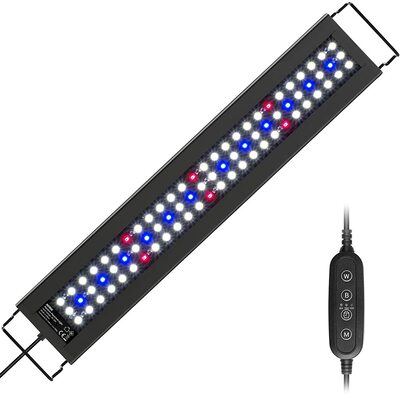
Light – Lights create a well illuminated aquarium that allows better viewing and highlights color of your fish. You should leave the lights on at least 4 hours but no more than 10 hours each day. Goldfish have no eyelids, and will be shocked and stressed if lights are suddenly turned on. It is a good idea to always turn on room lights first. Fish do sleep every night and will get the best sleep when the lights are off. You should try to get them on a schedule and turn the lights off at approx. the same time each night!

If you leave the lights on around the clock the fish will find some time to rest during the day but will remain healthier if they are allowed to get some sleep at night. So make your fish a happy fish and turn off the lights each night! Goldfish are sensitive to light.

NICREW LED Aquarium Light

NICREW LED Aquarium Light with Timer

Buy Now

There are different types of aquarium light fixtures available. For example, striplights, full hood and canopy lights available in fluorescent and incandescent fixtures. Fluorescent fixtures produce more light per watt and give off less heat than incandescent bulbs. (see purchasing info here)

Filters – Filters come in various brands and types that will efficiently clean your tank. I would suggest that if your tank is larger than a 10 gallon investing in a undergravel system with powerheads, which creates a biological system within the gravel. I would also use an outside filter system. These use fibrous material and activated carbon which purifies and cleans the water.

AquaClear Aquarium Filtration System

AquaClear Tank Filter

Buy Now

Goldfish Tank Decorating

Decorating the tank is purely an individuals own preference. Gravel, decorative rocks, ornaments, and artificial plants as well as alive plants are a few choices. Avoid sharp objects in the tank or you may end up with a cut or injured fish. This is especially true with fancy species with hoods or bubble eyes.

Tank Plants

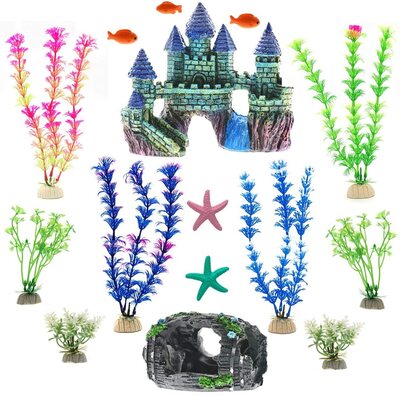
I would suggest purchasing plants in different sizes to create a natural look. This also allows the fish a place to seek refuge if needed (makes the fish feel more at ease, plus allows a place to seek refuge from the bright light when the tank lights first come on). I have found that artificial plants work better with goldfish, as they tend to be scavengers and dig up the plants.

Artificial plants can be cleaned in a solution of water and bleach. ( Just remember to rinse the plants extremely well) I have added plants such as anacharis to suction cup clips to the side of the tank for the fish to nibble on when they choose.

Bumiews 15pcs Aquarium Decorations

Bumiews Artificial Fish Tank Decoration Set

Buy Now

Tank Gravel

Gravel is a necessity if you choose to use an undergravel system. I would use enough gravel that the undergravel plate is covered about 2-2 1/2 inches in depth. Any color of gravel is okay; however, some colored gravel has been known to color the water. I recommend a natural gravel in a fairly fine size. (this ensures that if the goldfish ingests any it can be easily passed) It is important that gravel (and not crushed coral or coral sand) be used as a substrate in the goldfish aquarium.

Coral and shells are calcium-rich, and this will encourage the pH to rise. Gravel allows colonies of beneficial bacteria to thrive. This helps with the removal of ammonia and nitrites in your tank and creates more suitable living conditions for your fish. If your tank is newly setup, you only need to acquire a handful of gravel from an established tank. Take the established gravel and place it under the gravel in your tank and you have just placed some beneficial bacteria in your tank and gave it a head start in the entire bacterial process.

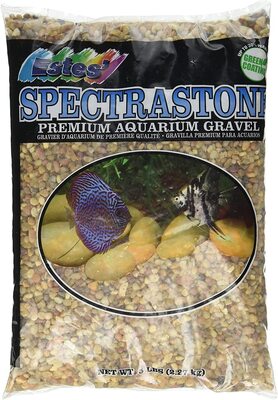
Spectrastone Premium Aquarium Gravel

Aquarium Gravel

Buy Now

Be sure to thoroughly rinse the gravel before placing it in the tank.

Use caution when using things that you have collected on the beach, or from your yard etc. They may contain soluble materials that could leach into your tank and pollute the water. Some examples are:

  • sea shells
  • builders gravel
  • beach sand
  • drift wood

Backgrounds are a very nice addition to the tank and make the tank’s look very nice!

Algae Control

Healthy „green“ algae should be allowed to grow on rocks in the tank. If you find too much algae on the decorative rocks and items in the tank you can remove these items and place them in the sink and pour boiling water over them and then allow them to sit until they have cooled before placing them in the aquarium again. This will cause the algae to die and they will return to their original color within a few days…

Algae should be scraped from the sides of the tank glass with an algae scraper sponge. Never use metal to scrape with as it will scratch your glass. Besides NO metals should be placed in a tank or aquarium!

You should avoid using algae medications unless it has become uncontrollable. You could instead get an algae eater (Plecostomus, snail, etc).

If the tank has a greenish tint, more than likely it is caused by an excessive amount of algae growth. This could cause respiratory problems in your fish. If this has happened do a 50% water change and remove as much of the algae as possible. If within 2 days it has not helped do an additional 25% water change.

Add carbon filters and increase aeration for one day after the water change. The secret to maintaining a good healthy algae growth is to provide good water quality and lighting. Use an algae eater, and perform routine water changes and keep the glass scraped to control algae growth.

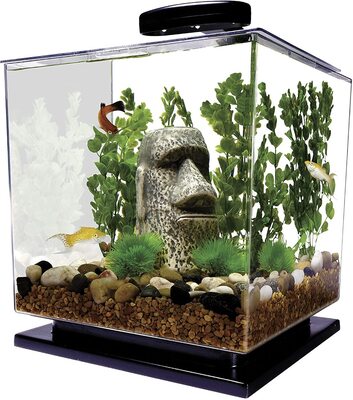
Tetra 3 Gallon Aquarium with Pedestal Base

Tetra 3 Gallon Aquarium LED Cube Kit

Buy Now

Aeration and Filtration

The objects of this is to increase oxygen content of the water and provide a direct benefit to the fish as well as aiding the nitrification of waste products. Also, it is to remove waste material mechanically, chemically, and biologically.

Aeration must be carried out during the actual filtration process, or provided separately. The goal is to allow oxygen to diffuse into the water and waste gases (carbon dioxide and ammonia) to diffuse out. An air pump with an airstone or bubble wand (see below) are good choices.

Filtration is based on the idea of removing water from the aquarium and processing it to remove waste products and returning it to the aquarium while aerating at the same time. Usually these filters are a box type setup with some form of filter media such as carbon and floss or a pre-packaged carbon type filter. The water is usually drawn up by a stream of bubbles or a small electrically driven pump and ran through the filter media. These are used to remove dirt and debrie and provide water aeration as well as water circulation. The carbon that is associated with most pumps has two main functions:

  • It absorbs waste material, which helps purify the water.
  • It acts as a biological medium. It can become a bed for nitrifying bacteria.

Cleaning Your Newly Acquired Glass Tank

You will want to remove any dust or oil that is on the tank’s surface. You should not use any cleaners or you could cause your fish to become ill. Take a damp rag and some warm water and wash the tank out. You can also use the hose and wash it out. There are some special made cleaners for tanks that can be purchased at petstores. I have just always used the bathtub faucet or the hose and rinsed the tank very well.

Outside of glass: I use windex window cleaner to clean my glass on the outside of the tank. Just use caution when spraying so no chemicals get sprayed in the tank. Chemicals and fish do not mix!

Aqueon Aquarium Kit with SmartClean Technology

Aqueon LED MiniBow Aquarium Kit with SmartClean Technology with Essentials

Buy Now

Leaky Goldfish Tank

If your tank has any type of leak, your must tend to this immediately. If not you could end up with a big disaster! If you are lucky, the leak will be near the top and you can siphon the water level to below the leak. You should drop the water level to 3 inches below leak. If the tank has a small leak between the sides of the glass, a temporary seal can be made with two-part epoxy. Mix the epoxy and apply it to the outside of the glass(never on the inside) where the water is leaking. NOTE: This is only temporary!

If the leak is near the bottom, or on the bottom and requires that you drain the entire tank, keep as much of the water in buckets or plastic containers as you possibly can. If you can leave enough water in the tank to keep the gravel wet you will keep your beneficial bacteria that is needed for a healthy aquarium.

Place the fish in containers and cover with towels. Try to add airstones to the containers housing the fish. Do not feed the fish during this time. (unless the repair takes more than 3 days)

If the room is cooler than what the tanks water was kept, wrap each container in towels. Turn up the room’s temp.

Goldfish Tank Repair

If the tank glass is broken, your will need new glass or a new tank altogether. If you attempt to fix it on your own, remember that silicone needs to be aquarium approved and takes 2 days at least to cure.

Replace the tank water with as much of the original tank water as you can, and start the filtration devices. Replace the carbon and floss if you use these. Run the filters for at least 2 hrs before adding the fish back in.

If you have had to replace the entire tank’s water, or the gravel has dried out, the tank may have to go through the complete bacteria process again.

Water Spills: If water has leaked onto your carpet, dry as much of it as possible with towels. Do not rub the carpet as this may cause the carpet to fray. Remove as much water as possible. If you have a wet-dry vac use this. Place fans on the area and this will help to dry out the area much faster. If you have spilt a lot of water you may have to rent a large wet vacum or steam cleaner from a business to remove the water.

Hygger Horizon Arc Shape Glass Aquarium Kit with Background

Hygger Horizon Glass Aquarium Kit with Filter and Adjustable LED

Buy Now

Goldfish Aquarium Water Chemistry

The single most important factor for a successful tank is maintaining optimum water conditions. The cause of most problems in a tank is poor water quality. In nature, small amounts of pollutants may not always cause adverse reactions. Given the small area of a tank, even small changes can affect an entire tank of fish within a few days.

Improperly maintained aquariums are a breeding ground for diseases. Once a disease is established it can reach epidemic proportions within a few days.

You must do routine water changes and maintain adequate water conditions at all times!

Factors for Proper Water Chemistry: Many individuals feel that doing water changes is all that is needed; however that is not correct. Temperatures need to be monitored, pH, nitrites, nitrates, ammonia, aeration, pollution, lighting, feeding, and overcrowding. Equipment must also be maintained properly.

Water changes: Routine water changes must be done. This is very important. Generally a 25% change every 2-3 weeks. Be sure before doing any water changes that the utensils are cleaned. Do not use soap. Use water treatment drops to remove the chlorine and other substances from the water.

Make sure that the aquarium equipment is working properly. Increase aeration for 1 day after making a water change.

Temperature: Water temp problems are usually caused by a faulty heater.

Water too hot: The tank should not be in the direct sunlight, or placed near a heat duct or heat register. To cool the tank water you could unplug the heater, place ice cubes in plastic bags and float them in the tank, or use plastic containers that are filled with frozen water.

Water too cold: Close windows, turn the heater on in the tank, and possibly the house as well. Wrap the tank with towels or blankets. Plastic containers can be added with warm water inside them.

Pollution: Over feeding or not doing routine water changes can create water pollution. Foul smelling water, cloudy or tinted water, debris on the tanks bottom, rotting, dead fish are all indications that the water is polluted. If this occurs you need to do a 50% water change. Increase aeration for 1 day whenever you perform a water change.

Overcrowding: A tank with too many fish can cause fighting among them, excessive fecal waste, and rapid oxygen loss. Remember goldfish require more room than other fish species. One goldfish to every 10-20 gallons of water.

Aeration: This is a necessary step for your tank. It gives the animals oxygen. The deeper the tank the more powerful of an airpump you will need. Always increase aeration when temperatures are over 80 degrees.

Place the airpump above water level if possible. This will keep the water from being siphoned if the pump fails.

pH: The pH test determines whether your tank water is too acidic or too alkaline. Acceptable ranges for freshwater is a reading of 6.8-7.3. You should get a pH testing kit from your petstore. They have charts and the necessary vials inside to check the waters quality and conditions.

Water Hardness: Water hardness is not a problem with established tanks. If water hardness is a major problem for you, you will probably have to get a water softener for your household use.

Lighting: The tank should receive at least 4 hours of light each day. Indirect sunlight can be used during the day, while using fluorescent bulbs during the evening. Avoid incandescent lights as they put off heat.

Algae growth is also an essential part of a healthy tank. Algae needs light to grow. The key to this is knowing if you are providing the proper amount of light. Brown algae indicates too much light or insufficient lighting, whereas, green algae indicates proper lighting. Excessive algae is too much lighting.

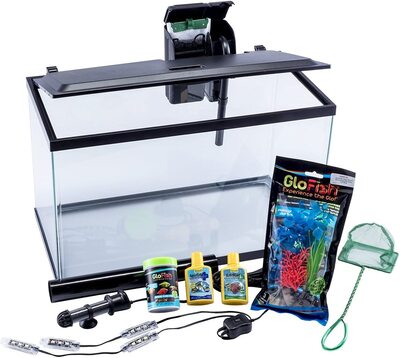
GloFish Fish Tank Kit with All Essentials

GloFish Fish Tank Kit with LED Lighting and Filtration

Buy Now

Goldfish Tank Algae Eaters (plecostomus)

A lot of people like the idea of adding an algae eater to the tank to keep the slime away. Well that is great, unless you get a rather large pleco who takes a liking to your fish’s slime coat. These sucker fish will suck on the sides of the fish causing a great deal of damage. They leave the fish with a huge sore and other problems could arise from this. It is best to keep the algae eater small or keep a watchful eye on it. If you notice it chasing your goldfish around and sucking on them it is time to find it a new home!

Goldfish Tank Poisoning

Because of the small area in which fish live while being housed in tanks, the slightest amount of toxin can become lethal to fish.

Toxic Substances: Toxins to fish can be both obvious and concealed forms.

  • chemicals were used around the tank (bug spray, perfumes, aerosol cans, fireplace smoke, cigarette smoke)
  • metallic objects
  • over medication of main tank
  • non-approved aquarium sealant that has not been properly cured.

Other toxic poisoning can be the result of heavily chlorinated water that you have used to replace tank water with, unsanitized rocks, decorations, oil leaking from filters in the tank. In unsanitary tanks, debrie that is rotting on the bottom can create hydrogen sulphide poisoning, which in turn robs the water of the needed oxygen. (this will be noticed when the tank smells of rotten eggs)

Nitrites, Nitrates, Ammonia, and the Beneficial Biological Filter: The beginning of the cycle starts with fish wastes, and uneaten food being trapped in the gravel and decaying. This forms bacteria and ammonium(ammonia). As the bacteria level rises, it begins to turn into nitrites(nitrite ions). At this stage the ammonia level and nitrite level can be lethal to more delicate fish. After this occurs, the bacteria turns the nitrites into less toxic nitrates. Nitrite and ammonia levels will then suddenly drop to near zero and the biological filter cycle is finished. You then have a well established tank!

Fish that are more sensitive to water conditions can now be safely added to the established tank. The length of time needed to completely cycle a tank depends on the tank’s size, how many fish are in it, the amount of oxygen the tank is receiving. The cycle can be as fast as 1 week to several weeks.

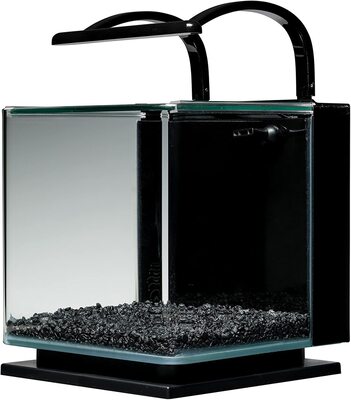
MarineLand Glass Aquarium Kit with Hidden Filtration and LED Lighting System

Marineland Contour 3 aquarium Kit

Buy Now

Main Goldfish Tank Medicating

Since drugs can upset the beneficial biological filter in the tank it is not recommended to medicate the main tank. If you have no other choice, it is suggested to follow all manufacturer’s directions closely. (a 50 gallon tank does not hold 50 gallons of water). The water is displaced due to the gravel, decorations, equipment, animals, etc.

Before you add medication to the main tank:

  • Remove the carbon from the filters
  • Remove all live plants, live animals, sponges, etc.
  • Increase aeration during the treatment period. (some medications deplete oxygen from the water)

After the treatment period:

  • Return all equipment to normal conditions and perform a 50% water change.
  • If you have treated the main tank with copper, much of it will have become bound in the bottom gravel. Gently stir up the gravel and siphon out the debris when making water changes.
  • Replace the carbon and floss in the filters to help rid the tank of the medication.
  • Keep aeration increased for an additional 2 days.

After 1 day of running the tank water through the carbon filters, return the live plants, and aquatic animals if any to the tank. If they have an adverse reaction to the tank do an immediate 80% water change.

Категорије: Goldfish Тагови: Goldfish aquarium, Goldfish tank

Bernese Mountain Dog

април 20, 2021 By Janine Tusk

What are white, tan, and jet-black all over? That would be the Bernese Mountain Dog, a large dog breed that originated from the Alps of Switzerland. This hard-working breed was kept originally as farm dogs and companions of alpine herders and dairymen. To further understand this loyal dog breed, here are some tidbits of information of the Bernese Mountain Dog.

Bernese Mountain Dog Breed Information

4 Things You Didn’t Know About Bernese Mountain Dog

Fact #1

These breed are also called Berner Sennenhund. “Berner” is Bernese in English and is derived from the area of the breed’s origin, Canton of Bern in Switzerland. “Senne” is a German term for alpine pasture while “Hund” is German for dog. Another name of these dogs is Dürrbachhunde, derived from a small town where they were frequently seen.

Fact #2

Bernese Mountain Dogs are famous for pulling carts for kids and parade purposes. The fondness of the dogs for this activity was that they were originally bred to pull wagons for farmers. Their calm temperament and large structure also made them suitable for cart pulling.

Fact #3

Unlike large working dog breeds such as the Newfoundland and Saint Bernard, Bernese Mountain Dogs do not usually like water. Many owners mistake that their similarities to the aforementioned breeds make them good water dogs. The Bernese dogs actually do not even allow their legs to be wet, as they just do not like the feeling of it.

Fact #4

An alarming information regarding the Bernese Mountain Dog is that this breed have a short life span compared to other large and pure bred dogs similar to it. According to studies, the average life span of these dogs recently is between 7-8 years, far from their previous life span of 10-11 years. Cancer is thought to be the main cause of the breed’s shortened longevity and have higher rates of cancer fatality than other breeds.

Is A Bernese Mountain Dog For You?

If you live in a house with a large, fenced yard and would like to share this with a furry companion, then Bernese Mountain Dog is one of the best choice for you. These dogs require daily walks and play for at least half an hour per day and in return they will give you much love, politeness and devotion towards you and your whole family.

Bernese Mountain Dogs are big in size (around 25 inches height) and they have a very thick, black and brownish coat that requires daily care during their seasonal shedding. The breed is not that easy to train while they never respond well to harsh voices and hard-handed training. But of course with fairness, consistency and much praise the breed can learn herding, agility or tracking for example.

Bernese Mountain Dogs are excellent with children, but because of their big size, the best is if you never leave small children alone with the dog. The breed prefers to be the only pet in the family, because they do not get on well with other dogs and pets around them.

All in all, Bernese Mountain Dog is the best breed for big families with (older) children and a big yard to play, and in return they will be devoted to the family and will protect them in all cases in dangerous situations.

A Short History of Bernese Mountain Dogs

Not so long ago, the ancestor of today’s Bernese Mountain Dog spent all year guarding the yard – protecting sheep during summer and pulling milk carts from autumn to spring.

The inhabitants of the Swiss Alps would not let themselves keep such a huge pet unless it was useful on the farm throughout the year.

Due to practical reasons, villagers preferred to breed the dogs long-coated (therefore resistant to cold) and strong (to give the owners protection and help).

Today it is hard for us to imagine that Bernese Mountain Dogs were used to watch yards, but at the beginning it was one of their main tasks.

Nevertheless, they were only supposed to guard and not to defend.

Their task was to bark to warn off intruders and alert the hosts.

Bernese Mountain Dog

The posture of a Bernese Mountain Dog was supposed to deter potential attackers, but they were never brought up to be aggressive towards animals or people.

These dogs, guarding yards in the country, lived among other animals like cows, sheep, and poultry, and were therefore raised to be mild towards others.

This feature was cultivated by breeders later on, and today we can say that Bernese Mountain Dogs are “friends of the whole world.”

The ancestors of today’s Bernese Mountain Dogs reached the area of Switzerland with the Roman legions around the 1st century B.C. Their origin is uncertain, but it is probable that they descended from Roman Mastiffs crossed with sheepdogs.

They were living on Swiss mountain farms unrecognized until the end of the 19th century, when Professor Albert Heim and Franz Schertenlieb decided to rescue the breed and promote it.

The first official name was Dürrbachler (after a small village Dürrbach), but changed to Bernese Mountain Dog (for the canton of Berne) in 1908.

The breed was recognized by the Swiss Kennel Club in 1913. In the 1920s, Bernese Mountain Dogs arrived in America and were recognized by the American Kennel Club in 1937.

Is Your Bernese Mountain Dog Cold?

As there are people who enjoy different seasons differently, it all really depends on their feeling of comfort.

European people may like to try out a less rainy and dark atmosphere and try someplace more sunny and warm or people living in icy conditions would crave for some tropical heat.

This comfort is also sought by canine companions however too much of anything is coined as bad.

Take the Bernese Mountain dog, they were developed in the Swiss Alps and used for pulling carts and farm dogs in the extreme cold.

With their dual coats they are insulated. But a few degrees below zero may prove too much for them.

One good sign to bring them inside is standing on three legs, alternating them and shivering.

To help help them avoid freezing even more outside, trim the hair on the paws so as not to accumulate ice and make it more uncomfortable for them. Keep them indoors after their shots for their resistance would be weak.

Bernese Mountain Dog Short Lifespan

It pains me to write this, but the Bernese is one of those big dog breeds that Shakespeare would not label as immortal.

On average the lifespan of a Bernese Mountain Dog is 7 years; so this is an important factor when considering buying one as a beloved family pet.

Although the coat and disposition shines through and through, the Bernese is cannot be labeled as a very healthy breed.

Apart from having a high food bill, veterinary bills may also skyrocket, since this breed is susceptible to getting certain illnesses.

Hip and elbow Dysplasia plagues this breed, while bloating, several types of cancer and kidney problems have also been known to develop.

Progressive retinal atrophy – an eye disease that causes blindness- is becoming a problem as well with this huge and lovable dog.

Due to its heavy coat, the Bernese may suffer in hot climates if you plan to spend a lot of time outdoors in summer make sure you have enough shade and loads of fresh water for your Bernese.

Take care of your Bernese. He will love you all the more for it…

Категорије: Dogs

Guinea Pig Care Guide – How To Take Care Of A Guinea Pig

март 29, 2021 By Janine Tusk

This is a comprehensive guide on How To Take Care Of A Guinea Pig – an overview of the basics on guinea pig care and ownership.

Guinea pig care

One Or Two Guinea Pigs? Male Or Female?

Guinea pigs are very social animals and do best with a good amount of attention and play time every day. If you’re unable to interact very much daily, you simply must get him or her a companion cavy (or more!) in order for him or her to be truly happy and thrive. Guinea pigs can actually die from loneliness.

Be careful selecting a companion though as most males will NOT get along with other males and they’ll fight terribly to the death. However, if males are raised together from very young, they’ll be okay; and sometimes you can put a baby male with an older male.

But note that if you would put one or both of these male companions with a female, they will fight when put back together later, even if they were the best of buddies before.

If this happens, you could house males in separate cages that are touching each other, so they can easily see what the other is doing all the time, and they’ll keep each other fine company again and not fight. Females will get along with all other females, with only very rare exceptions.

Please do NOT plan on housing a male and female Guinea pigs together permanently as she cannot have more than two or three litters per year or it will be very hard on her. You can have a male neutered, but it can be costly and also risky for the male. Many veterinarians are not very knowledgeable on small animals like the Guinea pig.

There are many Guinea pig owners that say males make better pets than females as they tend to have more ‘even’ personalities. Then there are those that prefer females as they say they’re more gentle and less rowdy. Both make excellent pets!

Guinea Pig Handling

If you are a new Guinea pig owner, be aware that it’s not unusual to take a few attempts before you are successful in catching him in his cage at first. This is because Guinea pigs are prey animals and the instinct to always run away is deeply rooted.

Approach him slowly so you don’t startle him, letting him smell your hand.

When you pick him up, be very, very careful not to squeeze his body as you can bruise his insides. If you should bruise his lungs, he can develop breathing problems, then even pneumonia, which can lead to death. Use both hands to support the full length of his body.

Do not allow his body to sort of ‘bend in half’ or to the side or lean backwards when you pick him up. If you need to reach far into his cage and can use only one hand initially, reach fully under him in such a way as to support as much of the length of his body as you can, then get your second hand under him as quickly as you can so he’s fully supported.

When you get him all the way out of his cage, position him so the front part of his body is cupped in the palm of one hand, with the back part of his body laying on up the wrist of that hand.

Then place your other hand on top of him, to steady him and to be sure he cannot jump down.

You do not want him to jump to the floor as he has delicate bones that will break.

Once you’re sure he’s quieted down, use your top hand to pet his head.

Stroke him down the center of his nose and on up between his ears as he’ll really like that and it’s calming to him.

Some guinea pigs like their body petted also; however, we have one sow that hates to be petted any place other than her head.

Guinea Pig Housing

CAGE – Please, please, please provide your cavy or cavies with as large a cage as possible. There are way too many pet guinea pigs living out their lives in extremely small cages.

Recently, pet stores have been selling larger cages than they used to; however, even larger cages than that are better.

You absolutely will see a difference in your Guinea pig’s outlook on life if you house him in a wonderful, large cage. He will run laps around his cage and do much more popcorning, which is when they jump straight up in the air from delight.

Avoid Wire Grid Bottom Cages

DO NOT use a cage that has a wire grid bottom with any size of grid openings for Guinea pigs.

Guinea pigs startle easily as they are prey animals, and their legs are delicate. When they move so fast, they can get their whole foot or leg caught in an opening, and their leg will actually rip off. This has actually happened.

You will come home to your friend in terrible pain with an entire leg dangling by a tendon, and you will need to have him euthanized immediately.

Wire bottom cages are actually designed for rabbits, as rabbits have much bigger feet and they have lots of hair on the bottoms of their feet, which cushions them more from the wire (guinea pigs have no hair on the bottoms of their feet).

However, we do not like to hear of any pet rabbits (or any animals) having to live out their time on this earth being forced to walk around on wire.

Guinea Pig Cage Location

Guinea pigs are social animals and they can get lonely, so please try and keep their cage in an area of the house where there is a nice level of activity going on, but not too much, as it can make „some“ cavies nervous.

If in doubt, try it and see how your Guinea pigs do. Don’t put their cage right next to a stereo, radio or TV that’s loud.

Don’t put your Guinea pigs in a laundry room due to abrupt humidity changes, plus it’s too noisy when the machines are running, and it’s definitely too isolated.

Cage Temperature And Drafts

Hairless guinea pigs will need to be kept warmer than the haired guinea pigs, but amazingly, not as warm as you might think.

Skinnies and Baldwins can tolerate temperatures between 60 degrees and 75 degrees, but we feel closer to 75 degrees is better.

The haired guinea pig breeds will prefer temps a bit cooler. You do NOT ever want a guinea pig to get over 85 degrees, hairless or haired, as they may collapse.

Also, their cage needs to be in an area where there are no drafts.

NEVER house a hairless guinea pig outside. In fact, we do not like to hear of haired guinea pigs that live outside.

Guinea Pigs and Rabbits

Do NOT house any guinea pig with a rabbit of any size. There are actually books that say it’s fine to do so, and they even have pictures of them together; however, it’s very dangerous for the guinea pig.

A rabbit has large and very strong back legs. They could be the best of friends, but if the rabbit would suddenly become frightened and jump around (and rabbits are very fearful animals), his back legs could strike your cavy and kill him very easily.

They also have different diet requirements. If you are currently housing a guinea pig and rabbit together that are good buddies, let them live out the rest of their lives in separate cages that are butted right up next to each other. They will still be able to lay beside each other along the adjoining ‘wall’ and they’ll be content because they can keep track of what the other is doing all the time.

Guinea Pig Toys And Furniture

Toys are very important to a guinea pig, and they consider toys and furniture to be totally interchangeable, so we’ll place them together here in honor of them! They’re so curious about anything new you give them. They have to walk all around the new item, checking it out.

Our guinea pigs love the big plastic plumbing pipes that form the joints (the bigger sewer pipes). We like the ones with two or three outlets.

They enjoy taking the different routes in and out of them, following each other, and they’ll lay and sleep in them as well.

When we remove their pipes to clean and put them back, the cavies act like it’s a brand new toy and have to check it out all over again.

Just be sure to file or sand down any rough places on these pipes so your hairless guinea pig won’t get scratched. They also need to be big enough in diameter so your guinea pig can run easily through it without bumping the sides or top.

We also like to make tubes out of smaller, plain paper sacks, tearing the bottom out, folding both ends back about an inch (forming a cuff) to help keep the sack in a tube shape. They follow each other in and out of them, over and over at first, and they like the crackling paper sounds.

Another inexpensive toy to provide for your guinea pig is paper cups (NEVER styrofoam). We give them each a bathroom sized paper cup, and they love to throw them around and bite them, somehow making a distinctive popping sound.

It must have something to do with the shape of their incisors and the firmness of the paper cup. It’s a hoot when we give everybody in the caviary a new cup at the same time, which is something we love to do by the way, and everybody’s popping their cups!

Balls also make good toys, but get really firm ones they cannot rip or chew apart.

Some people provide small leather dog bones or leather chews. We provide some bird toys that have leather chews hanging on a chain, so they don’t get dirty from the floor. These are the hard, brittle leather chews made for a dog. Do not use something like a leather shoe lace.

Wood chews are important to provide for a guinea pig. This is because he’s a rodent, so his teeth never quit growing. He needs to gnaw on something to keep his teeth worn down.

The „safest“ way to provide wood is to simply buy little packages of wood chews at pet stores.

Wooden chew toys made for pet birds are especially great, as they’ll often have bells or shiny, fun objects to play with, and the wood lasts a really long time.

Just be VERY sure there’s nothing they can chew or pull off that would become a choking hazard. We recommend bird toys because they hang on the side of the cage, which keeps the wood clean as opposed to laying wood chews on the floor.

When the wood is chewed up, we replace it with new wood chews (with holes drilled) from a pet store, simply stringing the replacement wood chew onto the toy’s chain.

Do NOT just put in any piece of wood you might find around your house or garage as it may not be safe for chewing because it will splinter too much.

Also do NOT use woods that have been treated for outdoor use (green/brown treated), painted, or varnished, etc.

HINT: If you provide your cavy with timothy hay cubes instead of, or in addition to, loose timothy hay, they will help keep their teeth worn down. You can find timothy hay cubes at www.oxbowanimalhealth.com and they’re wonderful as they’re 100% timothy hay, with NO alfalfa, which is not good for adult guinea pigs (except for pregnant/nursing females). Alfalfa contains too much protein and calcium, which can cause urinary stones and related problems.

Do NOT use toy exercise wheels for guinea pigs. They may be able to maneuver it; however, guinea pigs have been known to injure their backs from them because of their overall body shape.

Their body is larger than their legs can handle, so to speak. They also have much longer and larger back feet and legs.

Bedding and Litter

Your guinea pig will need litter on the bottom of his cage to absorb urine and poops.

There are now many bedding products available, from very low cost to high.

You may want to experiment with various products until you find one that suits your needs, based on how often you will be able to clean the cage.

The cheaper brands will usually need to be changed more often, depending on how many guinea pigs are in each cage.

Do NOT use any of the clay cat litters and also NONE of the scoopable cat litters. The guinea pigs could ingest them as they’re so curious.

Do NOT use Cedar Shavings as they contain cedar oil which will cause your guinea pig to have skin problems.

Cedar smells good to us, but it’s very bad for small animals, even toxic. Unfortunately, many pet stores still sell this product for small animals. Please do NOT buy it, even if your pet store recommends it. In fact, please tell your pet store they should stop carrying it! Tell them to research it on the internet.

You can use Pine Shavings if they have been „kiln-dried“, which means the pine oil has been removed. If the sack does not say „kiln dried“, do NOT buy it either.

Cavies can even get liver problems from pine oil.

Aspen Shavings are always excellent to use, as it has no oils. It also is not very expensive, just a little more than kiln-dried Pine.

CareFresh is always a popular choice; however, it is quite expensive. There are some sites on the internet with lower prices; however, you also have to pay shipping. Some people do not like the smell of CareFresh when it becomes damp from sippy water bottles and urine; however, we did not notice a problem with that.

Some people mix litters (i.e. CareFresh and Aspen Shavings) and are very happy with that.

There are quite a few companies that sell „pelleted“ litter/bedding. We believe they are not very comfortable for the guinea pig.

When you watch them scurry around on the tubular hard pieces, it becomes clear they’re not enjoying their bedding.

Some tubular pieces are bigger than others; however, we did not care for either the smaller pieces or the larger.

We tried all the name brands, and some of our cavies even appeared to be avoiding walking whenever possible, decreasing their running and walking around. They’d lay in areas they cleared away.

Also, a couple brands produced a high amount of dust, and guinea pigs are sensitive to too much dust and can develop breathing problems.

Actually, it would be ok to use a pelleted litter in their corner litter box, if you use one, but put it only in the litter box, and avoid pellets that produce dust.

We are always keeping an eye on bedding products. Currently we have settled on using kiln-dried Pine Shavings in our caviary as it’s very inexpensive. It does not keep the odors away for very long; however, we clean our cages daily or every other day.

How Often Should You Clean The Cage?

Well, a simple way to tell is if you can smell your guinea pigs’ cage, you have waited too long to clean their cage.

It’s not good for you to have that smell around you, and it’s also not good for your guinea pigs. They can develop breathing problems from a dirty, smelly cage.

Hairless guinea pigs can even develop skin problems from having to lay in it. You need to keep their home like a home, and not let it become like a garbage can.

Veterinarian

Unfortunately most veterinary colleges do not include training on animals as small as the guinea pig.

You need to seek out a veterinarian that has received such training, or who acquired the training on his/her own.

Sometimes they cannot be found nearby, if at all. Most veterinarians are very willing to adapt their practice to suit your animal needs.

Also, please find your veterinarian ahead of time. Don’t wait to find one at the time your guinea pig has a health issue.

However, if you learn the quite specific needs of cavies regarding their pellets, vegetables, fruit, hay, Vitamin C and housing requirements, you very well will never or rarely need veterinarian care.

How To Take Care Of A Guinea Pig

Skinny Pig And Baldwin Health Care Basics

Skinny Pigs and Baldwin Guinea Pigs will suffer from the same health ailments as haired guinea pigs, and the same treatments are recommended. The hairless will have a few issues with their skin care that the haired will not have as often, if at all.

Small Scratches

Being hairless, or nearly so, Skinnies and Baldwins can get scratches and cuts on their skin from rough cage edges, wood houses, toys, even their toenails.

You need to treat scratches immediately to prevent infection.

Udder/Bag Balm is usually good for scratches.

Cleanse the scratched area first with a mild soap and rinse well.

Bacitracin or a triple antibiotic like Neosporin is also good for scratches, as well as Aloe Vera lotion.

We’ve become fond of ‘BandAid brand Hurt-Free Cleansing+Infection Protection FOAM’. It gently cleanses and provides a mild antiseptic all in one.

Bites And Deep Scratches

Cleanse the area first with a mild soap and rinse well. If your hairless guinea pig has numerous bites or scratches, it’s a good idea to use Iodine (NOT Merthiolate and NOT Merchurochrome).

You can buy Iodine in large bottles, sometimes even a gallon jug, at WalMart, Target, K-Mart, etc. Either apply Iodine directly to each injury, or you can make a bath from 1/2 Iodine and 1/2 water and dip them down into the bath to apply it all over their body.

Baths

Bathe your hairless guinea pig when their skin gets dirty. The same applies to haired guinea pigs, but they need baths much less often.

Use tearless baby shampoo, or kitten shampoo, and rinse really well.

Do NOT wash much on the head as you don’t want to get water in their nose.

Also, please do NOT use a blow dryer on them, not even on a low setting, as it’s really, really easy to burn their delicate skin. Just wrap them in a dry towel and cuddle til good and dry! In a pinch, or if they have just a dirty spot, you can use Baby Wipes.

Dry Skin

Skinnies and Baldwins will sometimes get dry patches on their skin, or just get dry all over.

Apply unscented Hand or Body Lotion.

Also, Udder/Bag Balm is good for dry skin.

NOTE: Do not get carried away with applying lotion, as you need to get it all rubbed in good, or it may cake up later. Also, do not apply lotion if it’s not really needed (skin is not dry) as it may contribute to pimple-like bumps.

Dry Patches That Won’t Go Away

Sometimes a guinea pig will have a small patch or patches of dry, very scaly skin that will not respond to, say, a good couple weeks of applications of Hand/Body Lotion or Udder/Bag Balm.

Sometimes you’ll also see a build-up of skin tissue, forming a mound that can build up quite tall.

This may be a Fungal Infection or it could be Sellnick Mange (Sellnick Mites) from parasites.

It’s always good to take your guinea pig to a veterinarian, of course.

Be aware, though, it is very possible that the veterinarian will not be able to detect either Sellnick Mites or a Fungal Infection.

He or she may prescribe a mild antibiotic. If so, please provide your guinea pig with some Plain Yogurt to be sure he does not develop digestive problems due to the antibiotic.

Male’s Scent Gland

Being hairless, you’ll be able to see the male’s scent gland, as opposed to it being hidden by hair on haired guinea pigs.

The lighter colored Skinnies or Baldwins show it much more.

It’s an area about 1/2 inch or sometimes an inch in diameter, located on his upper back but way at the rear end area, above the area where his tail would be if he had one.

You’ll want to be attentive to this spot and clean it when it gets dirty.

It can be difficult to clean as it will get so waxy. „Mechanic’s Goop“ used to clean hands is good.

Also good is „Dawn“ dish soap or sometimes just liquid hand soap.

Soak the spot for a few minutes to break it down.

Once softened, try wiping it clean with a cloth; however, you may need to very gently use your fingernail to carefully scrape and remove little chunks.

Do not scrape deeply or you’ll make a sore. It’s not as gross as it sounds, it’s just waxy.

Ears

Clean your guinea pig’s ears regularly with Q-tips, being very careful NOT to go any deeper than you can see.

You may use a dab of vegetable (cooking) oil to clean stubborn spots.

Toenails

This is actually quite easy to do for guinea pigs, compared to a cat or dog.

Keep their toenails trimmed with a nail clipper. Just use a nail clipper that us humans use, and trim them in very bright lighting.

If your guinea pig has at least one white toenail, you can hold their foot near the light and see the quik, which is the blood supply that comes down from the toe.

You will be able to see where the quik ends, and from there it’s all clear to the end of the toenail. You can then use your best judgment as to where the quik would be on dark toenails that you can’t see through.

Do not cut into the quik or it will bleed.

Make your cut a little bit beyond where the quik ends.

Use flour or a steptic pencil or steptic powder (some pets stores have the powder version) if it does bleed.

HINT: Place a flat rock with a somewhat rough surface in their cage where they’ll run over it frequently to keep their nails filed down so you don’t have to trim them as often, if at all.

Teeth

Being a rodent, a guinea pig’s teeth never stop growing.

They need things to gnaw on to wear them down, or they’ll overgrow.

If guinea pigs can’t gnaw down their teeth, they’ll grow long and/or crooked (bending inwards into the mouth) and will need to be trimmed or they will impede their eating and drinking.

Wood chews provide good gnawing material for your cavy. The safest way to go is to simply buy little packages of wood chews at pet stores.

Wooden chew toys made for pet birds are especially great, as they’ll often have bells or shiny, fun objects to play with.

Just be VERY sure there’s nothing they can chew or pull off that would become a choking hazard.

We recommend bird toys because they hang on the side of the cage, which keeps the wood clean as opposed to laying wood chews on the floor.

When the wood is chewed up pretty good, we replace it with new wood chews (with holes drilled) from a pet store, simply stringing the replacement wood chew onto the bird toy’s chain.

Do NOT just put in any piece of wood you might find in your garage or basement as it may not be safe for chewing because it will splinter too much.

Also do NOT use woods that have been treated for outdoor use (green or brown treated), painted, or varnished in any way.

HINT: If your guinea pig is slobbering or losing weight, check his teeth. If you provide your cavy with timothy hay cubes instead of, or in addition to, loose timothy hay, they will be great for helping them keep their teeth worn down. NO alfalfa, which is not good for adult guinea pigs (except for pregnant/nursing females). Alfalfa contains too much protein and calcium, which can cause urinary stones and related urinary problems.

Guinea Pig Food

Vitamin C

We put Vitamin C first on this list, as guinea pigs are unique animals in that they WILL get sick if they do not receive enough Vitamin C. They get scurvy.

Signs of Vitamin C deficiency:

  • poor growth
  • bad skin
  • weakness
  • pregnancy/delivery deaths

Advanced stages:

  • weak legs
  • may limp
  • broken teeth
  • bleeding gums
  • they may slobber
  • problems eating

Each guinea pig differs in how quickly they will show Vitamin C deficiency: some show problems in the first 3 to 4 months of life, others take 10 to 12 months to get sick and die.

Do not worry that you may overdose, as too much Vitamin C will not hurt them; however, you can overdose on all other vitamins (provided in their pellets), so do not give them „multiple vitamin“ supplements, not even those specifically for guinea pigs, just give them Vitamin C supplements.

Some pet stores carry liquid Vitamin C, as well as some health stores and baby departments.

You also can use Vitamin C tablets and crush them.

We add „Vitamin C Crystals“ to their water.

Vitamin C loses potency in water after about a day or even less, so be sure to replace daily.

We’ve also heard that if you use tap water, the chlorine will depleat the Vitamin C in as little as 8 hours.

We adjust down as close as possible to the following dosages:

  • Adult – 20 to 30 mg Vitamin C every single day.
  • Pregnant or Nursing Female – 40 to 90 mg every single day.
  • Baby – 2 to 3 mg per 100 grams of body weight every single day.

Pellets

Provide unlimited offerings of an excellent quality guinea pig pellet.

Pellets will have vitamins and minerals added, including Vitamin C (however, you still need to supplement Vitamin C as it’s never enough Vitamin C, plus the pellets could be old).

Do not purchase more than 2 or 3 months’ supply of pellets at a time, as the vitamins and minerals will lose potency.

Also, some guinea pigs will refuse to eat stale pellets, and some can even get so fussy they won’t finish their daily bowl.

For adults, we feed OxBow Hay’s „Cavy Cuisine“ Guinea Pig Pellets. www.oxbowhay.com

For babies and pregnant/nursing mothers, we feed OxBow Hay’s „Cavy Performance“ Guinea Pig Pellets.

Other good brands are American Pet Diner and Mazuri by Purina.

Some bags of guinea pig pellets also contain seeds (sunflower seeds, millet, safflower, etc.). Please do NOT buy them as seeds are a choking hazard for guinea pigs.

Hay

Provide unlimited offerings of Timothy Hay every day.

It can be loose hay, or Timothy Hay cubes.

We buy our timothy hay cubes from Oxbow Hay.

The cubes are less messy for you and they provide good dental care for your cavy as well, but they can be difficult to find, especially in larger amounts, and especially containing ONLY Timothy Hay (NO Alfalfa Hay).

For babies, and pregnant/nursing mothers, also provide Alfalfa Hay.

Do NOT give Alfalfa Hay to adults (except for pregnant, nursing females), except perhaps in very, very small amounts very occasionally as a little treat, and then not every day or even every week. Alfalfa Hay can give adults urinary/bladder stones.

Vegetables

You need to educate yourself on which veggies are low in calcium, as you don’t want your guinea pigs to get too much calcium or they get urinary tract problems.

Over all, make sure you take out the seeds, stems and strings, as they can be a choking hazard.

CLEAN their veggies very good. You can get „Veggie Cleanse“ which is excellent. You soak their veggies or fruit in a bowl of it for 20 minutes and it will remove pesticides that ARE present.

It also will help them last a bit longer in the fridge. It’s good for your family’s use too.

Feed carrots only 2 or 3 times per week, as they’re high in sugar, plus they can overdose from the Vitamin A in carrots and that’s toxic to them.

Feed spinach only 2 or 3 times per week, as it’s high in calcium.

Good daily choices are romaine lettuce, parsley, kale and chicory.

Never feed iceberg (head) lettuce, as it has very few nutrients and it can actually cause diarrhea. In general, choose dark leafed veggies.

Other vegetables you can feed are fresh green beans, cilantro, okra, turnips, parsnips, squash (Winter or Summer), asparagus, endive, tomatoes, green peppers and cucumber (with the skin, washed very well).

Don’t feed too many tomatoes as they can get sore mouths from the acid.

Celery and also celery leaves are good; however, cut stalks into pieces no longer than 1/2 inch so the strings can’t be an issue.

Occasional veggie choices:

  • young clover
  • chickweed
  • dandelion greens (from a farmers’ market, or from your lawn if you’re positive of no weed killer exposure, and don’t take from a dog’s area)
  • Wheatgrass in the organic form is excellent (get from your farmer’s market).

AVOID all cruciferous vegetables (i.e. cabbage, broccoli, collards, etc.), as they give gas and bloat to many guinea pigs, and gas can kill them.

Some owners feed small amounts of cruciferous veggies, but it’s very risky. If they do get gas, give them an infant (human) formula of anti-gas medication like „Simethicone“ – give at half of whatever the infant dose is. It’s good to keep this anti-gas medicine on hand all the time.

AVOID onions and garlic, and avoid potato tops and green eyes of potatoes as they’re very toxic.

Also tomato leaves are toxic.

Fruits

Over all, make sure you take out the seeds and stems as they can be a choking hazard.

CLEAN their fruit very good.

A good guideline is to think of fruit ONLY as a treat for them.

Offer fruit only 2 or 3 times a week, due to the sugar content.

Related: Can Guinea Pigs Eat Grapes?

If you choose, you can offer fruit every day if it’s in very small amounts, like a tiny treat.

Fruits you can feed guinea pigs are:

  • apples
  • seedless oranges (not too many apples or oranges as they can cause mouth sores)
  • apricots
  • pears
  • bananas
  • strawberries
  • blueberries
  • seedless grapes or raisins
  • cantalope or watermelon (with the rind left on, but washed very well).

Related: Can Guinea Pigs Eat Apples?

How Many Vegetables / Fruits Can Guinea Pig Eat Daily

It’s actually kind of hard to judge this, but we have been providing an amount of vegetables/fruit (remember though not too much fruit, and not every day) to equal „approximately“ 10 percent of their daily food intake, which is about a cup per day, every day.

Some very successful breeders feed more vegetables than this though.

If you do so, be sure to provide a nice variety of vegetables to broaden the vitamins/minerals they are consuming.

Our thinking currently is that we want to be sure they’re consuming their recommended amount of guinea pig pellets daily to get their vitamins/minerals, and that amount is posted on their pellet sack.

They can get diarrhea from too many veggies.

Water

Provide unlimited amounts of fresh water daily (with Vitamin C added – see above).

You can offer water in a bowl in a pinch; however, the sippy bottles keep it fresh and sanitary.

Clean their sippy bottles daily, or at least weekly, using a mild soap and a bottle brush to avoid mold and slimy buildups.

Final Thoughts

We are not in the veterinary profession, and guinea pig care and breeding continues to be an ongoing learning process for us. All information in this article is intended to be used as a guideline for those seeking basic information on the guinea pigs in general, and especially good Guinea Pig Care. We very much welcome any and all corrective information regarding what we have compiled in this article. Just share your opinion below in the comments.

Категорије: Guinea Pig Тагови: Care, Guinea Pig

How Long Can a Horse Run Safely

март 10, 2021 By Janine Tusk

Horses are born to run and the mere sight of horses running free is bound to lift anyone’s spirits. Yet these majestic creatures are still made out of flesh, blood, and bone, and their endurance abilities, although downright impressive, are by no means supernatural.

How Long Can a Horse Run

Whether you are a horse owner and/or rider with your horse’s best interest at heart or you’re just curious about how long can a horse run exactly, read on to learn more about horses’ endurance abilities and the effects of prolonged physical exertion on their health.

How long horse can run

Horse Vs Man

Horses’ amazing capacity to bolt when sensing predators is a key adaptation mechanism that has facilitated the survival of the species throughout the ages.

According to specialists in equine veterinary medicine, a horse’s heart rate during a high-speed gallop has been associated with even a whopping eight-fold increase.

Whoa, Nelly! To better understand how phenomenal horses’ fitness level really is, simply compare it to that of people – The heart rate of top athletes ( think marathon runners) increases only four-fold or less. Voila!

Natural Born Runners

Horses are born this way, partly thanks to the spring-like tendons of their limbs.

According to the Roman poet Ovid’s famous quote, catching up and outpacing other horses nurtures their endurance abilities.

Now the answer to how long can a horse run actually depends on multiple factors, including the pace the horse is running at ( e.g. galloping, cantering, trotting – and this is a crucial factor), whether the horse is carrying a rider (and the tack, obviously), rider skills, terrain, the horse’s physical condition, stamina, training, age, and, of course, breed.

Galloping Vs Trotting

With that being said, in a high-speed gallop, a healthy and fit horse can run up to 2.5 miles without stopping, before fatigue sets in. Possibly even 3 miles, considering that in Europe, back in the 18th century, many horse race tracks exceeded this distance. Eclipse was a famous racehorse in England that won 18 races, including a 4-mile one.

It’s worth noting that mammals use 2 different types of gallop – the rotary gallop ( epitomized by the cheetah) and the transverse gallop.

The latter has become synonymous with the horse, and it’s initiated by a hindlimb contact with the ground ( as opposed to the forelimb contact in cheetahs) and it’s carried out in a way that resembles skipping stones on a river.

This distinct directional transition in horses is a major source of momentum and energy loss.

With a proper break that would allow the horse to rest and lower his/her heart rate, galloping can safely continue.

At a trot, on the other hand, a horse in good physical condition can travel up to 30-40 miles in one day, but again, some breaks are in order to prevent potential heart issues.

Note that these may develop later in life, but sudden death due to heart failure or heart explosion ( when a horse runs too fast and too long) can occur when pushing the horse’s limits.

Horse running

In general, a horse can trot for about 4 hours before needing a break ( walking is a sort of break). When carrying a rider on a plain terrain, a horse that is trotting can take 8-9 hours to travel 20 miles, breaks included.

Racehorses Vs Other Horses

The endurance abilities of a horse bred and trained for racing are obviously superior to other horses’. The speed of racehorses when galloping also differs from others – 55 mph vs 25-30 mph. Good stamina also differentiates one horse breed from another when it comes to sprinting. In general, lighter breeds have better stamina than heavier breeds.

Thoroughbreds are known for their superior endurance abilities and speed, which is why they are the number one choice in racing, followed by Quarter horses and Arabians ( the latter breed is the equine king of stamina).

Other horse breeds with impressive endurance abilities include Mustangs, Andalusians, Morgans, Rocky Mountain, Tennessee Walker, and Hanoverian horses.

Final Thoughts

We hope that the above facts have satisfied your curiosity about how long can a horse run safely without stopping or, have helped you. If you’re a responsible rider/ own a horse, know his or her limits so as to prevent you from unwittingly causing your horse harm. If your horse exhibits signs of fatigue when galloping, cantering, or trotting, you should know that rest is needed to get his/her heart rate down to normal.

Категорије: Horses

Dog Jumping Behavior – How to Stop Your Dog From Jumping

март 6, 2021 By Janine Tusk

Do you have a dog that just won’t stop jumping? There’s nothing worse than being bombarded by a big slobbering pooch every day when you get home from work. Worse still, overexcited dogs can overwhelm visitors and even injure small children with their jumping. If you are sneaking past your dog through the side gate when you come home and hesitant to introduce friends to your dog, it’s time to take control of the situation.

stop your dog jumping

Once you have a well behaved dog that you are able to control, you will enjoy your time together far better. If you are able to get your dog to listen to your commands and recognize you as head of the pack, you are well on your way. Remember, a well trained dog is a happy dog.

Training your dog takes time, but the rewards are many. Not only will your dog be happier and healthier but they will be easier to manage and control. The first step to stopping your dog from jumping is to understand their behavior. Dogs play up for a reason, they may be lacking something in their doggy life, or they may simply just not know any better.

What Is Your Dog Trying To Say?

There are several reasons that dogs jump. The first is their excitement to see you. Dogs have glands around the face that omit odor, this is why dogs sniff each other out when they first meet. They are simply trying to do the same to you.

They also want to know where you have been, what you’ve been doing and who you have met along the way. You’re dog won’t understand when you tell them about your annoying boss or the great lunch date you went on, but having a sniff of you can tell them a lot more than you might think.

Dogs jump to get your attention, usually it works. As puppies they seem cute and affectionate when they are jumping, rewarding this behavior reinforces it in adulthood. Part of training your dog not to jump is not rewarding your dog for anti social behavior, whether you are doing so intentionally or not.

Dogs also jump to assert their dominance. Dogs are pack animals, and in each pack there is always an alpha dog. Your dog views you and our family as its pack. Have you ever noticed how much happier your dog is when you are all together?

You need to ensure that you are the alpha in your pack. A dog jumping is one way of it trying to be the alpha, when it jumps on your couch or your bed, it is claiming ownership of that particular object.

Keep in mind that what you allow your dogs to do they will continue to do. By not telling a dog off when they jump, you are encouraging this behavior. Your dog wants nothing more than your approval and love, and will do what it thinks is making you happy.

Please don’t use violent methods to discipline your dog. You may have been told that pushing a dog’s chest or pinching his paws may stop jumping, this is not the case. Doing this may injure your dog and will not help with training.

Instead they will become afraid of you which makes them more likely to bite or attack you. Also, avoid excessive yelling. This will only stress your dog out, in this frame of mind, they won’t learn anything. When telling a dog off, do it quickly and sharply.

How To Stop Your Dog Jumping

So, in order to get your dog to stop jumping you need to gain some control in the relationship. You need to reassert yourself as the alpha of the pack.

When your dog jumps, they are taking control of the situation. The next time it happens take a step away from your dog and calmly ask him or her to sit. If they don’t obey ask again in a sterner voice. It may take a little more time than usual for them to sit if they are excited. Once they have sat for a few moments, allow them to get up and give them a quick pat on the head. If they jump again, you need to repeat this.

Don’t excite your dog when you get home. It’s tempting to start making a fuss and giving your dog a big hug and pat, but this is when they are likely to act up. Instead, give them a simple hello in a neutral tone of voice and a pat on the head.

If you are unable to do this you need to ask them to sit until they are calm enough to have a pat on the head and a hello. Alternatively you can ignore them until they calm down. Patting your dog on the head is a way of asserting dominance. Repeat this everyday and over time your dog will calm down and stop jumping.

You may like to teach your dog that a certain action must be completed in order for a certain reaction to occur. For instance, teaching your dog to sit on a mat before you greet them is a good way to enforce good habits. If they are sitting on a mat, they are not jumping, and they will stop associating jumping on you with greeting you.

Teaching your dog a command word which means stop is an excellent idea. You may like to make this word OFF, STOP or DOWN, whatever you choose, just make sure you are consistent. When your dog is jumping, either on you or on an object, use this command.

By speaking in a low tone, your dog will quickly learn that this word means they are doing the wrong thing. Many obedience trainers will advice you to teach your dog the word NO as a puppy and use this command across the board.

This is not to say you can’t let your dog jump around on you and have a wrestle when the time is right. This is one of the best ways to bond with your dog and it would be a shame to miss out on. What you do need to do though is remain in control of your dog.

Once you have practiced your sit commands and calm entries, feel free to have a play with your dog. A good time to do this is in the evening when both you and your dog are feeling relaxed. If you feel like your dog is getting too rough ask them to stop of sit. If you can’t do this then you need to spend some more time together training.

dog jumping up

How To Stop Your Dog Jumping Up On People

When dogs jump on people most of the time it’s their way of saying, „Hello“. They also jump when they are happy or excited. Others jump on people as a way of showing domination or aggressiveness. Dogs jump on fences because they want to get out and see what’s on the other side. They jump on furniture because it’s a comfortable place to rest/sleep and because furniture usually smells like their owners. This gives them comfort.

Regardless, there are tips to stopping your dog from jumping. The most important of all tips is to be consistent. Make sure you constantly enforce the rule of no jumping. You cannot allow your dog to jump on certain people but not on others, or certain furniture and not on other pieces. You have to be consistent, no dog jumping is allowed.

Best Tips to Stop Dog Jumping:

Don’t greet his leaping or jumping with positive attention. When you arrive home, you and your dog are both glad to see each other. Get down and greet him at his own level. If he jumps, be calm and yet ignore him. When he retreats down to all four legs, then get down to his level, greet him and give him lots of praise.

If your dog tries to jump on you, ignore him, turn around and walk away. He is trying to get your attention. Don’t give it to him while he is jumping. Show positive attention when and only when he’s back down and not jumping.

Have your friends stop by often. Have your friends follow the same technique that is described above. Your dog needs to understand not to jump on all people, not just you.

Swivel your hip or knee your dog when he jumps on you. This technique is especially effective on big dogs. One good knee in the chest and the jumping should stop.

Only pet the dog when he is on all fours.

Teach your dog to sit on command and when someone comes to the door, give him the sit command.

If you desire to keep the dog from jumping on the furniture, use similar techniques in regard to praise. Teach him the command „down“ and reward him with praise and attention when he follows the command.

Teaching your dog that all the petting and attention comes with all fours on the ground (or in your lap) will get into his mind and instincts and aid tremendously in preventing jumping. Stopping this behavior when the dog is a puppy is vitally important in preventing problems down the road.

Категорије: Dogs

Horse Behavior

фебруар 1, 2021 By Janine Tusk

Behavior is a unique characteristic of any animal, and horses are no exception. Although, some habits might be common to a specie, individual behavior might differ. It is a very confusing aspect.

Horses that share a similar trait might not have similar habits. If we can understand a horse’s behavior then it would enhance our relationship with the animal. In this chapter, we would read some common habits that horses have.

Equine Behavior

Group Activity

Horses prefer to stay in groups. They tend to build up a strong relationship amongst each other when they live together. They do not fight amongst each other for food or water but live very peacefully when kept together. It is because of their social nature that they go along well with human beings and can prove to be faithful companions.

Communication

Like any other animal, horses too have their own ways of communicating. They communicate through sounds and actions and by looking at their behavior we can come to know what they are trying to say. The sounds and actions vary and we can know when the horse is frightened or alarmed or if the horse is in a friendly mood or unfriendly mood. These vary from animal to animal and these behaviors can be understood only when there is a close interaction with the animal.

A Sound and its meaning:

Neigh: This is the most common and familiar sound that a horse makes. The horse uses this sound to greet a passerby and if the sound is high pitched and loud then it means that the horse is trying to locate a missing foal.

Whinny: This is a softer form of a neigh and this sound is used by the horse to show affection or greet friends. Whinny can also mean that the horse wants a treat.

Nicker: This sound is a low and soft one and this is also used for greeting friends and the horse also uses this sound as a thank-you sound when a treat is given to him.

Squeals and screams: These are unfriendly sounds and a signal of anger or unhappiness. The horse often uses this sound along with slapping the ears and wrinkling his nostrils. If the horse makes such a sound and action, then it can be a sign of a probable bite from the horse.

When a horse is in a confronting mood he will start screaming and also make some actions like shaking the head and continual stomping of his hooves.

Horses respond rapidly to touch. They can feel the type of contact that other humans or animals make and react accordingly. For example a horse responds to the touch of the riders feet and runs accordingly. Smelling sense of horses is very strong. They often recognize individuals by the smell.

Control Your Horse / Horses

We would now see as to how you can control your horse. Before that let us see how horses instinctively behave.

As mentioned earlier, horses prefer to be in groups or herds, to be precise. This basic nature of horses comes because horses feel insecure. Due to insecurity, they are very repulsive and tend to react with the slightest disturbance. Such behavior is very important to understand to be able to coordinate with your horse. Give them safety, and they are yours!

Horses easily accept dominance as long as they feel secure. Body language is an excellent way to communicate with horses. They can sense your way of movement, speech, tone of voice and decide whether you can control him or not.

You have to be dominant over your horse. Never go back when your horse is approaching you. This would make him feel that you would not be able to provide security and will try to be dominant over you.

Dominance on your part should not bring along harshness or cruelty to your horse. Be firm but polite with your horse. This would enhance the relationship between you and your horse, and the horse will learn to respect you and obey to all your orders.

Horses express their feelings through their own body language. If your horse moves his feet rapidly, he is feeling insecure. One distinct behavior is that a horse feels safer in moving his feet.

A horse that fears something would have flaring nostrils, head held high, stiff tail, and ears held against the head. However, similar expressions can be seen when the horse is under aggression. On the other hand, a relaxed horse will have his head down, and ears relaxed.

Bad habits that should be taken care of by experts

Horses can get frustrated at times. This could be due to boredom or improper physical conditions; sometimes created by human beings. Some of the most common actions that horses do when they feel neglected are cribbing and weaving. Cribbing would mean that the horse would start biting solid objects. Weaving mans that the horse would rock his body and head.

Rearing Horse

Some horses even tear rugs out of boredom. Some actions like bolting, bucking and rearing could be due to an improper saddle. Bolting is a result of improper tacking. This is very dangerous as the horse tends to get rid of what causes him trouble.

A horse bucks in order to get rid of predators and strangers. This could also be due to improper tacks that trouble the horse. Rearing means rising on the rear legs. This is very dangerous and should be taken care of by expert riders.

Behavior – Likes and Dislikes

Horses like friends, so be as friendly as you can. Provide comfort to your horse both emotionally and physically. Horses love to eat! Your horse loves to be brushed. So don’t forget brushing your horse properly.

Horses never like pain. Try to avoid injuries and hurting saddles. Horses hate to be confined. They love to explore. Give room to your horse and sometimes, leave it alone (but not for too long).

Behavior – Some Other Factors

There are some other factors that influence the behavior of a horse.

One most important factor is the age. Although, different horses tend to mature at different ages, many of them are matured enough at around seven years. When horses reach their level of maturity, they tend to be more obedient and sober.

Another important factor is the gender of horses. Mares show more maturity than their male counterparts. However, geldings are the most suitable when it comes to calmness. They are the most suited for children and novice riders.

A lot of your horse’s behavior would depend upon the training that it receives. Sometimes, the horse’s behavior will greatly influence the style of training to be imparted to the horse. Make sure that proper training is imparted to make your horse a pleasure to be with!

Warning! Make sure you stick to the following rules when it comes to horses:

  • Always approach a horse from the front side and not the rear side.
  • Feed the horse in front of the owner.
  • Avoid sudden movements and unusual sounds in front of horses.

Категорије: Horses

Dog Body Language

јануар 20, 2021 By Janine Tusk

Dog body language is a universal language amongst all dogs. This means that dogs “speak” to each other in body language and in scent. No matter whether they are from America, Europe, Asia or Oceania, they understand each other by means of body signals and scent.

Body Language of Dogs

An average adult dog has about 220 million scent receptors in his nose. The first thing that new born puppies can do is smell, even before hearing and seeing. The very first thing they pick up in life is their mother’s scent and energy. It is not for about fifteen days later that the puppy opens its eyes and around twenty days later, the ears start to function.

Dogs greet by sniffing each other’s behinds. By sniffing they “read” the other dog’s state of mind: who they are, their whereabouts, and their social, aggressive, submissive, antisocial and/or fearful behavior etc. They also communicate with dog body language. They use their ears, eyes, tail and body to express themselves.

Human beings greet each other by saying hello and shaking hands. We lost the ability to “read” each other’s body signals because we learned to speak and communicate with each other by means of words. But, we can not fool our dogs! They “read” our body signals as if they were reading a book!

They can feel exactly in what state of mind we are: either happy, sad, calm, excited, sick. Dogs are even able to feel the energy of the earth! Everybody heard stories of dogs predicting earthquakes or other nature disasters.

By using its dog body language, every calm, well-raised and socialized dog will avoid conflict situations. Therefore it is very important that growing up puppies have regular contact with other well socialized dogs in order to learn the dog body language signals. Most socialized full grown dogs will not attack puppies. They will tell the puppies which boundaries to respect, but they will never attack them viciously.

Some dogs, however, are not so well-raised and socialized. Their behavior can easily turn into aggression. Most of the time, it’s a dominance issue. But before the real fight is on, they try to scare each other off by growling and showing teeth. Normally, a fight is never to death, when one of the fighters submits, for example by lying on his back and showing his belly, the fight should be over.

But, can you speak “dog”? Are you capable to understand your dog? It is very important that we as humans learn to understand our dog’s body language, because the way we behave has a very big influence on our relationship with our dog and dogs in general. For us, humans, it isn’t simple to speak the dog body language.

We communicate with words, whereas dogs use their bodies. To fully understand our dog, you should see the whole picture, the whole dog. How does he carry his tail, his ears, what are his eyes telling us? Is he firmly standing upright or rather bending down? Is his fur lying flat over his back or does he look punk?

What is the best way to approach a dog? Which body language should WE use? When meeting a puppy or an adult dog for the first time, never approach it straight forward. Never make direct eye contact, because this may feel threatening. Approach sideways and keep some distance, let the dog come to you.

Because every dog is curious by nature, he will want to sniff you out. Don’t pet him or talk to him right away! Allow the dog to analyze you by sniffing. After a little while, this can be from a few seconds to a few minutes, you will see the dog relax and stop sniffing.

He will either ignore you or even turn away from you. This means you are no threat to him, but he shows no interest in you. Or, he rubs himself on to you to make contact. This is the time to interact. Don’t act or talk overexcited! Be calm and relaxed.

As stated above, dogs also communicate with scent. They can sniff if the other one is fearful, sick, excited… So, we as humans, start off with a handicap when learning how to speak dog! Nevertheless, dogs use a lot of body signals to express themselves. It is only up to us, to read the dog body language correctly. Here below, we listed some body signals which dogs use amongst each other. These are the same signals they use when they try to communicate with us.

Calming signs

Turn sideways or show their back

Turning sideways or showing their back is used as a calming signal to avoid conflict situations. You can even use these signals yourself. When a dog jumps up to you, turn your back to him. He will understand this signal and stop jumping.

But, your dog can send out calming signals for you too! For example when you are in a bad mood and you shout at the dog or pull his leash during the daily walk, your dog may turn his back to you and start sniffing around.
Maybe you will overreact because you think that your dog is pestering you. Definitely not!

By turning his back to you he will “invite” you to calm down and relax. However, if you misunderstand the signals, you may make the situation even worse. You start shouting and yelling. If your dog sees that his calming signals don’t have the required result, he may go over to signs of aggression (showing teeth, growling, barking).

Sitting or lying down

Another very strong calming signal is sitting or lying down. For example: two dogs who already know each other meet during the daily walk. The younger dog is overexcited and starts running around like mad, the older dog will sit or lie down thus inviting the other dog to calm down.

Signs of not feeling at ease

Turning the head

Sometimes a dog will turn his head away to show that he doesn’t feel at ease in a particular situation. This may happen when you bend over him or when another dog comes straight to him. This can also happen when you are trying to take a picture of your dog. Most of the time you will end up with a picture where your dog looks the other way.

Licking the nose

Another signal is licking of the nose. They use this dog body language when meeting a dog for the first time or when you pick them up.

Moving of the eyes

When threatened, a dog will stiffen his head, and move his eyes fast from left to right. He may even lower his eyelids.

Other signs

Play-bow

When a dog is bowing down, front paws outstretched on the ground and the hind in the air, he is inviting you to play with him. Most of the time, his tail is wagging. When meeting another dog, they will most likely start running after or with each other, even jumping up to one another, lightly nipping each other, but always in a friendly manner.

You can mimic the same behavior by squatting and spreading your arms. When your dog is at a distance, this movement will make him want to run to you. Your dog sees this as an invitation to play. When your dog comes to you, you should always reward him by petting or playing with him.

Shaking

Sometimes, your dog will shake his body. He is not trying to straighten his “hairdo”, or get rid of the water/dirt in his fur; this behavior can sometimes mean something else too. For example, you take your dog on his daily walk. Suddenly, there is a dust bin on the pavement. Your dog has never seen this thing before and is a little afraid. Don’t act or talk overexcited to your dog.

Stay calm and relaxed and let your dog explore this dust bin. As every dog is curious, this may put him in an ambiguous situation, staying far away from the dust bin or exploring it. This causes your dog to grow twice as long out of fear, but eventually, he will loose his anxiety and take a sniff. He shakes off the situation and continues his walk.

Aggressive signs

When a dog shows aggressive dog body language, always be alert. Most of the time, they’re only showing off in order to impress. Avoid making eye contact as this provokes them. Stay calm and relaxed, but alert.

Barking

Some dogs will start barking, when meeting someone or something they don’t know or trust. Most of the time, they’re simply scared and try to impress you with their dog body language. However, this behavior can lead to aggression. The best thing you can do is simply ignore the dog, don’t make eye contact. Don’t run away either as this will enforce their prey drift.

Showing teeth and growling

There are two forms of aggression: dominant aggression and fearful aggression. The position of the ears and tail is completely different in those two forms. Dominant: the ears are erect, and the tail is carried high. By fearful aggression the ears are slightly laid back, and the tail is carried low. Dogs can become aggressive over a lot of things, for example over a toy (possession), towards other dogs (dominant), when they’re afraid.

dog with happy face

Understanding A Dogs Body Language

Dogs can’t talk so to communicate with us and other dogs they make use of a number of instinctive behaviours and other responses. All the dog senses are used to communicate but as they are different from humans this is where many misunderstandings and behavioural problems originate.

Dogs will put their bodies into various postures and make all kinds of noises such as growl, barks and whimpers to express their emotions. If we can learn to read all these signals this will go a long way in training the dog.

A dog’s body language is very important because it communicates the dogs status and current emotional state. It will consist of facial expressions, the dogs posture and even how its tail is positioned. So if you can learn to read all these body language signals that your dog exhibits it will go a long way to understanding how your dog is thinking and feeling.

Here are a just few of these body language signals that a dog shows.

Excitement

When the dog is happy to see you or anyone else for that matter, its face will look relaxed its mouth will be pulled back and its tail will be wagging steadily. A dog will often stamp its feet, alternating its left and right front legs, while keeping its back legs still. This is generally when the dog is excited, wants something, or wants its owner’s attention.

Confidence

When the dog has a high body posture and the head tail and ears are erect it shows that the dog is confident. If it’s tail and ears are held low and close to the body and its body posture is more crouched that means the dog is not feeling confident.

Aggression

Understanding the body language of an aggressive dog is very important for obvious reasons. An aggressive dog will make its body seem larger by raising itself to its full height, its tail will be raised and it will lean forwards in a threatening manner. More obvious signs of aggression in a dog is staring, showing and curling its lips back to expose its teeth to you. Never make sudden movements or put your hand out toward the dog when you see this as it might bite.

Fear

When the dog is afraid it will try to make its body as small as possible. It will tuck its tail between its legs, hold its head down and cringe. It may also avoid eye contact and pull the corners of the mouth, almost like a grin. Rolling on its back in a submissive gesture is another indicator as well.

Playfulness

When the dog wants to play with you it does this with by exhibiting the so-called play bow, in which it lowers its forequarters whilst keeping its hind legs erect.

Although certain canine body language is specific to the dog, a few signals are more or less universal. Learning these mannerisms can give you an insight into your favorite canine’s mood. A few things are obvious. For example, a dog that is happy and excited will be wagging his tail, prancing around and/or jumping around. A dog that is cowering in the corner is afraid. Here are a few other common canine mannerisms and their meanings:

  • Play Bow: Rear end up, front down, and tail wagging generally means „I want to play.“
  • Tail Wagging: Doesn’t always mean that the dog is happy or friendly as is generally assumed. Some dogs also wag their tails when they are scared, agitated or unsure about a situation. Look for other signals to determine the dog’s mood.
  • Rolling Over: Generally means the dog is being submissive. In effect the dog is saying, „You’re the boss.“ Lots of times a contented dog also will roll over when she is happy and wants you to rub her tummy.
  • Tail Between Legs and Ears Back: The dog is afraid or feeling apprehensive about something.
  • Ears Perked Up: The dog is alert for some reason. During obedience class, the dog looking attentively at you with her ears perked up is ideal. It means your dog is paying attention to you and waiting for your next command (egad!).
  • Frontal Approach: A dog standing still facing another dog or person with direct eye contact, hackles raised, and ears and tail up indicates dominance or a sign of imminent attack.
  • Raised Paw: A dog who raises a paw with a bent foreleg is showing submission.

It can be interesting to just sit and watch a dog. By observing your dog, you’ll see how her posture changes and how she uses her ears, eyes, eyebrows, lips, nose, mouth, tail, and coat to express her mood. You can be sure that your dog knows your body language, so if you take the time to learn her body language, you’ll be one step closer to improving the relationship you have with your dog.

When reading a dog’s body language it’s vital that you understand that you have to study the dog’s whole body and not just the mouth or tail before deciding what the dog is feeling. This is important because what might look like an invitation to play might actually be aggression.

These are only a few signals of dog body language. Most of the time, it takes us humans years of practice to understand what dogs are telling us. Moreover, a specific sign of body language can mean several things. A specific word in our spoken language can also have different meanings. It is the same in dog body language.

The most important thing we can do is to look at the general picture, to look at the total dog behavior at that moment and in that particular situation and try to understand our dogs and act the right way.

Категорије: Dogs

Winter Horse Blankets

јануар 12, 2021 By Janine Tusk

Nowadays horses are highly domesticated; they have adapted themselves to live in an environment surrounded by humans. The owners provide them with extra care and protection from danger, hunger and weather.

So whenever winter season arrives, equine owners pull out their winter horse blankets to protect their horses from cold and give them warmer environment.

When Horses Need Blankets

Winter horse blankets are very useful to equine owners, although not all horses need this kind of protection. By nature the horses are adapted to survive different weather conditions. That is why there are rare cases wherein some horses might actually feel colder when blanketed. Especially, if the material used in making blankets are not that good.

That is very important when choosing winter horse blankets: When obtaining a winter horse blanket one must consider different factors like material, style and fit of the blanket, condition of the horse, cage and weather.

What You Need to Know About Winter Horse Blankets

There are two major types of winter horse blankets: the stable blanket and turnout rugs.

Stable blankets are designed to give maximum warmth and comfort. These are pretty thick and are used mostly when the horse is stable inside or outside, thus the name.

On the other hand, turnout rugs are more durable and are designed for maneuverability. These are best for horses that are active and more athletic.

Horse blankets can be made from different materials. Unlike older versions, modern horse blankets can be made from synthetic materials like nylon or natural fibers like wool or combination of both.

Most blankets have different layers: outer shells, inner shells and the insulation in between. The inner layer is smooth and soft against horse’s skin and hair. This layer gives extra warmth and at the same time can keep the horse’s hair clean, soft and beautiful.

The insulating part, on the other hand keeps the warmth in while keeping cold temperature outside; this part must be light enough to prevent the horses’ coat from being flattened. The outer shell provides resistant and additional insulation, usually made of nylon fiber, making the blanket waterproof or water resistant.

Also, there are waterproof, water resistant and breathable horse blanket. Waterproof and water resistant are two totally different words when it comes to horse blankets, although it may sound as if that means the same thing.

  • Water resistant horse blankets can resist water and prevent it from entering the blanket but the inner part can absorb moisture and sweat.
  • On the other hand waterproof horse blankets can prevent outside water from coming in and at the same time the inside part is made not to absorb or hold moisture and sweat.
  • Breathable blankets on the other hand, let the air circulate to avoid moisture build up between the horse skin and the blanket while keeping the cold out and the warmth in.

Horse-Blanket-with-Shipping-Boots

Choosing the Proper Winter Horse Blankets

Although the fiber and the type of the winter horse blanket are both very important, they could be quite worthless if the size of the blanket will not fit your horse properly. Tight fitting blankets can cause irritation and abrasion while loose fitting blankets can cause leg tangling and accidents and additionally it can’t serve its purpose of keeping your horse warm.

So before buying winter horse blankets cautiously get your horse’s measurements. With your measuring tape and a friend, measure your horse’s chest, hips, flank, shoulder and barrel. You may get odd measurements but the best solution is to get the next even size.

The next thing to do is to look for the nearest store where you can find the perfect winter horse blanket for your equine. You can find it in different niche stores online or within your community; other leading retailers also carries these products. Prices can go as low as $30 to as high as $250, depending on the manufacturer and materials.

But owner’s responsibilities don’t stop in buying the perfect blanket. Make sure that you monitor your horses when you put on their blankets. Since temperature might change once in a while so as your horses body temperature; so watch out for sweats and irritation for it may lead to bigger problems.

Also, if you have multiple horses, remember not to let them share blankets. And lastly, make it a habit to wash and clean those blankets, to protect your horses not just from cold but from other hazards.

Protect Your Horse with Horse Turnout Blanket

Knowing and understanding your horses is the best way to protect them. That means knowing their body chemistry and activities. If your horses spend most of their times outside, running or playing around even at extreme low temperatures or heavy rainfall, you might want to consider buying a horse turnout blanket. Turnout blankets are especially made to protect and warmth active horses while letting their skin breathe.

They are durable and specifically designed for maneuverability. They are made with rip-stop fabrics and usually have water proof outer layer. Most horse turnout blankets come with tail guard and neck guard to protect the tail and the neck of your equines from the wind and weather.

one piece horse blanket from ears to tail
See the Price on Amazon

And since a horse turnout blanket is designed for maneuverability, it can withstand common wear and tear, and it will stay in place as your horse plays, runs and rolls. For that reason such a horse blanket has surcingle and straps to make sure it won’t slip, and its linings is made of materials durable enough to prevent it from ripping yet comfortable enough not to cause irritation and abrasion to the horse.

To protect the shoulder, manufacturers add up shoulder gussets to alleviate pressure while giving it enough room to move and avoid bald spots.

There are different manufacturers and retailers of turnout blankets and you can find them online or in specialty store near you. Popular brands are Rambo, WeatherBeeta and Rhino. Those brands provide high quality and world class designs although they command higher prices you will be getting your money’s worth.

Choosing the Best Horse Turnout Blanket

Horse turnout blankets can cost as low as $70 to as high as $400. The recommendation is not to base your buying decision on the price or brand of the horse blankets but rather on what your horses need and which blankets will protect them best.

Saying that you must remember to measure up your equines so, you will get the perfect fit for your horse. Take your measuring tape and a friend to help you. Start measuring from the chest all the way back to the tail. Make sure that you get the exact measurement of your horse for tight fitting blankets can cause irritation and abrasion while loose fitting blankets can slip out and cause tangling and accidents.

Finally, when you already bought turnout blanket for your horse, make sure that you clean and wash them often. And never share blankets to avoid skin diseases and contamination. Plus, always check your horses; blankets can cause your equines to sweat so watch out for your horses can get sick if you let their sweats dry out. Remember, responsible ownership doesn’t end on providing food and shelter but proper care, love and protection are also a must.

Horses are naturally born to run around and although domesticated, they still have the instinct to explore. So during the cold season active horses might need some extra protection like horse turnout blanket. Although there are different factors to consider before buying such a blanket, factors like horse breed, average time spend outside and weather conditions or to know if your horse really needs a horse blanket at all.

Horses are not created equal, there are breeds that can protect and keep themselves warm during cold season while there are other breeds that cannot adopt well in cold environment and needed extra protection. In the same manner, there are horses that are active all year round while there are those that semi-hibernate and stay stable during winter season. These characteristics help in determining whether your equines need extra warmth from turnout blankets or not.

Waterproof Horse Blanket

Equine owners are always finding ways to protect their horses from natural elements like cold, wind and rain while keeping them comfortable and at ease. One of the greatest inventions for equines is horse blankets. Although not all blankets are created equal, most of equine owners are in favor of waterproof horse blanket. Why use waterproof blankets?

The Facts about Waterproof Horse Blanket

Waterproof horse blankets are made of natural and/or synthetic fibers. These fibers are coated with “waterproofing” materials. These coating gives the fabric special properties that can repel water from outside while allowing the moisture and air from inside to pass through to avoid condensation or build up.

Different manufacturers have developed different “waterproofing” materials. The materials being used are rubber, silicon, and wax, PVC (polyvinyl chloride) and/or PU (polyurethane).

Saxon Standard Neck Horse Blanket
See the Price on Amazon

Equine owners use waterproof blankets to protect their horses from rain, wind and cold weather while keeping them dry and warm. Of course horses are mammals and therefore warm-blooded animals. As all mammals they sweat not only when they run around or play but also when they stationary. Naturally they sweat in warm and in cold weather.

That is why waterproof horse blankets are in demand. The main aim of waterproof horse blanket is to keep a horse protected from outside elements while directing sweat away from its body. This is to avoid the possibility of catching pneumonia and other complications.

There are different types of waterproof horse blankets:

  • day sheet
  • turnout
  • coolers
  • flysheets
  • stables.

Day sheets are made from lightweight materials and are use to protect your horse from mild weather. The price are various depending on the brand and are from $30 to as much as $200.

Turnouts are used for horse’s outdoor activities and are made of sturdy materials that are wear and tear resistant. They are pricier, too: cost could be between $60 to even $400.

Coolers, on the other hand are used after your horse has betrothed in physical activities like shows and competitions. They are made specifically to cool down the horse. This is also explanation for the name of those waterproof blankets. They cost from around $40 to as much as $250.

Stables waterproof blankets are used to protect horses in undercover areas from cold weather and wind. They can cost from $40 to $300.

The flysheets waterproof horse blankets are used to protect the horses from insects. If you want one for your equine friend, count with spending something between $40 and $250.

Basically the prices of waterproof horse blankets vary because of the brand or features. Quite often the prices of waterproof blankets depend on the dealer or store selling the products.

Horseware Products LTD. They created Rambo Originals. But there are different manufacturers trying to beat and surpass Horseware merchandise: WeatherBeeta, Kensington, Saxon and others.

Horseware Rambo Polyester Stable Sheet Horse Blanket
See the Price on Amazon

Caring for Horse Blankets

When it comes to cleaning and caring for your horse blankets you must always pay attention and be keen. Make it a hobby to clean the blankets to avoid irritation, infection and allergies the blanket may cause on your horse.

Rub away unwanted elements like mud, manure, stray hair, grime and dust. Shake it off few times before washing. Use warm water and mild detergent to avoid destroying the waterproof coating.

Well, just read washing instruction to know if your blankets are hand or machine washable. Air-dry your blankets. Do not ever machine dry for them as the dryer can ruin or shrink the fabric, especially synthetic one. Fold the blanket neatly and store in self-sealing plastic bags.

The ideal way is to have a spare blanket. It is always good to be ready when things get rough.

Категорије: Horses

  • Страница 1
  • Страница 2
  • Go to Next Page »

Primary Sidebar

Small Fish Tank

Glass Fish Tank

Категорије

  • Animals
  • Birds
  • Cats
  • Dogs
  • Fish
  • Goldfish
  • Guinea Pig
  • Hamster
  • Horses
  • Name Inspiration
  • Parrot Pet
  • Rabbits
  • Reptile Names

Скорашњи чланци

  • Hoppy Naming! Adorable and Funny Easter-Inspired Guinea Pig Names
  • Purr-fectly Adorable: Valentine’s Day Cat Names for Your Feline Friend
  • Astronomy Inspired Cat Names
  • James Bond Cat Names: Purr-fectly Suave Options for Your Feline 007
  • 170 Authentic Greek Names For Cats
  • Hippie Cat Names
  • Ladybug Facts For Kids
  • Unique White Horse Names with Meanings: From Majestic to Mystical
  • Disney Turtle Names: 160+ Names For Turtles From Disney Movies
  • 100+ Names For Black Horses With Meanings

Guinea Pig Cage

Large cage for your guinea pig

Ознаке

Best family parrots Best Gifts for Cat Lovers Best Hamster Toys Best parrot for beginners Best parrot for kids Best Small Dogs For Kids Boy Cat Names Can Guinea Pigs Eat Celery Cat Names Cat names for pairs Dog Behavior Dog Throwing up Dog Vomiting eat Female Bengal Cat Names Female guinea pig names Funny goldfish names Goldfish aquarium Goldfish names Gold Fish Names Goldfish tank Goldfish varieties Guinea Pig Guinea pig names Guinea pigs Male guinea pig names Manx Cat Names Names for Goldfish Names for guinea pigs Names for pink fish persian cat personality Siamese cats Small curly haired dogs Small dog breeds Sounds Twin cat names Types of goldfish Undigested food Unique guinea pig names What can guinea pigs eat Winter White Hamster Care Winter White Hamster Colors Winter White Hamster Diet Winter White Hamster Facts Winter White Hamster Life Span

Disclaimer:

This website „PETSIUM“ is not liable for any outcome or damage resulting from information obtained from these articles.

The articles provided here are for information and entertainment purposes only. The decision to use, or not to use, any of this information is the sole responsibility of the reader.

Any medical related content in any articles is not intended as diagnosis, treatment or prescription. It is not intended to be a medical advice and is not a substitute for professional medical advice. Please consult with a licensed health care practitioner if you are dealing with a serious medical problem.

Hamster Cage

Hamster Cage

Footer

Petsium – Veštačka Inteligencija

Dobrodošli na Petsium, vašeg novog saputnika za brzo, precizno i potpuno besplatno AI iskustvo. Ovde možete da postavite bilo koje pitanje – od pisanja eseja, preko tehničkih izazova u kodiranju, do saveta za svakodnevne zadatke – i dobićete odgovor prilagođen upravo vama. Sve to bez registracije, bez komplikovanih menija i bez skrivenih troškova.


© 2026 Petsium · Privacy Policy