• Skip to primary navigation
  • Skip to main content
  • Skip to primary sidebar
  • Skip to footer

Petsium - Veštačka Inteligencija | AI

Vestacka Inteligencija Aplikacija i Chat

  • Vestacka Inteligencija
  • Kontakt
  • Uslovi Koriscenja

Guinea Pig

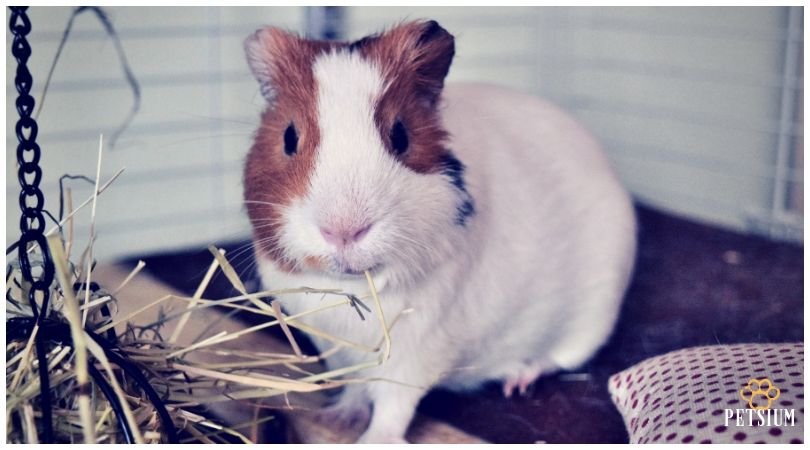
5 Ways to Increase the Life Span of Guinea Pigs

април 6, 2019 By liv parmel

On average, the life span of guinea pigs is between four and eight years. However, you have to keep in mind that, just like any living creature, its longevity greatly depends on how healthy and happy the cavy is. Showering it with proper attention and food will do wonders to keep your cavy alive for a long time.

Bad nutrition, heat stroke, infections, parasites and ring worm can also cause the premature death of your cavy. Although very rare, the longest recorded lifespan of a guinea pig is 15 years. However, as far as small house pets go, they have a relatively long life span.

What Are They?

Also known as the cavy, a guinea pig belongs to the rodent family and is a popular household pet. Weighing between 700 and 1200 grams and measuring up to 25 centimeters in length, guinea pigs are known to thrive in groups of two or more. Their gentle demeanor and small size make them the perfect addition to any home. Cavies originated from South America and, as far as research shows, are domesticated descendants of a similar species and hence cannot be found in the wild.

How to Increase Their Life Span of Guinea Pig

There are several things you can do to increase the average life span of guinea pig. From ensuring it does not get too stressed to feeding it the right balance of nutrients and minerals, there are many things you can do to ensure your cavy will live a long and happy life.
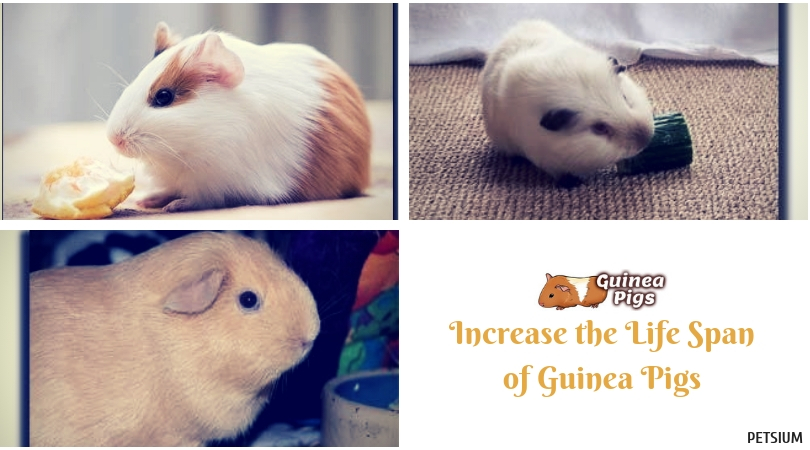
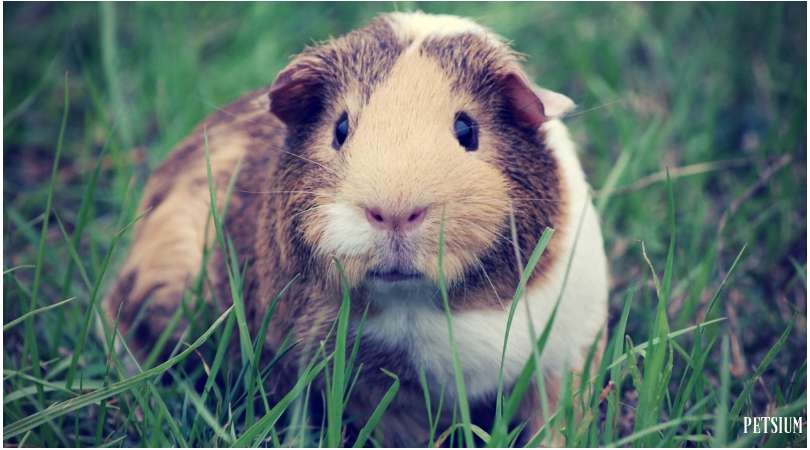
guinea pigs life span

Give It Sufficient Living Space

Animals need space to thrive and cavies are no different. You have to prepare and maintain a minimum of 10 square feet of living space for two cavies. Not only will sufficient space give them their own territory, it also gives them enough room to exercise. Exercise will prevent the animals from suffering obesity, gas buildup and excessive bloating. Some pet owners go the extra mile and offer entire rooms for them.

However, to simplify things, cages with solid wire mesh floors are a common choice and are perfectly acceptable. Be sure to line the cages with newspaper or wood shavings to prevent it from injuring itself. The more cavies you intend to raise, the larger the cage has to be. Enough space to roam about will discourage them from fighting and hurting each other.

Raise Them in Pairs

As social creatures, cavies do well living in groups of two or more. It is advisable to keep cavies of the same sex together. If you want to keep one of each, ensure at least one is spayed or neutered. A reason for this is because you do not want the female to become pregnant. Although breeding them is a common activity, you should keep in mind that at least one in five females will die from complications either during pregnancy, birth, or post-pregnancy. Living in pairs will also encourage exercise and play which helps with blood circulation and the prevention of obesity.

Practice Good Hygiene

If you do not regularly clean your guinea pig’s cage, you will be inviting infection and bacteria to flourish. Bumblefoot is a common infection contracted by these animals. Bumblefoot is an inflammatory reaction that affects the feet of rodents who live in cages that have not been cleaned for a significant amount of time. Because they are generally messy creatures, they tend to jump into their feces and urine, mixing them up with their bedding and food. Besides cleaning the cavy’s cage regularly, you can also opt to bathe your pet once every three months.

Depending on your pet, it will either love it or hate it. Either way, prepare a towel, guinea pig or rabbit shampoo, a hair dryer and a brush. Fill up a sink with warm water and gently hold your cavy under the gentle flow of running water. Avoid getting water onto its face or into its ears. After wetting its body, work the shampoo into its fur. Rinse it off once you have lathered its entire body. Wrap your cavy in the towel and absorb as much water as possible. Finish up by blow drying its fur and brushing it to work out the kinks and tangles. As an alternative, you can also use a washcloth and wipe it with warm water.
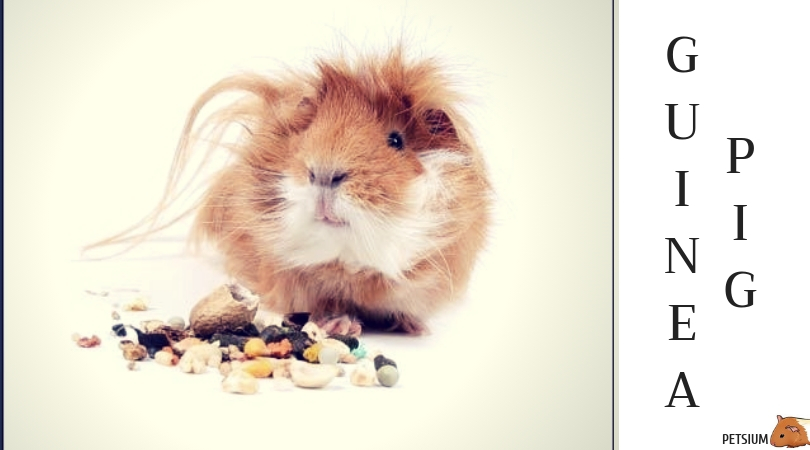
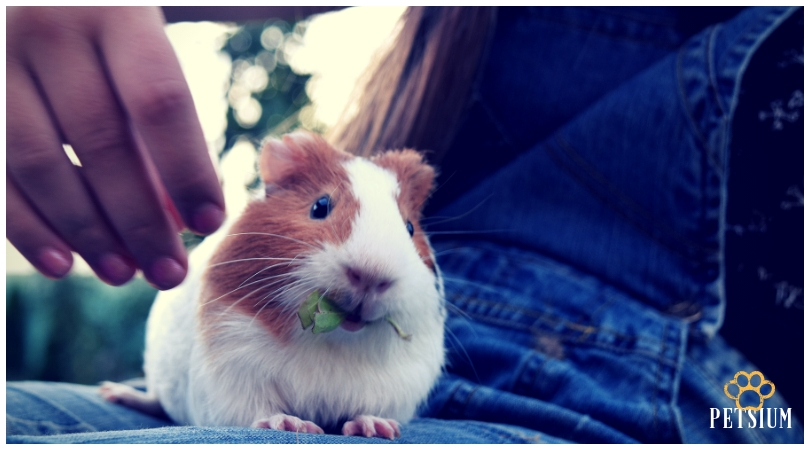
increase guinea pigs lifespan

Be Sure to Avoid Sudden Temperature Changes

Guinea pigs are rather delicate creatures and do not do well adjusting to drastic temperature changes. They are also prone to heat and sun strokes so do not place your pet’s cage anywhere with direct sunlight. Rather, opt for somewhere with indirect sunlight or a bright location that gets some morning sun. You should also ensure that your pet’s space is draft free as cavies are prone to catching respiratory infections.

Also, ensure the area the cage is placed has a stable, low level of humidity and heat. Placing the cage in the laundry room or bathroom is a bad idea. They should be housed indoors as research has proven that indoor cavies tend to live longer than those that are housed outdoors.

Offer It Proper Nutrition

As a pet owner, you are responsible for the health of those under your care. It should be your main goal to ensure your pet gets sufficient nutrients to live a long and healthy life. Offering your pet proper nutrition is one of the most important steps you can take to ensure its life span of guinea pig increases. Fresh water and quality food are the backbones of a guinea pig good diet.

Cavies should be fed a diet rich in calcium, phosphorus, magnesium, potassium and vitamins A, C, D and E. As cavies are herbivores, feed them quality pellets, grass hay and fresh fruits and vegetables. Some great examples are leafy greens, carrots, celery and apples. Feed them more vegetables than fruits as the latter contains high levels of sugar which, when not controlled, can prove to be very unhealthy to guinea pigs.
Категорије: Guinea Pig

Common Guinea Pig Breeds

март 22, 2019 By liv parmel

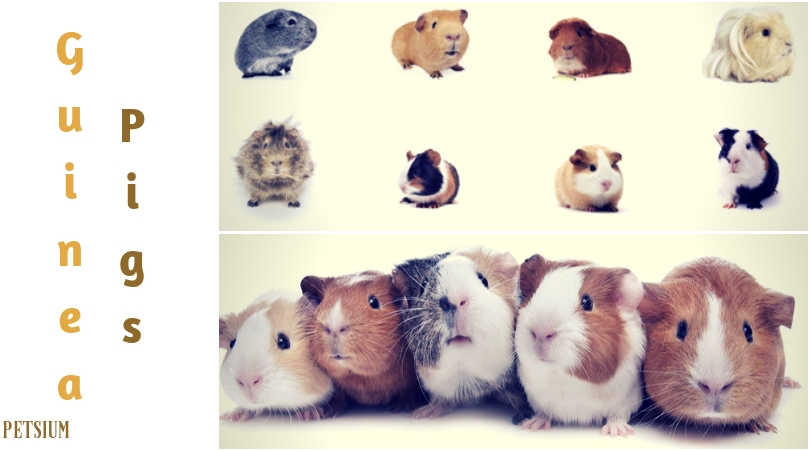
According to the American Cavy Breeders Association (ACBA) there are 13 standard guinea pig breeds.

Cavy is another name for this animal and refers to domesticated versions.

Cavies are greatly enjoyed as pets today in the United States.

The Cavy traces its ancestry back to South America, in particular to the Peruvian Andes region of the continent.

First having been domesticated by the Incas, they were grown for both their meat and their fur. In more recent times they have served as laboratory animals.

They still exist in the wild in many parts of South America. The wild animals tend not to be nearly as round or as plump as their domesticated cousins.

Wild guinea pigs captured by English and Dutch explorers were shipped back to Europe from the northeastern part of South America known as Guinea, hence the name, even though the animals were not native to Guinea and are not related to the pig family.

These little animals soon became great favorites in Europe, not for their meat of their fur, but as pets. They are members of the rodent family.

Most of them are quite small animals and vary in size from a large hamster or rat to a smaller breed of dog. On average, though, they weigh in at about 2 pounds.

Guinea Pig Breeds

The guinea pig comes from the order Rodentia, or rodent, from the Caviidae family and the genus Cavia.

They are one of two species of Cavia and have the scientific name Cavia porcellus, or C. porcellus.

Getting To Know The Various Types Of Guinea Pigs

In the listing below, the 13 ACBA standard guinea pigs are briefly described along with several breeds that are recognized by other societies.

One of them, the Skinny Pig, while not recognized as a unique breed by the ACBA has been included in the main listing because of its popularity.

All in all, 20 of the more well-known breeds are either described in some detail or briefly mentioned.

Abyssinian and Abyssinian Satin

The Abyssinian and the Abyssinian Satin are two of the 12 so-called standard breeds. The colors can vary but one of the more distinctive features is the manner in which the hair stands out.

The texture of the Abyssinian’s coat is quite a bit different than the others. The coat is short and rough and features a number of rosettes, or tufts of hair.

These rosettes are normally eight in number and are located in the vicinity of the animal’s shoulders. The Abyssinian can be bred with any other guinea pigs.

This is a very energetic animal that can be mischievous and is a known troublemaker at times, but it is, nevertheless, quite easy to train. Most owners refer to these little pets as an “Abby.”

Abyssinian and Abyssinian Satin Guinea Pig

It is uncertain why this animal is referred to as Abyssinian since they do not come from Ethiopia, the African country that was once known as Abyssinia. One of the more positive features is that it is easy to groom.

One of the negative features is that it is more prone to illness than the others. The primary difference between these two is that the coat on the Abyssinian Satin is much denser and shinier.

American and American Satin

These are by far the most common. When you visit someone who keeps them as pets, those pets will most likely be American guinea pigs. Because it is so common, they are seldom expensive.

They tend to be well-behaved and affectionate and are rarely known to bite, a trait shared with most. This is a short-haired animal and grooming is seldom a problem.

Like most of the other animals, it will go out of its way to groom itself and keep itself clean.

The American breed originated in the Andes Mountains of South America. It is believed to be the oldest of the Cavies. Its short coat is straight and smooth.

A variant, the American Satin, has a coat that is finer, denser, and extra shiny. The American Satin is recognized by the ACBA as being a separate breed.

American guinea pig coats can take on a variety of colors and patterns, although the American Satin coats are more often than not solid in color or have what is called a self-color.

It makes a fine pet for children.

It is generally recommended they be purchased in pairs or larger numbers as they are very social animals which, if purchased as solitary pets, will need plenty of attention from their owners.

If purchased in pairs, same-sex pairs are recommended unless the intent is to breed them.

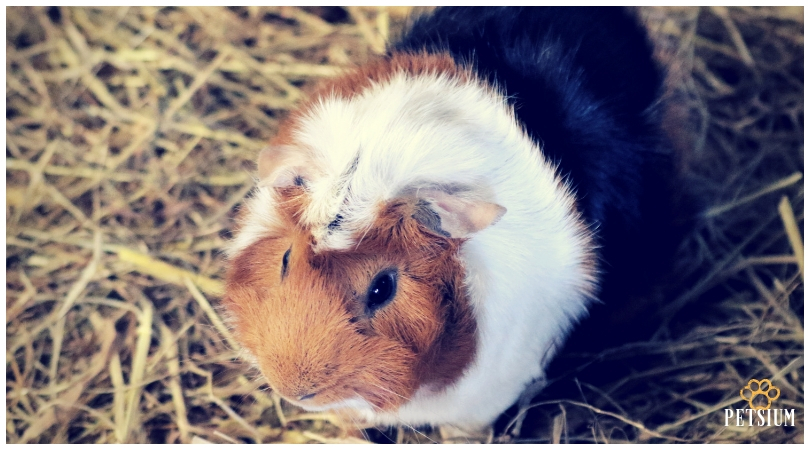
American guinea pigs

Coronet

A number of different breeds feature rosettes one or more places in their coats. This particular breed features a rosette at the top of its head. This distinctive whorl of fur, or coronet, is what gives this animal its name.

The Coronet is long-haired. It is also a fairly new breed that has proven to be both popular as a pet and as a show-stopper when exhibited.

Although lacking a muzzle, as is of course the case with all breeds, the long hair of the Coronet gives the animal a somewhat striking resemblance to the head of a small dog; a head with feet.

The Coronet comes from England where it was first bred in the mid 1970’s. A related breed appeared in the United States a few years later.

The latter was a cross between Silkies and the White Crested. Coronets can be found in Satin, meaning they will have a denser and shinier coat.

While some Satins are recognized as distinct breeds by the ACBA, such is not the case with the Coronet Satin. Coronets come in a wide variety of colors and patterns, all of which are acceptable for showing.

Because of their long hair, the Coronets require somewhat more maintenance than is the case with the short-haired breeds.

coronet guinea pig

Peruvian and Peruvian Satin

Because of its long hair, this animal resembles a very tiny dog in some ways; perhaps a Shih Tzu or a long-haired Yorkshire terrier. This Cavy has proven to be somewhat difficult to breed.

Consequently, a Peruvian guinea pig is not always the easiest type to find. It is not native to Peru but was first bred in Australia.

Although they are born with short hair, Peruvians become long-haired as they become adults. Their hair will begin to part at the top and spill down the sides of the head and body.

Being long-haired, it requires quite a bit of grooming to keep the coat from becoming matted. If several Peruvians are kept together, they will tend to groom one another.

Human intervention is still necessary, though, especially if the animals are going to appear for show. This animal probably requires the most grooming.

Their hair has to be trimmed back on occasion, normally about once a week or when it reaches the floor. If left untrimmed, a its hair can grow to a length of up to 20 inches.

Silkie and Silkie Satin

The Silkie is a long-hair guinea pig. Its most notable feature is the fact that the long hair that grows on the top if its head is swept back as if a hairdresser had arranged it that way.

This tends to give the Silkie a hairstyle that is not only extremely cute, but is somewhat similar to a hairdo you might expect on an elderly politician, actor or orchestra conductor.

The hair sweeps down in back of the ears. It also tends to cover the back of the animal as if it were a cloak. The hair is both soft and shiny, with the hair of the Silkie Satin being even shinier.

The Silkie is a cross between a black Cavy and a Peruvian Cavy. While it comes in a variety of colors, one of its patterns (black and white) bears a resemblance to the pattern of a Shetland sheepdog.

In the UK, the Silkie is called a Sheltie.

Teddy and Teddy Satin

The Teddy is noted for having a dense, wiry coat, which in some cases can be soft and fuzzy to the touch while in other cases it can be somewhat rough.

It can be as rough as a scouring pad according to some owners. A variant is the Satin Teddy, which has a coat that is considerably shinier than most Teddies.

One thing the members of these two breeds do have in common is they both tend to be unbelievably cute.

The Teddy is the result of a genetic mutation, but it has been recognized as a standard breed since the late 1970’s.

The Teddy comes in nearly all of the colors considered to be standard and comes in a variety of patterns as well.

Although not quite as common as the American guinea pig, the Teddies have, nevertheless, become one of the more common and popular breeds and are generally not too difficult to locate.

They also tend to cost about half as much as an American.

teddy guinea pig

Texel

When you first see a Texel, it might take you a moment to decide if it is extremely strange looking or extremely beautiful. Most people tend to agree with the latter description.

To refer to the Texel as a curly-haired animal really doesn’t do it justice. Describing a guinea pig as having long, curly hair would be closer to the mark.

The Texel is one of the friendliest and most affectionate and makes a wonderful pet. One caveat would be that, if you aren’t willing to take the time to keep it groomed, it is probably not the right pet for you or for small children.

On a relative scale, the Texel would have to be considered a high-maintenance Cavy. The face of the Texel fortunately features rather short hair. It comes in a variety of colors and patterns.

White Crested

To call the White Crested guinea pig unique-looking may not be saying much since the same could be said for most of the other ones. It does have a somewhat different and unique feature however.

These Cavies do not have, or at least for show purposes should not have, white coloration on any part of their body except on the top of the head.

The White Crested Cavy wears a white patch on the top of its head as if it were a crown. It can come in a variety of colors, but for show purposes these colors are usually limited to a few solids or patterns.

All competitors must, however, be wearing a white crown and only a white crown.

In addition, the Cavy must not have white anywhere else on its body. Needless to say, a White Crested guinea pig that is fit for competitive showing can sometimes be difficult to come by.

The coat of a White Crested will be similar to that of the American, which is to say it will be short and smooth. Satins exist but are not yet recognized as being distinctive breeds.

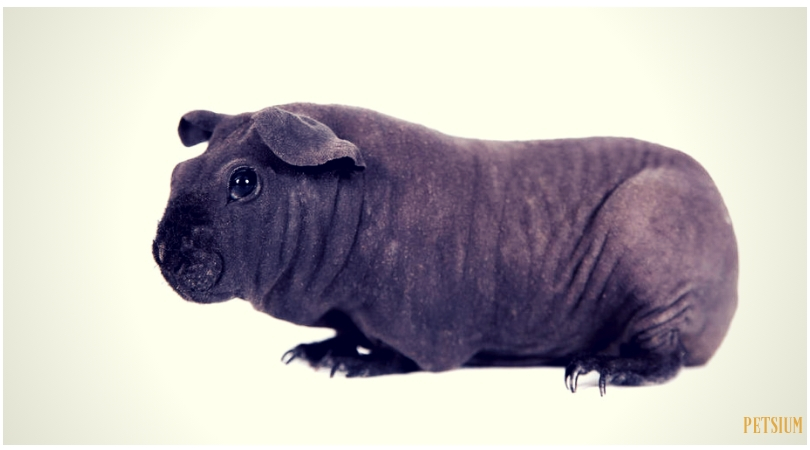
Hairless (Skinny Pig)

This hairless, or nearly hairless, guinea pig is a mixed breed dating back to the late 1970s when a short-haired breed was cross-bred with a hairless strain that had been bred in a laboratory.

The Hairless guinea pig, or Skinny Pig, is not completely hairless although it is born nearly so. As it matures, hair will develop on its head, particularly the muzzle, and on the legs and feet.

The Skinny Pig has been cross-bred with others resulting in a variety of hair patterns. In one instance, the breeding has been such that the hair covers the entire head and not just the muzzle.

These cross-breeds have come to be known as Werewolf Skinny Pigs.

hairless skinny guinea pig

In terms of temperament, the Skinny Pig is not much different than other animals. Its lack of body hair does require special attention, however, in that extra precautions need to be taken to make certain it is kept warm.

The lack of body hair suggests grooming is never a problem, which is basically true. It should not be bathed too often as doing so could disturb the production of protective oils it needs to keep its skin healthy.

It should not be exposed to sunlight as its skin can sunburn quite easily.

The soft, rubbery skin is for the most part smooth, although it often wrinkles around the neck. It is very affectionate and social.

It does best when in the company of other similar breeds. If kept as a solitary pet, it usually needs a lot of human attention to remain happy and healthy.

Others Guinea Pigs

While the 13 breeds recognized by the ACBA have been listed here, including the Satins, there are others in existence. Some go by more than one name and some names actually refer to colors rather than a unique breed.

The English guinea pig is popular in Europe but is actually another name often given to the American.

Several “Satin” varieties are not recognized as separate breeds by the ACBA but are recognized as such by other societies or organizations. These include the Coronet Satin, the White Crested Satin and the Texel Satin.

The Agouti is considered a separate breed in some quarters although the name essentially refers to the color of the animal. The same is true of the Himalaya, which is characterized by having a white body with a black nose and feet.

Amazing Pet Guinea Pig

The Baldwin is closely associated with the Skinny Pig breed. In some quarters, the Baldwin is thought to be the predominant breed of hairless guinea pigs, while in others it is hardly mentioned and the Skinny Pig appears to be predominant.

The Alpaca closely resembles the Peruvian, but is generally considered a separate, though extremely rare, breed. The same can be said for the Merino, which is quite similar to the Coronet but has curly hair.

The Lunkarya is a relatively new breed that comes from Scandinavia and has not yet gained worldwide acceptance as a distinct breed. It is called a “Lunk” for short.

With at least thirteen or more breeds to choose from and as many different colors to choose from, coupled with an even greater number of possible coat patterns, it shouldn’t be difficult to find a pet Cavy that could be accurately be described as being “unique” in its appearance.

Where there are similarities it is that nearly all of these little animals are affectionate, sociable and reasonably easy to care for.

Категорије: Guinea Pig

Feeding Your Pet Guinea Pig

фебруар 13, 2019 By liv parmel

After bringing home your new pet guinea pig, and making sure it is well housed, you will need to figure out how best to feed it. Guinea pigs are strict herbivores. There are many commercial guinea pig foods available in the form of pellets: make sure to choose one that provides all the nutrients your pet needs to thrive, including at least 16 per cent crude protein. If in doubt, consult with your veterinarian and read pet food labels carefully to make sure all required nutrients are included.

Make especially sure that the food has sufficient vitamin C since guinea pigs need more vitamin C in their diets than other herbivores. You can increase the vitamin C in your guinea pig’s diet by adding drops to its water. Again, make sure you follow the dosage directions carefully, and replace supplemented water daily, because vitamin C loses its potency quickly.

In addition to commercial food, guinea pigs need hay, especially Timothy hay. They also need fresh fruits and vegetables, such as cabbage, kale, oranges and melons. But be sure to remove the seeds from the oranges and melons and any other fruits, as they are toxic to guinea pigs.

guinea pig care

Caring for Your Pet Guinea Pig

Once your guinea pig is well housed and well fed, you have the basics covered. But like many other animals, guinea pigs are social beings. They need time with you, to play and to feel your loving attention, as do dogs and cats.

First, though, you must care for their physical needs. Their cage and bedding need to be cleaned daily. Remove the wood chips or bedding material and replace them with fresh materials every day. Additionally, the cage needs to be thoroughly cleaned once a week. This means removing the old bedding, thoroughly washing the pan, drying it (dampness can cause illness in guinea pigs, so drying is very important) and refilling it with fresh bedding material. Same goes for the water and food feeders: rinse them well every day, and then refill them with fresh food and water.

Now for the fun. Guinea pigs love an indoor playpen, with tunnels to explore and boxes to climb in and on. If you can make the environment safe, your pet would also like to explore outside of its cage or playpen, but only if you are there to supervise and ensure your pets safety.

Категорије: Guinea Pig Тагови: guinea pig feeding, guinea pigs need hay

Is Guinea Pig the Right Pet for Your Kids?

фебруар 11, 2019 By liv parmel

Many parents think that a guinea pig is the ideal first pet for their children. In some ways, they are right, but there are some important things to know about adopting a guinea pig aka piggy.

It has happened to many parents. Their children begging them for a pet can be a common occurrence. However, a dog or a cat can be simply out of the question. For those parents, who are looking for the perfect pet for their kids, they may want to consider guinea pigs as pets. There are many advantages to purchasing guinea pigs for kids, and following are some of these reasons.

Guinea Pigs for Kids

First of all, Cavies do not require a lot of space in one’s home. There are many guinea pig cages of different sizes available on the market today; however, the perfect size cage for these pets is about 7 square feet. Although many people choose to purchase a cage for their pet, some people choose to build one. There are many fantastic books that can show people how to make their own cages for their pets.

These small creatures enjoy spending most of their time in their own small living space; however, they do enjoy spending time outside of their cages, as well; and they especially love spending time outdoors. Many pet shops also sell exercise pens that owners can set up outdoors, to allow their small pets to enjoy being outside from time to time.

Another reason that guinea pig for kids is a great pet is that they do not cost a lot to take care of. They require the most basic of equipment including a proper cage, bedding, food and a few toys. Most people use cedar shavings as bedding, and it can be quite affordable when purchased in bulk. People can find toys and the proper food for guinea pig in any pet department or pet store. The veterinary bills for guinea pigs are also much cheaper than for many other pets.

guinea pig for kids

Owning a pet can also instill some responsibility in children. Children of about 10 years old and over are ideal ages to begin teaching them some sort of responsibility, such as taking care of their own pet. However, many parents either do not want dogs or cats in their homes, or they cannot have them in their homes. Thus, these lovable, little creatures make fantastic alternatives.

Cavies are extremely easy for kids to handle and take care of, with minimal adult supervision. These wonderful, small creatures are relatively quiet and extremely gentle. When parents give one of these gentle little creatures to their children, they do not have to worry about the pet harming their child. Parents always should, however, teach their children how to handle their furry friends properly so that they do not harm them.

Guinea pigs are also extremely fun for children to watch, while they scurry about playing with their toys and doing funny things. They, just like any other animals, each have their own unique personalities and it can be quite fun watching them develop. As the little creatures get more familiar with their young owners, many of them will try to play with them and will enjoy being held and petted.

Guinea Pigs for Kids Benefits

You may consider baby guinea pigs for your children as their first experience of having a pet. They are cute and cuddly and kids can grow attached to them.

Pets are a good thing for children to have at a young age. They can learn a lot about responsibility if you give them the pets to look after themselves. You should allow them to do all the chores associated with caring for the animal. Cleaning the cage is an important job. The child can be responsible for removing the old straw and putting in clean supplies.

The child may even want to be involved before the guinea pig has been purchased. They can be involved in selecting the cage and preparing it for its new occupant. There are many nifty cages on the market these days. They come in many colors and styles. Some are several stories high so that the guinea pigs can run up and down with ladders and wheels.

The child should also take care of all the guinea pig feeding. They should also get to know about the guinea pig medications. Many are on vitamins and also antibiotics. The child can learn how to administer these safely.

Having the pet should be a learning opportunity about the specific species and breed. You can give the child a project to learn as much about the origins and history of the animals. Ask them to find out why it is called a guinea pig. They should know which other animals it is related to and how it used to live in the wild. They should also know how the animals are reared in captivity and what they are used for in various parts of the world.

There is so much fun to be had from playing with the new pet. They can be a bit shy but they do soon get used to a degree of human contact and can be very friendly. A child should enjoy playing with guinea pigs in the garden. However, they should be careful the guinea pig does not get lost in the over growth or run away.

One of the most important lessons children learn from having guinea pigs is about the life cycle. They can observe first hand how the animal matures from babyhood to adolescence and even adulthood. If you have more than one guinea pigs they could be given the opportunity to reproduce so that the child can learn about the creation of next generations. Eventually the guinea pig will age and die and this is the final lesson the child needs to learn.

Guinea pigs pets for kids

Guinea Pig Needs Care and Attention

Its cage, water and feeding dish need daily cleaning and weekly scouring to keep piggy nourished and healthy. While it doesn’t need a lot of equipment, a guinea pig does need ample room to roam safely, such as a big enough cage, and benefits from time outside its cage if in a protected environment.

Guinea pigs also require veterinary care to ensure their well-being. Bi-annual visits are recommended.

Guinea pigs need to be handled gently, which can be a tall order for most children. Because guinea pigs are susceptible to stress, which they show with different kinds of body language, they need to be picked up and held with care. Make sure that piggy is well-supported under its hindquarters while picking it up; then, hold it close to your chest so that it feels safe and secure.

Housing Your Pet Guinea Pig

Guinea pigs can be wonderful pets. Like all animals, they need to have a home, or nest, that suits their nature. For guinea pigs, that means a cage that is at least 18 inches wide and 25 inches deep, and more than a foot in height. Good ventilation is essential, so wire cages with a tray in the bottom work well. The larger the cage, the more room your pet has to move about; and the more active your pet is, the healthier and happier it will be.

Once you have selected the Guinea Pig cage, you will need to choose bedding material. Aspen wood shavings, or Carefresh shavings, work well; do not use pine or cedar shavings, since the oils of those woods can cause respiratory problems in guinea pigs.

Your pet guinea pig will also need food and water bowls in its cage. Unlike some caged pets, guinea pets do not benefit from having a wheel, or multiple „stories,“ or levels. Guinea pigs do need floor space to run around, rather than wheels or ladders.

Guinea pigs do need to chew, since their teeth are growing. Providing appropriate chew toys for them to work on in their cages is important to their well-being.

guinea pig for kids

The Health of Your Pet Guinea Pig

A guinea pig can live as long as 12 years, with most averaging about six to eight years. Knowing the potential health issues of your pet and how to prevent them will go a long way towards prolonging its health and well-being.

Guinea pigs should visit a veterinarian twice a year for examinations. Guinea Pig grooming is not that hard. Your vet can teach you how to trim its nails, something that needs to be done every couple of weeks. Since guinea pigs’ teeth are constantly growing, they too may need regular trimming.

Guinea pigs are most susceptible to colds that can develop in response to dampness and expose to temperature fluctuations. Colds can quickly turn into pneumonia in guinea pigs, so seek treatment for your pet the moment you notice signs of its ailing. As with all pets, if your guinea pig stops eating, take it to the vet immediately.

On a daily basis, examine your pet for lumps and bumps, which can indicate injuries or insect bites. Check under its chin, where guinea pigs are prone to lymph node abscesses. And, of course, if you see diarrhea, constipation, weight loss or gain, limping, discharge from eyes, ears or nose, seek help immediately.

In conclusion, for those individuals, who may be looking for the ideal pet for their child, they may want to consider a guinea pig as pets. There are many benefits to choosing them as pets for kids.

Категорије: Guinea Pig Тагови: Guinea Pig

  • « Go to Previous Page
  • Страница 1
  • Страница 2
  • Страница 3

Primary Sidebar

Small Fish Tank

Glass Fish Tank

Категорије

  • Animals
  • Birds
  • Cats
  • Dogs
  • Fish
  • Goldfish
  • Guinea Pig
  • Hamster
  • Horses
  • Name Inspiration
  • Parrot Pet
  • Rabbits
  • Reptile Names

Скорашњи чланци

  • Hoppy Naming! Adorable and Funny Easter-Inspired Guinea Pig Names
  • Purr-fectly Adorable: Valentine’s Day Cat Names for Your Feline Friend
  • Astronomy Inspired Cat Names
  • James Bond Cat Names: Purr-fectly Suave Options for Your Feline 007
  • 170 Authentic Greek Names For Cats
  • Hippie Cat Names
  • Ladybug Facts For Kids
  • Unique White Horse Names with Meanings: From Majestic to Mystical
  • Disney Turtle Names: 160+ Names For Turtles From Disney Movies
  • 100+ Names For Black Horses With Meanings

Guinea Pig Cage

Large cage for your guinea pig

Ознаке

Best family parrots Best Gifts for Cat Lovers Best Hamster Toys Best parrot for beginners Best parrot for kids Best Small Dogs For Kids Boy Cat Names Can Guinea Pigs Eat Celery Cat Names Cat names for pairs Dog Behavior Dog Throwing up Dog Vomiting eat Female Bengal Cat Names Female guinea pig names Funny goldfish names Goldfish aquarium Goldfish names Gold Fish Names Goldfish tank Goldfish varieties Guinea Pig Guinea pig names Guinea pigs Male guinea pig names Manx Cat Names Names for Goldfish Names for guinea pigs Names for pink fish persian cat personality Siamese cats Small curly haired dogs Small dog breeds Sounds Twin cat names Types of goldfish Undigested food Unique guinea pig names What can guinea pigs eat Winter White Hamster Care Winter White Hamster Colors Winter White Hamster Diet Winter White Hamster Facts Winter White Hamster Life Span

Disclaimer:

This website „PETSIUM“ is not liable for any outcome or damage resulting from information obtained from these articles.

The articles provided here are for information and entertainment purposes only. The decision to use, or not to use, any of this information is the sole responsibility of the reader.

Any medical related content in any articles is not intended as diagnosis, treatment or prescription. It is not intended to be a medical advice and is not a substitute for professional medical advice. Please consult with a licensed health care practitioner if you are dealing with a serious medical problem.

Hamster Cage

Hamster Cage

Footer

Petsium – Veštačka Inteligencija

Dobrodošli na Petsium, vašeg novog saputnika za brzo, precizno i potpuno besplatno AI iskustvo. Ovde možete da postavite bilo koje pitanje – od pisanja eseja, preko tehničkih izazova u kodiranju, do saveta za svakodnevne zadatke – i dobićete odgovor prilagođen upravo vama. Sve to bez registracije, bez komplikovanih menija i bez skrivenih troškova.


© 2026 Petsium · Privacy Policy