• Skip to primary navigation
  • Skip to main content
  • Skip to primary sidebar
  • Skip to footer

Petsium - Veštačka Inteligencija | AI

Vestacka Inteligencija Aplikacija i Chat

  • Vestacka Inteligencija
  • Kontakt
  • Uslovi Koriscenja

Guinea Pig

Guinea Pig Grooming

децембар 8, 2019 By liv parmel

Sure, Guinea Pigs are easier to take care of as compared to bigger pets. Especially when it comes to guinea pig grooming. But this doesn’t mean that they are completely self-sufficient animals! In fact, I believe that Guinea Pigs should come with a tag that say ‘Don’t buy me if you won’t take good care of me’. Guinea Pigs aren’t toys. Neither are they playthings for young children.

Their health and appearance must be nourish to regularly in order that they will have long and happy lives. Moreover, they must be groomed the right way. Making mistakes in this aspect is crucial to their quality of life, as you will see in this article.

guinea pig grooming

Easy Guide on How to Correctly Groom your Guinea Pig

Most owners of Cavies or Guinea Pigs just let them freely run around their enclosures. They take care of them by providing food, water and cleaning their Guinea Pig cage. But while this may work for other animals. This is not ideal for a Cavy.

Without proper grooming, a Cavy could hurt itself. A good owner realizes that and takes steps to make sure that their pet is pretty and healthy.

Guinea Pig Nails

First, always make sure that you give your guinea pig manicures and pedicures. Even if they are „ladies“, trust me, they will not benefit from having long nails. It will only give them a lot of discomfort. That is why you will commonly see cages filled with objects having rough surfaces on which they can scratch their nails with. They act like nail files, keeping the size of their nails at a manageable length.

They are very vulnerable to injury and bleeding because they are located near the nail bed. Carefully trim your Guinea Pigs nails above these vessels, especially if they have opaque nails.

Even if you are extremely careful, you might be unable to avoid the bloodbath if your pet has black nails. So keep iodine handy. Get someone to assist you as well. You can take turns with someone holding your pet still while the other cuts the nails. You can also place your pet on top of a tennis racket so that his movements will be suppressed by the strings.

Nails are another problem area. Like the teeth, they grow constantly. They need to be cut or trimmed as well. Animals usually scratch objects to trim their nails but, depending on the construction, your Guinea Pig hutch may not have anything to scratch.

If the nails are too long, it could cause injury and cuts to both you and your pet. Learn how to clip your pets nails. You can have your veterinarian show you how it is done.

Guinea Pig Teeth

Guinea Pigs don’t need toothbrushes or toothpaste. But their teeth have to be controlled in size, or else they will not be able to shut their mouths properly. Look out for cracks, chips and missing teeth in his mouth as well, and send him to the vet right away should you see anything wrong.

One of the more problematic areas is their teeth. For one thing, it grows constantly. A human’s teeth will grow only to a certain extent. This is not the same with the Cavy.  Their teeth will continue growing until the day they die. If their teeth aren’t properly groomed, they will find it increasingly hard to eat. It could become so bad that they stop eating altogether.

Guinea Pig Gnawing

Thankfully, nature has given the Cavy a behavior to keep their teeth under control: gnawing as you can read from our Guinea pig body language article. Gnawing will whittle down the ever growing teeth. Don’t just feed your guinea pig pellets.

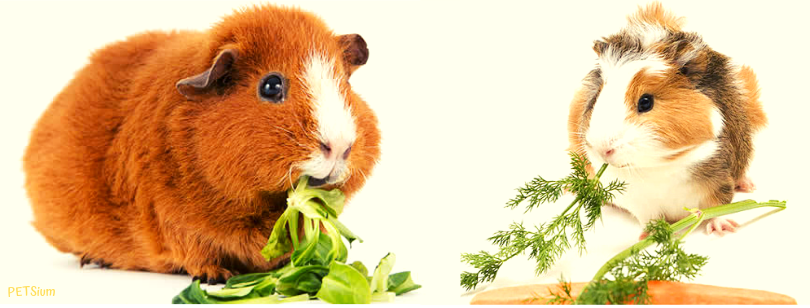
Give him some hard vegetables. Carrots are nice and hard. Non-vegetables can be used too, like twigs or brushwood.

If your Cavy’s teeth are already too long, bring him to the vet. He will trim its teeth for you. Doing that yourself is possible, but not recommended.

guinea pig grooming

Guinea Pig Hair

Another problematic part of a Cavy’s body is their hair. Whenever two Guinea Pigs meet, they will engage in social hair grooming. It’s a practice that many other animals have. This is necessary for their health.

A single Cavy will try to groom his own hair but there are simply some places, which he can’t reach. It is a good idea to buy a small brush for your pet in order to groom him yourself.

Brush his hair once a week, if your Guinea Pig has short hair. Long-haired Cavies should be groomed everyday. This will bond the two of you even more.

It will also relieve your Cavy. Their hair won’t turn into a tangled, greasy mess. If your pet’s hair becomes too long then you will have to cut it. You don’t need to cut very short, just short enough so it won’t disturb the Guinea Pig’s movement.

While brushing your Cavy’s hair, this is also a good time to check for pests, which is another reason for social grooming. Lice and bedbugs are very troublesome for humans. Imagine how troublesome they are to a small creature like your pet.

These parasites can be transmitted through several ways, for instance other pets or a dirty Guinea Pig hutch. If your pet has these vermin, you can buy a shampoo that kills the pests.

Brush your Guinea Pig’s mane gently with a natural-bristled brush. Only use metal brushes for long-haired Guinea Pigs.

Guinea Pig Bathing

Guinea pigs don’t like to be bathed, hence one of the most popular boy guinea pig names is Trash. They become highly stressed when you do decide to dunk them in water, and this can lower their immune system. Many guinea pigs go their entire lives without bathing, and that’s just fine for them.

Unless you’ve been instructed by the vet, or your guinea pig got into something dirty and smelly, you do not have to bathe your guinea pig. If you do have to bathe him, choose a shampoo that’s gentle on his skin – either something made for kittens (not cats) or a baby shampoo. Only use a medicated shampoo if it’s recommended by a vet.

Keep your Guinea Pig groomed and he will be happy and healthy.
Категорије: Guinea Pig

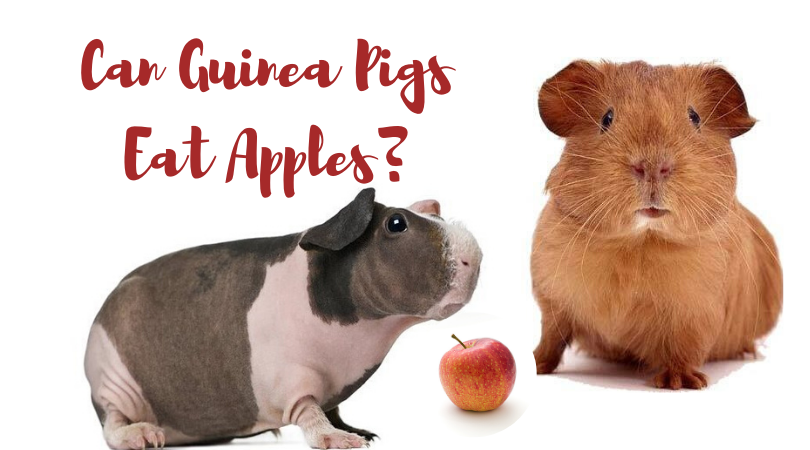
Can Guinea Pigs Eat Apples – Are apples safe for guinea pigs

октобар 25, 2019 By Petsium

When you hear the word „apple“ your mind probably recalls that popular saying about apples and doctors. The health benefits of this sweet, round fruit are well known, but it’s worth noting that they generally apply only for humans.

Can Guinea Pigs Eat Apples?

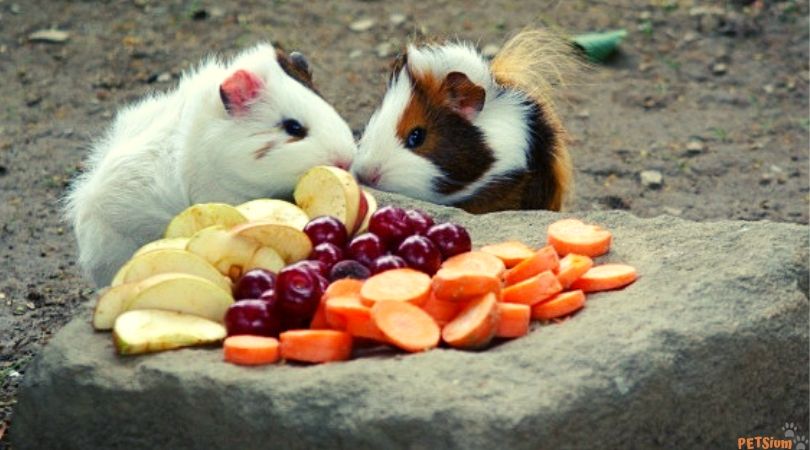
When it comes to animals, particularly the little pets like guinea pigs, apples can be both good and bad, depending on how you serve them. More on that later, for now, let’s answer the pertinent question that brought you to this page: can guinea pigs eat apples? And the short answer is yes, guinea pigs can eat apples. However, there are things you need to consider before giving apples to your guinea pig.

can guinea pigs eat apples

First Test Whether Your Guinea Pig Likes Apples

Just like humans, guinea pigs have varying tastes and preferences in fruits, and while majority of them will eat (and even love) apple fruit, there are some that won’t eat apples no matter what.

So, the first thing you need to do before anything else, is to establish whether your pet can eat apples.

While spending time with your guinea fowl, cut a small piece of apple and handfeed it to them or put it in their bowl.

Closely observe how they take the apple. If they quickly munch it down, you know what that means.

Similarly, if they nibble a bit of the apple, then run away carrying the rest of the piece, know that they love the fruit.

On the other hand, if they nibble a bit of the apple, then turn away, or leave the other piece, it’s a sign that you shouldn’t even bother feeding them more apples.

Benefits of Apples to Guinea Pigs

Apples contain varying amounts of Vitamin C, antioxidants, and fibers.

Vitamin C helps keep your guinea pig healthy by eliminating harmful elements in the blood called free radicals. On the other hand, fibers help in digestion and maintaining a healthy body weight.

Apples also contain calcium, which promotes strong bone development and proper functioning of the muscles and nerves. Phosphorus, another mineral found in apples, aids in the repair and maintenance of body tissue and cells, as well as in the proper functioning of the kidneys.

Should Apples Be a Part of a Guinea Pig’s Diet?

As much as guinea pigs are herbivores, fruits like apple shouldn’t be a regular part of their diet, even if they happen to love them.

The recommended guinea pig’s diet should be a mixture of Timothy hay and pellets. Vegetables, and fruits should be taken as snacks, or treats, and only given occasionally.

Can Guinea Pigs Eat Apples Every Day?

Ideally, you should introduce your pet to apples by including them in their diet once a week, for the first couple of weeks.

That way, you will be better placed to observe, and detect any changes in their feces and body that may be caused by apples.

Can Guinea Pigs Eat Green Apples?

As mentioned before, not all types of apples are good for guinea pigs. Green apples are the most acidic and thus can cause some issues. Avoid acids in your guinea pig diet.

You should feed them with sweater, more common apples.

Can Guinea Pigs Eat Apple Skin?

After you give the first apple to your guinea pig, you will realize that guinea pigs like to eat apple skin the most. Actually they love to play with apple skin while eating apples.

And apple skin has healthy fibers as well which are good for guinea pigs.

Can Guinea Pigs Eat Apple Seeds?

Apple seeds are the only part of the apple that you should avoid. Apple seeds are dangerous for guinea pigs as they contain cyanide and can be harmful.

It is normal if your guinea pig eats one or two seeds while eating the apple, but do your best to remove the seeds first before feeding your guinea pigs.

What If Guinea Pigs Eat Too Much Apples?

In case you weren’t aware, too many apples can cause stomach upsets, and diarrhea in guinea pigs. Mouth sores are also common occurrences as apples contain varying levels of acidity that may prove too much for smaller animals like guinea pigs to handle.

Can Guinea Pigs Have Apples

Related: Can Guinea Pigs Eat Grapes?

Dealing With Diarrhea From Apple Consumption

As mentioned earlier, apples can cause diarrhea in guinea pigs due to their high fiber content. And since the little piggies have relatively weaker immune systems, the diarrhea can even lead to death, or cause serious complications.

If, after feeding your guinea pig with some apples, you notice that their feces are „wetter“ or that they have diarrhea, stop feeding them apples (and any other fruits) with immediate effect. Secondly, feed them increased amounts of Timothy hay, which is known to promote healthy digestion and helps to control diarrhea. Thirdly, and most importantly, schedule a visit to your vet for further advice and directions.

Essential Tips for Feeding Apples to Your Guinea Pig

  • Before cutting up an apple and serving it to your guinea pig, ensure that it’s adequately ripe and sweet-tasting. No one loves sour fruits, not even animals.
  • Avoid apple seeds as much as you can, as they can choke your pet, and contain a toxic compound called cyanide.
  • While apple skin is healthy and okay for guinea pigs to consume, serve it in moderation as it contains higher amounts of fiber, which can cause indigestion and diarrhea. Further, clean the skins with clean running water before serving them to your pet.

Категорије: Guinea Pig Тагови: Apples, eat, Guinea pigs

Importance of Exercise for Guinea Pigs

јул 23, 2019 By liv parmel

To raise healthy guinea pigs, diet, hygiene, love and exercise all have their part to play. Exercise for guinea pigs is something that is easily overlooked because guinea pigs are small and don’t seem to need as much exercise as other pets like dogs for instance.

Many families who have guinea pigs live in small apartments, so it can be a challenge to find a suitable space where we can let our pets roam freely. If your goal is to encourage your guinea pigs to exercise more regularly, here are some ideas that you can implement.

do guinea pigs need a run

How do You Exercise a Guinea Pig?

House your guinea pigs in a bigger cage. The more space they have to run around, the more movement you can expect them to make. A roomy cage is ideal because it gives them the space they need to get some exercise.

Schedule floor time exercise

Regularly schedule floor time where you take them out of their cages to roam around freely. If you have a backyard, you can create outdoor guinea pig enclosures and let your guinea pig run around inside it. If you live in an apartment, choose a part of the house that is easy to clean and safe (with no exposed electricity cables), such as the laundry room or the bathroom, and let your guinea pig explore freely.

To help make them feel secure in the larger space, remember to put a place where they can hide – a paper bag, or a small cardboard box that’s turned upside down, with escape holes on the sides will do.

Encourage exploration and movement by placing food and healthy treats or toys

Your guinea pig will love the treasure hunt, and they will get a good amount of exercise from running around.

Another way to encourage movement is by using appropriate and safe toys. Many objects around the house can be recycled to make suitable toys. For example, old socks, small stuffed toys, toilet paper spools, small balls like tennis balls and golf balls, cardboard boxes of various shapes and sizes, and even just crumpled pieces of paper. Put the in their cages, or scatter them around during floor time.

Play with your guinea pigs

We often find that the more involved an owner is, the happier and healthier pets are. This is because the more time you spend with your pets, the more you will realize the things that they need, and the bigger the likelihood that these needs will be met.

When you play with your guinea pigs regularly, then that’s one way of encouraging movement and social interaction. It’s exercise that’s fun for both you and your pets.

Guinea Pig Run Help Keep Your Pet Happy and Fit

Guinea pigs are so much fun. You probably want your guinea pig, which are also known as cavies, to be happy so are looking at guinea pig runs. Guinea pig runs aren’t cheap and if you buy them at your local pet store then you can expect to pay a lot, sometimes as much as $150 depending on where you live and where you are shopping.

Before you make the purchase you should do a little homework so you can choose the best run for your guinea pig. Getting the right sized run the first time is easy when you do a little research.

One of the big mistakes many people make when buying their first run is to buy it too small. Even though guinea pigs aren’t very pig they do need an area to run around.

How much space do Guinea Pigs actually need?

There is some debate here, the old advice was 4 square feet and now guinea pig experts are recommending as much as 8 square feet per guinea pig or cavy.

You are probably wondering why such a small animal needs so much space? Guineas love hiding, privacy, and scurrying about, they also have a physical need of exercise. An unexercised cavy will quickly become an overweight cavy.

Overweight cavies may have the same problems as overweight people, diabetes, breathing difficulties, heart issues, etc. It’s best to ensure your guineas have plenty of room to run around and hide so they can remain fit and healthy.
Since guinea pigs are social animals many people choose to keep more than one guinea at a time. Experts recommend you add an additional 2.5 to 3 square feet of additional space per guinea. So if you have 2 guinea pigs you will need 8 square feet plus and additional 2.5 square feet for a total of 10.5 square feet for their run.

As you can see buying the biggest run that your space and budget will allow is the way to go.

Where can you get a big, inexpensive run to keep your guinea pigs exercising and safe?

This is the big question most guinea pig owners ask themselves. One of the best ways to find a run is to get the word out to family and friends that you are looking for a very large guinea pig run at an low or free price. In some cases a chicken tractor or a rabbit hutches will also work, depending on what it’s made out of, the size of the wire and the design features.

Your family and friends can keep an eye out for you and you never know, they may actually know someone who is trying to get rid of a great run. Sometimes you can really luck out and find a hutch for sale at a garage sale or maybe even your local flea market. Buying a used run is a good way to safe money, just make sure you give the run a good cleaning with a guinea pig safe disinfectant.

Exercise for guinea pigs

Coroplast Alternative for the Guinea Pig Cage

One of the more inexpensive and easy to add on runs available is called Coroplast. These are made out of plastic and are easy to clean. They will work both indoors and outside in the shade. These cages are a good starting point and make good exercise for guinea pigs  and are definitely better than having nothing.

One thing I don’t particularly like about some of these habitats is the walls are low and there isn’t a roof so a large dog or any cat could easily come and get inside the open topped run. These open access runs don’t provide enough safety from predators.

On the other hand if your guinea is going to remain indoors and you don’t have other pets this could be the perfect solution for your guinea pig.

Another inexpensive option is to purchase a small animal play pen. These small animal play pens are easy to set up and take down and can be used both indoors and outdoors with some supervision. The walls of the small play pen are tall but again you should supervise.

Since guineas should have exercise daily you may want to consider a large two story guinea pig house with the house on top and run underneath in addition to an small animal play pen. Your cavy will be able to run around both in the cage and in the play pen. Your cavy will be happier and healthier and you won’t have to spend a fortune!

Guinea Pig Toys

You may believe that your guinea pig has toys like an ordinary type of animal just like how the dogs have so many toys. However, it is good to outline that there aren’t many variations of guinea pig toys on the market. There are very little items out there that are made specifically for guinea pigs. Many people are often shocked at the small amount of toys that are made for them.

Excellent Alternative to the Guinea Pig Toys

Toy Balls

Tennis balls and ping pong balls are extremely popular among small guinea pigs. They usually like to move them around in their cages if you give them the space. Try to allow them to move around with these balls since it gives them more exercise than usual. It allows them to relax and get their bodies moving. Usually if they don’t move, they will end up with problems later on. Try to also give them only one ball so they don’t overcome the entire space.

Old Socks

These may not seem to be good guinea pig toys, but they make great cushions for guinea pigs. Just give them a nice sock that you used to use, and then stuff them with a bit of bedding if you want. It can really be a nice pillow for them and can be nice for them to drag around the cage.

Containers

Their cages are always good, but they need another place to enjoy inside; sort of like how a person wants a couch or a sofa in their home. Give them a nice old bowl or cheese container, and then allow them to lay down in it. This can give your guinea pig a nice place to relax and enjoy themselves when they are tired.

Stuffed Animals

Giving them nice stuffed animals can help keep them company. Usually they need a bit more stuffed company than human company. Just give them one or two and see what happens. If they happen to enjoy it, try giving them another one if you want. Beanie babies make great gifts for small guinea pigs, and they can replace all kinds of toys. You can expect them to drag these around often.

Each of the toys above are extremely popular among guinea pigs. Again, there are very few items and toys out there that were specifically made for them. So, it is all about creativity and finding an item that suits them best. Try out different items that you can give to them and see what happens.

There are all kinds of these items out there, and you will definitely like having your guinea pig having some fun despite your not being there. Each item above should be used with caution, so be sure to take care of your guinea pigs constantly and to always check up on them daily.

RECOMMENDED PRODUCT

guinea pig playpen

Tespo DIY Playpen for Guinea Pigs

  • Tespo Playpen helps you create a world for your pets by your own hands.
  • DIY expandable feature allows you to extend your playpen to bigger space or multiple layers.
  • Ventilated design makes it convenient to interact with your pets from any angle, at any time.
  • Ample area leaves your pet enough space for exercising a happier, healthier life.
Buy on Amazon

Категорије: Guinea Pig

What to Look for when Adopting or Buying Guinea Pigs

јул 3, 2019 By liv parmel

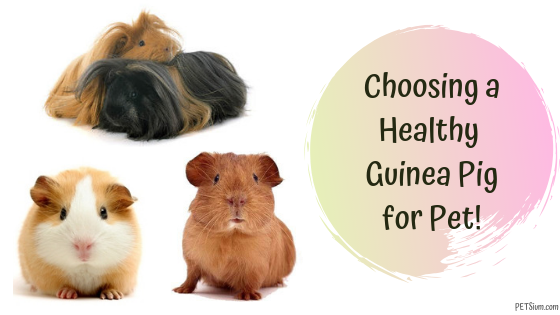
When looking at different guinea pig breeds to buy or you are seeking guinea pigs for adoption, then you must ideally choose the healthy ones to take home with you. If you already own a cage full of cavies and you notice one or more of these signs on any of them, then have your pets treated right away.

Cavies are prone to many diseases. An untreated infection can kill them easily. It is inhumane to simply let them to perish because of lack of foreknowledge on how to properly take care of them.

choosing a healthy guinea pig for pet

Important Indicators of a Healthy Guinea Pig

Look for these signs. They will guide you on how to tell the overall health condition of a cavy.

  • Guinea pigs are always active, curious, and very inquisitive. It is in their nature to act that way. Healthy guinea pigs love to move around. So, when you see a lethargic cavy, then that means something is wrong. The pet animal is sick.
  • The fur coat of a disease-free cavy is well-groomed. The coat is fluffy and smooth. The presence of bald or red skin patches indicates skin diseases.
  • A soiled area around the rear end of a cavy indicates problems with diarrhea.
  • A healthy cavy has no lumps anywhere on its body.
  • A normal guinea pig is neither fat nor skinny.
  • The eyes, ears, and nose of a guinea pig must be free from any discharge. Wetness or crusting on those areas may point to a parasitic infestation or a bacterial infection.
  • Look at the teeth. They must not be overgrown at all. The cavy’s teeth must be well-aligned as well.
  • Pay attention to the chin. The chin area must not contain a wet or a matted fur.
  • Observe how the guinea pig breathes. It must breathe quietly. Wheezing, labored breathing, and gurgling noises are all signs of respiratory illnesses.

If you buy cavies, observe its surroundings in the pet shop. Cavies that are kept in clean cages where they have access to fresh food and water thrive well once you bring them home. Guinea pigs raised in overcrowded environments have higher risks of exposure to diseases. Moreover, overcrowding instills psychological stress.

When you about to get a guinea pig, here are two things to keep in mind:

Get pet animals from the shelter first. There are so many of these little animals out there. They need a second chance at ending up in a loving home that only you can provide.

Separate male and female guinea pigs. They mate uncontrollably. And for female guinea pigs aged four weeks old, an instance of pregnancy can be fatal. And who can manage a small cage filled with litters? If you can’t tell the gender, have the pet seller do it for you.

Considerations When Buying A Guinea Pig

The guinea pig continues to be a popular and ideal pet for many families. Guinea pigs are good natured and easy to care for. They’re not expensive to keep, and they respond well to being handled and cared for. Families with young children will find guinea pigs to be gentle and endearing companions in the home.

If you are thinking about buying a guinea pig but you are not sure how to go about it, know that there are some things you need to consider. Here are a few of them:

Who will be responsible for the Guinea Pig?

Before heading off to purchase a guinea pig, it helps to identify who will be ultimately responsible for it. Figure out who will do the feeding, cleaning and spending for the guinea pig. Often, when no one person is assigned, no one ends up doing the things that need to be done (or you end up with the extra chore).

Guinea pig pairs and groups

Guinea pigs are social animals. It is always advisable to keep them in pairs or in groups. Just remember that the more guinea pigs you have, the bigger space you need to allot to them. Aggression is a trait that surfaces when guinea pigs are subjected to scarce space and resources. Also guinea pigs can multiply quite rapidly. So if you are not planning on caring for a family, choose to keep guinea pigs of the same gender.

Guinea pig breeds

There are several breeds of guinea pigs that you will find in pet stores. They differ in color and in the length of their fur. Researching before you buy will prepare you for any special care that each breed may require.

Temperament

The temperament of guinea pigs are based more on personality than on gender. A guinea pig that is used to being handled by owners from a young age will not mind being picked up and will not want to be scratch or bite when handled. When buying a mature guinea pig, check to make sure it has been sufficiently domesticated.

Guinea pig needs

When buying a guinea pig, don’t forget to also purchase the things that they will need. This includes an enclosure of sufficient size, such as a guinea pig hutch or a cage, beddings, food, grooming needs and even a few toys.

Other pets in the house

When introducing guinea pigs to a household that already have existing pets, it is important to introduce them properly to ensure that they will get along well.

can you introduce new guinea pigs to old ones

What to Do When Introducing New Guinea Pigs to Old

When introducing new guinea pigs to old guinea pigs in your home, it is important to observe certain rituals to make sure the new addition to your family is well received by your existing guinea pig or piggies. Before you go and select a new member to your cavy family, it is interesting how age and gender can affect how easily it will be for the old cavy to accept the new one.

Here are some things to consider:

  • An adult male guinea pig is averse to sharing his space with another adult male guinea pig. The old one will treat the new one as a threat and reject him.
  • A baby male guinea pig can be made to get along with an adult male guinea pig.
  • It is fairly easy to get a baby male guinea pig to get along with a female guinea pig.
  • Female adult guinea pigs can be made to get along with another adult female guinea pig.
  • If your adult male guinea pig is neutered, it will be easier to make him get along with a new female guinea pig
  • When you plan to have a group of guinea pigs, realize that a male guinea pig will be able to get along with a herd of females. But when you have two adult males and even just a single female guinea pig, they will constantly fight.
  • Unless you want to breed guinea pigs, neuter your male guinea pig.

Now, before allowing any interaction between the new guinea pig and the resident cavy, quarantine the new arrival for 2 to 3 weeks. Put the new cavy in a cage and situate it in a different room in the house. When handling the new cavy, be sure to thoroughly wash your hands right after. Wearing an apron also helps so you don’t need to keep on changing your shirt after handling the new pet.

The reason for the enforced quarantine is to make sure your new cavy does not carry any parasites or infection that can easily spread to the other guinea pig or piggies in your home. It may seem like a long while to wait, but you need to find the patience for it. Unless the new cavy has a clean bill of health, you should wait before introducing her to her new family.

When introducing the new guinea pigs to old, select a neutral location. Make sure the neutral location is clean. If it has any guinea pig toys or stuff, be sure to wash these well to remove any trace of scent.

Before letting the new guinea pigs meet, be sure you are thoroughly prepared. Wear a mitten (oven mitts will do) and have a towel ready to use as a distraction in case things don’t go so well. Lay down a clean blanket in your neutral area and put food or treats in the center.

Make sure the space that you select is quiet without anything that can distract your guinea pigs. You want the first interaction to be as positive as possible.

When everything is ready, put the old and the new guinea pigs on the blanket. Initially, they may show some aggressive behavior such as teeth chattering or some aggressive contact as they try to sort out who the dominant guinea pig is. You should allow this as long as no serious injuries are being inflicted. After a while, they should both calm down and start playing with each other.

If it does turn violent, be ready to throw the towel at the old hamster, and with your protected hands, bring the guinea pigs back to their separate enclosures. Repeat the same process to introduce them to each other after a couple of days.

All About the Pregnant Guinea Pig

It isn’t hard to imagine a house full of guinea pigs- and nearly every guinea pig owner will give testimony to that. Some guinea pig owners actually devote an entire room to their guinea pigs- granted these are owners with a true passion for the pet.

However, the adorable, fun-loving, spirited guinea pig is something that makes you feel as though it is time for a family- for the guinea pig, anyway. And, it is hard not to imagine offspring from such a delight.

The guinea pig can get pregnant at a very young age, four weeks to be exact, which would be extremely unhealthy for not only the offspring, but the mother. Therefore, it is vital to keep the female guinea pig away from males until they are of mating age, which is ideally between four to six months of age.

The pregnant guinea pig that is less than four months old and older than nine months old has an increased risk of death during pregnancy.

The pregnant guinea pig will be pregnant about 60 to 70 days from the time of conception to birth. During which time, a well-balanced diet, love and attention, and exercise will be needed. The labor time of the guinea pig is short and typical liters are anywhere from one to eight offspring.

how to deal with a pregnant guinea pig

Important things to do for the pregnant guinea pig

Diet is an important factor for the pregnant guinea pig. Greens are vital for the pregnant guinea pig and during pregnancy she should be feed plenty of greens, a high quality guinea pig pellet food containing Vitamin C, and foods enriched in vitamin C. The guinea pig is unable to produced vitamin C themselves and therefore it is necessary to provide vitamin C through foods.

During pregnancy, vitamin C intake should increase by at least 30 mg of vitamin C per day. A liquid vitamin C supplement can be purchased at your local pet store which can be administered through the guinea pigs water for additional vitamin C support.

Once the pregnant guinea pig begins to go into labor it will be quick. You should hear a distinctive groan that will alert you that labor has begun. Do not move your guinea pig from its cage, but stay by the cage. You should strictly be close for support and in case there is the need to intervene. Once the guinea pig has given birth to the babies there will be a discharge of blood- do not be alarmed, this is normal.

Should the births happen to arrive close together, the mother may not have time to nip the amniotic sac allowing the baby to breath air, and it will be necessary for you to nip the sap. The pregnant guinea pig will instinctively begin to care for young through bathing and nursing. This is a time for mother and child. The male guinea pig does need to be removed from the cage immediately, as the female will be fertile as soon as she gives birth.

Be as much support by providing love and attention, special care and a well-balanced nutritional diet to your pregnant guinea pig.

Категорије: Guinea Pig

Hairless Guinea Pigs

јун 14, 2019 By liv parmel

While in our opinions the best way to learn about Guinea Pigs is through first hand experience, research is something that you can not overlook, especially when it comes to caring for a hairless guinea pig.

Whether you think you know all you need to know about Guinea Pigs or you are just starting out we are going to take the time to provide you with useful knowledge about Guinea Pigs and their special needs.

No matter what type of animal you have or plan to get, it really is a big decision and one that you should make only after learning everything you can…

Guinea Pig Stats

Specific Name: Cavia Porcellus
Origin : South America
Size: 8 to 12 inches in length
Weight: 700 – 1200 grams

Hairless Guinea Pigs History

There are two different types of hairless guinea pigs, the Skinny Pig and the Baldwin.

The Skinny Pig has wiry, frizzy hair on their head, face and paws and sometime have hair on the backs and rest of body too but generally look hairless and skinny, hence their name.

Baldwins are completely hairless. Born hairy, but soon after birth it all falls out.

There is not a whole lot available about the Skinny Pig except that they were accidentally created in labs and then used for testing in Canada for dermatological studies.

The Charles River’s Laboratory in Canada then released the „Skinny Pigs“ to breeders some time in the early 80’s. The first Skinny Pigs were all Red-Eyed whites (REWs or Albino’s).

Through the hard work and experimentation of breeders crossing the hairless pigs to hairy pigs, a variety of colors emerged.

Hairless Guinea Pigs

There is also still a lot of misconceptions about the Skinny breed.

You can find in books and on websites even today stating that hairless guinea pigs are less hardy and more prone to some common guinea pig disease than regulars and that is simply not the case.

Over time breeders were able to strengthen the immunities of the skinny pig through continual breeding of skinny pigs back to hairy pigs to strengthen the gene pool.

Hairless guinea pig breeds are uncommon but not unprecedented. The most well-known type is the skinny pig. Even though it is not completely hairless, it comes pretty close to it.

The Baldwin guinea pig is also another hairless guinea pig breed. At birth, they have a full-coat of hair that falls out later on.

The Skinny and Baldwin guinea pig do not breed to beget another hairless guinea pig because their genes are unsuited.

Hairless Guinea Pigs Care

There has been a bit of controversy surrounding the introduction of the hairless guinea pig breed into the pet industry. These guinea pigs were initially bred for laboratory-research.

However, trepidation about their immune system’s hardiness and overall function has been up for debate.

Nevertheless, this seems more to do with their line-of-breeding than their being hairless.

Hairless guinea pigs should be cared for like any other guinea pig; nonetheless, due to their being hairless they are more sensitive to climate extremes and must be shielded from drafts and direct sunlight.

In addition, they tend to have a big appetite that helps to maintain their body heat and metabolism.

The hairless guinea pig, or ‘skinny pig’ as breeders like to call it, is a fun and unique alternative to the traditional furry guinea pig.

Like the traditional variety, skinny pigs are smart, entertaining, and loveable creatures that make a great choice of pet for older children and adults.

If you are considering the opportunity to take in a hairless guinea pig or if you have recently done so, then you may have some questions about what kind of care this animal requires.

The sections below describe guidelines for housing, feeding, and grooming this type of guinea pig.

About Hairless Guinea Pigs

Hairless guinea pigs and traditional guinea pigs are the exact same animal.

The only thing that separates the two on a genetic basis is a mutation that occurs in the hairless variety that causes significant baldness on the body of the guinea pig.

Some specimens may not be completely bald, but rather have a very fine peach fuzz-like coating on the body. They come in a variety of colors and may even be spotted.

You may be wondering why the hairless guinea pig is so difficult to come by. The truth is that hairless guinea pigs haven’t been intentionally bred for very long.

The random genetic mutation that caused this species to be born without hair was discovered in a laboratory in 1978.

They continued breeding guinea pigs that carried this gene to intentionally yield hairless guinea pigs and finally released the genetically-mutated guinea pigs for purchase by the general public.

hairless guinea pig hippo

You can expect the hairless variety to be just as friendly and companionable as the traditional guinea pig.

Many owners feel that this species tends to be very empathic and can pick up on their owner’s emotions.

They are especially good at detecting good moods and will take the chance to appeal to your good nature to score some cuddles and extra treats.

You’ll find that guinea pigs really are social creatures and they can become very lonely if they are neglected the attention that they so crave, whether from owners or lack of fellow guinea pigs.

Housing Requirements

As with any other rodent, the type of housing that it will live in is very important and can have a direct impact on the animal’s physical and mental health.

Guinea pigs are sizeable members of the rodent family with an average length around nine or ten inches.

Although they may look pudgy and docile, they really do require a decent-sized living space in order to have sufficient room for exercise and to simply “live.”

One thing that you may want to consider, especially if you spend a significant time away from the house, is that guinea pigs are so dependent on interaction with others that they can become depressed and even physically sick if they are left alone often and for long periods of time.

In circumstances like this, it is recommended that a potential owner take in at least two guinea pigs initially, as they will be much happier as part of a group.

Not only will a partner help to chase away loneliness, but the potential for play and general interactions serve as stimulation for this intelligent species.

The decision on whether to have more than one guinea pig will have a massive impact on the size of cage that your guinea(s) will need.

As a general guideline, you should count on at least two square feet of cage space per guinea pig.

This sounds like a lot, but this will likely be the environment in which your guinea will spend most of its time.

The food bowl and water bottle will also take up some space.

Your guinea cage will need bedding, such as shredded newspaper, as well as a makeshift nest.

You can use a sturdy bowl or box, however anything made of cardboard runs the risk of needing to be replaced should it become soiled.

You will also need to invest in toys to keep your intelligent little guy occupied when you aren’t around.

The cage will need to be cleaned at least once a week and as necessary between the weekly cleanings.

skinny pig


Hairless Guinea Pigs Feeding

Your local pet supply store will carry guinea pig food made of grains and seeds.

All you really need to do is follow the instructions on the packaging which should tell you how much food to serve per feeding and how many times a day the guinea should be fed.

You can also feed your guinea pig organic fruits and vegetables such as: carrots, cucumbers, broccoli, green beans, red peppers, apples, grapes, oranges, bananas, parsley, leafy green lettuce, and romaine.

Spinach and cherry tomatoes can be given to guineas on a sparing basis.

Grooming

You might be wondering how much grooming responsibility there could possibly be to keeping a hairless guinea pig.

Although the guinea pig does not have hair to become matted or dirty, it does have an issue with keeping itself warm.

If you keep your home too cool or if you were to attempt to take the guinea outside then you could inflict a serious amount of discomfort and even endanger your guinea’s life.

If your guinea is brought into a room that is a little on the cool side then you may want to wrap the guinea in a fuzzy blanket to keep it warm.

You may also need to keep untreated tree branches, chew toys, and tough fresh vegetables such as broccoli in your guinea’s cage, as these items will entice your guinea to chew and gnaw, which in turn will file down his teeth and prevent them from growing too long and becoming uncomfortable or dangerous.

Категорије: Guinea Pig

Guinea Pigs Body Language, Noises and Sounds

јун 4, 2019 By liv parmel

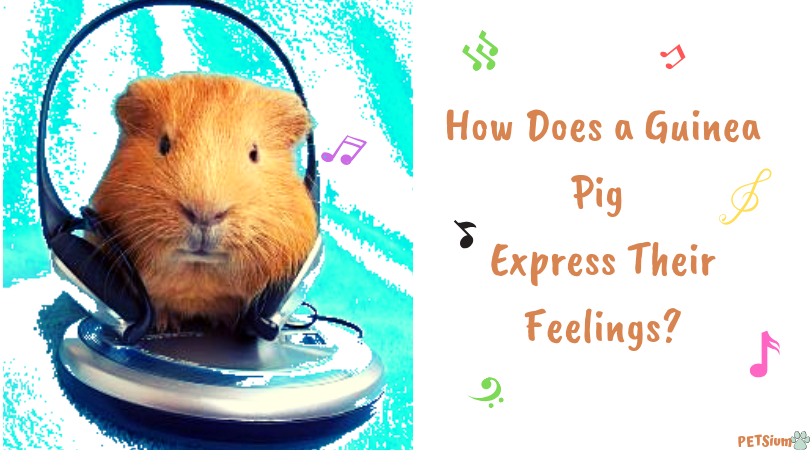
Guinea pig body language and noises help to communicate their many gestures like happiness, sadness, hunger, etc. if understood properly by humans.

The Guinea pig sounds can be easily understood if heard carefully because they have a good vocabulary.

Some sounds and body language can have more than two meanings so one needs to carefully examine the exact feeling which a Guinea pig wants to convey.

A Guinea pig is special specie belonging to the family of rodents.

In contrary to their names they do not belong to a pig family nor are they coming from Guinea, they basically are from Andes and a case of hybridization.

This Caviidae family is an important food source for the folk culture of South America as well as medicine and a part of community religious ceremonies.

For the people of western society the Guinea pig enjoys the popularity of being a household pet.

This is so because they have a very passive nature and they respond well to feeding, handling and caring.

Guinea pigs have a face somewhat like that of a pig and spend long time in eating.

They are large and weigh about 1.5 to 2.5 pounds having an average life of four to five years.

When domesticated they live in a group of two or more and love to live quietly in cages.

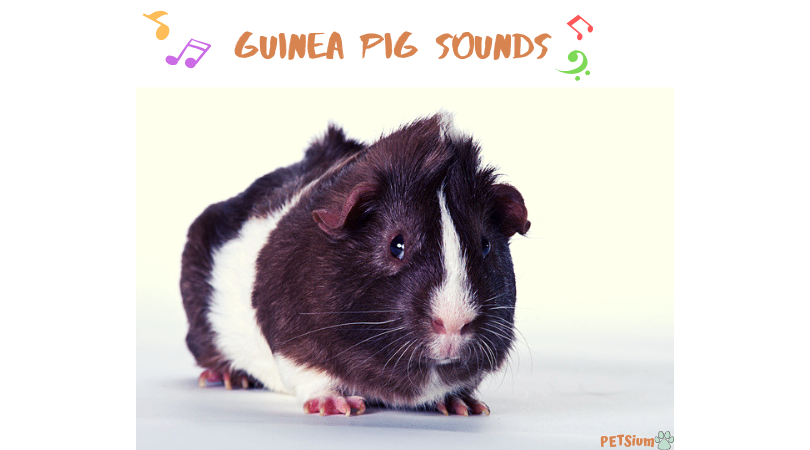
Guinea pig sounds

Guinea Pig Noises

There are so many different Guinea Pig noises it’s difficult to accurately describe them with words.

Despite this, once you’ve listened to your guinea pig sounds I’m positive you’ll be able to classify it based on your pet’s situation and the guinea pig noises description below.

It’s important to note that various guinea pig noises can actually mean two completely separate things so keeping an eye on your cavies demeanour is an important aspect of identifying her vocabulary.

Guinea Pig Sounds Meanings

Some popular Guinea pig sounds and their meanings are as follows:

Guinea Pig Purring

Guinea pigs can also make a distinctive purring noise during petting, stroking or other pleasurable activities.

It sounds very similar to rumbling guinea pig noises heard during mating encounters.

Guinea pigs can also make a distinctive purring noise during petting, stroking or other pleasurable activities.

It sounds very similar to rumbling guinea pig noises heard during mating encounters.

Sometimes while petting or pampering a Guinea pig one may be able to hear a purring sound which is an indication that the Guinea pig is enjoying the affection.

Purring can somewhat sound like a rumble but it can have a different meaning as well.

They can also purr when groomed or when brought to a new place which they are investigating.

Guinea Pig Wheeking

This is one of the most enjoyable guinea pig noises and generally means it’s time to eat.

It is a loud noise like that of a whistle which is generally heard when a Guinea pig sees its master or when it wants to be fed.

It is an expression of excitement or can be a situation when the Guinea pig is lost somewhere and is seeking for help in fear.

If a Guinea pig has a fixed time for feeding then at that point of time the wheeking sound will be the loudest and even if they find that food is being cooked or coming towards them then also their sound will be at a very high pitch.

Guinea pig body language

Guinea Pig Rumbling

The native mating rumble is another easy to identify guinea pig sound.

If you’ve ever bred or housed opposite sex cavies together you’ll already be able to identify this noise.

On occasion this rumble will be accompanied by the male swaying his hips in what’s known collectively as the mating dance!

This sound is usually heard when a male Guinea pig is romancing with the other Guinea pig.

The sound has a vibrating effect and the Guinea pig will walk around other Guinea pig swaying their hips like doing a rumble strutting.

Female guinea pig can also make this sound if she is in season.

Guinea Pig Mutter

Muttering is low pitched sound when pigs are free in relaxation and feel contended.

They roam here and there on floor muttering and enjoying.

Cavies also make a contented muttering sound, often interspersed with purring.

This symbolizes happiness and contentment.

My animals make these kinds of noises when they’re resting in a ball of hay or snuggling up to me on the sofa.

Guinea Pig Whining

Such sounds are made when pig is resting and does not like to be disturbed.

It is a moaning or complaining sound.

Its volume increases if mischief maker goes on repeating his acts.

Sometimes Guinea pig makes this sound when they desire that their particular body part should not be touched.

My cavies have been known to whine, both inside and outside of the cage or hutch.

Usually if one is resting peacefully and another guinea pig wanders up and disturbs her she’ll have a quick moan.

The whining can gain volume if the intruder doesn’t leave followed by head pushing and shoving.

guinea pig noises

Guinea Pig Shrieking

Squeaking or shrieking sounds are sharp high pitched and indicative of pain feelings in body due to injury or internal body problems.

If your pet is alarmed, frightened or experiences sudden pain you’ll hear the piercing shrieking sound.

Any sudden noises can also lead to this distressed bellow.

I’ve also noticed this particular sound when two cage sharing guinea pigs are separated.

Guinea Pig Chirping

I’d like t briefly comment on the rarest of guinea pig noises.

Chirping. I’m yet to experience this seemingly wonderful guinea pig sound but I’m informed by people that it resembles bird singing.

Other guinea pigs in the area are said to remain still and listen intently as the vocalist sings her notes.

Guinea Pig Chutting

This refers to a series of short staccato “chut” sounds. Like purring, this tells you your pig is feeling happy or relaxed.

You might sometimes hear a few chuts mixed in with purring while you are petting your pig, but don’t be worried if you never hear your pet chutting.

Not all guinea pigs make this sound.

Guinea Pig Teeth Chattering

It is a warning signal in which the Guinea pigs gnash their teeth, raise their heads high sometimes even stamp their foot to show their anger.

This shows that they are angry or upset so they warn their enemy to get away before they attack.

Guinea Pig Body Language

When you think about the way your guinea pigs communicate with you and with each other, vocalizations such as wheeking, purring/“durring“, cooing ( specific to guinea pig sows when calming their offspring), and even chirping most likely come to your mind first.

But non-vocal communication is just as important in delivering certain messages i.e. emotions to you and other guinea pigs.

Being aware of the various non-vocal cues, signals and bodily actions that make up guinea pig body language enables you to better understand the particular messages that your piggies are trying to convey.

Take heed and see what your cavies are trying to „tell“ you using distinctive body movements, gestures, and postures.

Recognizing and learning how to interpret guinea pig body language will help you „read“ your pets’ underlying emotions and ultimately help strengthen your bond with your guinea pig.

Guinea Pig Popcorning

Just the mere sight of guinea pigs popcorning is cuteness galore!

This distinctive and easily recognizable body movement is very specific to guinea pigs, especially young(er) ones, but older guinea pigs may occasionally popcorn too ( not as spectacularly high as young cavies though).

Just like popcorn popping, guinea pigs repeatedly hop up and down, and this piggy-style dance is, more often than not, accompanied by intense wheeking.

It’s their way of telling you that they are excited, happy, or simply want to engage in social play, which plays ( no pun intended) an essential role in healthy behavioral development.

Guinea Pig Rumblestrutting – Strutting

Love is in the air! You can easily recognize this guinea pig body language, part of courtship behavior, by the guinea pig boar’s swaying, rather slow walk around a piggy sow, a low-key mating dance accompanied by a rumble.

If your piggy is doing a strut without a rumbling sound and this repeated move from side to side is accompanied by hissing and teeth chattering, then it’s a sign of dominant or even aggressive behavior.

Guinea Pig Nose Touching, Bumping And Sniffing

It takes two ( or more) piggies for this move, but it’s all good. A nose touch is just their way of greeting each other in a friendly manner.

Your guinea pig may even greet you in the same way. Sniffing each other’s nose, ears, chin, and back end when greeting is guinea pigs’ way of gathering more information.

In keeping with their inquisitiveness, sniffing all sorts of objects satisfies their need to discover and explore new things.

Guinea Pig Nose and Head Tossing

When your guinea pig gives you the head or nose tossing cue, you should know that, for some reason, she is feeling uncomfortable or annoyed and wants to be left alone.

Your piggy is essentially saying „back off!“ If this gesture is followed by one or more nips, be aware that a fight may start soon.

Guinea Pig Freezing

When your guinea pig freezes i.e. stands motionless, then your pet is trying to tell you that she is too startled to be able to move. Something may have surprised or even frightened her.

If your piggy senses that there’s danger such as a predator lurking around, she will freeze in an attempt to become invisible to it.

Your guinea pig will typically remain motionless until she feels that the predator or whatever has startled her is no longer an imminent danger. A low vibration usually accompanies a freeze.

Guinea Pig Standing On Hind Legs

When your piggy behaves like a bunny ( this body posture is as cute as it gets) but without showing signals of dominance or aggressiveness, this is indicative of the fact that she craves some attention and TLC or just begs for a snack.

This posture could also be part of a face-off when accompanied by other signs of anger and a possible attack such as hissing, head tossed back, and teeth-baring & chattering.

Guinea Pig Yawning and Hackles Raised

A wide yawn is by no means a sign of your piggy being tired, sleepy, or bored, especially if accompanied by raised hackles.

Be sure to keep an eye on those angry piggies and do intervene to separate them before the situation gets messy.

To avoid getting accidentally bitten, use a towel, a plastic bottle, or another lightweight object instead of your bare hands.

Guinea Pig Running Away

New guinea pig owners should also keep in mind that running away when trying to pick her up, part of guinea pig body language at first is simply a natural defense mechanism and she will come out of her shell with time and patience.

Your guinea pig (s) may even engage in licking your skin which may be her way of showing affection toward you when cuddling her or just an affinity for the salt on your skin – feel free to interpret the licking cue any way you want.

Conclusion

Guinea pig sounds and body language are the expressions of their feelings like human beings.

Just as humans talk to each other, communicate horror, sorrow, pleasure and curiosity in their language these little creatures too unfurl emotions through indicative sounds found common in almost all species.

They share their feelings of being hungry, lonely, curious, stressed, happy, chirpy, angry, merry making and kept away with other guinea pigs or their owners.

Well that concludes my brief introduction to the various guinea pig body language and noises you’ll hear from day to day.

Категорије: Guinea Pig Тагови: Body Language, Guinea Pig, Sounds

Guinea Pig Cage and the Importance of Getting a Good One

мај 21, 2019 By liv parmel

Providing an appropriate guinea pig cage for your pet is one of the best things you can do to show that you are a responsible pet owner.

Since guinea pigs spend most of their lives in cages, it will be worth buying a guinea pig cage that is roomy enough for them to move about, to play and to exercise.

Besides, it will require a bigger space to contain a nest box, a food dish, a water bottle and some toys.

What Kind of Cage is Best for a Guinea Pig?

Since guinea pigs are sociable animals, it will be good to consider getting at least a pair.

This, therefore, there will be a need for you to have a bigger size of guinea pig cage.

One reason for this is so that they have room to walk and sprint around; they are not like mice and hamsters that are happy to run on a wheel all night.

In fact, they don’t even use a wheel; even if you ignore me and put one in there anyway, just know that your guinea pigs will not use it; it may be a point of interest for a few minutes, but that would be about it.

The second consideration for a guinea pig cage is that it has to have a removable plastic bottom.

This will make it easier for you to clean it at the end of the week.

Also, make sure that the bottom tray sides are quite high, because guinea pigs like to dig around and kick up their litter.

It can get quite messy around the cage if the sides aren’t tall enough.

But anyway, consider that these animals can live up to ten years, so can you imagine having trouble with a cage for that long?

Guinea pig cages can be expensive, but it is money well spent when you think of the long term.

And after you bond with your new pet, you will not regret one single penny spent.

the best guinea pig cages

Cage Style

Nowadays, the Cubes and Coroplast (C & C) style of cage, is now fast gaining popularity.

This kind of guinea pig cage was designed to contain a big number of guinea pigs.

It is made from a combination of metal wire grid, joined together, to serve as walls for the enclosure and corrugated plastic to be used as a container to hold the bedding and the waste materials of the guinea pigs.

This cage can be constructed by means of do-it-yourself instructions that are available online, through C & C cage links.

As compared to the commercial cages available, this is a healthier choice for your pets with the ample size it offers.

Besides, it is more reasonable to build one because of its lower cost.

Since these animals are quite large, they are not into climbing so a sensible height of 18 inches will do for a guinea pig cage.

RECOMMENDED PRODUCT

guinea pig cage

MidWest Guinea Habitat Plus

  • A multi-access folding top allowing safe and secure interaction with your enclosed guinea pigs.
  • 14 inch sides keep your guinea pigs secure while giving you easy access.
  • Modular design allows for numerous configurations and unlimited expandability.
  • Durable, PVC-lined canvas bottom protects your pets’ sensitive feet.
Buy on Amazon

Bedding

It is vital to choose bedding that is safe for your guinea pigs.

Aspen shavings as well as hay are good alternatives to cedar and pine.

Furthermore, placing paper below will help with the absorbency.

Aside from the aforementioned, the newer type of beddings made from recycle paper is, also, a good choice for a bedding.

Nest Box

A place to hide such as a nest box is essential to guinea pigs.

It may either be a plastic pail, tub or a cardboard box, which is easy to replace when dirty.

Shoe boxes and PVC pipes with large diameters are, likewise, good choices for nest boxes.

Toys

Guinea pigs are playful animals so they love to have toys in their midst.

They play with all sorts of stuff such as balls, crumpled paper, wooden blocks, paper bags, tunnels, tubes and hanging bird toys, among others.

These toys, however, should not contain parts that are too small for fear that they may be swallowed by your pets.

Since they are active pets, guinea pigs need ample space in their guinea pig cage to exercise.

Exercise wheels are not recommended because these are not suited to their larger size.

These and exercise balls may do more harm than good and may even cause injury.

Food Dish and Water Bottle

A ceramic bowl is a good choice for a food dish.

On the other hand, a water bottle with a steel spout is a better alternative to a water bowl because this can maintain cleaner water to drink.

Since guinea pigs are fond of drinking, they can easily finish the water that is provided.

So, it would be good to check on the water supply from time to time to replenish when needed.

the best accessories for guinea pig cage

Exercise Pens

To enable your pet guinea pigs to be active, you can make your own exercise pen.

You can, also, buy a pen made from wire that is designed for small animals.

Playing inside these corrals keeps them from chewing on the furniture.

The practical thing about these portable pens is that they can be brought anywhere, even in the lawn which can serve as a nice backdrop for playing.

But you have to make sure that no pesticides have been sprayed on the grass to prevent pets from breathing in toxic chemicals.

RECOMMENDED PRODUCT

guinea pigs playpen

MidWest Guinea Pigs Playpen

  • The 15″ high panels ensure that your guinea pig will be in a safe, contained environment.
  • This Playpen features six colorful and durable panels that keep your pets safely contained.
  • Perfect for outdoor use.
  • You can give your pet a safe place to roam and explore.
Buy on Amazon

Proper Place for Guinea Pig Cage

It is, also, important to consider the right spot to situate your guinea pig cage.

When it is inside the house, it should be placed near the window where your pets can be able to get the healthy benefits provided by the sunlight.

It should be far from too much noise.

The temperature should fall within the range of 65 to 75 deg F to prevent them from getting sick.

When the guinea pig cage is brought outside, it should not be placed too far from the house.

It should be kept under a shade to keep your pets from either the sun’s harmful rays or getting wet from the rain.

Keeping your pets in the best guinea pig cage is the most important way of assuring their safety and well being throughout their life span.

This way, you will have pets to enjoy for a longer time.

How to Choose Guinea Pig Beddings

When it comes to choosing guinea pig beddings, the good news is there are a lot of options available to you.

The bad news is, there is no such thing as the perfect bedding. Well, not yet anyway.

The most suitable bedding for your guinea pigs will depend entirely on your priorities.

There are many factors that people consider when choosing their guinea pig’s beddings.

Of course, beddings that are healthy and not toxic to your guinea pigs is up at the top.

We also want one that’s inexpensive and easy to purchase; one that will not require frequent cleaning or changing; beddings that are environment friendly and won’t trigger any allergies; and one that can absorb and neutralize smells very well.

Fortunately, we have plenty of alternatives when it comes to guinea pig beddings. Let’s look at the pros and cons of each one:

Newspaper

Using old newspapers to line the floor of your guinea pig’s cage is an economical option.

Newspapers are inexpensive and it makes cleaning up your cavy’s cage easier, too.

Plus, when you use old newspapers, you are recycling, so its actually good for the environment when you reuse in this manner.

how to prepare cage for guinea pig

Packed paper beddings

In many pet stores you will find various brands of paper based beddings.

Paper beddings are great because they are absorbent, less expensive, and are usually more absorbent compared to wood based beddings.

The drawback with paper beddings is that they may carry some dust which can cause respiratory problems for your guinea pigs.

Kiln Dried Pine Shavings

For many pet owners, kiln dried pine shavings are considered suitable for guinea pigs.

However, there are some who believe that pine shavings may cause fungal infection and respiratory problems like allergies in cavies.

When using pine shavings, make sure you get the one that is kiln dried and not those that are air dried.

Air dried pine shavings retail their phenols, which in large quantities is toxic to guinea pigs.

This is the same reason why cedar and other softwood tree shavings are considered harmful when used as beddings for guinea pigs.

Aspen Shavings

Another type of wood shavings that can be used in guinea pig beddings is the aspen shavings.

While it is pricier compared to other wood shavings, it is possibly the only type of wood shaving that’s considered completely safe for guinea pigs.

Hay

While hay is not strictly a bedding material, it works great when used with other bedding materials, both paper and wood based. Those who use it say that guinea pigs love to run over hay.

A layer of hay on top of the other beddings also prevents dust and pieces of the wood or paper shavings from being kicked around and turning messy.

However, when using hay, it is important that you replace the hay daily.

RECOMMENDED PRODUCT

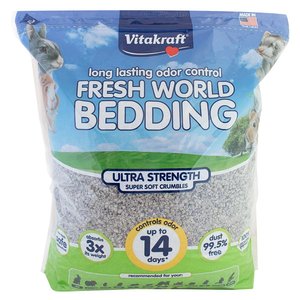
vitakraft fresh world strength crumble bedding for guinea pigs

Vitakraft Long Lasting Odor Control Bedding for Guinea Pigs

  • Absorbs 3x its weight in moisture.
  • Up to 14 days of amazing odor control, less time cleaning up after them.
  • Perfectly soft for guinea pig cages and a great litter for guinea pig.
  • Fresh World Bedding is proudly made right here in the USA!
  • Made entirely from paper collected through PaperGator.
Buy on Amazon

Instructions on Cleaning a Guinea Pig Cage

Cleaning a guinea pig cage is part and parcel of caring for your cavy.

Keeping the housing of your cavy clean will help keep it healthy and deter any build up of foul smell emanating from it.

How often to clean the guinea pig cage is up to you, but generally a once a week schedule is what most pet owners observe.

Several factors will affect how often your guinea pig cage needs to be cleaned.

The type of bedding material that you use on your cage is one of them.

Some types of beddings are more absorbent than others, or neutralizes smells and urine much better.

Fleece is a popular bedding material used by many pet owners.

With fleece, daily spot cleaning by picking up droppings is usually observed.

Other factors include the size of your cage and the number of guinea pigs that you have sharing a cage.

The bigger the cage is, the less frequently you will need to clean it.

But, the more guinea pigs you have to care for, the more mess they’ll make, which means more frequent cleaning.

how to clean a guinea pig cage

When cleaning a guinea pig cage, here are the steps you need to observe:

  • Wear a mask and gloves to protect yourself especially if you have allergies.
  • Transfer your guinea pigs temporarily to a clean and secure enclosure while their cage is being cleaned.
  • Remove accessories in the cage such as their food and water dishes, igloos, and toys. Wash or launder toys, igloos, food containers and water bottle as well.
  • Remove disposable bedding materials and dispose of properly. If using towels and fleece beddings, replace them with a fresh set of towels and beddings, or wash and dry before reusing.
  • Use a vacuum cleaner on the floor of the cage to remove any stray bits. Or sweep with a broom and dustpan.
  • Prepare a vinegar solution by mixing 3 parts water with 1 part vinegar. This vinegar solution will neutralize the smell from guinea pig urine. Spray the floor and the walls of the cage liberally and wipe with a dry cloth.
  • To clean calcium deposits that are stuck on the floor, put vinegar on the stain to loosen it. And then with an old toothbrush, scrub the floor lightly to completely remove it.
  • To disinfect the cage, create a bleach solution by mixing about 2 tablespoons of bleach to a litter of water and clean the cage using it.
  • After cleaning the cage, it’s time to put the beddings back, then the accessories. When everything is in place, you may return the guinea pigs back to their cleaned cage.

Guinea Pig Water Bottles and Guinea Pig Bowls

Like all living creatures, in order to survive, guinea pigs need a constant source of fresh and clean water.

It is necessary to change it every day. I find it easiest to make it part of the feeding routine.

The best way to give water to your guinea pig is to use one of those water bottles that hang on the wires of the cage from the outside.

You can use a water bowl, but it isn’t very sanitary and you would need to clean it way more often, as these animals like to sprint around and kick up a mess and some of it is bound to hit the water bowl.

The guinea pigs are also prone to spilling it and a bowl will just end up wetting the cage and cause extra mess and clean up.

The second item I wanted to mention is a food bowl, you can use a metal, ceramic or plastic bowl if you like.

You will not require one for their vegetables and fruit because you can just place these in the middle of the cage.

A bowl is needed to hold their pellets, however.

This is for two reasons: to keep the cage clean and to keep the pellets clean and away from their feces and urine.

You can find water bottles and bowls made specifically for this purpose in any pet store or by shopping online.

They are not very expensive and considering that guinea pigs live 4-8 years, they are a worthwhile investment.

The Importance of a Guinea Pig House

Aside from a cage, food and water, a house is the most important item that you should provide for your guinea pig.

The reason for this is that they have a natural instinct to hide because they are at the bottom of the food chain; in other words, they are considered food for larger carnivorous creatures.

Your pet will never totally feel secure and safe if you don’t give them a house to sleep and hide in.

These houses are commonly referred to as an “igloo”, because they are igloo shaped.

They are constructed of a hard plastic and are the perfect size for one pig.

You may find that your guinea pigs don’t mind sharing one, but it’s still a good idea to provide one for each animal, just in case.

Guinea pigs are nervous and jumpy by nature, and if they feel that they are in any kind of danger, they like to scurry to where they feel safe from predators.

A house of some kind will satisfy this need to hide.

Of course you don’t necessarily need to buy a plastic hut, you can simply make one yourself.

guinea pig igloo

Shoe Box for Hiding Guinea Pigs

An old cardboard shoebox with a guinea pig sized hole cut in it will work just as well.

The problem with this is that you would need an endless supply of shoe boxes.

You can’t wash cardboard and you would need to throw it out at the end of the week because guinea pigs pee and poo all over the place and it wouldn’t be very sanitary.

One of the suggestion is that you can use a flowerpot for a house; just turn it on its side and the guinea pigs will love it.

Whichever way you decide to go is fine, as long as you provide a nice hidey-hole for your pet, he/she will be all the happier because of it.

RECOMMENDED PRODUCT

JanYoo Guinea Pig Bed Accessories Cage House

JanYoo Guinea Pig Bed/House

    • It is removable with zipper,you can wash it in the washing machine.
    • Adorable cartoon shapes and short plush for guinea pig accessories, very popular with children.
    • Super soft short plush + high precision PP cotton filling.
    • Choice of 3 sizes.
Buy on Amazon

Where Should my Guinea Pig Live?

Where you keep your guinea pig largely depends on your own circumstances and personal preferences.

The weather plays a part too.

They need to be kept warm in the winter and in the shade in the summer.

Wherever you choose to keep them it is important to keep their bedding and living quarters as clean as you can.

Cleaning the cage or hutch out 2 to 3 times a week should be a minimum.

More so in hot weather to prevent flies and other unwanted attention.

You must also consider the size of the cage according to how many guinea pigs you have.

Many cages and hutches are double floored these days which is brilliant for allowing guinea pigs to roam and get some personal space if they want it.

Indoors

If you have the space you can keep them indoors with you.

There are plenty of guinea pig cages for sale that can be bought online through many stores or at your local petshop.

You can put them to run outside on pleasant days so that they can munch through the grass.

They love to eat grass. Plus guinea pig poo is a brilliant manure for the grass!

Just make sure you keep moving the run around your garden so they can get to work on the whole garden.

Guinea pigs do well living inside with the family.

They like the same temperatures as us (make sure they are not right next to a radiator or in direct sunlight).

Your guinea pigs will soon become used to everyday family life and probably benefit from extra cuddles if inside!

One point to mention is if you decide to let your guinea pigs roam around make sure there are no electrical leads or telephone cables they can chew through.

Outdoors

If you are going to be mainly keeping your guinea pig outside you need to make sure your hutch is both weather proof and secure.

Be aware of local cats and cunning foxes who will all be intrigued by your little furry friends.

Make sure the hutch is at least a metre off the ground and secure against a wall or fence.

Make sure the hutch has a felt roof to protect it from the elements.

In wet weather and colder nights you might want to put a cover over the cage at night to give your piggies so extra warmth.

Always make sure your guinea pigs have plenty of bedding to keep them warm and dry.

Категорије: Guinea Pig

Guinea Pig Illnesses

мај 17, 2019 By liv parmel

The guinea pig, although relatively a healthy animal can get ill and you as a owner should learn about common guinea pig illnesses.

When you have a family pet as loving as the guinea pig, it often entails being the family doctor.

It is vital for all guinea pig owners to be able to supply and treat their guinea pigs with optimal care.

There are many common conditions such as “bumblefoot” to more uncommon conditions such as abortions and stillbirths.

The guinea pig is naturally “alive” and playful in spirit.

It enjoys hide-and-seek, being pampered, and will jump high in the air at times when it is agitated or around a new person, therefore, it is not difficult to distinguish when there is something troubling your guinea pig, such as illness.

Common Guinea Pig Heath Problems Signs

If your guinea pig is experiencing bouts of lethargy, weight loss, discoloration or weakness, it is time to get the medical journal out and put on your nurse’s hat.

These are all signs that the guinea pig health is at risk.

Diet is a very important concern in guinea pig health.

The guinea pig is unable to produce its own vitamin C; therefore it is necessary to ensure that the guinea pig is feed foods with vitamin C.

Signs of Vitamin C Deficiency in Guinea Pigs

Signs of a vitamin C deficiency will include lethargy, lack of movement, weakness, hopping instead of walking, lack of appetite, loss of weight, diarrhea, discharge from the eyes and nose, coarse or rough hair, experiences pain when touched, an internal skeletal-muscular hemorrhage, and /or stiff limb joints.

Ensure that your guinea pig is getting an adequate supply of vitamin C by feeding it a diet of pellets formulated for guinea pigs, fresh vegetables and fruit, and grasses. You can read our „What can Guinea pigs eat“ for details.

Guinea Pig Illnesses

Common Guinea Pig Illnesses

Common guinea pig illnesses can strike even with our watchful care.

Prevention of course is important, but it is no guarantee that health problems will not take place.

This is why it is important for us to stay vigilant so we can spot the signs and symptoms of these diseases early on.

There’s nothing more distressing for a pet owner than to see his pet ill.

With cavies, due to their small size, these disease can progress really quickly.

Guinea Pig Illnesses and the Symptoms You May Observe in Your Cavy:

Guinea pigs are usually very active, so if you see something that’s off in their behavior, don’t just brush it off. It may be an early warning of an impending illness.

Common signs of illness include slower movements or generally less activity.

You may also notice guinea pig not eating, eating less or drinking less.

An unusual discharge in any part of the body should be looked into.

Diarrhea is not common, but should be taken seriously when you see it in your pet.

Parasitic and fungal skin infections

Signs that you can observe is a guinea pig that seems to scratch itself a lot.

When you check the cavy’s fur, you will see scratch woulds and scaling.

Parasites and fungal infections can spread quickly.

Be sure to check all your guinea pigs if you suspect that one of them is infected.

Urinary tract infection

Urinary tract infections are common in guinea pigs and their anatomy contributes to this problem.

Guinea pigs are quite „low slung“, especially the older ones.

This puts them in contact with the floor litter and makes them more susceptible to urinary infection.

Aside from this, their diet may also put them at risk for these types of infections.

Having too much calcium in their diet, or perhaps eating too much dry food and not taking sufficient water can also be blamed.

Vitamin C deficiency

Because guinea pigs do not produce their own vitamin C, they need to supply themselves with it from the food that they eat.

A deficiency in this vitamin interferes with energy absorption, which can result to malnutrition, hair loss, susceptibility to respiratory infections and so on.

Respiratory infection

Guinea pigs are prone to allergy from dust, pollen and even to the type of bedding material that you use.

Aside from this, a common bacteria called Bordatella present in our environment can also cause respiratory infection in guinea pigs.

Old age

When your cavy has reached old age, debility is something that you cannot entirely avoid.

Your cavy will be more sluggish and slow in its movements.

One way to avoid complications is to make sure your cavy is healthy and fit in its youth.

common health issues in guinea pigs

Common Guinea Pig Parasites

One of the common afflictions that can affect your guinea pig are parasites.

Guinea pig parasites are a bane to both cavies and their owners.

Parasites can do a lot of harm to your guinea pigs. It causes intense itch, and scratching leads to wounds.

Parasites can also carry infectious diseases with them, and may even cause anemia in severe cases.

Parasites are usually brought in when you have a pet that’s allowed to go outdoors.

Or there may be cases when you unwittingly let parasites in when you introduce a new guinea pig into your home.

This is why we should never skip putting a new guinea pig in quarantine for 2 to 3 weeks to make sure we stop the spread of parasites and other diseases.

Common guinea pig parasites include lice, mites and fleas

Lice

There are several types of lice that can affect guinea pigs.

All of them do not pose any risk to humans. Lice can cause intense itching, scratching, and scabbing.

You will find red papules one back of the head and behind the ears.

Lice infestation are usually together with fleas.

When treating guinea pigs for lice, all guinea pigs and not just the one suspected of having lice will be inspected.

All beddings and housing should be thoroughly cleaned as well.

Fleas

Fleas can also affect guinea pigs.

This usually happens when you have other animals in the house, such as dog and cats, who get infected outside the home.

When they return, the fleas catch a free ride and spread to other animals in the house.

The most common flea that affects guinea pigs are what’s commonly called as cat flea.

Fleas can cause intense itching, hair loss, and crusty lesions on the skin.

If left untreated, it can lead to anemia and even death.

In guinea pigs that are afflicted with fleas, you will be able to observe small brown granules on their fur when you brush it.

These brown granules are the fleas feces, which serves as the food of newly hatched flea larvae.

If you suspect fleas in your guinea pigs, bring them to the vet to find out what the recommended treatment is.

Other pets in the house should also be observed for fleas.

Together with treatment, prepare to do a general cleaning and disinfecting of the spaces occupied by your pets.

Common Guinea Pig Illnesses

Mites

When it comes to mites, there are 2 types of mites that are commonly seen to afflict guinea pigs.

These are the T. caviae and the C. caviae.

Trixacarus caviae mites

This type of mite is transmitted by direct contact and can afflict humans as well.

T. caviae is known to burrow itself into the skin of the host. It is not always active.

In some guinea pigs, the mite can remain dormant and may surface when the animal is weaker such as at times of sickness or poor nutrition.

When active, it causes an itch that is so intense at times that you may observe your pets throwing fits as if they’re having seizures.

You may also see guinea pigs scratching their bodies to the point of creating open wounds, which then opens them up to risks of secondary infections.

These mites cause redness and papules, commonly found around the head, shoulders, on the back and around the flanks of your pets’ body.

Chirodiscoides caviae mites

In a way c.caviae are easier to detect because the mite lives on the hair of the host animal.

In guinea pigs, it is often found on the hairs in the rump area.

This mite is also transmitted by direct contact.

Just like the t.caviae, it causes itching, scratching, hair loss, and redness.

how to avoid guinea pig parasites

Prevent health issues in guinea pigs

It is a good practice to get into to give your guinea pig a health check every day.

Begin with checking the eyes for discharge.

If you notice a discharge aside from the normal milky discharge that is sometimes produced, it could be a sign of infection, such as conjunctivitis and should be treated.

If you notice a discoloration of the eye, the guinea pig may have scratched his eye on something and likely needs to be examined by the veterinarian, as the protective covering to the eye is likely damaged.

Your guinea pig health checklist should also include a check of the hair and skin.

Run your fingers through the guinea pigs hair and feel for coarseness or brittle hair, pay close attention to the skin as well.

Your guinea pigs skin should be free from scratches, sores and flaky skin.

Pay attention to the itching habits of the guinea pig as well.

Any of these signs could be a sign of a fungal infection, lice or other forms of a skin condition.

Check the ears of your guinea pig each day when performing your guinea pig health checklist.

The ears should be soft and smooth, and not have excessive wax buildup.

Ear conditions will result as a sign of ear mites or infection.

Check the nose for discharge- yes even guinea pigs get colds!

Sinusitis is a condition which will show through a running nose and needs to be treated immediately by your veterinarian.

Check the guinea pig each day for conditions of the feet.

The feet should be free from all swelling, cuts and scrapes.

Weigh the guinea pig weekly to ensure that it is not losing weight.

Weight loss is a sign of an underlying condition in the guinea pig.

Respiratory problems are also another condition that affects the guinea pig.

Check the guinea pig daily for labored breathing or wheezing.

Категорије: Guinea Pig

Important Guinea Pig Facts That Every Pet Owner Has To Remember

мај 8, 2019 By liv parmel

As cute, cuddly and easily manageable as they are, there are many important Guinea Pig facts out there that every pet owner should pay attention to in order to secure a happy and healthy life for their Guinea Pig.

What Are Guinea Pigs?

A Guinea Pig is also known as a Cavy.

These creatures belong to the family of rodents and alongside hamsters, are a very popular household pet.

Because of their gentle demeanor and compact size, they are the perfect addition to any home, even those with young children.

Guinea Pigs are said to originate from the Andes in South America and were domesticated and raised for food by the local tribes.

Although they were originally introduced to the conventional pet market as exotic pets, Guinea Pigs can be found in homes all across the globe today.

Unlike other rodents, Guinea Pigs are fully domesticated and no matter how hard you search, cannot be found in the wild.

What Are Some Important Guinea Pig Facts To Know?

Like all other household pets, there are certain things that you should know before welcoming a Guinea Pig into your family.

Although they are generally easy to maintain and to keep as pets, here are some things that you should take note of as a responsible pet owner.

Guinea Pigs Lifespan and Size

Cavies can live up to eight years, with the average lifespan being six or so odd years.

However like any living creature, your Cavy lifespan is directly linked to how well you look after it.

Factors such as diet, habitat, and care play very important roles in determining how long a Guinea Pig will live for.

Interestingly, the longest recorded lifespan for a guinea pig is 15 years.

As this is extremely rare, do no get your hopes up too high and expect your pet to live for a decade and a half.

guinea pig things that you should know

However judging from its small size, Guinea Pigs have a relatively long lifespan as compared to fellow rodents like hamsters, mice and rats.

When it comes to the average size, Cavies weigh between 700 to 1200 grams and measure up to 25 centimeters in length.

These little creatures are a perfect fit for pet owners who live in apartments and small spaces.

Physical Traits of Guinea Pig

Generally, Guinea Pigs come in a wide array of colors. From brown to black to white, you will be spoilt for choice when choosing the perfect Cavy to bring home.

Not only that, you have to decide if you want a Cavy with long, short, straight or curly fur.

When sourcing for a Guinea Pig, there are four categories to look out for. They are smooth-coated breeds, long-coated breeds, rough-coated breeds and hairless breeds.

A popular breed is the American Short Coat whereas the Skinny Pig is a rare breed and you will probably have to contact a breeder to get your hands on one.

Guinea Pig Dietary Needs

A cavy diet plays a very important role in determining how long it will live. You have to feed your pet a diet that is rich in phosphorus, calcium, potassium, magnesium and vitamins A, C, D and E.

These little creatures are herbivores so they will thrive on a diet that comprises of high quality pellets, grass hay, organic vegetables and fruits.

They love carrots, kale, apples, salad greens, red and yellow bell peppers, fresh parsley, pears, corn on the cob and seedless grapes.

Although most vegetables are fine for Guinea Pigs, stick to dark leafy greens to be safe.

Try not to feed your Cavy cabbage as it is a gassy vegetable and can cause your pet to feel bloated and gassy when fed in large quantities.

The golden rule is to feed your Cavy everything in moderation and it will be just fine. Also remember to remove the seeds from fresh fruits before treating your Cavy to them.

cavy food

Guinea Pigs Social Characteristics

Like rabbits and other rodents, Guinea Pigs are very social creatures. Remember to raise a minimum of two at a time to avoid depression and loneliness.

Because they are gentle creatures that exhibit mild behavioral characteristics, they are a perfect fit for families with kids.

However, you have to remember not to stress your Cavy out and children should always be cautious when lifting or playing with the Cavy.

They are sensitive to loud noises so children have to be reminded to be gentle around these creatures.

Remember that pet stores may make a mistake when determining the gender of the Guinea Pig so in order to avoid having to deal with an unwanted litter of pups, get both Guinea Pigs spayed or neutered before bringing them home.

Do not worry about altering their personalities as this will not affect them in any way.

Most Cavies get along with one another, regardless of whether they are of the same sex, but you have to be prepared for the unexpected.

There have been cases where Guinea Pigs raised together from pups may not get along in the future, especially after they go through adolescence.

Guinea Pigs Habits

Guinea Pigs love social situations and will interact with those around them.

Whether it is a human, dog, cat or other Guinea Pig that it has grown up with, it is not uncommon for plenty of bonding and playing to happen.

Like cats, Guinea Pigs show affection and happiness through purring. They also love stretching out when they feel relaxed and at ease.

Another thing to note is that when given the chance, Guinea Pigs can eat all day long, just like pandas.

They even get worked up and competitive when it comes to meal times so if you have two or more Cavies, ensure that each creature is getting enough nutrition and that the dominant one is not monopolizing the food supply.

Another habit of Cavies is that they do not sleep for long periods at a time the way humans do. Instead, they prefer to take multiple short naps throughout the day.

guinea pig behaviour with each other

Guinea Pig Habitat

These mild mannered animals prefer in-between climates. Nothing too hot or too cold is ideal for the Guinea Pig so it is best to keep your Cavy indoors.

Generally, if you feel comfortable with the temperature, your Cavy probably will too.

As Guinea Pigs do not adjust well to drastic temperature changes and are prone to heat and sun strokes, do not place its cage with access to direct sunlight.

You should also ensure that your Cavy space is not in the way of drafts and wind as they tend to catch respiratory infections easily.

Besides the temperature, you should pay attention to the space of your Cavy cage.

Like all other animals, they need space to grow and thrive.

Cramped quarters are a big no-no so prepare and maintain at least 10 square feet of living space for two Cavies.

If you plan to own just one Cavy for the time being, something a little smaller is fine too but remember that the more space your pet has, the more exercise it will get in order to stay healthy.

Cages with solid mesh wire floors are a common choice as they offer great airflow and are easy to clean.

Line the cage with wood chips so that your Guinea Pig will not hurt itself when running back and forth.

If you are able to, install ramps and platforms so that your Guinea Pig will not get bored with its environment.

The introduction of toys and other equipment will stimulate your pet to exercise and play, building a strong base for a long and happy life.

Common Diseases of Guinea Pigs

Besides respiratory infections, a common ailment amongst Guinea Pigs is Bumblefoot.

This is an inflammatory infection that affects the feet of rodents who live in cages that have not been cleaned for a significant amount of time.

The only way to avoid this from happening is to clean your pet’s cage frequently.

You can also opt to wipe its feet every few days with a wet cloth to get rid of the grime, feces and urine that will inevitably get stuck to the bottom of its feet.

You have to remember that a clean living environment is key to a happy pet so ensure that do all that you can to offer it the best life possible.

Категорије: Guinea Pig

What Can Guinea Pigs Eat? A Guide to the Cavy Diet!

април 18, 2019 By liv parmel

If you have recently acquired a guinea pig or you are considering doing so, you are probably wondering the most common question among first-time piggie owners: what can guinea pigs eat?

It is not unusual for people to assume that because this species belongs to the rodent family that it can consume virtually anything and everything it comes across.

Guinea Pig Favorite Foods

Like most other creatures, this specie’s basic requirements are comprised of protein, vitamins, minerals, fiber, and a constant, fresh supply of water.

The sources from which these nutrients are obtained is key to a healthy and happy guinea pig pet.

In fact, some foods can be outright toxic to guinea pigs which is why it is extremely important that you understand which foods are safe to give to your pet and which ones should be avoided entirely.

RECOMMENDED PRODUCT

grain-free balanced food for guinea pigs

Guinea Pig Food Made with Timothy Hay by selective NATURALS

  • Made with Timothy Hay to help promote the good health of guinea pigs.
  • High in fiber and grain free, Selective respects the natural diet, that includes essential forage and garden vegetables.
  • It supports digestive wellbeing and has all the vitamins and minerals that guinea pigs need.
  • Contains Linseed for healthy skin and shiny coat.
Buy on Amazon

Hay/Grass

Hay and grass should make up a significant percentage of the animal’s diet.

Not only does it provide the fiber that this little guy needs in order to have smooth, regular bowel movements, but hay will also create a delicate balance within the guinea pig digestive tract to ensure that it remains healthy and works effectively.

This animal will frequently chew and grind on grass and hay which is excellent for his or her teeth as they will continuously grow throughout the animal’s life.

Your rodent pet should have unlimited access to some sort of dry fiber; the type that you offer is up to you.

Consider offering your pet a selection of timothy hay and meadow grass as both of these items are well-loved by this species and provide all of the digestive support necessary for this pet.

You may decide to alternate between hay and grass on a regular basis, such as daily or weekly, or you could even offer a 50-50 mixture of grass and hay in order to provide your pet with a bit more variety.

Check his or her food a few times each day.

If the hay or grass becomes soiled or remains damp for an extended period of time, be sure to replace the old selection with a fresh, dry bunch.

guinea pig safe foods

Pellets

Even if you were to offer the animal a decent selection of hay, vegetables, and fruit, there is a good chance that your furry friend will be lacking in some essential vitamins and minerals.

It is difficult – even for experienced piggie owners – to provide exactly the right balance of dietary nutrition.

Because of this, pellets are considered to be the second most important element in the guinea pig diet.

Vitamin C is an integral nutrient in the guinea pig diet and most guinea pig pellets are fortified with this essential element.

Rodent pellets can be purchased at any pet supply store. In general, you should feed your guinea pig about one quarter cup of pellets each day.

If you supplement his or her diet with fresh vegetables each day, particularly ones high in vitamin C, you may lower the amount of pellets fed to your pet to one eighth cup.

Be sure to read the nutrition information and feeding guidelines on the pellet packaging to make sure that you aren’t overfeeding or underfeeding your piggie, as some store-bought products contain concentrated amounts of vitamins and minerals.

Pellets should be offered in a clean food dish, preferably one that is mounted to the cage to prevent spills.

RECOMMENDED PRODUCT

young guinea pig food

Essentials Young Guinea Pig Food by OXBOW

  • Made with hand-selected Alfalfa hay.
  • All-natural with vitamins and minerals.
  • Fortified with stabilized Vitamin C.
  • No seeds or fruits – No artificial ingredients.
Buy on Amazon

Vegetables and Herbs

Fresh vegetables should be offered to your guinea pig periodically, but ideally your little friend will be able to enjoy a few pieces of vegetables each day.

In addition to hay/grass and pellets, guineas may be fed up to one cup of vegetables and herbs daily.

However less should be given on days when your guinea is offered fruit.

Bell peppers, kale, broccoli, turnip greens, and spinach are very high in vitamin C and may be offered to your guinea pig regularly.

When preparing bell peppers for your pet, be sure to remove all of the seeds from the pepper.

guinea pigs diet

Never give this animal chili peppers, jalapenos, or other spicy peppers. Asparagus, cabbage, carrots, parsnips, turnips, cucumbers, celery, yellow and green squash, peas in the pod, watercress/alfalfa, and Brussels sprouts are other safe and healthy vegetables for your guinea pig.

This type of animal also enjoys small amounts of herbs, especially when mixed with other vegetables.

Basil, cilantro, chicory, parsley, dill, lavender, and mint are a few examples of herbs that your furry friend can safely enjoy.

Fruits

Supplementing your guinea’s diet with fruits is a great way to top up his vitamin C levels, but it is important that you offer fruit in small amounts and/or on a less frequent basis.

A pinch of fruit each day isn’t going to harm your guinea but if you choose to offer a small selection of various fruits then try to do so no more than two to three times per week.

Papaya, kiwi, guava, and mango are very high in vitamin c and piggies tend to love them.

You may also provide an assortment of various berries such as strawberries, blackberries, blueberries, and raspberries.

Elderberries may also be given in small amounts.

Apples (without the seeds), apricot, peaches, pears, and plums are cheap and abundant fruits that can be included in this animal’s diet.

Watermelon and honeydew may also be given although it is best to remove the rind first.

Find out can guinea pigs eat apples?

What Vegetables do Guinea Pigs Eat?

• Artichoke
• Arugula
• Asparagus
• Basil
• Beetroot
• Belgian Endive
• Bell Pepper (Remove Seeds)
• Broccoli
• Butterhead Lettuce
• Carrot Greens
• Carrots
• Cauliflower
• Celery
• Chicory Greens
• Chinese Cabbage
• Cilantro
• Coriander
• Corn Husks
• Corn Silks
• Cucumber
• Curly Endive
• Dill
• Escarole
• Grass
• Green Leaf Lettuce
• Green Leek Tops
• Kale
• Parsley Greens
• Parsley Root
• Pumpkin (Remove Seeds)
• Radicchio
• Red Leaf Lettuce
• Romaine Lettuce
• Rutabaga
• Spinach
• Sweet Potato
• Swiss Chard
• Thyme
• Tomato (Remove Seeds and Green top)
• Turnip Greens
• Watercress
• Zucchini

What Fruits do Guinea Pigs Eat?

• Apple (No Seeds)
• Apricot
• Banana
• Blackberries
• Blueberries
• Cantaloupe
• Cherries (Remove Pits)
• Cranberries
• Dates
• Figs
• Grapefruit
• Grapes
• Kiwi
• Mango
• Nectarine
• Oranges
• Peach
• Pear (No Seeds)
• Plum
• Raisins
• Raspberries
• Strawberries
• Watermelon

What Should Never Feed Guinea Pig?

• Alcohol
• Avocado
• Baked Goods
• Beans (Green Beans are Ok)
• Bok Choy
• Bread
• Carbonated Drinks
• Chocolate
• Coconut
• Coffee
• Collard Greens
• Corn
• Dairy
• Eggs
• Fish
• Fruit Juice
• Garlic
• Horseradish
• Hot Peppers
• Jam
• Lentils
• Meat
• Mushrooms
• Nuts
• Peanut Butter
• Pickled vegetables
• Potatoes
• Processed Foods
• Rhubarb
• Seeds
• Taro
• Tea
• Tomato Leaves

What do Guinea Pigs Drink?

Guinea pigs need a constant fresh supply of plain water in order for them to be happy. Here are a few tips on watering your guinea pig.

• Untreated tap water is not recommended. It can contain chlorine and heavy metals such as iron, which can harm your furry friend.
• Distilled water does not provide any minerals and thus should be avoided.
• Conversely, water that is high in minerals such as calcium should be avoided.
• Bottled water or water that has been filtered from the tap are the best options.
• Use a chew proof water bottle and clean the nozzle regularly.

If you follow these guidelines your cavy will stay happy and hydrated!

guinea pig favorite fruits and veggies

Foods Never to be Given to Guinea Pigs

Some foods are prone to causing digestive upset, stomach ulcers, or even outright toxicity in this species. Some foods, such as pineapple, citrus fruits, beets, cherries (without the pit), eggplant, leeks, radish, and sweet potato may be fed to rodent pets on a rare basis – meaning no more than once a month.

You should never feed fruit pits, apple seeds, potatoes, or potato vegetation to this type of rodent as they can be toxic and even deadly.

Rhubarb, rhubarb leaves, and tomato leaves are also unsafe for piggies to consume.

Obviously you should never feed your fuzzy companion foods that are in any state other than fresh (meaning cooked, pickled, or tinned).

Nuts, seeds, beans, lentils, corn, dairy products, eggs, and meat should also never be offered.

Being a responsible pet owner means doing the appropriate research necessary to gain a solid understanding of what you can and cannot offer the guinea pig.

The sections above contain detailed lists of foods that should be given regularly, in moderation, rarely, and not at all.

However if you come across a food not included in this article that you would like to offer your fuzzy family member, the best course of action would be to call your veterinarian to determine whether the food is safe for this species.

RECOMMENDED PRODUCT

2 in 1 food and hay feeder for guinea pig cage

Food Bowl and Hay Rack for Guinea Pig by sxbest

  • The feeder’s upper layer is a grass rack,and the lower layer is a food bowl.
  • Made of antibacterial ABS material to ensure a non-toxic, durable, long-lasting feeder.
  • The edge of the food bowl is reinforced with metal sheets to prevent your cavy from biting the bowl.
  • The grass rack is removable so that you can easily clean it.
Buy on Amazon

guide to the guinea pig diet infographic

Категорије: Guinea Pig

  • « Go to Previous Page
  • Страница 1
  • Страница 2
  • Страница 3
  • Go to Next Page »

Primary Sidebar

Small Fish Tank

Glass Fish Tank

Категорије

  • Animals
  • Birds
  • Cats
  • Dogs
  • Fish
  • Goldfish
  • Guinea Pig
  • Hamster
  • Horses
  • Name Inspiration
  • Parrot Pet
  • Rabbits
  • Reptile Names

Скорашњи чланци

  • Hoppy Naming! Adorable and Funny Easter-Inspired Guinea Pig Names
  • Purr-fectly Adorable: Valentine’s Day Cat Names for Your Feline Friend
  • Astronomy Inspired Cat Names
  • James Bond Cat Names: Purr-fectly Suave Options for Your Feline 007
  • 170 Authentic Greek Names For Cats
  • Hippie Cat Names
  • Ladybug Facts For Kids
  • Unique White Horse Names with Meanings: From Majestic to Mystical
  • Disney Turtle Names: 160+ Names For Turtles From Disney Movies
  • 100+ Names For Black Horses With Meanings

Guinea Pig Cage

Large cage for your guinea pig

Ознаке

Best family parrots Best Gifts for Cat Lovers Best Hamster Toys Best parrot for beginners Best parrot for kids Best Small Dogs For Kids Boy Cat Names Can Guinea Pigs Eat Celery Cat Names Cat names for pairs Dog Behavior Dog Throwing up Dog Vomiting eat Female Bengal Cat Names Female guinea pig names Funny goldfish names Goldfish aquarium Goldfish names Gold Fish Names Goldfish tank Goldfish varieties Guinea Pig Guinea pig names Guinea pigs Male guinea pig names Manx Cat Names Names for Goldfish Names for guinea pigs Names for pink fish persian cat personality Siamese cats Small curly haired dogs Small dog breeds Sounds Twin cat names Types of goldfish Undigested food Unique guinea pig names What can guinea pigs eat Winter White Hamster Care Winter White Hamster Colors Winter White Hamster Diet Winter White Hamster Facts Winter White Hamster Life Span

Disclaimer:

This website „PETSIUM“ is not liable for any outcome or damage resulting from information obtained from these articles.

The articles provided here are for information and entertainment purposes only. The decision to use, or not to use, any of this information is the sole responsibility of the reader.

Any medical related content in any articles is not intended as diagnosis, treatment or prescription. It is not intended to be a medical advice and is not a substitute for professional medical advice. Please consult with a licensed health care practitioner if you are dealing with a serious medical problem.

Hamster Cage

Hamster Cage

Footer

Petsium – Veštačka Inteligencija

Dobrodošli na Petsium, vašeg novog saputnika za brzo, precizno i potpuno besplatno AI iskustvo. Ovde možete da postavite bilo koje pitanje – od pisanja eseja, preko tehničkih izazova u kodiranju, do saveta za svakodnevne zadatke – i dobićete odgovor prilagođen upravo vama. Sve to bez registracije, bez komplikovanih menija i bez skrivenih troškova.


© 2026 Petsium · Privacy Policy