• Skip to primary navigation
  • Skip to main content
  • Skip to primary sidebar
  • Skip to footer

Petsium - Veštačka Inteligencija | AI

Vestacka Inteligencija Aplikacija i Chat

  • Vestacka Inteligencija
  • Kontakt
  • Uslovi Koriscenja

liv parmel

Importance of Exercise for Guinea Pigs

јул 23, 2019 By liv parmel

To raise healthy guinea pigs, diet, hygiene, love and exercise all have their part to play. Exercise for guinea pigs is something that is easily overlooked because guinea pigs are small and don’t seem to need as much exercise as other pets like dogs for instance.

Many families who have guinea pigs live in small apartments, so it can be a challenge to find a suitable space where we can let our pets roam freely. If your goal is to encourage your guinea pigs to exercise more regularly, here are some ideas that you can implement.

do guinea pigs need a run

How do You Exercise a Guinea Pig?

House your guinea pigs in a bigger cage. The more space they have to run around, the more movement you can expect them to make. A roomy cage is ideal because it gives them the space they need to get some exercise.

Schedule floor time exercise

Regularly schedule floor time where you take them out of their cages to roam around freely. If you have a backyard, you can create outdoor guinea pig enclosures and let your guinea pig run around inside it. If you live in an apartment, choose a part of the house that is easy to clean and safe (with no exposed electricity cables), such as the laundry room or the bathroom, and let your guinea pig explore freely.

To help make them feel secure in the larger space, remember to put a place where they can hide – a paper bag, or a small cardboard box that’s turned upside down, with escape holes on the sides will do.

Encourage exploration and movement by placing food and healthy treats or toys

Your guinea pig will love the treasure hunt, and they will get a good amount of exercise from running around.

Another way to encourage movement is by using appropriate and safe toys. Many objects around the house can be recycled to make suitable toys. For example, old socks, small stuffed toys, toilet paper spools, small balls like tennis balls and golf balls, cardboard boxes of various shapes and sizes, and even just crumpled pieces of paper. Put the in their cages, or scatter them around during floor time.

Play with your guinea pigs

We often find that the more involved an owner is, the happier and healthier pets are. This is because the more time you spend with your pets, the more you will realize the things that they need, and the bigger the likelihood that these needs will be met.

When you play with your guinea pigs regularly, then that’s one way of encouraging movement and social interaction. It’s exercise that’s fun for both you and your pets.

Guinea Pig Run Help Keep Your Pet Happy and Fit

Guinea pigs are so much fun. You probably want your guinea pig, which are also known as cavies, to be happy so are looking at guinea pig runs. Guinea pig runs aren’t cheap and if you buy them at your local pet store then you can expect to pay a lot, sometimes as much as $150 depending on where you live and where you are shopping.

Before you make the purchase you should do a little homework so you can choose the best run for your guinea pig. Getting the right sized run the first time is easy when you do a little research.

One of the big mistakes many people make when buying their first run is to buy it too small. Even though guinea pigs aren’t very pig they do need an area to run around.

How much space do Guinea Pigs actually need?

There is some debate here, the old advice was 4 square feet and now guinea pig experts are recommending as much as 8 square feet per guinea pig or cavy.

You are probably wondering why such a small animal needs so much space? Guineas love hiding, privacy, and scurrying about, they also have a physical need of exercise. An unexercised cavy will quickly become an overweight cavy.

Overweight cavies may have the same problems as overweight people, diabetes, breathing difficulties, heart issues, etc. It’s best to ensure your guineas have plenty of room to run around and hide so they can remain fit and healthy.

Since guinea pigs are social animals many people choose to keep more than one guinea at a time. Experts recommend you add an additional 2.5 to 3 square feet of additional space per guinea. So if you have 2 guinea pigs you will need 8 square feet plus and additional 2.5 square feet for a total of 10.5 square feet for their run.

As you can see buying the biggest run that your space and budget will allow is the way to go.

Where can you get a big, inexpensive run to keep your guinea pigs exercising and safe?

This is the big question most guinea pig owners ask themselves. One of the best ways to find a run is to get the word out to family and friends that you are looking for a very large guinea pig run at an low or free price. In some cases a chicken tractor or a rabbit hutches will also work, depending on what it’s made out of, the size of the wire and the design features.

Your family and friends can keep an eye out for you and you never know, they may actually know someone who is trying to get rid of a great run. Sometimes you can really luck out and find a hutch for sale at a garage sale or maybe even your local flea market. Buying a used run is a good way to safe money, just make sure you give the run a good cleaning with a guinea pig safe disinfectant.

Exercise for guinea pigs

Coroplast Alternative for the Guinea Pig Cage

One of the more inexpensive and easy to add on runs available is called Coroplast. These are made out of plastic and are easy to clean. They will work both indoors and outside in the shade. These cages are a good starting point and make good exercise for guinea pigs  and are definitely better than having nothing.

One thing I don’t particularly like about some of these habitats is the walls are low and there isn’t a roof so a large dog or any cat could easily come and get inside the open topped run. These open access runs don’t provide enough safety from predators.

On the other hand if your guinea is going to remain indoors and you don’t have other pets this could be the perfect solution for your guinea pig.

Another inexpensive option is to purchase a small animal play pen. These small animal play pens are easy to set up and take down and can be used both indoors and outdoors with some supervision. The walls of the small play pen are tall but again you should supervise.

Since guineas should have exercise daily you may want to consider a large two story guinea pig house with the house on top and run underneath in addition to an small animal play pen. Your cavy will be able to run around both in the cage and in the play pen. Your cavy will be happier and healthier and you won’t have to spend a fortune!

Guinea Pig Toys

You may believe that your guinea pig has toys like an ordinary type of animal just like how the dogs have so many toys. However, it is good to outline that there aren’t many variations of guinea pig toys on the market. There are very little items out there that are made specifically for guinea pigs. Many people are often shocked at the small amount of toys that are made for them.

Excellent Alternative to the Guinea Pig Toys

Toy Balls

Tennis balls and ping pong balls are extremely popular among small guinea pigs. They usually like to move them around in their cages if you give them the space. Try to allow them to move around with these balls since it gives them more exercise than usual. It allows them to relax and get their bodies moving. Usually if they don’t move, they will end up with problems later on. Try to also give them only one ball so they don’t overcome the entire space.

Old Socks

These may not seem to be good guinea pig toys, but they make great cushions for guinea pigs. Just give them a nice sock that you used to use, and then stuff them with a bit of bedding if you want. It can really be a nice pillow for them and can be nice for them to drag around the cage.

Containers

Their cages are always good, but they need another place to enjoy inside; sort of like how a person wants a couch or a sofa in their home. Give them a nice old bowl or cheese container, and then allow them to lay down in it. This can give your guinea pig a nice place to relax and enjoy themselves when they are tired.

Stuffed Animals

Giving them nice stuffed animals can help keep them company. Usually they need a bit more stuffed company than human company. Just give them one or two and see what happens. If they happen to enjoy it, try giving them another one if you want. Beanie babies make great gifts for small guinea pigs, and they can replace all kinds of toys. You can expect them to drag these around often.

Each of the toys above are extremely popular among guinea pigs. Again, there are very few items and toys out there that were specifically made for them. So, it is all about creativity and finding an item that suits them best. Try out different items that you can give to them and see what happens.

There are all kinds of these items out there, and you will definitely like having your guinea pig having some fun despite your not being there. Each item above should be used with caution, so be sure to take care of your guinea pigs constantly and to always check up on them daily.

RECOMMENDED PRODUCT

guinea pig playpen

Tespo DIY Playpen for Guinea Pigs

  • Tespo Playpen helps you create a world for your pets by your own hands.
  • DIY expandable feature allows you to extend your playpen to bigger space or multiple layers.
  • Ventilated design makes it convenient to interact with your pets from any angle, at any time.
  • Ample area leaves your pet enough space for exercising a happier, healthier life.
Buy on Amazon

Категорије: Guinea Pig

What Can Hamsters Eat? Hamsters Food Guide

јул 14, 2019 By liv parmel

So you have brought home your new hamster and now you want to know what can hamsters eat?

Well, that is a good question.

Actually, it is a very good sign that you are a responsible pet owner because you are taking the time to check to see what is safe for your hamster to eat.

That is the question all new hamster owners ask themselves as they are purchasing their new pet.

We know you want to provide the best diet for your hamster, and that includes you providing nutritious hamster food and hamster treats to your new companion.

What Can Hamsters Eat?

What can hamsters eat and what do hamsters eat are two different questions.

what can hamsters eat

What are the Best Foods for Hamster Diet

Hamsters are omnivores which means they eat just about everything.

In the wild they eat berries, nuts, fruits, a wide variety of vegetables and grasses, a wide variety of seeds, and occasionally insects.

Hamsters need a source of protein and in the wild they fulfill this need by eating the occasional insect.

Hamsters are opportunistic feeders and will eat what is readily available to them.

They scavenge throughout their native environment collecting any foods they can carry in their cheek pouches.

Hamsters will take these foods back to their burrow and store excess foods to eat later as needed.

What do Hamsters Eat as Pets?

Hamsters generally will eat the same things as a pet as they do in the wild.

The one difference will be that we as pet owners do not usually offer high protein insects to their diets.

These high protein foods are supplemented with other commercial foods that will be mentioned a bit later.

Today, hamster owners have a HUGE selection of commercial hamster foods available to them.

Some are of better quality than others because the manufacturers load the hamster food with vitamins, supplements, and sometimes medications.

Something all hamster owners learn is that hamsters love to eat!

The truth is they forage actively, especially at night, and spend a large portion of their time on food gathering activities.

Hamsters consume about a tablespoon of food per day spread throughout the day.

Hamsters typically collect food at night and wake every couple of hours during the day to snack.

A fast metabolism ensures that hamsters require food regularly in small amounts.

Hamster Staple Diet Base

Hamsters know which type of food their bodies need at any given time and commercial grains cover most of these requirements.

It is safe to use packaged grains from the store as the staple or base of your hamster’s diet.

You will want to supplement a base diet with proteins, carbohydrates, vitamins, minerals, fresh vegetables and the occasional hamster treat to keep your pet healthy and happy.

Hamster Proteins

Needed for building of healthy tissue additional protein is recommended for young or pregnant hamsters.

Good sources of protein include corn, nuts, oats, peas, barley, cooked beans and wheat.

what do hamsters eat

Hamster Fats and Carbohydrates

Eating fats only results in a fat pet if eaten in excess, otherwise your hamster needs fats and carbohydrates to maintain a healthy level of energy.

Carbohydrates are abundant in potatoes, milk, sugar and yeast and readily provided by barley, corn wheat and oats.

Note: avoid giving your hamster pure milk as this can sour quickly in a warm environment.

Hamster Vitamins & Minerals

Ask your vet if they recommend additional vitamins or minerals when you bring your hamster in for a checkup.

Too many vitamins or minerals can cause as many problems as not enough.

Hamster Water Needs

Hamsters require fresh water daily even if they are not finishing the bottle.

Clean the bottle regularly and boil it to disinfect as required.

Stagnant water breeds mold that can harm your pets health.

Hamster Treats

Hamster snacks can be added to the diet of a healthy pet in moderation.

A hamster eats a relatively small amount of food each day so focus on snacks that have a good nutrient value.

Do not feed your hamster human snacks with empty calories such as chocolate or your pet will eventually get sick.

Fresh Vegetables for Hamster

A list of recommended fresh vegetables to feed your hamster is available below.

It’s important to thoroughly wash all fruits and vegetables to remove any trace of pesticide before feeding it to your hamster.

Hamster Food Types

Today, there are so many different types of hamster foods on the market today.

The following section will briefly discuss the differences between the types of hamster food on the market today.

Hamster Seed Mixes

Hamster seed mixes can be purchased in bags that range from 2 -5 pounds.

Most common size bags found on the market today are 2 – 3 pound bags.

Kaytee Fiesta Max offers your hamster a good blend of vegetables, seeds, fruits, and grains.

Your hamster will LOVE this seed mix!

Hartz Bonanza (4 lb. bag) includes a great combination of ingredients such as carrots, pinto beans, almonds, seeds, and pellets.

This larger bag is a great value and offers great nutritional value.

Common commercial Hamster Seed Mixes often contain the following:

  • Millet
  • Oats
  • Barley
  • Corn
  • Raisins
  • Peanuts
  • Wheat
  • Sunflower Seeds
  • Split Peas
  • Milo
  • Pumpkin Seeds
  • Various dried Fruits

These seed mixes also contain other supplements, minerals, and vitamins.

I urge you to read the bag’s ingredients before purchasing.

what can hamsters eat

Hamster Pellets

Hamster Pellets are available in various sizes, shapes, and color.

Hamster pellets or hamster cubes usually contain the same ingredients, vitamins, and supplements that the Hamster Seed Mixes do but simply come in a different format.

Hamster pellets are good because they contain everything the hamster needs to eat all compressed into one chunk.

The benefit of feeding Hamster Pellets is that the hamster can not pick out only what they want to eat.

With hamster pellets, the question:”What Do Hamsters Eat?” is answered simply with “everything”!

Hamster pellets ensure your hamster eats all the good stuff and the stuff they “prefer”.

A hamster is like a small child, put all types of food on the table and let them choose, and they will pick only their favorites.

Put only one type of food in front of them, they will most likely eat that one food.

When you ask what do hamsters eat, you simply must remember they will eat almost anything we as pet owners give them so let’s make sure we give them the best foods possible.

Hamsters are really not that picky.

So when you begin asking what can hamsters eat, you really need to think about what we shouldn’t feed our hamsters.

Below I am going to list out the common foods that hamsters enjoy and that are safe.

**NOTE:

The following food items are generally safe for hamsters, but like all animals, every individual specimen is different and pets can have allergic reactions to certain foods.

The foods below are believed to be safe to the general population of hamsters, but if you notice any difference in health, behavior, or appearance of your hamster after feeding a certain food, please look into possible allergic reactions.

Safe Hamster Foods

The following foods are hamster safe and can be given to them a few times a week.

I highly suggest you provide a commercial grade hamster food that contains all the vitamins and supplements hamsters need.

You can add these foods several times a week along with their staple diet.

What Fruits Can Hamsters Eat

Hamster Fruits:

  • Raspberries
  • Cherries
  • Blueberries
  • Seedless Apples
  • Cantaloupe
  • Banana
  • Blackberries
  • Melon
  • Mango
  • Peaches (no center core)
  • Plums (no center core)
  • Strawberries
  • Cranberries
  • Grapes(seedless)

Can Hamsters Eat Apples?

Yes, hamsters can eat apples, and they actually do eat apples. As earlier mentioned, apples are healthy and nutritious, and these health benefits are not restricted to human consumers only.

Nonetheless, you should watch the amount of apples you feed your hammie to prevent possible side effects. Read the complete guide – Can hamsters eat apples?

Can Hamsters Eat Strawberries?

Yes, it is safe to give strawberries to your hamster. However, you should limit the servings to at most thrice per week to prevent stomach upsets, particularly diarrhea. Additionally, strawberries are pretty high in sugar, which may affect your hamster healthwise. Remember, hamsters can also get lifestyle diseases such as diabetes and cancer, just like us humans. Read the complete guide – Can Hamsters eat strawberries?

Can Hamsters Eat Bananas?

Well, the answer to that is a resounding YES! Generally, hammies love to eat fruits and vegetables, just like rats – their more famous cousins.

While bananas are not known to harm hamsters, they should be served with other fruits, for a healthy and wholesome diet. Basically, you should feed your hamster several pieces of banana at most twice or thrice a week. Every banana feeding should ideally not exceed half a teaspoon. Read the full review – Can Hamsters eat bananas?

Can Hamsters Eat Grapes?

Yes, they can! Matter of fact, most types of fruits, including grapes, are safe, and actually healthy for hamsters. Remember, hamsters are herbivores, and fruits and vegetables are their main foods. Read more – Can Hamsters eat grapes?

Can Hamsters Eat Blueberries?

Yes they can. Blueberries are safe for hamsters and even recommended. The adorable hamster will find them delicious and it will be delight to see him eating them too. Read the full guide – Can Hamsters eat blueberries?

Can Hamsters Eat Blackberries?

While hamsters can eat blackberries, they should only be fed in small quantities to avoid putting a strain on their sensitive digestive system. Luckily, blackberries are one of the many fruits that are safe for hamsters to consume, as they pose no risk of poisoning. Read more on Can Hamsters eat blackberries?

Can Hamsters Eat Raspberries?

Well, this depends largely on the species of the hamster. Different species, due to their varied sizes respond differently to sugars and acidity in their diet. Before you feed raspberries to your pet hamster, therefore, it is essential to understand the potential health implications of your particular species. Read the detailed review on Can Hamsters eat raspberries?

what fruit and vegetables can hamsters eat

What Vegetables Can Hamsters Eat

  • Asparagus
  • Squash
  • Carrots
  • Broccoli
  • Cauliflower
  • Bean Sprouts
  • Corn on the Cob (uncooked, small piece)
  • Cucumber
  • Zucchini
  • Turnips
  • Sweet Potatoes
  • Spinach
  • Peas
  • Green Beans
  • Kale
  • Bok Choy
  • Cabbage (small portions)
  • Celery
  • Chestnuts
  • Clover
  • Parsnip
  • Romaine Lettuce
  • Bell Peppers

Proteins for your Hamster:

These foods add the proteins a hamster would normally eat in the wild.

When asking What Can Hamsters Eat, I bet you didn’t think they would eat insects!

If you decide to feed insects, be sure they are pesticide free (found in your local pet store -store bought are usually really safe) and feed occasionally.

Meats & Insect Foods

  • Cooked Chicken or Turkey (not fried)
  • Crickets (Pet Shop)
  • Eggs (boiled or scrambled)
  • Grasshoppers (Pet Shop)
  • Low Fat Cottage Cheese
  • Low Fat Yogurt (unflavored)
  • Meal Worms (Pet Shop)
  • Bread (whole wheat)

Hamsters Treats:

These foods can be offered as treats a few times a week.

Remember these are treats, not foods to be given every day.

  • Peanuts (no salt)
  • Cooked Plain Brown Rice
  • Dry Wheat Toast
  • Flax Seed
  • Pumpkin Seeds (unsalted)
  • Sunflower Seeds (unsalted)
  • Squash Seeds
  • Bran/Wheat Germ
  • Alfalfa
  • Plain Popcorn (no salt or butter)
  • Dry Oatmeal
  • Sesame Seeds

what can't hamsters eat

What Can Hamsters Not Eat:

These are the foods to avoid.

Remember hamsters should not eat a lot of sugars, salts, and preservatives.

  • Almonds (Cyanic Acid)
  • Apple Seeds
  • Apricot Stone
  • Avocado (Cardiac Glycosides)
  • Candy
  • Canned Foods
  • Cherry Stone
  • Chips, Cookies and Junk Food
  • Chives
  • Chocolate
  • Eggplant
  • Garlic
  • Grape Seeds
  • Iceberg Lettuce (liver problems)
  • Jams and Jellies
  • Leeks
  • Lemon or Lime
  • Onions (N-propyldisulfide is toxic to hamsters)
  • Oranges or Tangerines (no citrus fruits)
  • Pickles
  • Pork Products
  • Raw Kidney Beans
  • Raw Potatoes
  • Raw Rhubarb
  • Scallions
  • Spicy Foods (indigestion)
  • Tomato Leaves
  • Unwashed Fruits & Vegetables (toxic pesticides)
  • Watermelon (high water content, diarrhea)

This list of  foods that Hamsters CAN NOT eat is a good beginning list.

If you have a food in mind that is not mentioned here, simply search on the internet to see if that specific food is hamster safe.

When asking What Can Hamsters Eat, it is better to be safe than sorry!

  • Feed a Commercial Hamster Food as your staple diet.
  • Always monitor your hamster to ensure no food allergies are present.
  • Provide Commercial Hamster Treats that are high in vitamins and minerals.
  • Feed in moderation.
  • Leafy veggies and fruits no more than two to three times a week (too many and your hamster will have diarrhea).
  • Wash fruits and vegetables properly.
  • Be aware that some foods above will be stored and not eaten by your hamster, so clean old food stored or you will have odors and flies on the uneaten rotting foods.
  • Stay away from sugars (some hamsters are prone to diabetes and obesity).
  • Stay away from canned, salty, preservative laden foods.

Should I Use a Bowl?

A bowl is recommended to keep foods off the bottom of the cage however hamsters will likely move the food into their sleeping area.

It’s also perfectly acceptable not to use a food bowl.

A regular feeding schedule and placing the food in the same location each day will limit the hamsters desire to relocate food.

I recommend placing a food bowl just outside your hamsters primary sleeping area to further minimize hoarding outside of the bowl.

Important: if you notice the hamster sitting in the bowl regularly and doing his business in it consider moving the bowl or using a smaller bowl.

Do you have a name for your new Hamster? If you are still brainstorming, let our Hamster names inspire you.

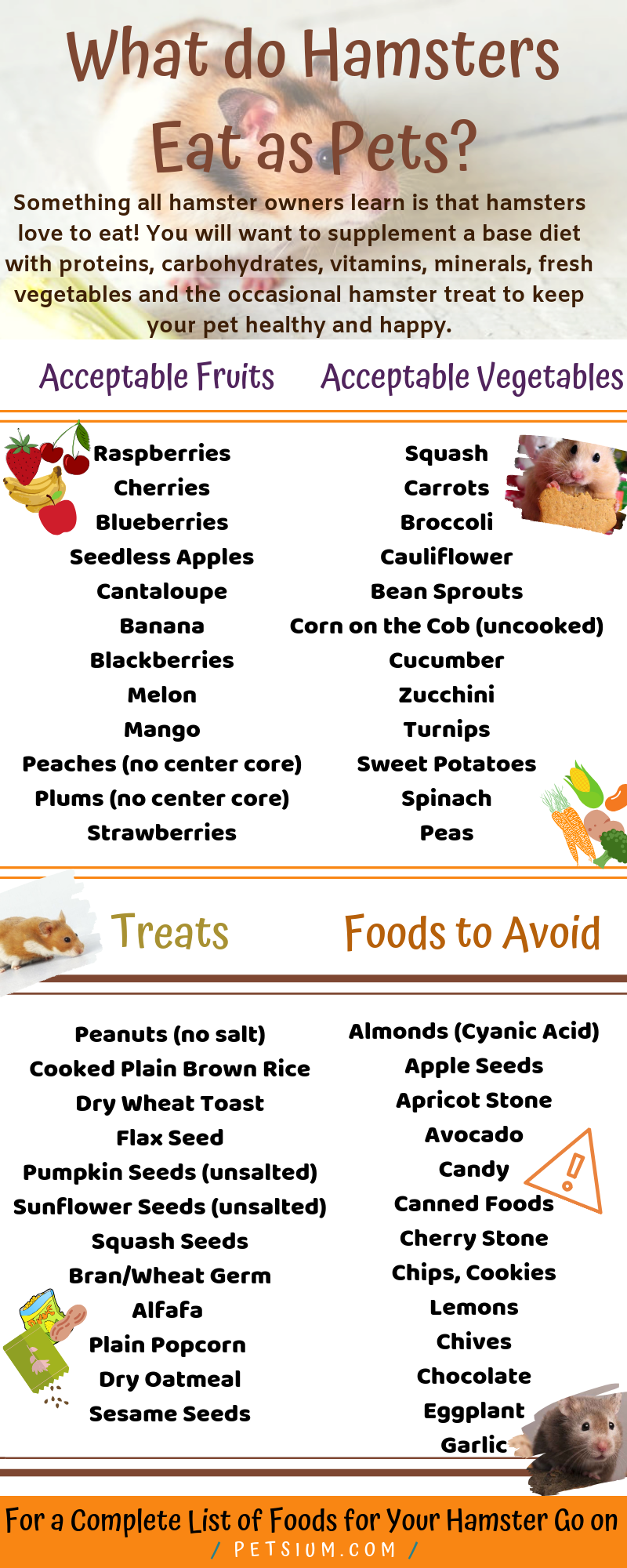
What Can Hamsters Eat Infographic

This is our hamster food guide on infographic. Feel free to share it, or place it on your website, just link back to petsium.com.

what can hamsters eat infographic

Категорије: Hamster Тагови: Hamster food

Detecting Skin Problems in Dogs

јул 11, 2019 By liv parmel

Like people, dogs suffer from a range of ailments that require attention and care.

While skin problems in dogs are sometimes caused by neglect they are also often difficult to prevent, and in some cases the cause may remain unknown until skin irritation develops.

Pet owners should be aware of a variety of culprits that cause skin problems in dogs in order to be best prepared to deal with this issue.

Sometimes dog skin conditions or infections can be caused by the poor living conditions of a dog.

A lack of cleanliness will cause bacterial and yeast infections.

If he is left outside, for example, there are various factors in the outdoors that could spark infection.

Constant exposure to dirt and fecal matter will cause skin problems in dogs.

Bacterial infections manifest themselves as small bumps on the skin.

Skin problems in dogs need to be addressed in order to keep your pet happy and healthy.

Most skin conditions cause irritation which results in constant scratching and leads to distress.

In severe cases it can even result in premature death.

dealing with dog skin problems

What Causes Skin Problems In Dogs?

A dog’s skin problem may be caused by something the dog has eaten, something that has come in contact with their skin or a genetic skin condition the dog has inherited.

There are 5 categories of skin problems in dogs:

Infections

Common dog infections include bacterial, fungal or yeast.

Allergic Skin Disorders

One of the most commonly over looked causes of skin problems in dogs is an allergic reaction to something in the food they are eating.

Some commercially made dog foods contain minerals and dyes that can cause an allergic reaction, or even be very harmful to your dog’s body system.

Parasites

External parasites known as Ectoparasites include mites, fleas and ticks.

These parasites can penetrate the skin barrier, leaving the area susceptible to bacterial infections.

Neurogenic

Is characterized by a dog excessively licking and chewing an area of their skin.

Common causes include boredom, separation anxiety disorder, confinement or frustration.

Environment

There are many things in your home that could be irritating your dogs skin condition.

Did you know that chemicals in your carpets, on your dogs collar and those on your lawn or garden maybe making your dog sick?

Are Skin Problems In Dogs Contagious?

There are both contagious and non contagious skin problems in dogs.

Contagious infections include parasitic, bacterial, fungal and viral skin diseases.

Mites, lice and some forms of mange are also contagious.

What Is The Best Shampoo For Skin Problems In Dogs?

The best shampoo for dogs prone to skin problems is a natural product which contains oatmeal and aloe.

Oatmeal keeps the coat healthy while aloe is a natural skin treatment for both humans and animals.

You should never use a human shampoo on a dog.

Dogs and humans have different skin types.

Human shampoo is designed to removed oils and a dog need their natural oils to keep their coat and skin healthy.

It’s best to use a dog shampoo that contains oatmeal and is formulated specifically for dogs.

Natural Treatments For Skin Problems In Dogs

These natural remedies can help to keep your dog healthy and happy.

Food allergies frequently manifest themselves as skin problems in dogs.

Taking your dog off all foods that contain food color, grains and corn may completely relieve the skin problem.

Feeding your dog hypoallergenic food may also solve the problem and is a common dog allergies treatment.

Baking soda and water applied directly to the skin of a dog can help to provide relief from itching.

Apple cider vinegar applied 2 or 3 times per week to the skin fold areas of the neck, groin and armpits can elevate yeast and fungus infections in your dog.

Two natural treatments for dry itchy or irritated skin in dogs are Milk of Magnesia and coconut oil.

Milk of Magnesia can be applied directly to the skin using a cotton ball or cotton pad.

Coconut oil can be applied directly to the effected skin area.

Allow the oil to soak into the skin for 4-6 hours.

guide to skin problems in dogs

Dog Skin Conditions

Oftentimes this condition is an indication that the dog has a compromised immune system and is unable to fight off the attack.

In this scenario, the root problem must be addressed.

If your dog suffers from allergies, excessive stress, or some other illness these primary problems must be dealt with first.

When your pooch’s immune system returns to normal, it will be easy for him to kick the infection.

Yeast infections

Yeast infections appear as a greasy brown paste, most often found in the ears.

Symptoms include a very bad odor and excessive itching and chewing of infected areas.

If your dog struggles with yeast infections, it is important that you keep him clean at all times.

Regularly bathe him and be sure that his environment, preferably indoors, is kept clean and regularly disinfected.

Dog skin allergies

Dog Skin Allergies – Dog skin allergies is the primary cause of skin problems in dogs.

When your dog has skin allergies, he or she will constantly chew or scratch at the same spot on their body.

This will then result in hot spots, red skin and hair loss.

In order for you to determine the cause of your dog’s skin allergies, you will need to add and remove things from the environment and diet, and watch what items your dog will have a reaction to.

Add more Omega-6 and Omega-3 fatty acids to your dog’s diet.

These include seasonal and food allergies.

Like people, dogs can be susceptible to allergens that come and go with the changes of season.

Pollen, mold, certain plants, and even dust may trigger an immune response that results in skin problems.

If you notice your dog scratching more during a certain time of year when these allergens are abundant, you should take him to the vet for confirmation.

He can prescribe your pooch a simple antihistamine that will great help to relieve skin irritations.

A change in diet might also help the problem.

Several well-known dog food brands carry special food for dogs with skin allergies.

Food allergies can be very dangerous in dogs because they are so hard to detect.

Although they are rare, they can become very serious when left untreated.

Keep an eye on your dog in the hour or so after he eats and observe any unusual behavior like chewing the feet, which is a symptom of food allergies.

Purchasing food made from all natural ingredients is a good way to avert skin problems in dogs caused by diet.

What Are The Different Types Of Skin Problems In Dogs

Parasites

Parasites – Generally, dogs are outside on a regular basis; as such, it is easy for them to pick up parasites.

The top three parasites that are responsible for causing dog skin problems are mites, ticks and fleas.

Fleas are quite difficult to deal with, as if they are not treated properly, your dog will most likely develop anemia and tapeworms.

One of the most effective ways to treat parasites is by having your dog take medication regularly, especially during April to September, which is the flea season.

Seasonal Allergens

Skin problems in dogs can also affect your pet only during specific parts of the year.

For instance, if your dog has an allergic reaction to pollen, then he or she will not show any symptoms during the winter season; however, as soon as spring returns, then you will notice him or her scratching incessantly.

Mold and ragweed are also common seasonal allergens.

In trying to treat your dog’s skin problems, you should use hypoallergenic shampoos and anti-inflammatory agents.

Remember that when you shampoo your dog, you should use cold water to assist in soothing the skin; hot or warm water will only cause the condition to get worse.

What Are The Different Types Of Skin Problems In Dogs?

Your dog’s skin and coat says a lot about its overall condition and health.

Skin problems in dogs are very common, and factors such as hormonal stimuli, environmental stimuli and insects are the primary causes of dogs’ skin problems.

Coat and Skin – A dog’s skin is nothing like that of a human.

While the human skin is tough and is made up of sweat glands and blood vessels, dog skin tends to be thinner and more sensitive and only has sweat glands in the feet pads.

Additionally, a dog’s skin aids in retaining water in various tissues, which is vital for protecting against foreign bacteria and bodies, providing insulation for cold and hot temperatures and producing vitamins.

Fleas – The most common of the skin problems in dogs are fleas.

Fleas are considered to be a type of parasite, and often times appear in small white and black specs of the coat of dogs.

When a dogs are bitten by fleas, they will experience mild itching, which is generally found in areas such as the back, hindquarters and tail.

In severe cases where the condition is untreated, dogs may either die or develop anemia.

Flea spray, dusting, collar and shampoo can be used to treat fleas.

You would also need to treat the dog’s bedding.

Ticks – Ticks are flat, small parasites that will attach themselves to dogs and continually feed on areas such as between the toes, in the head and around the neck.

All types of ticks have the ability to transfer various types of diseases, and may result in tick paralysis.

You have to kill the tick first, in order to start treating skin problems in dogs.

Use a Q-tip to apply ether, fingernail polish or alcohol to the tick, then you should grab the tick in the closest area of the skin and pull it until it is free from the dog.

If the infestation is in a small area, then this method is effective; however, if the area is larger then you need to try the dusting method.

Hypothyroidism – Hypothyroidism can be defined as a thyroid gland deficiency, where there is not enough thyroid hormone produced.

This is one of the skin problems in dogs that results in the hair becoming course and falling out, and the coat of the dog becoming thin.

Additionally, the skin will become tough, dark colored and thick.

This skin condition is also known to have an impact on the energy level of your dog, resulting in he or she lacking in mental sharpness, developing droopy eyelids and becoming sluggish.

Is уour dog suffering from skin infection

How to Escape Dog Skin Problems?

There is nothing more drastic and terrible than watching as your pet suffers.

Dog skin problems can appear despite the season and other health conditions of your pet.

Some of them are often neglected by the dog keepers.

However some symptoms can be significant signs of more serious disease developing in the body of your pet.

How to indicate some skin problems in dogs?

You should be attentive and follow the behavior of your dog.

If you notice your pet is constantly scratching and biting its fur, if you notice some bold spots and excessive fur fall off you should carefully watch through the dog’s skin.

There should not be red spots, bruises and clotted blood on the skin surface.

There are some breeds of dogs to indicate the dog skin problems are easy as they are bold (it means that their bodies are not covered with fur coat).

However those breeds with excessive fur are difficult to diagnose some skin disorders.

To find out something is wrong with the dog’s skin you should pay attention to those body parts which are not covered with fur (inner side of the paws, stomach and inguinal region).

Why it is important to examine the skin of your dog?

Dog skin problems are indicating the general health condition of the dog.

These are meaningful to perform the inner problems the dog is suffering from.

As other symptoms may be absent some skin problems in dogs are indicative of serious diseases.

That is why timely indication of the skin disorders can help to rescue the pet from suffering.

Another reason why you should be attentive to dog skin problems is that most of them can be contagious to humans.

Some of the diseases as fungal skin infections can be transmitted to people and be human health challenging.

If you pet suffers from such infections you should limit its contacting with other animals and people to escape contamination of other pets and humans.

Dog skin problems can be of different nature.

Some of these are immune-mediated and can be determined by the immune system deficiency or over activity.

Other dog skin problems are determined by outer physical and environmental factors (flees, impetigo, ticks, fungi and others harmful agents a pet can catch from the environment).

Mind that you should not try to treat dog skin problems on your own as these may be just symptoms of more serious disorders in the pet body.

You should consult with the veterinarian to choose the proper treatment.

Most skin problems in dogs needs complex treatments requiring skin and fur applications and manipulations as well as injections and oral administrated pills.

Some skin infections need a repeated treatment as the infection can not be totally fought in the body.

Together with infection treatment you should take care of the pet immune system strengthening.

Be careful of your pet health as some dog skin problems may challenge your well being.

There is nothing happier in your life watching as you pet enjoys its clear skin and fur!

Категорије: Dogs

8 Best KONG Dog Toys

јул 9, 2019 By liv parmel

All dogs love and need to play for physical activity and for mental development. But most of the dog owners can not give enough attention to their pets each day as they spend a lot of time at work. So dog can feel lonely, isolated and bored.

Boredom is the cause of many dog behavior problems, as the dog seeks an outlet to relieve its frustration and lack of attention. As a result, returning home one day, you can find teeth marks on your favorite pair of shoes or on a new book. To prevent this from happening, we recommend you to buy special interactive dog toys.

We sometimes discover that our dog’s chewing habits are more than we anticipated.

Interactive Dog Chew Toys Benefits

Buying dog toys for aggressive chewers can save you and your personal belongings a great deal of stress and destruction.

There’s everything from rubber toys, ropes, and bouncing balls to keep them occupied for a while.

By having a selection of dog chew toys handy you can ensure that:

  • Your dog does not chew up your property.
  • Your dog’s teeth and gums are kept in good condition.
  • Your dog’s overabundance of energy has a means of escape, relieving anxiety and boredom.

Try to have a few different toys, would be the best course of action after all just like us, dogs will become uninterested with no new incitation.

An assortment of dog chew toys will service you well, mixed in with a tennis ball and the odd random bone and your canine friend will love you even more unreservedly.

KONG best dog chewing toys

Kong The Number One Recommended Toy for Your Puppy

If you’re a new puppy owner, chances are someone’s told you to get your puppy a KONG. Breeders, behaviorists, trainers, dog owners – everyone seems to agree KONG is a great toy for all types of puppies as well as adult dogs.

What is a Kong?

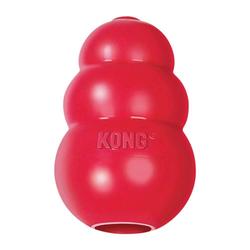
The KONG is a very strong rubber chew toy that is designed to hold and dispense treats to keep dogs entertained while they chew. Kong’s are usually red in color and shaped somewhat like a small beehive. They are hollow in the middle so you can stuff them with kibble, peanut butter or another favorite treat your puppy will enjoy.

The Kong Company offers a full line of Kong products for all stages of your puppy’s life. Standard adult Kong’s are red colored, with a super durable black variety designed for extreme chewers. Puppy Kong’s are available in pink or blue and are made of slightly softer rubber. There are also floatable Kong’s for playing in water, teething stick Kong’s, Kong balls and many other varieties.

What’s so Great about a Kong?

There are so many wonderful things about Kong’s Toys, different dog owners will tell you different things. The things most dogs and their owners appreciate are:

  • Kong’s bounce. They are a great choice for interactive play games like fetch as well as independent play.
  • Kong’s are durable. Although the Kong Company takes great pains to point out “no toy is indestructible,” appropriately sized Kong’s toys can and do last for years.
  • Kong’s hold all kinds of treats. You can put hard treats, kibble or biscuits in them for you dog to try to remove. Or, you can put soft foods in them such as peanut butter, plain low-fat yogurt, mashed banana or even brown rice for your dog to lick out.
  • Kong’s are easy to clean. You just wash them with water or water and a very small amount of mild dish detergent and they’re good as new.
  • Kong’s are inexpensive. Combined with the fact that they’re durable, they’re a great investment.
  • Kong’s are crate safe. Although no toy can be considered absolutely, 100% crate safe, if your puppy’s Kong is the right size and it is in good condition, it is probably the safest choice you have for your puppy’s crate.
  • Kong’s are fun to chew on. The texture of Kong’s is ideal for teething puppies. It is more fun for a puppy to chew on a rubber Kong that holds or at least tastes like a treat that’s already been eaten than it is for them to chew on furniture, shoes or practically anything else.

Kong Size and Replacement

By introducing your puppy to a Kong toy at a very young age, you will help him learn to play with and enjoy a toy he can literally have for years. As your dog grows and matures, you can select the right size KONG for every stage of his life.
To choose the right size KONG for you puppy, take a look at two things: the size of his mouth and his chewing ability. If the Kong fits comfortably in your puppy’s mouth, it is too small and you should go up to a size or two bigger.

If your puppy’s KONG begins to show any signs of wear whatsoever such as cracking, it is time to move up to a tougher adult KONG. Since Kong’s exercise puppies’ and dogs’ jaws, expect that you will have to go up to a larger size and harder rubber variety in time.

The Best Dog Chew Toys

If you’re finding it challenging to tempt your dog away from your furniture, try a dog chew toy with a treat hidden inside, a good dog chew toy such as the KONG Toys.

These are made from hard thick rubber and come in a range of sizes for the more aggressive chewer, and with a treat inside it will keep your canine friend occupied for hours.

The KONG classic is not overly large either so if you have an aggressive chewer that likes to shake his toys it is less likely to cause damage if he lets go while shaking it!

Interactive Dog Toys by Kong

Interactive dog toys often pique the curiosity of our beloved canines, and this curiosity allows them to get the stimulation that they need.

Comforting dog toys on the other hand, are used mostly to help your canines get rid of stress, they help your canine get rid of anxiety, and they also help your dog to learn new commands at the same time.

Touted as the world’s best dog toy, KONG dog toys set the standard for durability, functionality and performance.

With millions of satisfied pups and humans around the world, KONG dog toys are highly recommended by veterinarians, trainers and other canine professionals.

The „Classic“ Kong

Quite possibly the world’s most popular dog toy, the „Classic“ KONG is ultra bouncy and absolutely irresistible for dogs who love to chew. The KONG Classic Dog Toy is without question the most popular dog food puzzle toy. It comes in the normal Red and an Extreme Black version for especially powerful chewers.

The best way to use the Kong is to mix dry treats with some sort of wet or sticky food. You can use a little bit of peanut butter smeared along the inside of the cavity, then fill the rest with regular kibble and, if your dogs are kind of experts, stuff some big treats that are really hard to get out. Top off with a bit more peanut butter.

Another good option is mixing plain yogurt with the treats or kibble. There really is no limit to what you can mix in (provided it is safe for your dog).

Tip: Freeze the stuffed Kong to make it more challenging!

Available in six sizes, it’s legendary for it’s strength and „treat in a toy“ functionality.

Recommended Product:

classic kong dog toy

Kong Classic Chew Toy for Dogs by KONG

FEATURES:
Fun to chew chase and fetch. Ideal for dogs that like to chew while also fulfilling a dog's need to play.
Promotes healthy teeth and gums.
Durable natural rubber with an erratic bounce.
Recommended by veterinarians and trainers worldwide.
Add to the fun by adding KONG Snacks and topping with KONG Easy Treat.

Buy on Amazon

„Air KONG Squeaker“

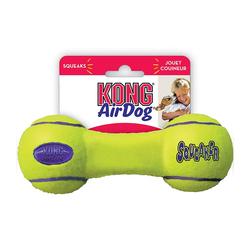
One of best KONG’s toys is the „Air KONG Squeaker“: a hybrid of tennis ball and squeaky toy.

Exceptionally designed, the Air KONG Squeaker combines two classic toys to create one durable, high quality KONG dog toy that will engage your pup for hours on end.

Recommended Product:

kong air dog toy squeaker

KONG Air Dog Squeaker Toy

FEATURES:
The non-abrasive, high-quality material will not wear down dogs' teeth.
Tailor-made for games of chase and fetch, this toy conceals an irresistible squeaker inside.
The dumbbell shape has a silly, unpredictable bounce, and it even floats, for hours of retrieving fun (and training) by land or by water.

Buy on Amazon

The „Puppy“ Kong

Another KONG toy is specially made for your young pup.

Super bouncy and, of course, durable, the „Puppy“ KONG is available in three sizes and comes in blue and pink.

Perfect for puppies up to 9 months old, this KONG is the perfect toy for your young furbaby.

Recommended Product:

kong puppy chew toy

Puppy KONG Toy

FEATURES:
Great toy to make crate training easier or extend play time.
Helps solve: Chewing, Teething, Separation Anxiety, Boredom, Weight Management, Crate Training, Digging, and Barking.
Insert treats to extend play time.
Natural teething rubber fun to chew, chase and fetch.

Buy on Amazon

The „Braidz“ Kong

If your dog loves to squeak in addition to shaking and tugging his or her toys, then put the KONG „Braidz“ toy on your „must have“ list.

Designed with soft but durable material, the Braidz toy comes in different sizes as well as characters such as giraffes, zebras and monkeys.

Recommended Product:

kong dog squeaky toy

Spunky the Monkey Cozies Dog Squeaky Toy by KONG

FEATURES:
The cute, soft and cuddly plush toys are perfect for a game of fetch or as a comfort toy for your furry friend.
Minimal filling for minimal mess.
Extra layer of material to increase strength.
Squeak to help entice play.
Not for chew sessions.

Buy on Amazon

The „Extreme“ Kong

Made just for large dogs with powerful jaws, the „Extreme“ KONG is used worldwide by military K-9 teams, police K-9, AKC competition trainers and other professional canine fields.

The Extreme KONG is designed to be virtually indestructible – and big dogs love them!

Recommended Product:

kong extreme dog toy

Extreme Kong Dog Toy by KONG

FEATURES:
The Extreme dog toy represents the most durable strength of KONG rubber.
Designed for the toughest of chewers.
The KONG Extreme offers enrichment and helps satisfy dogs' instinctual needs.
Stuff with snacks and freeze for a longer-lasting challenge.

Buy on Amazon

The „Senior“ Kong

If your pup isn’t a spring chicken anymore, then look no further than the „Senior“ KONG.

Made with a „senior formula“ natural rubber, the „Senior“ is an excellent option for dogs with aging jaws and teeth and keeps your older pup feeling young and playful.

Recommended Product:

senior kong dogs toy

Kong Senior Dog Toy from KONG

FEATURES:
The Senior dog toy from KONG is customized for an aging dog's chewing and play needs.
The unique, all-natural KONG Senior rubber formula is designed for teeth and gums that have enjoyed chewing for years.
Designed to provide a gentle and comfortable chewing outlet while offering enrichment and satisfying an older dog's instinctual need to play.

Buy on Amazon

The „Dental“ Kong

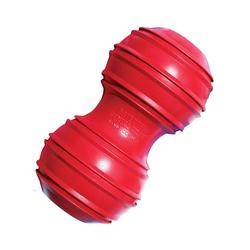
Half toy and half teeth cleaner, the KONG „Dental“ comes in two shapes and has patented Denta-Ridges that help reduce food debris and plaque while gentle conditioning and cleaning the teeth and gums.

Not only is the „Dental“ a great treat dispenser and fetch toy, but it’s an easy and fun way to add dental hygiene to your dog’s playtime.

Recommended Product:

dental toy for dogs from kong

Durable and Natural Dental Dog Toy by KONG

FEATURES:
The KONG Dental has special grooves that clean teeth and gums as dogs chew.
KONG Easy Treat can be used inside the grooves to get your dog chewing.
This fun, versatile chew combines the functions of a treat dispenser, toothbrush, and classic fetch toy, all in one.
Made from the super-tough, puncture-resistant natural rubber.

Buy on Amazon

The „Flyer“ Kong

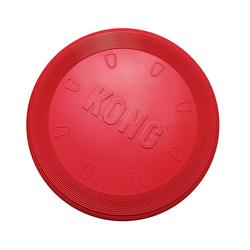
For the ultra active dog, the KONG „Flyer“ is a durable, rubber, flexible, flying disc – basically, the world’s coolest and strongest frisbee.

Soft-catch and precise flight make this member of the KONG family perfect for a fun game of catch and fetch with your pup.

Recommended Product:

perfect dog flying disc for games of fetch

Kong Flyer Toy for You and Your Dog by KONG

FEATURES:
Made with durable rubber, the Flyer is safe for teeth and gums.
If your dog loves to fetch and catch, then the Flyer is the best, safest product for play.
It features accurate flight and the durable rubber creates a soft catch meaning your dog will want to catch it again and again!

Buy on Amazon

How to Select the Best Chew Toy for your Dog

Selection of the toys for your dog is not easy; it can take multiple trial and errors before you find the best Toys for your dog.

Make Sure the Chew Toy is safe for your Dog

Safety is most important, read the manufacturer guidelines carefully before Buying Dog Toys and make sure the Toy is safe for your dog breed.

Choose the Right Size

It shouldn’t be too small to cause choking hazards and it shouldn’t be too large either to avoid casing injury or your dog may lose the interest.

Keep in mind your Dog’s Age

The choice of Toys would largely depend on the age of the dog.

A Puppy may like something small, soft and easy to play.

However a big dog may like Hard Rubber Toys which he can chew for hours.

Provide Ample Choice

It is a very good idea to have more than handful of Dog Chew Toys.

The Choice of toys will keep the dog interested all the times.

Consult your Veterinarian

Don’t be afraid to ask Your Veterinarian.

He knows about it all and would be able to help you select the right kind of toys for your dog.

Rubber dog toys are perfect for dogs that need a toy that is a bit more robust.

These tough dog toys will stand up to a lot more chewing from your dog, they can also help with the dental health of your dog, removing plaque and strengthening gums.

Whichever your favorite KONG dog toys may be, they will keep your pup contently occupied, engaged and entertained for hours on end.

Find your favorite today!

kong rubber toys features

Категорије: Dogs

Persian Cat Colors and Patterns

јул 6, 2019 By liv parmel

The Persian breed is the most popular breed of cat these days.

Persian cats come in almost every color and pattern imaginable.

There’s a color for every person’s taste.

Persian cat colors

Persian Cat Colors and Pattern Divisions

In CFA, the Persian is broken into 7 divisions based on color patterns.

However, it is unfortunate that the Persian cat color’s popularity is declining since 2004.

  • Solid Color Division
  • Silver and Golden Division
  • Shaded and Smoke Division
  • Parti Color Division
  • Tabby Division
  • Bi-Color Division
  • Himalayan Division

Solid Color Persians

The solid color Persians have big copper eyes, with the exception of the solid whites.

Whites can have copper (CEW), or blue (BEW) eye color, and can even have one eye of each color, known as Odd-eyed (OEW).

Solid Division Colors:

  • White (CEW)
  • White (BEW)
  • White (OEW)
  • Black – shiny coal black
  • Blue – pale slate blue
  • Red – rich red color
  • Cream – very pale in color
  • Chocolate – warm dark brown (cc)
  • Lilac – pale lavender with pale pink highlight (cc)

Persian cat white color

Silver and Golden Color Division

Silver and Golden Persians have green or blue-green eyes that are rimmed, or lined, in black.

The nose is also lined in black is warm cream.

The Shaded pattern has even black tipping on the back and sides, and Chinchilla is a lighter version of the same pattern.

The basic ground color of the Silver is white, and of the Golden.

  • Shaded Silver
  • Chinchilla Silver
  • Shaded Golden
  • Chinchilla Golden

Shaded and Smoke Color Persians:

Shaded and Smoke Persians all have big copper eyes, and come in a variety of colors.

The Shell and Shaded colors have a white undercoat with red or cream tipping.

The Smoke colors have a white undercoat with heavy tipping, and appear to be a solid cat until you part the hair.

Shaded Cat Colors:

  • Shell Cameo
  • Shaded Cameo
  • Cream Shell Cameo
  • Cream Shaded Cameo

Smoke Cat Colors:

  • Black Smoke
  • Blue Smoke
  • Cameo (Red) Smoke
  • Cream Smoke
  • Smoke Tortoiseshell
  • Blue-Cream Smoke

Persian cat black and blue smoke colors

Parti-Color Persian

Parti-color Persians have big copper eyes.

Parti-Color Division Colors:

  • Tortoiseshell – coal black with big patches of red
  • Blue-cream – very pale shades of slate blue and cream
  • Chocolate Tortoiseshell – deep chocolate brown with patches of red
  • Lilac-cream – pale lavender with pale cream

About the Tabby Persian Cat Colors:

Tabby Persians have big copper eyes, with the exception of the silver and blue-silver tabby, who have green or hazel eyes.

The three Tabby patterns apply to all color with the noted exceptions on the Patched pattern.

Tabby Division Colors:

  • Silver
  • Blue-Silver
  • Red
  • Brown
  • Blue
  • Cream
  • Cameo
  • Cameo-Cream

Tabby Division Patterns:

  • Classic (bulls-eye on side of cat)
  • Mackerel (narrow lines)
  • Patched (classic or mackerel markings with red patches; not available in red, cream, cameo.)

PrettyLitter Ultra Premium Cat Litter

Bi-Color Persian:

Bi-Color Persians have big copper eyes, with the exception of the silver tabby with white, who have green or hazel eyes.

The Bi-Colors may come in one of two patterns, Classic and Van.

The Classic pattern is a cat that is white on the legs and underside and the color is on the top and sides.

The Van pattern is a white cat with spots confined to the extremities, and no more than 2 color spots on the body.

Himalayan Division

The Himalayan cat was originally created by breeding Siamese to Persian several decades ago.

The goal was to create a Persian-style long-haired cat with the Siamese color pattern.

This was quite an accomplishment if you compare the two breeds.

Persians and Siamese are quite different physically, with completely different head and body structures.

The only features that reflect the Siamese cat are the colorpoint pattern and colors, and the beautiful blue eye color.

himalayan cat

Color, on a Himalayan, refers to the color of the facial mask and extremities (ears, legs, tail), or point color.

The body color ranges from white to a cream or light fawn color.

The point color can be with or without the Lynx (Tabby) pattern.

With the Lynx pattern, tabby stripes are confined to the points and the mask only, and the „M“ marking seen on the Tabby Persian is visible on the mask of the Lynx Point Himalayan.

With years of selective breeding to Pure Persian cats, the Himalayan has evolved to the Persian breed standard.

It should be noted that the offspring of a Himalayan bred to a Solid pure Persian will not be color-pointed, but will carry the Himalayan colorpoint gene.

These cats are referred to as ColorPoint Carriers (CPCs) or Hybrid Persians.

These offspring can then be bred to another color-pointed or CPC cat and produce colorpoint offspring.

The solid Chocolate and solid Lilac Persians are always CPCs as this color results from the Siamese pattern and colors.

Persian Cats

All Himalayan colors come in both the Traditional pattern and the Lynx Point pattern.

Himalayan Cat Colors:

  • Seal Point
  • Blue Point
  • Chocolate Point
  • Lilac Point
  • Flame (Red) Point
  • Cream Point
  • Tortie Point
  • Blue-Cream Point
  • Chocolate-Tortie Point
  • Lilac-Cream Point

Who Are Persian Cats

The Persian cat is an old breed, and no one really knows just how old it is.

Some believe that the long coat comes from the Turkish Angora, an old established breed.

Decades of selective breeding toward an ideal written standard has greatly influenced and defined the look of the Persian today.

The Persian cat of today is a large to medium cat, and has a massive round head, with big round saucer-eyes set wide apart.

They have small rounded ears set very low on the head, and have a snub nose placed right between the eyes.

These features give the Persian a doll-faced look, and from the profile, appear flat-faced.

Persian Cat Facts and Personality

The body of a Persian cat is heavy-boned.

They have thick, sturdy short legs to support a massive boxy body.

The width at the shoulder is the same as the width at the rump. Persian cats have 5 toes on each of the fore paws, and 4 toes on each of the back paws.

The tail is not extremely long, and reaches about halfway up the back if pulled forward.

Persians have varying coat types, both texture and length.

Some have long flowing silky coats, others may have cottony coats, still others may have a combination of both cottony and silky coats.

With the short legs and the long coat, Persians often give the impression of „coat to the floor.“

The Persian is typically an easy-going affectionate cat.

They are playful, yet not overly active.

Due perhaps to their mass and short legs, they are not usually prone to climbing or jumping from great heights.

They are not particularly talkative, and have a sweet-sounding voice.

Their favorite activity seems to be showing off their own beauty, and of course, eating.

Persian Cat

Категорије: Cats Тагови: persian cat colors, persian cat personality

The Answers to Your Puppy Behavior Problems!

јул 4, 2019 By liv parmel

There are some things every person should think about before getting a puppy. One of them is the puppy behavior problems that come along with getting a new puppy. Yes, puppies are cute, sweet and adorable but there will be behavior issues that will come up that won’t seem anything but cute.

Got a New Puppy? Prevent Future Problems and Train Your Puppy Good Behaviors

Here are some puppy behavior problems to expect as a new dog owner:

Establishing Alpha Status

Every dog owner should understand and know that being the alpha in the family is CRUCIAL. If you haven’t established who’s alpha dog status yet, your dog is headed for trouble. Your dog is going to struggle with dominance which can lead to all sorts of behavioral issues. That’s why it’s so important to teach your dog that your the alpha at a young age.

stop puppy bad behavior

Nipping and Mouthing

Nipping and mouthing is a common occurrence when it comes to puppies. That’s what they do to explore and learn about the world. This issue will have to be addressed before it worsens.

Dogs who haven’t learned to control their bite inhibition by a certain age may become one of those “ankle biters” and make people uneasy to be around.

Separation Anxiety

We know how much you wish you could just stay at home with your puppy, but how realistic is that? Your dog may or may not go through separation anxiety but it’s important for you to be prepared for it in case he does.

Separation anxiety is the number one reason for puppy behavior problems and can be caused by many reasons. 1. Alpha has left the house-your dog may not know what to do when the alpha leaves the house. 2-Your poor pup may be worried that you’ll never come back and is worried about you. A number of reason why it happens. Separation Anxiety is one of the number one causes for behavioral issues.

There are also other issues that as a dog owner you probably will have to deal with. Training is crucial if you want to raise puppy to be a well behaved and mannered dog.

Do you avoid having company over because of the fear of your dog pestering your guest? Are you afraid that one of these days your dog may seriously hurt someone? Or may even have to pay the awful price of losing your dog for this puppy behavior problem that could have been avoided.

You can get professional help to train your dog or you can take matters into your own hands and train your dog yourself.. Either way it’s important for your dog to get training. Training your dog should not be difficult. It won’t be easy, it will take a lot of practice, consistency and a firm hand to fix and prevent puppy behavior problems.

Want to Know How to Become Alpha Dog?

You should know how important it is for you to be the Alpha when it comes to having a dog. By being the alpha you set the rules, you set all the boundaries, you make the rules, and you make all the decisions. You need to learn how to become alpha dog.

Train Your Dog to Obey You Fast and Effectively!

If your dog is the alpha dog, then there is going to big HUGE problems if there hasn’t been any already. If you haven’t establish alpha status yet then your dog is going to struggle for dominance meaning major behavioral issues to come like biting and aggressiveness. Here are the following tips you can use to become the alpha dog in the house.

how to become alpha dog with your puppy

Become Alpha Dog: Stare Down

In pack animals, the alpha dog will stare into the eyes of other dogs to remind them who’s boss. Making eye contact for several seconds will help your dog understand who’s the pack leader of the family. Make this a fun exercise.

Use the “watch me” cue to establish eye contact with your dog. When your dog makes eye contact with you, praise him. Do not let be the first one to break the stare. If your dog is struggling to become alpha, you and your dog may end up in a staring contest. Whatever you do, don’t look away otherwise you’ll only confirm to your dog that your not the alpha dog.

Become Alpha Dog: Daily Alpha Exercises

Simple commands like “sit and stay” will help remind your dog that you are the alpha dog. Try using the command “sit” everyday with your dog. Before you feed your dog, let him out to go outside and before playtime tell your dog to “sit”. By doing this everyday into your dog’s daily routine, you will remind your dog that he must wait for your approval before he dives right into to what he wants to do.

This is a simple way to become the alpha dog in your family.

Become Alpha Dog: Using an Air of Authority

Keep in mind that dogs are very observant animals. If act shy, timid, or insecure around your dog, you are not giving your dog the air of authority. In order to be the alpha you need to do more than “talk the talk” you also need to “walk the walk”. This means you will need to have the attitude of an alpha.

Alphas are confident. If you have the mindset of an Alpha, you need to follow through with the actions. You need to speak with confidence, project your voice and stand tall. Be gentle but firm, you don’t need to be a bully to be an alpha. Don’t ask your dog to do something, make sure you tell your dog what you want.

People who are naturally confident people don’t need to become alpha dog because they ARE the alpha dog. Your dog won’t have to struggle trying to be dominant one because with these simple tips, you’ll show your dog who’s the alpha dog.

Imagine… a Way to Stop Dog Nipping!

Ok, Dog owners, understand the difference between dog nipping and aggressive biting. Nipping is when a dog playfully bites and mouths you. Aggressive dog biting is when a dog feels threaten, is on the defense mode and will bite to protect themselves. It is really important to stop dog nipping. Imagine a full grown dog that never was taught to learn the nipping wasn’t acceptable. A little frightening right?

train your puppy to stop nipping

Stop Dog Nipping : Why Do Dogs Nip?

Nipping is most common with puppies but can also occur with older dogs who haven’t learned biting inhibition properly. Dog nipping is a form of communication and how dogs explore the world. Very similar to when a toddler puts everything in site in their mouth, they are exploring the world with their mouths, they just haven’t learned proper etiquette yet.

Just as your hands are very important to you, our mouths are very important to us. Since birth, we’ve used our mouths to explore everything-our environment, mother, and brothers and sisters.

Dogs who are older and that tend to nip usually have owners that like to roughhouse with them, this encourages nipping. Another reason why dogs nip is because they were taken from their litter to early.

Stop Dog Nipping : What is Bite Inhibition?

When puppies play with their siblings, they learn bite inhibition. Bite inhibition is when we learn that if we bite too hard, our siblings will not want to play with us anymore, socially isolating us. When another puppy bites us too hard, then we learn to feel pain associated with dog nipping.

When we are nursing and we bite too hard, our mother would stop stand up and walk away. This is another way we learn bite inhibition. This is why puppies who are taken from their siblings and mother to early miss out on this important lesson.

Even if your puppy has learned bite inhibition, as a dog owner, reinforcement bite inhibition is crucial, especially when bringing home a new puppy to prevent dog nipping in the future. As puppies, nipping won’t do much damage, but imagine the harm that a larger and full grown dog can do.

Stop Dog Nipping: How to Teach Bite Inhibition With Older and Younger Dogs

Playing with your puppy will require you to adjust and pick the level of mouthing you want to accept. Whether you are prepared to accept your puppy gently touch with their teeth to you hands as long as they don’t hurt you or choose the no teeth contact, whatever you decide to choose, either one is acceptable.

Once you’ve figured out your tolerance level with your new puppy,if you dog nips you, firmly say “NO” and walk away. Ignore your dog for not more then 20-30 seconds because he may forget what lesson he is learning. This is really important to stop dog nipping.

Younger dogs, along with some older dogs have the tendency to chew. They will chew on anything they can get their mouths on. If your playing with your dog, to keep your dog from chewing on your fingers, provide something else they can chew on, like a milk bone, rawhide or anything that will help satisfy his need to chew.

When your dog stops nipping you make sure you praise your dog for this behavior.

Stop Dog Nipping : Establish a Way to Prevent Dog Nipping Without Corporal Punishments

Always avoid any form of physical force to stop your dog from nipping or mouthing. This will only encourage more nipping and mouthing. The most effective way to curb this behavior is the cease all play technique mentioned above. Dogs are smart, he will eventually figure out what not to do if he wants to playing or interact with you.

Teaching and reinforcing dog biting inhibition is crucial to prevent further problems that may occur with dog nipping.

3 Simple Ways to Deal With Puppy Separation Anxiety

Separation anxiety is the number one reason for behavior issues. Many dog owners don’t connect their dog’s behavior to separation anxiety. So many dogs are put to sleep or homeless because their owner’s couldn’t deal with their behaviors anymore. If they only knew that their dog was dealing with separation anxiety, more dogs would have a place to call home right now.

Is Your Dog Suffering From Separation Anxiety?

Separation anxiety is common with dogs. Dogs are pack animals. They get very stressed out when someone in their pack leaves, mainly you.

Here are some things you should know about puppy separation anxiety. First things first, as a dog owner, you should be able to recognize the symptoms of your puppy separation anxiety.

how do you stop separation anxiety in puppies

What are the symptoms of puppy separation anxiety?

Destruction (Chewing and Scratching) – Are you coming home to a place that looks like a war-zone because you dog chewed on everything, including your most favorite items? This is a big sign that your dog has a separation anxiety. They usually chew on objects that have your scent. That’s why so many people come home to their favorite items all chewed up, like their shoes.

Whining & Barking – When your dog barks and whines while your away is a big sign of distress that your dog may be suffering from separation anxiety.

Clingy and Demanding – Your dog turns into your shadow or constantly following your when you return home . They become very demanding for attention. Encouraging this behavior by lavishing them with attention does not help the situation.

Anxiousness – If your dog becomes anxious or whiny while your getting ready to leave the house is a big sign of puppy separation anxiety. They know you are about to leave and that’s when their separation anxiety begins.

Eliminating In the House – A very common sign of separation anxiety is when your dog eliminates in your house. It’s common to find “accidents” when your training a new puppy, but if your dog is already potty trained than this is a sign your poor puppy has separation anxiety.

Very Excitable When Your Return – Does your dog gets so excited upon your return that their doing laps around the house? This is a big sign of puppy separation anxiety.

What You Can Do to Prevent Puppy Separation Anxiety

An effective way to deal with puppy separation anxiety is crate training. Having a special place for your dog to feel secure while your away is important to prevent destructive behaviors. When your dog feels vulnerable, he will have a place to go to feel secure and safe while your away.

Reduce your puppy’s separation anxiety by getting them used to your “getting ready to go out” cues. For example, put your shoes and jacket on off and on throughout the day and grab your keys now and then. This will help prevent your puppy’s separation anxiety from kicking in when you actually prepare to go out.

A good way to prevent behavior issues from occurring is making sure your dog gets enough exercise. I don’t mean sticking your dog in the backyard while your inside watching TV. Making sure your dog gets enough exercise requires you walk your dog several times a day. A tired dog is a happy and well behaved dog!

Don’t forget mental stimulation as well as physical exercise. Socialize your dog with other dogs, play fetch, explore new places together, and invest in buying a kong toys (a great mental stimulation and babysitter while your away).

Remember, your dog isn’t trashing your belongings to “get back at you” for leaving. Puppy separation anxiety is fear that your poor dog gets when a member of their pack leaves. Reducing puppy separation anxiety will reduce bad behavior.

Категорије: Dogs

What to Look for when Adopting or Buying Guinea Pigs

јул 3, 2019 By liv parmel

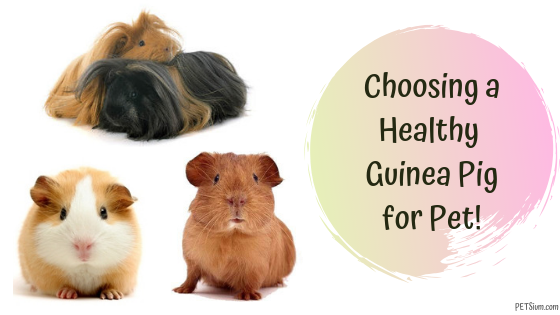
When looking at different guinea pig breeds to buy or you are seeking guinea pigs for adoption, then you must ideally choose the healthy ones to take home with you. If you already own a cage full of cavies and you notice one or more of these signs on any of them, then have your pets treated right away.

Cavies are prone to many diseases. An untreated infection can kill them easily. It is inhumane to simply let them to perish because of lack of foreknowledge on how to properly take care of them.

choosing a healthy guinea pig for pet

Important Indicators of a Healthy Guinea Pig

Look for these signs. They will guide you on how to tell the overall health condition of a cavy.

  • Guinea pigs are always active, curious, and very inquisitive. It is in their nature to act that way. Healthy guinea pigs love to move around. So, when you see a lethargic cavy, then that means something is wrong. The pet animal is sick.
  • The fur coat of a disease-free cavy is well-groomed. The coat is fluffy and smooth. The presence of bald or red skin patches indicates skin diseases.
  • A soiled area around the rear end of a cavy indicates problems with diarrhea.
  • A healthy cavy has no lumps anywhere on its body.
  • A normal guinea pig is neither fat nor skinny.
  • The eyes, ears, and nose of a guinea pig must be free from any discharge. Wetness or crusting on those areas may point to a parasitic infestation or a bacterial infection.
  • Look at the teeth. They must not be overgrown at all. The cavy’s teeth must be well-aligned as well.
  • Pay attention to the chin. The chin area must not contain a wet or a matted fur.
  • Observe how the guinea pig breathes. It must breathe quietly. Wheezing, labored breathing, and gurgling noises are all signs of respiratory illnesses.

If you buy cavies, observe its surroundings in the pet shop. Cavies that are kept in clean cages where they have access to fresh food and water thrive well once you bring them home. Guinea pigs raised in overcrowded environments have higher risks of exposure to diseases. Moreover, overcrowding instills psychological stress.

When you about to get a guinea pig, here are two things to keep in mind:

Get pet animals from the shelter first. There are so many of these little animals out there. They need a second chance at ending up in a loving home that only you can provide.

Separate male and female guinea pigs. They mate uncontrollably. And for female guinea pigs aged four weeks old, an instance of pregnancy can be fatal. And who can manage a small cage filled with litters? If you can’t tell the gender, have the pet seller do it for you.

Considerations When Buying A Guinea Pig

The guinea pig continues to be a popular and ideal pet for many families. Guinea pigs are good natured and easy to care for. They’re not expensive to keep, and they respond well to being handled and cared for. Families with young children will find guinea pigs to be gentle and endearing companions in the home.

If you are thinking about buying a guinea pig but you are not sure how to go about it, know that there are some things you need to consider. Here are a few of them:

Who will be responsible for the Guinea Pig?

Before heading off to purchase a guinea pig, it helps to identify who will be ultimately responsible for it. Figure out who will do the feeding, cleaning and spending for the guinea pig. Often, when no one person is assigned, no one ends up doing the things that need to be done (or you end up with the extra chore).

Guinea pig pairs and groups

Guinea pigs are social animals. It is always advisable to keep them in pairs or in groups. Just remember that the more guinea pigs you have, the bigger space you need to allot to them. Aggression is a trait that surfaces when guinea pigs are subjected to scarce space and resources. Also guinea pigs can multiply quite rapidly. So if you are not planning on caring for a family, choose to keep guinea pigs of the same gender.

Guinea pig breeds

There are several breeds of guinea pigs that you will find in pet stores. They differ in color and in the length of their fur. Researching before you buy will prepare you for any special care that each breed may require.

Temperament

The temperament of guinea pigs are based more on personality than on gender. A guinea pig that is used to being handled by owners from a young age will not mind being picked up and will not want to be scratch or bite when handled. When buying a mature guinea pig, check to make sure it has been sufficiently domesticated.

Guinea pig needs

When buying a guinea pig, don’t forget to also purchase the things that they will need. This includes an enclosure of sufficient size, such as a guinea pig hutch or a cage, beddings, food, grooming needs and even a few toys.

Other pets in the house

When introducing guinea pigs to a household that already have existing pets, it is important to introduce them properly to ensure that they will get along well.

can you introduce new guinea pigs to old ones

What to Do When Introducing New Guinea Pigs to Old

When introducing new guinea pigs to old guinea pigs in your home, it is important to observe certain rituals to make sure the new addition to your family is well received by your existing guinea pig or piggies. Before you go and select a new member to your cavy family, it is interesting how age and gender can affect how easily it will be for the old cavy to accept the new one.

Here are some things to consider:

  • An adult male guinea pig is averse to sharing his space with another adult male guinea pig. The old one will treat the new one as a threat and reject him.
  • A baby male guinea pig can be made to get along with an adult male guinea pig.
  • It is fairly easy to get a baby male guinea pig to get along with a female guinea pig.
  • Female adult guinea pigs can be made to get along with another adult female guinea pig.
  • If your adult male guinea pig is neutered, it will be easier to make him get along with a new female guinea pig
  • When you plan to have a group of guinea pigs, realize that a male guinea pig will be able to get along with a herd of females. But when you have two adult males and even just a single female guinea pig, they will constantly fight.
  • Unless you want to breed guinea pigs, neuter your male guinea pig.

Now, before allowing any interaction between the new guinea pig and the resident cavy, quarantine the new arrival for 2 to 3 weeks. Put the new cavy in a cage and situate it in a different room in the house. When handling the new cavy, be sure to thoroughly wash your hands right after. Wearing an apron also helps so you don’t need to keep on changing your shirt after handling the new pet.

The reason for the enforced quarantine is to make sure your new cavy does not carry any parasites or infection that can easily spread to the other guinea pig or piggies in your home. It may seem like a long while to wait, but you need to find the patience for it. Unless the new cavy has a clean bill of health, you should wait before introducing her to her new family.

When introducing the new guinea pigs to old, select a neutral location. Make sure the neutral location is clean. If it has any guinea pig toys or stuff, be sure to wash these well to remove any trace of scent.

Before letting the new guinea pigs meet, be sure you are thoroughly prepared. Wear a mitten (oven mitts will do) and have a towel ready to use as a distraction in case things don’t go so well. Lay down a clean blanket in your neutral area and put food or treats in the center.

Make sure the space that you select is quiet without anything that can distract your guinea pigs. You want the first interaction to be as positive as possible.

When everything is ready, put the old and the new guinea pigs on the blanket. Initially, they may show some aggressive behavior such as teeth chattering or some aggressive contact as they try to sort out who the dominant guinea pig is. You should allow this as long as no serious injuries are being inflicted. After a while, they should both calm down and start playing with each other.

If it does turn violent, be ready to throw the towel at the old hamster, and with your protected hands, bring the guinea pigs back to their separate enclosures. Repeat the same process to introduce them to each other after a couple of days.

All About the Pregnant Guinea Pig

It isn’t hard to imagine a house full of guinea pigs- and nearly every guinea pig owner will give testimony to that. Some guinea pig owners actually devote an entire room to their guinea pigs- granted these are owners with a true passion for the pet.

However, the adorable, fun-loving, spirited guinea pig is something that makes you feel as though it is time for a family- for the guinea pig, anyway. And, it is hard not to imagine offspring from such a delight.

The guinea pig can get pregnant at a very young age, four weeks to be exact, which would be extremely unhealthy for not only the offspring, but the mother. Therefore, it is vital to keep the female guinea pig away from males until they are of mating age, which is ideally between four to six months of age.

The pregnant guinea pig that is less than four months old and older than nine months old has an increased risk of death during pregnancy.

The pregnant guinea pig will be pregnant about 60 to 70 days from the time of conception to birth. During which time, a well-balanced diet, love and attention, and exercise will be needed. The labor time of the guinea pig is short and typical liters are anywhere from one to eight offspring.

how to deal with a pregnant guinea pig

Important things to do for the pregnant guinea pig

Diet is an important factor for the pregnant guinea pig. Greens are vital for the pregnant guinea pig and during pregnancy she should be feed plenty of greens, a high quality guinea pig pellet food containing Vitamin C, and foods enriched in vitamin C. The guinea pig is unable to produced vitamin C themselves and therefore it is necessary to provide vitamin C through foods.

During pregnancy, vitamin C intake should increase by at least 30 mg of vitamin C per day. A liquid vitamin C supplement can be purchased at your local pet store which can be administered through the guinea pigs water for additional vitamin C support.

Once the pregnant guinea pig begins to go into labor it will be quick. You should hear a distinctive groan that will alert you that labor has begun. Do not move your guinea pig from its cage, but stay by the cage. You should strictly be close for support and in case there is the need to intervene. Once the guinea pig has given birth to the babies there will be a discharge of blood- do not be alarmed, this is normal.

Should the births happen to arrive close together, the mother may not have time to nip the amniotic sac allowing the baby to breath air, and it will be necessary for you to nip the sap. The pregnant guinea pig will instinctively begin to care for young through bathing and nursing. This is a time for mother and child. The male guinea pig does need to be removed from the cage immediately, as the female will be fertile as soon as she gives birth.

Be as much support by providing love and attention, special care and a well-balanced nutritional diet to your pregnant guinea pig.

Категорије: Guinea Pig

How to Choose a Healthy Goldfish

јул 2, 2019 By liv parmel

A lot of goldfish diseases can be completely prevented if you take the time to pick out healthy stock in the first place. However, that can be a difficult task in itself if you haven’t been keeping Goldies for very long – especially if you’re trying to sort through a tank that has a couple dozen Oranda Goldfish in it.

What to Look for Before Buying any Type of Goldfish

There’s a lot more to check than simply making sure it’s swimming!

Examine the overall appearance of the Goldfish

When I do this I’m looking primarily at the color – is it dull? Does it appear sickly or malnourished? If the color is very pale compared to the rest of the fish the one in question is probably suffering from some kind of stress or illness. You also want to pay very close attention to the belly – a fish with a very sunken appearance to its stomach is likely carrying internal parasites.

I also like to take a quick look at the shape of the body – in general, I avoid Goldfish that have a very distorted, deep body because I don’t want to deal with buoyancy problems later on.

how to choose goldfish that are healthy

Observe the way the Goldfish is swimming

This should only take you a few minutes – all you are doing is watching the way the Goldfish swims in comparison to the rest of the Goldies in the tank. You should avoid purchasing a Goldfish that is bottom sitting or scratching against objects. Likewise, I don’t recommend purchasing a fish that is already showing signs that is has difficulty maintaining buoyancy. For instance, avoid the ones that have an apparent tilt or occasionally stop to float on one side.

Examine the fins on the Goldfish and its tank mates

This is a very easy step because there really isn’t a lot that you need to look for. However, the condition of the fins can tell you a lot about the health of a fish. For instance, you do not want to purchase a Goldfish that has any red streaking or white cottony growths along the edges of the fin. If the fins have a very shredded appearance or look like they are being eaten away by something do not purchase anything from that tank!

Examine the feces if possible

You are ideally looking for a Goldfish that has solid strands of poop, not one that has clear or very stringy poop. However, many Goldfish at the pet store are already suffering from a mild case of constipation because they are only offered flake food, so I would not be terribly concerned with a bubbly or clear strand of poo – instead, I would just fast the fish once I got it home and then offer it organic whole peas for a few days.

While you are observing the feces, make sure you also take a quick look at the vent (where the poo is coming from). You do not want to purchase a Goldfish that has a bloody or very swollen, irritated vent. The vent area of a Goldie should gently slop upwards toward the tail.

Look the Goldfish over to see if it is missing any scales

The scales on a Goldfish act like a layer of armor in respect to its immune system – these are the first things that any bacteria or parasite come in contact with. If the barrier is compromised in any way, like a patch of missing scales, the fish is left very vulnerable to infection and disease.

Generally, a Goldie that has patches of missing scales will also show other signs of being unhealthy as well. However, occasionally I overlook a missing scale or two because it’s very apparent that they are being picked on by the other fish which isn’t a rare occurrence in an already overcrowded sales tank.

Look for any growths, lesions or fuzzy patches on all of the Goldfish in the tank

This one is pretty self-explanatory – you do not want to purchase a Goldfish that has any open wounds, ulcer-like markings, or fuzzy patches on its body/fins. You should also be on the lookout for fish that look like they have been sprinkled with salt – if any fish have this appearance do not buy anything from the tank.

choosing a healthy goldfish

Observe the other Goldfish in the tank

After you have taken the time to examine the Goldie you want to buy, take a couple minutes to look at all of the other fish in the tank. You ideally want to find a tank that doesn’t have any dead Goldfish floating around.

However, please keep in mind that it will be almost impossible to find a tank that meets that criterion if you are shopping in a large chain pet store. The tanks at these stores are grossly overstocked which makes dead fish an inevitable reality. Instead, make sure that the other Goldfish do not have any visible external parasites, growths or signs of fish ick.

The goal of the above check list is to help you pick out a healthy Goldfish; however it is not implying that you should be rigorously examining the fish to make sure it fits show quality standards. For instance, if the fish you like has a minor flaw, like a bent fin, but otherwise appears healthy then go for it!

The health of the fish is the most important consideration. Just make sure that the new Goldfish will be compatible with your other Goldies and have proper place to living.

Goldfish Will Not Survive Life In a Bowl

Unfortunately, many new goldie owners are led to believe that goldfish live happily in bowls – and this couldn’t be further from the truth!

A goldfish that lives a whopping four months in a bowl didn’t even come close to its full life expectancy, yet most people think that’s normal and just keep replacing Bubbles.

There are many different types of goldfish, and every single one of them will outgrow a bowl – in fact, most of them will even outgrow a 20 gallon aquarium as well. For the purpose of this discussion, we’re going to group goldfish into two categories – fancy and single-tailed.

The fancies have a double tail and a very round, egg-shaped body that can grow as large as a softball. Single-tailed goldies are a very stream-lined fish that can grow up to a foot in length, and sometimes over! An example of a fancy goldfish is an Oranda, and by single-tail we are referring to breeds like Comets and Shubunkins.

can goldfish live in a bowl

But I’ve Always Kept Goldfish In a Bowl?

There are many reasons why your new goldfish can’t live its life in the confines of a glass bowl. Here are some of the most important ones.

Goldfish are very messy fish in general

If you were to keep a baby goldfish in a bowl, you would be doing multiple water changes per day in an effort to keep the water quality pristine. Unfortunately, most people don’t have the time to dedicate to such an endeavor.

Goldfish are not only very messy when they eat but they are also constantly grazing which leads to quite a bit of fish waste throughout the day. It’s hard enough to keep the ammonia levels from breaching deadly toxicity in an adequately sized fish tank – imagine how much more work a bowl is going to be.

Goldfish grow very large, very quickly

Goldfish don’t stay small for very long, and as they grow that tiny bowl won’t be enough room for them to comfortably turn around in. Expecting a goldfish live in a bowl is similar to buying a dog crate with your Chihuahua in mind, and then deciding that you’d rather put a Great Dane in it.

Goldfish need oxygen and plenty of it

Goldfish rely heavily on well-oxygenated water to function properly. A bowl just cannot provide this for them. Once you place them in an environment where the oxygen is limited they will begin gasping at the surface and showing signs of distress.

The surface area is a large factor in aerating the water – a bowl does not provide a very long or wide surface and thus does not have good potential for aeration. Just remember, the bubbles from your air stone do not magically put oxygen into the water – the disturbance at the surface of the water does.

Goldfish need a good filter, it’s not an option

Because they excrete so much ammonia throughout the day a goldfish needs a good filter that can remove the waste from the water. A good filter should be able to filter at least twice the amount of water you have in the tank, and it should provide all of the three types of filtration – biological, mechanical and chemical. It would be impossible to find a filter that meets these requirements and still fits on the side of a fish bowl.

Some Final Considerations About Having Goldfish Live in Bowls

Aside from the above reasons, keeping a goldfish in a fish bowl is just cruel. You wouldn’t subject any other kind of pet to this kind of inhumane abuse, so why would you be willing to let a goldfish live in an environment that forces it to swim around in its own waste?

Provided that it receives good care, that tiny goldfish has the potential to live a couple decades. They may not be able to come out of the water and sit on your lap or kiss your face, but they do recognize their owners. If you aren’t willing to commit to the level of care that a goldfish requires then you should probably consider a different type of pet that doesn’t require as much space and maintenance.

Категорије: Goldfish

Why You Need a Cat Scratching Post

јун 30, 2019 By liv parmel

Some people don’t find cat scratching post to be essential things — until they see their untidy sofa or ravaged bedside, that is! Cats have a tendency to scratch.

Cats scratch when they stretch, to mark their territory (there are scent glands in their paws), to expend energy or remove the outer layer of their nail which is a normal occurrence.

These pets are fond of scratching conspicuous objects, so it is not surprising to see claw marks on your table, chairs, and other furniture at home.

This is something that you would like to avoid as a pet owner, because as much as you love your pet, their onslaught on your expensive furniture is just too hard to ignore.

That is the reason why cat scratching post are available for you to take advantage of. Why these posts can attract the interest of your pet is not difficult to explain.

Primarily scratch posts are designed with materials that can offer your cat an amazing experience whenever it digs its claws into it.

These posts are also lengthy enough to afford your cat a full vertical stretch that can tone their muscles and let them de-stress.

Placing the cat scratching post near where they sleep or near an entrance usually works.

You can scratch the post with your fingers to give them the idea. Or move their paws gently on the post. They’ll catch on.

In the meantime, you can cover items they’re already trying to scratch with double sided tape or a plastic carpet runner, something they won’t like using.

how to prevent cat scratching

Why do Cats Feel the Need to Scratch

Cats have the instinctive need to scratch and to climb atop tall objects.

Giving that they like to stay clean and well groomed, one of the reasons why cats like to scratch is because they try to remove the dead outer layer that forms on their claws.

Furthermore, this specific action helps them to keep their claws sharp, which is essential when it comes to being prepared for using them in case of any danger.

Another reason why your fluffy friend likes to scratch is because it needs to stretch its body in order to stay active throughout the day.

So, if you want to protect your sofa and curtains from its powerful claws, we suggest you to search for a solution that will allow your pet to carry on with its daily routine without causing any damages to your furniture.

We recommend you to opt for a cat playground that would offer your kitty everything that it needs to stay happy.

It is important to realize that cats do not damage carpet and furniture by scratching in an effort to sharpen claws or as a form of vindictive behavior.

Scratching objects is more a way for the cat to groom itself than it is anything else.

Sheaths of a cat’s claws are constantly renewed and replaced and scratching is the way they remove the old sheaths from front claws.

The sheaths of the back claws are removed by mouth.

The scent glands contained in the cat’s paw pads emit the cat’s scent on the surface scratched which enables them to mark territory.

The scent is undetectable by humans but other animals smell it.

Claw marks also provide a visual indication of a cat’s territory to be understood by other cats.

Recommended Product:

multi-level cat tree with sisal-covered scratching posts

Feandrea Multi-Level Cat Playground with Sisal-Covered Scratching Posts by SONGMICS

FEATURES:
Specially designed for sharpening cat claws, lying around, playing, and hiding.
Natural sisal rope is highly resilient yet strong enough to withstand constant scratches.
Featuring high density construction and superior durability, ensures overall stability for cats.
Made of compressed and glued cardboard, the high density supporting tubes can hold the platforms firmly without wobbling.

Buy on Amazon

When do Cats Start Scratching

Scratching is also an emotional response of cats.

It can be a form of stress relief as it often will increase when territorial conflicts or other stressors arise.

Anxiety, tension and frustration will also result in increased scratching.

Cats often focus on a limited number of obvious environmental objects for scratching such as sofas, fence posts or trees.

Once they have singled out a particular object, they will repeatedly use them for scratching.

This can be evidenced by the presence of a particularly scarred tree in the neighbor’s yard or an exposed portion of a couch.

The visible damage is a communication to other cats as well.

The scent left on an item by the cat’s scratching is another strong form of communication to other cats.

The ability to mark an area or item with the scent from the paw pads is the reason even declawed cats will continually scratch certain objects.

Although the visible evidence is not there, the cat can still mark its territory.

The damage a cat can inflict on the pet owner’s household possessions can be a great source of frustration and often lead to the cat losing its home.

It is much easier to prevent this problem than it is to rectify it.

Once a cat has an established favorite scratching area, it can be very difficult to persuade it to focus on a more appropriate one for the pet owner’s benefit.

It is best to begin training the cat to use a cat scratching post or other acceptable scratching area as early as possible.

how to stop cats from scratching furniture

The Advantages to Buying a Fun Cat Playground

A cat playground represents a great solution for helping your pet to keep its claws well groomed without destroying your furniture.

Moreover, we all know how cats like to jump on counters and tables, so if you want to save all your house decorations, we advise you to search for a playground that would satisfy your pet’s need for climbing.

Opting for a special cat furniture that features tall elements will keep your cat off your bookshelf, because once your fluffy friend will understand that it has its own private place, it will no longer be interested in other elements from the room.

Recommended Product:

ultimate cat scratching post

The Ultimate Scratching Post by SmartCat

FEATURES:
Encourages mental and physical stimulation of cats.
Durable post allows cats to get a full stretch vertically and tone muscles.
Fibrous woven sisal fiber is extremely durable and encourages scratching.
Sturdy construction with 16” x 16” wide base reduces tipping and wobbling.
The finest materials and workmanship guarantee the scratching post will remain attractive and useful for years.

Buy on Amazon

What to Look for in a Cat Playground?

Cats need their own space where they can retreat when they want to be left alone, or when they want to feel safe.
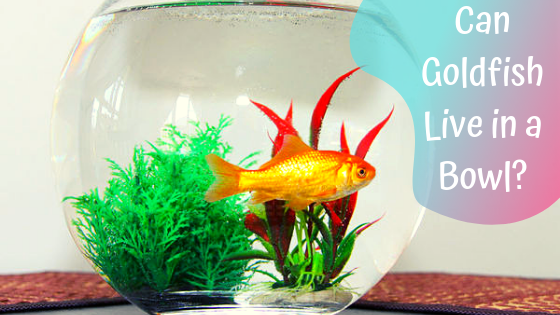
Therefore, we guarantee you that a playground that comes with practical spaces will meet all your pet’s expectations, and it will turn into its favorite place of the house.
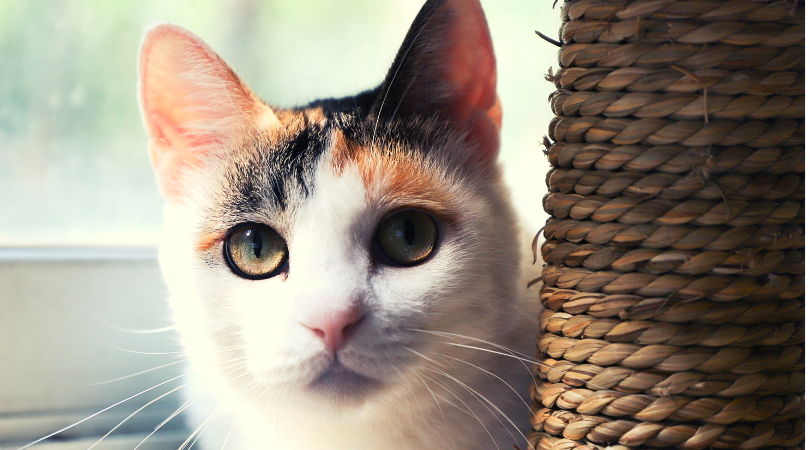
So, we advise you to search for a product that comes with the following elements:

Tall poles with landings

Cloth-covered poles come in all sizes and shapes, so you have to consider your cat’s dimensions before opting for a certain model.
Scratching surfaces

The best scratching surfaces are wrapped in sisal rope for a better resistance, but burlap and carpet-covered areas are also considered excellent for scratching.

Comfortable beds

Cats need a place where they can relax and pour after getting tired of playing, so you must ensure that your kitty has a special place where it can curl up.

Hiding spaces

Giving that felines feel the need to enter narrow places, they will love a playground that they can explore and use for hiding.

Punching toys

Cats like to paw and play with toys of all sizes, so offering them a playground with punching bags, or any other types of toys will definitely capture their attention.

Types of Cat Furniture

There are many types of cat furniture and toys.

Starting from basic shapes to complex structures and sophisticated constructions, you can choose between pieces that can serve as an addition to an existing playground, or you can opt for buying an entire dream house for cats.

Here are the most common products that you can find on the market:

Cat scratcher

This type of product represents a nondestructive surface where your pet can exercise its claws and stay active throughout the day.

Depending on your preferences, you can choose between a simple scratching board, or you can select a scratcher shaped as a bed for comfortable naps.

Furthermore, if you want your cat’s scratcher to match your contemporary house design, you can opt between a wide range of modern shapes.

what stops cats from scratching furniture

Cat boxy structures

These products come with random holes that allow your pet to move throughout the inside of the boxes by going from one perforated area to another.

Cat posts

Cat posts can feature a simple shape, or they can be integrated in circular and rectangular structures. Furthermore, depending on their design, they can include cat teasers and toys, or they can serve just for stretching.

Cat trees

Cat trees provide endless options for cats to stay active and play, but also to relax and purr in a comfortable environment.

The most practical cat trees include platforms, scratching surfaces, ladders, special bedrooms, high posts, toys and spaces for hiding.

Cat shelf

Since, they constantly express their passion for perching, cat experts implemented the idea of offering your pet a shelf of its own.

So, you can opt for a Cat Shelf where your fluffy friend can climb and analyze what is going on in the room from a comforting height.

Perch and hideaway furniture

One of the best acquisitions that you can make for your kitty is a piece of furniture that your pet can consider its very own.

Most models integrate all the elements that a cat needs to consume its energy and spend a wonderful time.

The best advantage that you can get by purchasing such a product is that it can serve as an addition for your interior design, so you can be confident that you can place it anywhere you want without ruining your house decor.

Recommended Product:

jumbo cat scratcher lounge

Jumbo Cat Scratcher Lounge for Scratch, Stretch, Perch, Interactive Play by PetFusion

FEATURES:
These scratchers are glued together piece by piece, making them much more durable than the cheaper pre-glued versions.
More than just a typical scratcher stimulating your cat’s natural instincts and curiosity.
Save money and reclaim your couch (carpet, drapes, you get the point).
Modern and durable cat furniture that protect your furniture.

Buy on Amazon

Tips on Choosing the Perfect Cat Scratching Post

Once a pet owner has decided a cat scratching post is needed to stop the cat from ruining the furniture, it is important to remember to consider the cat’s individual taste and preferences.

Without taking these things into account, the cat may continue to prefer the sofa to the scratching post no matter how expensive it is.

It is not uncommon to have to experiment with a few different cat scratching posts before the cat finds one it likes. Attempting to demonstrate the use of the cat scratching post to the cat is a big mistake.

It offends the cat and effectively marks the post as the demonstrator’s territory, not the cat’s.

A significant factor in the cat liking a post is the location of it.

What to Keep in Mind when Placing the New Scratching Post:

Stability – A cat will often put its entire weight into the effort of scratching.

For this reason, the post needs to be solidly stationary.

It should not be able to be toppled by the cats climbing it or jumping onto it.

Size – A cat will usually indulge in a stretch of the entire body while scratching.

The cat scratching post needs to be approximately 28 to 30 inches in length for the cat to accomplish this.

Although some cats may be smaller, it is better to have too much space rather than too little.

Horizontal or Vertical – Although experimentation may be the only way to determine which orientation of the post the cat prefers, it is a good idea to engage in some observation before shopping for the post.

When the cat is scratching the sofa or whatever item it should not be, observe whether it is standing on its hind legs and reaching up or if it is lying down and scratching.

That will show which orientation the cat prefers.

Texture – The best Cat Scratching posts are covered by a rough material that will act as a surface similar to a nail file.

Surfaces that appear to already be scratched will act as visible cues letting the cat know it is permissible to scratch it.

The surface of the ideal scratching item will also be a factor that can be different for each cat.

Carpet, rope and sisal are popular choices. Some cats particularly like the feel of rough fabrics or cardboard.

Cat scratching posts made with sisal are ideal because it has the perfect grain and texture for shredding, an activity cats enjoy.

Recent studies indicate that cats vertical shred marks as a territory markings and sisal allows the cat to make those type of marks.

Although it can look used up when the cat has shredded it, sisal should not be hastily thrown away because the cat has probably just gotten the material to a point where it feels comfortable and familiar.

Location – Poor placement of the new cat scratching post can result in the cat never using it no matter how carefully it has been chosen.

The pet owner should observe the times the cat exhibits the scratching behavior such as after sleeping or upon the owner’s entrance into the house.

The locations of these instances should dictate where the new cat scratching post is placed.

how to make your cat use a scratching post

Using a Cat Scratching Post

It’s a fact that cats love to scratch and they should be encouraged to scratch because it helps not only to clean and sharpen their claws, but also to exercise the muscles from the claws through the legs, shoulders and back.

If you find your cat scratching furniture indoors, consider providing the right kind of cat scratching post.

The fluffy posts that are covered with carpet are not ideal – first of all, how is the cat to know the difference between the carpet on the post and the carpet on your floor?

Secondly, the post needs to be covered with something rough, not smooth, like carpet.

If you do already have a post that is covered in carpet, you could try taking the carpet off and re-attaching it with the rough carpet backing on the outside, this will be much more appealing to your cat.

The ideal type of post is one that’s made of sisal and these are easily available in most pet stores.

Just make sure that the post is large enough and stable enough for your cat to use.

If it’s too small it may fall over or your cat may not be able to get a good grip.

How to Encourage Your Feline to Use the Cat Scratching Post

For example, when you arrive home, rather than immediately petting your cat, you can go to the cat scratching post and scratch it a little bit yourself with your nails until the cat comes, at which point your cat will probably join in.

Then you can stroke your cat while he or she scratches the post.

This way they associate the post with pleasure – you arriving home and stroking them at the same time.

You can also encourage your cat to use the post just before feeding time.

Once again, your cat will associate the post with something pleasurable – food.

It’s unfortunate that many people have their cats declawed because they’ve been scratching the furniture or the carpet when can simply buying the right cat scratching post and encouraging them to use it would stop the furniture scratching.

Cats need to sharpen their claws.

If you provide the right tools for them to do it then you needn’t worry about your furniture.

Категорије: Cats

Dog Aggression Problems are Not Difficult to Solve

јун 27, 2019 By liv parmel

Dogs are man’s best friend, the most adorable and loving pet you can have, that is unless they are aggressive and mean.

If you are an owner of an aggressive dog, then you have a lot to deal with, and you need to know that this is something that can be prevented. You need to know about your dogs growth periods and what the major influences are in his development which can cause aggressive behavior.

Some of the major factors in aggression in dogs are genetics. There are breeds such as Akita’s, Rottweilers, and Dobermans that are bred as protective animals and will tend to be more aggressive than a Labrador Retriever. Terriers were bred to be feisty in order to kill small game, and they still tend to remain feisty even now.

A big cause of aggression in dogs is “inbreeding”, which can create unstable temperaments. Another thing that can cause aggression are hormones in females in heat or with new puppies. Aggression in dogs is also influenced heavily by their living conditions.

Aggression can be happen when a dog lacks socialization, or has received harsh punishment, or maybe has been frightened or even attacked by an aggressive animal. A dog can also become aggressive by too much attention, being spoiled with unearned praise, or being kept away from people.

Dogs can also become aggressive due to children teasing them. There are so many influences that can bring out aggression in dogs, but if you are aware of these factors, you can avoid them.

Never allow your dog to achieve dominance over any person, young or old. A dog needs to know that they are not allowed to challenge their owners or any person. When they learn this, they are a happy and gentle member of the family.

Obviously, having an aggressive dog is a problem. To name a few issues, they bite people, defend their territory, and attack other dogs. Fortunately, if you want to stop dog aggression , then there are a number of options available.

Stop dog aggression at an early age

If you have the foresight to spot trouble dogs early, then this is the easiest option. Puppies are relatively easy to train, and putting an end to aggressive dog behavior now will save you from years of hardship in the future. In fact, the easiest way to prevent future dog aggression is to get your puppy neutered. If you wait until he is older, then neutering becomes a less effective way of stopping dog aggression.

However, if you don’t notice this behavior until the dog is older, then you will have to consider other options. The type of approach you choose will depend largely on the reason your dog is exhibiting this behavior in the first place.

Stopping dominant dog aggression

Dominant behavior is one of four main types of aggression in dogs. The dog will act like it is the alpha male of the pack. Since it sees your family as its ‘pack’, then this can quickly become a problem. For example, the dog may snarl at anybody who approaches his toy, or his food bowl.

Stopping a dominant aggressive dog can be a challenge. Often, this behavior has emerged because of a passive or submissive family. To eliminate this problem, you have to show your dog that he is at the bottom of the pack hierarchy. This can be done in a number of ways: don’t let the dog sleep on your bed, feed him only at scheduled meal times, and, when you play tug of war, never let the dog win the toy from you.

types of dog aggression

Preventing predatory aggression

With some ‘herding’ breeds, the instinct to guide others around can cause significant problems for your family. Primarily, the dog may tend to nip and chase after people.

To curb this natural instinct, you have to constantly remind the dog that it’s doing something wrong. When it starts to chase or nip, say ‘NO!’ and follow this up with other negative reinforcements. It’s important to note that these are not bad dogs: they’re simply doing what they have been bred to do. If you give them a chance, they’ll become loving members of your family.

Stopping territorial aggression in dogs

Dogs are often born with a tendency to protect their own property. When they become part of your family, this can quickly lead to an unhealthy level of aggression. If your dog is territorial guarding areas of your house or backyard, then the best solution is to establish your alpha male dominance.

This will make the dog obedient to you, which will stop its territorial aggressive tendencies. As the alpha male, your dog will look to you for advice when he’s in a strange situation, or when he’s meeting a stranger for the first time. To make your dog comfortable around other people, have your friends feed him treats, or take him for walks.

Stopping fear aggression in dogs

These dogs will often act submissive when around other people. This is a sign of nervousness, which can lead to aggressive behavior, like biting.

To remedy this, build up your dog’s confidence level. Reward him with treats and attention when he does well. If he’s in a strange situation, comfort him by stroking his sides, or his chest. Eventually, this will stop the dog’s aggression.

My Puppy Is Aggressive, What Should I Do?

It is important to note that majority of dog aggression issues found in dogs is the result of genetic and hereditary factors. Certain breeds tend to be more aggressive than other breeds. Nevertheless, with proper training at an early age, it is possible to keep even the most aggressive dog breeds under control.

New dog owners can increase their chances of getting a good and non problematic pet if they educate themselves on each individual’s breed characteristics and know which breed is suitable for them.

When your new puppy starts to display signs of aggressive puppy behavior, please do not be alarm and start looking for professional help. First, try to understand the root causes of your puppy’s aggressive behavior and whether this is a genuine case of puppy aggression before making a decision to seek professional help.

For example, if your puppy starts to mouth you too hard when playing, you have to decide whether it is a case of rough play or real puppy aggression. It is a common thing among puppies to mouth and nip at each other in a litter during play and when things get rough, the puppy that “yelp” out will be giving signal to the other that it is going too far.

In the same vein, when things start becoming too rough, it is your responsibility to let your puppy know what the limits are. Failure to do so will result in things getting out of control and this may inevitably lead to dog aggression issues in the future.

In any event, should you decide that your worries about your puppy aggression issues are not misplayed; you can seek the help of dog trainers or dog behaviorists to resolve these puppy aggression issues. Please bear in mind that the earlier you prevent and solve your puppy aggression issue, the better it will be in the long run.

Older dogs with dog aggression problems tend to be more difficult to be train and change for the better. However, it is still possible to keep most dogs with dog aggression issues under control for the duration of their life span with proper training and care.

how to stop dog aggression

Tips For Preventing And Stopping Aggressive Dog Behavior

Dog aggression is a relatively common problem among dog owners. Oftentimes, when a dog starts to behave aggressively, this can lead on to worse things such as attacking family members which will inevitably lead to a breakdown in relationship between the dog owner and the dog. This can often leads to dogs being abandoned at dog shelters or even euthanized by their dog owners when they failed to cure their dog aggression problems.

How to prevent and stop aggressive dog behavior:

First of all, to prevent dog aggression in dogs, make sure you start to train your dog from an early age as soon as possible. Proper training provides a form of structured learning whereby the dog can learn how to behave properly. During this period of training, it is also a good time to observe and look out for early signs of dog aggression.

Secondly, make sure your dog is socialized from an early age. Oftentimes, improper or inadequate socializing of a puppy to its new environment can lead to dog aggression in the future. As such, make sure you provide a good and proper environment for your dog to socialize and mix with people and other animals as young as possible.

Next, if your dog starts to show signs of aggressive dog behaviors such as biting, nipping, barking and glaring, you should put a stop to these aggressive dog behaviors immediately. Identify the root causes and then take concrete steps to change and prevent these behaviors from manifesting in the future.

Another important point to take note is never at any time allows your dog to achieve dominance over you or another family member in the household, not even the children. By keeping your dog status in check, you are telling it where it stands in the family and thus preventing it from getting overly aggressive and out of control in the future.

To solve dog aggression issues in your dog, first you have to understand the root causes. A lot of dog behavioral issues do not happen overnight. More often it is often developed through a prolong period of time. That is why it is absolutely crucial for all dog owners to look out for early signs of dog aggression and change and prevent these aggressive dog behaviors from manifesting into worse and uncontrollable behaviors.

Stopping Dog On Dog Aggression

When it comes to stopping dog on dog aggression, there are a few things that you may want to be aware of. All of the following solutions will go a long way in helping with the problem.

However, it’s best to incorporate all of the three into your training, as they’re all arguably equally important, especially if your dog has not been well socialized at an early age.

dog on dog aggression solution

Socialization

The importance of socialization cannot be emphasized enough when it comes to solving any dog aggression problem. Socialization consists of socializing your dog with as many people, dogs, and other animals as possible. This process should be started at as early an age as possible.

By exposing your dog to as many sights, sounds and smells as possible, he will learn that these things are not threats. Many cases of dog on dog aggression are caused by lack of socialization with other dogs. As a result, the dog may see other dogs as possible threats and become overly defensive.

If your dog was not socialized at an early age, it is not too late to start socialization. However, it should be done very gradually so as not to overwhelm him. Socialization should never be rushed and requires a lot of patience and persistence, but the efforts pay off. You may wish to start by bringing your dog to a dog park where he can watch other dogs from a distance.

Use positive reinforcement whenever he displays calm behaviour. Gradually shorten the distance between him and the other dogs. If he starts barking or becomes aggressive, back off and step further away. You will eventually learn how much distance your dog needs between other dogs before he becomes aggressive.

At this “threshold” distance, you will need to have lots of patience and persistence. Reward him everytime he remains calm at this distance and gradually move a little closer.

Alpha Leadership Training

If you haven’t established yourself as the alpha, you should do so, as it will go a long way in stopping your dog on dog aggression problem. In many cases, this type of aggression is caused by your dog trying to protect you from another dog, which is the role of the alpha leader in the pack.

However, if you establish yourself as the alpha, then should any potential “threat” appear, your dog will look to you for command instead of trying to control the situation. Even if he still attempts to confront another dog with aggression, he will obey your command to stop what he is doing if you are the alpha.

Proper Training Techniques

When dealing with aggression issues, it’s important to never use punishment or any forms of negative reinforcement training. Such methods can be dangerous to use with a dog that’s displaying any sort of aggression.

Instead, you should focus on using positive reinforcement to train any good behaviour into your dog. Praise or treats are the simplest ways of providing positive reinforcement.

Positive reinforcement is one of the most effective ways of dealing with dog on dog aggression. Whenever your dog remains calm near another dog, reward him with a treat or praise so that he will associate that behaviour with good things.

If you sense that your dog is about to become aggressive at the sight of another dog, distract him and offer him a treat. He will eventually associate the presence of another dog as something positive rather than something to be aggressive about.

What Can You Do About Your Dog Aggressive Behavior?

When your dog starts to display signs of aggressive behavior, it is important for you as the owner to take concrete actions to prevent and stop your dog’s aggressive behavioral problems from getting worse and spiraling out of control.

The worst thing that can happen is someone gets attacked and become seriously injured as a result of a lack of actions on your part. There are a couple of things that you can do when you discover that your dog is displaying signs of aggressive dog behavior.

On a final note, you must take immediate actions should you discover that your dog is displaying signs of dog aggression. By discovering early and taking preventing measures and appropriate training, you can ensure that your dog will not get out of control and become aggressive and start attacking people ever.

Категорије: Dogs

  • « Go to Previous Page
  • Страница 1
  • Interim pages omitted …
  • Страница 13
  • Страница 14
  • Страница 15
  • Страница 16
  • Страница 17
  • Interim pages omitted …
  • Страница 22
  • Go to Next Page »

Primary Sidebar

Small Fish Tank

Glass Fish Tank

Категорије

  • Animals
  • Birds
  • Cats
  • Dogs
  • Fish
  • Goldfish
  • Guinea Pig
  • Hamster
  • Horses
  • Name Inspiration
  • Parrot Pet
  • Rabbits
  • Reptile Names

Скорашњи чланци

  • Hoppy Naming! Adorable and Funny Easter-Inspired Guinea Pig Names
  • Purr-fectly Adorable: Valentine’s Day Cat Names for Your Feline Friend
  • Astronomy Inspired Cat Names
  • James Bond Cat Names: Purr-fectly Suave Options for Your Feline 007
  • 170 Authentic Greek Names For Cats
  • Hippie Cat Names
  • Ladybug Facts For Kids
  • Unique White Horse Names with Meanings: From Majestic to Mystical
  • Disney Turtle Names: 160+ Names For Turtles From Disney Movies
  • 100+ Names For Black Horses With Meanings

Guinea Pig Cage

Large cage for your guinea pig

Ознаке

Best family parrots Best Gifts for Cat Lovers Best Hamster Toys Best parrot for beginners Best parrot for kids Best Small Dogs For Kids Boy Cat Names Can Guinea Pigs Eat Celery Cat Names Cat names for pairs Dog Behavior Dog Throwing up Dog Vomiting eat Female Bengal Cat Names Female guinea pig names Funny goldfish names Goldfish aquarium Goldfish names Gold Fish Names Goldfish tank Goldfish varieties Guinea Pig Guinea pig names Guinea pigs Male guinea pig names Manx Cat Names Names for Goldfish Names for guinea pigs Names for pink fish persian cat personality Siamese cats Small curly haired dogs Small dog breeds Sounds Twin cat names Types of goldfish Undigested food Unique guinea pig names What can guinea pigs eat Winter White Hamster Care Winter White Hamster Colors Winter White Hamster Diet Winter White Hamster Facts Winter White Hamster Life Span

Disclaimer:

This website „PETSIUM“ is not liable for any outcome or damage resulting from information obtained from these articles.

The articles provided here are for information and entertainment purposes only. The decision to use, or not to use, any of this information is the sole responsibility of the reader.

Any medical related content in any articles is not intended as diagnosis, treatment or prescription. It is not intended to be a medical advice and is not a substitute for professional medical advice. Please consult with a licensed health care practitioner if you are dealing with a serious medical problem.

Hamster Cage

Hamster Cage

Footer

Petsium – Veštačka Inteligencija

Dobrodošli na Petsium, vašeg novog saputnika za brzo, precizno i potpuno besplatno AI iskustvo. Ovde možete da postavite bilo koje pitanje – od pisanja eseja, preko tehničkih izazova u kodiranju, do saveta za svakodnevne zadatke – i dobićete odgovor prilagođen upravo vama. Sve to bez registracije, bez komplikovanih menija i bez skrivenih troškova.


© 2026 Petsium · Privacy Policy