• Skip to primary navigation
  • Skip to main content
  • Skip to primary sidebar
  • Skip to footer

Petsium - Veštačka Inteligencija | AI

Vestacka Inteligencija Aplikacija i Chat

  • Vestacka Inteligencija
  • Kontakt
  • Uslovi Koriscenja

liv parmel

An In-Depth Guide to Roundworms in Cats

јун 23, 2019 By liv parmel

It’s not very uncommon to find roundworms in cats, especially in kittens. When kittens have roundworm infestations, it is usually because the worms have been passed on to them by their mother prior to their birth or following their birth through their mother’s milk. Cats of any age can be infested with roundworms, as can dogs; but these parasites can be particularly hard on kittens.

Kittens are much more vulnerable to the problems roundworms can cause than adult cats are, although older cats that have become debilitated can sometimes be at a high risk of becoming seriously ill should they become infected with roundworms.

What are Roundworms

Roundworms are parasites that live in the intestines of dogs, cats, and other animals as well as of humans. Roundworm infestations are contagious in the sense that their eggs can be transported from one animal to the next, either by direct contact or through dirt or debris that can harbor them.

With dogs and cats, roundworms are usually spread by feces, in which their eggs will usually be present once an animal has become infected. These eggs usually enter the feline’s body through its mouth if the cat should lick its paws, which cats of course frequently do, and the paws have become contaminated. In some instances, roundworm larvae will burrow through the skin.

all about roundworms in cats

How Roundworms Look Like

Roundworms are long, thin worms. In fact, they are so thin that they bear some resemblance to spaghetti. While they can be quite small, they can at times grow to be anywhere from 3 to 5 or 6 inches in length, particularly if they reside in a cat’s intestines, where there is always an ample supply of food.

There are a number of different species of roundworms. The two species known to affect cats are Toxocara cati and Toxascaris leonina, with T. cati being the more common of the two.

Once inside an animal, the adult worms take up residence in its intestines. The larvae however can travel throughout the body through the bloodstream and take up residence in other organs, such as the liver and the lungs.

In most cases, they do not cause damage, although on some occasions they will. If roundworms should take up residence in an eye for example, vision problems or even blindness can result.

Most of the time, roundworms are ingested as eggs and find their way into the intestines. It is in the intestinal tract where these eggs hatch, after which the larvae begin their migration into the bloodstream and throughout the body. The larvae will enter another stage in their development while in the liver and will enter yet another stage after passing into the lungs through the bloodstream.

When they mature in the lungs, they tend to be coughed up by the cat (one of the symptoms of an infection) and are then swallowed, after which they will return to the intestines to become adult worms. The adults then lay their eggs in the intestines to start the cycle all over again.

It should be noted that the eggs of roundworms are not always infective.  It is only three weeks or so after they have first passed into a cat’s intestines that they will become infective. It is at this point that the infection can spread if the roundworm eggs are then passed into the intestines and into a cat’s feces.

Transmammary Infection

As noted previously, one source of roundworms in kittens is the mother’s milk. When this occurs, it is referred to as a transmammary infection. Often, the immature larvae are the source of the problem as they may be present in the mother cat’s mammary glands. Kittens are less apt to pick up eggs from feces unless one or more of the other kittens in a litter have become infected.

Adult cats will sometimes become infected by roundworms by eating what are called paratenic hosts. Rodents often play the role of paratenic hosts. These are hosts in which roundworm eggs are present. These eggs may hatch in the host’s intestines, but cannot mature as long as they are in that host.

Once eaten by cats, or another animal, the eggs can mature, undergo a transformation into larvae, and eventually become adult worms, at which point the life cycle will resume. In some cases, the larvae may exist for some time in a dormant state.

When a female cat becomes pregnant, these inactive larvae will sometimes come out of dormancy and will be passed to the kittens through the mother’s milk or passed through the placenta prior to the kitten’s birth.

Roundworms are not the only type of worms that can infest cats, but they are the most common. Other types of worms that can cause problems are hookworms, tapeworms, and lungworms. All three types can create problems for a cat, and it is the hookworm that is potentially the most dangerous parasite, especially when kittens are involved.

symptoms roundworm infection in cats

Symptoms of Roundworms in Cats

While roundworms can be especially hard on kittens, their presence isn’t always noticed in adult cats, many of which may not show any symptom of being infected. While roundworms can potentially be a serious health problem, their presence in an adult cat may not be detected until the cat suddenly becomes quite ill.

The symptoms that may be noticed can vary both in intensity and in type, depending on the overall health of your feline buddy, which of the two species is involved, and the location or locations of the infection.

Two of the more common symptoms are diarrhea and blood in the stool. In some cases, worms may be observed in the stool, or segments of worms may be noticed in the area immediately surrounding the cat’s anus. Your cat may suffer from bloating, weight loss, or both conditions, and vomiting is a fairly common symptom as well.

In instances of bloating, your pussy may suddenly begin to take on a potbellied appearance. In particularly severe cases, your cat may have coughing spells or have trouble breathing, indicating that the infestation may be limited to the digestive system but may be affecting the cat’s lungs as well.

Diagnosis – Look for Floating Eggs

The next step would be conducting a diagnosis, which needs to be done by a veterinarian unless the presence of the parasites is obvious. While adult worms or segments of worms can usually be located in a cat’s feces fairly easily if they are present, determining if eggs are present can be somewhat more of a challenge since they are so small.

One technique that is often used is to place a sample of feces on a glass slide for viewing in a microscope. A special solution is mixed in with the feces. This solution causes the eggs to float to the top, where they tend to collect and become more visible. When viewed under a microscope, roundworm eggs are quite distinctive in appearance.

Dangers Posed to Cats

There are three primary threats that roundworms can pose to cats. Understanding what these threats are will help one to make a decision to have a cat treated:

  • Roundworms or roundworm larvae in the lungs can lead to pneumonia.
  • Roundworms in the intestines in sufficient quantities can rob a cat of the nutrition it requires.
  • Roundworms in the intestines in large enough numbers can cause intestinal blockage, a very serious condition.

Treating Roundworms in Cats

Treatment for roundworms is generally not difficult as there are a number of medications that are both safe and effective. Both oral and topical treatments are available, and both are relatively inexpensive.

Treatments can also be given by injection. Injections are a common method of treatment for kittens, since they can be given together with a kitten’s booster shots. Several injections, at two- or three-week intervals, are needed since the medication kills the adult worms and larvae only, but not the worms’ eggs.

Eggs that are already present in a kitten or cat will hatch in about three weeks, at which time they become vulnerable to the mediation. Treatment should routinely be given to kittens since it is the kittens that are at a high risk of becoming quite ill.

Outdoor cats should be treated periodically for roundworms as well. Veterinarians usually suggest that heartworm medications be given to pets on a periodic basis. Heartworm medications, usually taken as pills, can take care of roundworms and hookworms as well.

how to get rid of roundworms in cats

Prognosis for a Cat Diagnosed with Roundworms

The prognosis is usually good if the medication has been given in good time. The prognosis for kittens may not be so good if treatment is not given, or is not given in time, since a kitten can easily become debilitated to the point where it may die.

Avoidance and Prevention

There are at least five things that can be done to keep your cat free of roundworms, none of which are particularly difficult. Preventing or treating an infection early on is usually far less expensive than treating a cat that has become very ill from roundworms.

  • Feces should not be allowed to accumulate in your cat’s litter box. If there should happen to be eggs in the feces, some of the eggs could end up on the cat’s paws and could be ingested the next time your cat licks its paws to wash itself.
  • When scheduling an annual examination for your cat, ask the veterinarian to test a fecal sample for eggs unless that is already normal practice during such an exam. If roundworms appear to be a common problem where you live, especially if your cat is an outdoor cat, having a fecal exam done several times a year would not be a bad idea.
  • If you are a breeder, female cats (called queens) should be dewormed before they are allowed to become pregnant to prevent the transmission of an infection from the mother to her kittens.
  • To the extent possible, control insects and rodents that may be carriers around your property.
  • See that your cat receives heartworm medication periodically as prescribed by your veterinarian. Many, if not most, heartworm medications will eliminate roundworms as well.

Dangers Posed to Humans

The species of roundworms that affect cats cannot mature in a human host. The human then would assume the role of a paratenic host. The fact that the eggs will not fully mature does not however mean that humans will never feel the effects of their presence.

The eggs can hatch and enter the larval stage but can go no further. These larvae, known as stage 2 larvae, can however travel throughout the body and cause diseases in various organs, including the lungs, the eyes, the brain, and the liver.

Toxocariasis Disease

A disease in humans caused by these larvae is called toxocariasis. Toxocariasis is especially harmful if it affects the eyes since it can lead to blindness. If the larvae migrate to other organs, they can cause inflammation, leading to an immune system response that can at times prove damaging to organs.

The good news in all of these is that roundworm infections, once they are known to exist, are usually easily treatable. In addition, healthy adult cats are much less likely to become ill from an infection.

They should of course be treated if an infection is known to exist and be given periodic medications to prevent infections from occurring in the first place. While roundworms cannot mature in the human body, the immature larvae are still capable of causing a number of serious problems.
Категорије: Cats

How to Litter Train a Kitten

јун 20, 2019 By liv parmel

Most of new cat owners have the same question after the first day with their cutest kitten: How to Litter Train a Kitten?

It is instinctual for a kitten to cover up their waste after they are done. It doesn’t matter if they are using a litter box, a sand box, or your potted plant. As long as they have something soft that can bury their waste they will use it. Chances are you would prefer them to use their litter box.

Even outdoor cats, which tend do their business in the garden outside, will use their litter box when inside if they have been trained to use it. This is why it’s important to start litter training when they are a kitten.

Things to Consider Before Choosing a Kitten Litter Box

Before you begin litter box training the kittens the first thing you need to consider is how many kittens you have in the house. Ideally, there should be one litter box available for each cat or kitten when doing litter box training. In addition to that, you should keep a spare box in another location of the home just in case your cat has a problem with one the other boxes.

How to Litter Train More Cats

If you have several cats, or live in a small apartment with limited space, the cats will usually learn to adapt and share their little retreat. Keeping this in mind, you should still try to have two boxes available for them. This does help during litter box training.

How to Litter Train a Kitten

Going back to your cat’s natural instincts, and this is really important to litter box training your kitten, he or she prefers to have an environment where they can do their business and then bury it from sight. This is why, in a cat’s eyes, a litter box filled with pliable cat litter, is much more preferable than simply using your nice, clean floor.

The only reason why a cat would do their deed on the floor is because they are not aware that a litter box is available, or they have a problem with a particular litter box and refuse to use it.

RECOMMENDED PRODUCT

Petmate Open Litter Pan for Kitten

Petmate Open Litter Pan for Cats Of all Sizes

  • Litter pan design promotes stability when lifting and filling.
  • Entrance ensures comfortable access for cats of all sizes.
  • Comfort-grip pan is rimmed on all sides for easy lifting and cleaning.
  • Wide-profile base keeps litter contained within the pan.
  • Made using durable, pre-consumer recycled plastic.

Buy on Amazon

How To Train a Kitten To Use The Litter Box

When it comes to kitten litter training, the mother can teach the kitten how to use the litter box if she is around the kitten for a long enough time. Even other cats in the house can show the new kitten how to use the litter box. But if the kitten was taken away from its mother too early, or you have no other cats in the house, then the litter box training is going to fall onto your shoulders.

First, purchase a kitten sized litter box. You may be able to get a kitten into an adult sized litter box, but if the height of the door is too high then some kittens will not attempt to jump into their little box and avoid it all together.

When choosing the litter box try to pick the least scented and most natural clay-type litter that you can find. This will ensure your cat doesn’t get turned off by unnatural scents or clumping action. Just basic stuff that they would use outside works best for kitten litter training.

Second, find a location in the house that works well for you and for your kittens instincts. Also, remember that a kitten will want to have some privacy while doing their business, so a closet or somewhere behind furniture will be a good place to stash their little box.

Thirdly, remove all other options from the house. If you have floor potted plants, or even a sandy zen-garden inside, remove them until your kitten is litter trained. They will not know the difference between your potted plant and their litter box, as it all looks like stuff that they can bury their waste in!

Lastly, introduce your kitten to their litter box as soon as they come home. Place your kitten in it, and let your kitten smell around and figure out what it is. You can even mimic your kitten digging by taking the front paws and using them to dig a little. Your kitten should instinctively pick up what their paws are trying to do.

If your kitten does not use the litter box right away, then take your kitten to their litter box many times throughout the day. This will increase your chances of putting them in the litter box at a time that they have to go, and your kitten will quickly figure out that this is a great place to do their business.

Remember to keep the litter box clean at all times. Even kittens are picky and will not do their business in a dirty area. You want to make sure they are consistently using their litter box in order to train them quickly.

PrettyLitter Ultra Premium Cat Litter

How to Litter Train a Kitten the Easy Way

Generally speaking, momma cats will teach their kittens how to use the litter box. However, if you are picking up a stray cat or getting a cat from a shelter they might not be trained. So here is how to litter train a kitten. Its not as hard as you might think.

How to litter train a kitten tip #1 – Choose The Right Litter Box

This is a very important step. You have to make sure the litter box you get is low enough for the kitten to get in and out of with ease. If you want to give your kitten a level of privacy you can get one with a cover over it. Plastic is the best material because it is easy to clean.

How to litter train a cat tip #2 – Put The Litter Box In A Quiet and Easily Accessible Place

Most people will put the litter box in the laundry room. This is a great place because it provides privacy and they are usually close to the kittens eating and sleeping area. If you have small children or other pets, consider putting up a small gate to keep the area safe for the kitten.

How to litter train kittens tip #3 – Use Unscented, Clumping Litter

Some kittens are very sensitive to the smell of litter. To help them adjust use a unscented litter to start with. You should also use clumping litter so you can easily clean it out. If you use litter that doesn’t clump it will be very difficult to find the waste and remove it.

How to litter box train a kitten tip #4 – Introduce The Kitty To Their New Litter Box

Once you get the litter box home, take the kitten and put him or her in the litter box. The kitten will probably sniff around and scratch the box trying to see what it is. The first time they use the bathroom in the litter box make sure you leave the waste in it for at least a day. This way the kitten will learn where to go based on the scent.

How to litter train a kitten tip #5 – Keep The Litter Box Clean

Have you ever walked in a home and got hit in the face with the smell of kitty litter? That’s because the owner wasn’t cleaning the box out on a regular basis. Once your kitten starts to grow up and use the litter box on a regular basis you should be cleaning it out once a day. By doing so you will eliminate odors and keep the area clean for the kitten.

how to litter box train a kitten

Cat Litter Training Problems

A common problem with getting cats to use a litter box is that cats may find it hard to get in. If they are in a big hurry then they will go on the floor. This means that the smell and urine will have to be cleaned up. You don’t want to have to do this so you need to make sure your cat goes in the box.

Cats may have a problem with the type of litter you use and so they will avoid the box and use the floor or carpet to do the job. With small kittens the litter could get caught in their claws and so they will not use the litter. Cats may also have a serious health problems that makes them act this way as well.

3 Mistakes You Will Make in Litter Training Your Cat

Litter training your cat will save you countless hours of frustration but there are a few mistakes you may make while learning to litter train your cat.

How To Litter Box Train A Kitten Mistake #1 – Using the wrong type of litter:

In order for your cat or kitten to use a litter box it is crucial to use the right type of litter. If the litter has too much clay in it the litter may get stuck in the cat’s claw and it won’t want to use the box.

How To Litter Train A Kitten Mistake #2 – Placing the litter box in front of people:

Cats are very private animals and prefer to have their box in a private place in a corner so they can do their business privately. Your friends and family don’t need to see the box or your cat at this time as the smell could offend them.

How To Litter Train A Kitten Mistake #3 – Not using enough litter:

Cats are territorial creatures and nature has taught them to cover up their messes. The same is true when nature comes calling. Cats need enough litter in their box to cover over their messes. When your cat covers over its mess properly then you can praise it for a job well done.

When It Comes To Cat Litter Box Size Matters

Learning how to litter train a kitten does need your initial patience, but if you get it right it will have obvious rewards for you and your special new friend, for many years to come.

Think first of all about the size of your little pet, it’s tiny! A large space may be daunting, so consider a small quiet room, where the kitten is not too often disturbed, where you will be happy for your kitten to go to the toilet!

A small box with quite low sides would be ideal, although it needs to be sufficiently deep enough to hold the kitten’s toilet litter and ideally needs to be cleanable. Your kitten will bury its toilet movements into the litter very quickly, once it gets the idea, so a tray about the size of a shoe box would be a great start.

RECOMMENDED PRODUCT

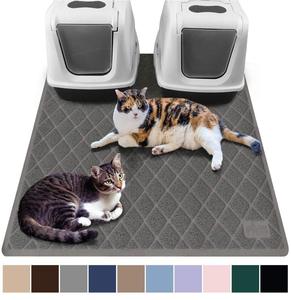
Premium Cat Litter Mat by Gorilla Grip

Gorilla Grip Cat Mat

  • A slip-resistant backing to help prevent the mat from slipping and sliding on your floors.
  • Messy litter and debris stay trapped on your mat.
  • Manufactured with the softest materials to protect even the most sensitive paws.
  • Gorilla Grip innovative design features carefully constructed grooves and tight mesh that capture and trap litter your cat kicks out of her box.

Buy on Amazon

Other Useful Tips on How to litter train a kitten

It may be prudent to spend some time with the kitten during the training days, as it will return over and over again to the place where it went to the toilet last time! So make sure that your new rules of how to litter train a kitten are safely passed on to your kitten. So he/she definitely knows where you want that to be!

If you find that the kitten goes to the toilet in an unsuitable different place, pick up the waste quickly with a tissue and place this, along with the dirty tissue, immediately into the kitten’s litter tray, ensuring that it knows that this is where it should be… And what it smells like!

Take the kitten’s paw and gently scratch the litter with it, giving the kitten experience of knowing what to do. Continue repeating this if mistakes are made. Alternatively move the tray!

A kitten is likely to use the litter tray, or go to the toilet, around 30 minutes after eating its food, so watch carefully and encourage the kitten into the right area. Keep doing this for a few days and it will soon get the hang of it.

Mistakes can be made if the kitten cannot find its way back to the litter tray in time! My tip would be to try and confine the kitten to a small space around the litter tray for a few days, allowing him more space as he gets older and bigger.

After a couple of weeks, or within a short period of time, you will have learned how to litter train a kitten and can look forward to happy days with your new fluffy new friend.

Kitten litter training is quite easy as long as you follow the above tips. Making it accessible to them, keeping it in a comfortable place, and consistently encouraging them to use it will help to ensure that they quickly know where to do their business.

Категорије: Cats Тагови: How to litter train a cat

Grooming Your Dog at Home is Safe and Easy

јун 18, 2019 By liv parmel

When it comes to your dog’s appearance and health, it’s vitally important you know how to groom a dog.

Dog grooming is one essential part of dog ownership.

If you’re a dog owner, you probably want to keep your canine friend happy and health.

Think of it this way: a well-groomed dog will avoid all kinds of diseases like yeast infection; diseases that can make your dog uncomfortable and constantly wanting to itch.

When your dog is well-groomed, he/she stays cleaner.

Bear in mind that dog grooming isn’t just about bathing your dog. It’s also brushing his/her teeth and trimming the hair.

You also need to ensure the ears are free of dirt and wax because these will lead to infections.

If you notice a bad smell emitting from the dog’s ears and/or see a discharge or swelling, you need to take your canine friend to the vet immediately.

Lastly, ensure the dog’s nails are part of dog grooming process.

You want them to be short and trimmed, as overgrown nails can bring discomfort to the dog.

Don’t forget your dog’s long nails can tear up the furniture.

dog grooming tips at home

Preparing Your Dog To Be Groomed

Preparing your dog to be groomed is the very first step.

You want to figure out where you want to groom your dog.

I find the more comfortable the dog is with their surroundings, the better the grooming experience will be.

Also, the more often you groom your dog and get them used to it, the more comfortable they will be.

Sometimes, if you get a dog later on in their life, the grooming experience can be harder, (this can be the same if you don’t groom your dog often).

There are steps you can take if your dog is uncomfortable.

Don’t force grooming on them.

Ease them into it.

By this I mean get them used to the tools you are using on them and reward, reward, reward when they do good!

When you brush them, don’t approach them quickly.

Show them the brush, give them praise and a treat each time they allow you to brush them.

The same goes for nail clipping.

This can be one of the most stressful times for a dog.

If a dogs quick gets cut, it can lead to bleeding which is stressful for dogs.

To gain trust in a dog you can start by having them let you touch their paws.

Touch their paws often so they do not fear getting their nails clipped.

For myself, I like to gather everything I need during the whole grooming process.

Trust me it makes things go so much smoother!

Items you will want to gather include:

This is if you are doing a full groom.

I usually break up my grooming throughout the week:

  • Appropriate Brushes or Combs
  • Treats
  • Scissors
  • Cloth and Eye Drops
  • Cleaning Solution and Cotton Pad
  • Dog Tooth Brush and Dog Tooth Paste
  • Nail clippers and Styptic Powder
  • Shampoo
  • Towels (and extras)
  • Grooming Clippers
  • MORE TREATS

When I initially taught my dog to give me her paw I wasn’t thinking initially that her long nails were a problem until she started walking funny.

On any normal day she would be hopping around barking at the television – but that day was different.

I noticed her mood changed, it seems as if something was holding her back.

When I decided to clip her nails myself using a traditional dog nail clipping tool, but I didn’t know where to begin.

A lot of owners feel this frustration day in and day out but my love and care is so great for my dog i decided to learn and overcome this common problem.

Recommended Product:

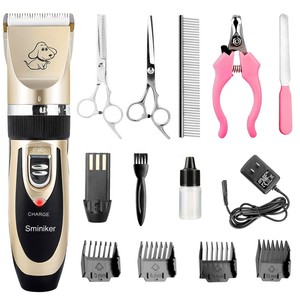
Professional Pet Hair Clippers and Grooming Kit for Dogs

Sminiker Rechargeable Cordless Dog Grooming Clippers

FEATURES:
The A shape edge design prevents from accidentally cutting your pet's skin.
Heavy-duty gear for proper powerful cut with stable control.
The titanium blade will keep shape and ensures high durability.
Precision motor, low vibration and ultra quiet design.
Cordless and rechargeable clipper design for easy use.

Buy on Amazon

Dog Nail Clipping – How to Basic

Many dog owners can agree, that their dogs paws are cute! for the most part, however the majority overlook this crucial grooming step throughout the course of their dogs life.

Avoiding the simple act of dog nail clipping can cause more pain to your dog in the long run associated with his/her long nails; allowing them to grow to the point where your dog shows discomfort in walking is way too long.

A common sign is clicking or tapping on surfaces or painful walking which could lead to joint problems later.

Step 1: Make sure your dog is in a comfortable and quiet place.

Step 2: Turn him / her over to their side and use a clipper to clip at a 45 degree angle.

Step 3: Every successful clip reward your dog with a treat.

This method of dog nail clipping is normally intended to be used with a traditional clipping tool specifically designed for dog nail clipping.

Many dogs may be apprehensive towards this and will not allow you to clip their nails because of fear or excitement.

One way of helping this is try taking your dog for a very long walk and ensure that he/she reaches fatigue, this will grant you a better chance for successful dog nail clipping with your companion.

clipping nails in dog how to do

Dog Nail Clipping – DON’TS!

Everyone who loves their dog will do anything to prevent injury or harm to their special companion.

Although we are human and can make a mistake here and there we would prefer not to when dealing with dog nail clipping.

However easy it may be it is important to follow some rules in order to ensure a good experience.

Relax : a nervous owner will project bad emotions to their dog which will lead to tension during dog nail clipping

Do not cut too deep: It is better to do small clips to avoid hitting the quick, the blood vessel of the dogs nail.

In case of this happening apply some antiseptic an gauze right away to stop the bleeding.

Choose your place wisely: if your dog is sensitive to sound or people try to avoid these stimuli in order to have a much more calm and responsive dog.

Do not clip a dog who is touch sensitive: If your dog retracts his or her paws every time you grab them he or she is touch sensitive.

Attempting dog nail clipping can lead to disastrous results of not properly desensitized to touch. So make sure your dog is nice and compliant!

Recommended Product:

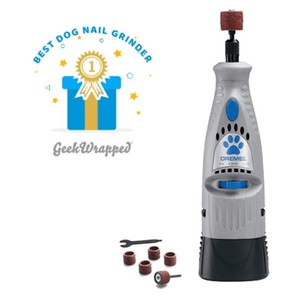
Dremel Dogs Nail Grooming Tool

Dremel Best Dog Nail Grinder

FEATURES:
Gently grind away long nails quickly and painlessly.
Perfect alternative to using clippers on your dog or pet's nails.
Adjust between high or low speed to fit your pet’s comfort level.
Light duty performance to gently trim your pet’s nails.
The cordless rotary tool uses a rechargeable and removable battery pack.

Buy on Amazon

Dog Nail Clipping – Grinding

Now there are many products out there on the market for clipping your dog’s nails however only a handful that are reliable and safe!.

If you care for your dog it is important to make the right choice.

We all have many things to do and trimming your dog’s nails is probably not one of the top priorities in the world but, there are some tools that can make your life a whole lot easier!

I have been used to traditional dog nail clipping using a professional clipper which i would have to say is great; but a grinder may suit you better.

I definitely chose this over traditional clipping to the lower risk factor with this tool. Grinding down your dogs nails is much safer and quicker can clipping inside our own home.

The tool provides enough stimulation and is very powerful and can clip your dogs nail in seconds plus they come with a safety plastic covers to avoid grinding too deep.

Its really that simple!

Cleaning Your Dog’s Ears

Dogs ears are a very important part of a dog, they are used to lock onto very faint sounds with precision accuracy.

Very powerful yet also sensitive which means…

Cleaning dog ears is the next important step in grooming and requires sensitive care.

Most dogs hate their ears being cleaned if not desensitized properly earlier on in life.

Maintaining clean dog ears is vital to avoid infection.

Dogs normally suffer from three different types of infections the outer ear infection, the inner ear infection, and the middle ear infection.

Some breeds are more prone to infection such as the “floppy” ear breeds, Beagles, Cocker Spaniels, Bloodhounds, maintaining clean dog ears in these breeds are even more important as they do not have much free air circulation.

how to clean dog ears yourself

Outer ear infection is easily noticed as inflammation, excessive wax and/or a very foul smelling odor coming from the ear is a dead give away.

The other two middle and inner ear infection may be slightly difficult to spot and require immediate veterinary attention, if you notice excessive scratching and or ear sensitivity consult your veterinary professional immediately.

Recommended Product:

Ear Wipes with Aloe Vera for Dogs

Pet MD Ear Wipes for Dogs

FEATURES:
Safely cleans, deodorizes and dries ears.
Keeps ears free of wax, discharge, and debris.
Controls and inhibits yeast and mites.
Lessens painful itching and scratching.
Reduces foul ear odor.

Buy on Amazon

How to Clean Dog Ears at Home

Try using a small amount of ear cleaning solution over a cotton ball or perhaps a small cloth and wipe your dog’s ears one by one to remove any wax or dirt which could have accumulated in time.

Be very gentle when you clean your dogs ears so that you don’t irritate the particular sensitive areas of skin in the ear and avoid diving too deep into the ear to cause damage, it is very common for owners to push back the wax to the inner ear.

Then dab a few drops of solution either obtained by your vet or pet store on a cotton ball and give a clean wipe to reduce any ear mites or perhaps bacteria.

Finally wipe the particular ear one last time using a dry swab or cloth.

In the occasion you see anything strange along with your dog’s ears, such as irritation, inflammation, or perhaps an odd scent, you should speak to your veterinarian since this may be a sign of infection.

Clean dog ears should not have an odor and may only have a small amount of wax.

Remember before grooming your dog, ensure that the alcohol or any ear cleaning products have been kept at room temperature and are not HOT as it may damage the ear of your dog.

Remember to maintain clean dog ears try to check them regularly whenever socializing, touching them and inspecting them and smelling them to ensure that their beautiful ears remain healthy and looking good!

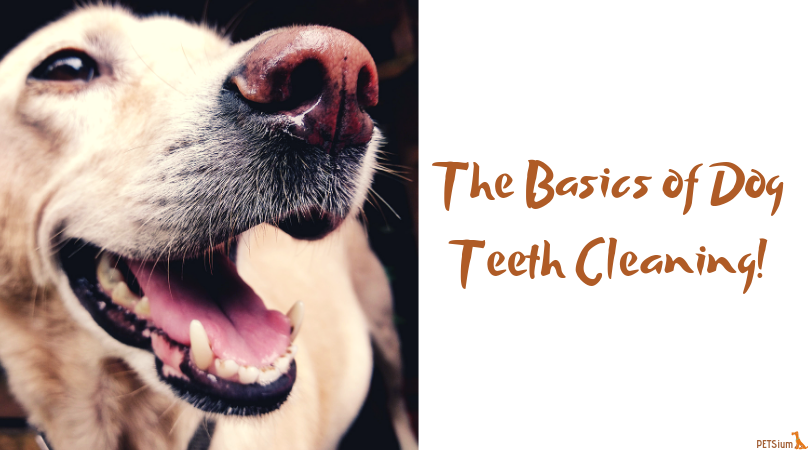
Dog Teeth Cleaning

You probably know that proper nutrition and exercise are important for your dog, but did you also know that dental hygiene should be a part of their lives to keep them healthy?

It’s true—it’s kind of a pain to get into the habit of brushing your dog’s teeth, but it is so good in the long run, you will thank yourself for getting into the habit.

the basics of dog teeth cleaning

Why cleaning your dog’s teeth is so important:

Cleaning your dog’s teeth can extend their life by 3 to 5 years.

Think about it—dog’s mouths have bacteria in them, just like yours.

Tooth decay is hard on their immune system because it subjects them to bacteria overgrowth.

Brushing your dog’s teeth saves you money.

Anyone who has owned a “senior citizen” dog can attest to the time, money, and pain involved with tooth extraction, which is basically when the dog’s teeth are so rotted, the vet has to put the dog under anesthesia and pull them out.

Once this happens, you’re on the road to specially-made, soft dog food that they can chew, more infections and extractions, and more pain for the dog.

You love your dog, so you don’t want to subject them to a life with painful and smelly teeth.

Two words: dog breath.

Veterinarians say that 85% of dogs over 5 years old have some form of periodontal diseases (which you would too if you had never, ever brushed your teeth), which causes that awful breath many dogs have.

Dog breath makes it harder to kiss and hug your dog, which can impact his/ her quality of life.

Yes, I am saying that if your dog has horrible breath, he or she is likely to be the outcast of the family.

Dogs live to be our companions and get love from us, so it’s up to us to make sure we can stand their breath (especially as they get older).

Recommended Product:

Vet's Best Enzymatic Dog Toothpaste

Vet’s+Best Dental Gel Toothpaste Formulated for Dogs

FEATURES:
Enzymatic dental gel and triple headed toothbrush.
Vet formulated with carefully selected ingredients for dental hygiene.
Freshens breath with a great taste that dogs love.
Gently cleans away plaque and tartar.
Brightens and whitens teeth.

Buy on Amazon

Brush Your Dog’s Teeth Yourself

This is by far the cheapest and simplest of all the solutions.

You’ll need to get a soft toothbrush/ toothpaste from your local pet store.

Do not use human toothpaste/ toothbrush on a dog!

Depending on the age and temperament of your dog, you’ll need to ease them into the tooth brushing process.

You probably don’t remember your parents doing this with you, but you most likely didn’t love it the first time, so be patient!

The results are worth it in the long term.

Think of it this way—at least you’re doing something to help your dog’s health, and it only takes a few minutes a day.

You will be so happy you started this when your senior citizen dog doesn’t have horrible breath and doesn’t need thousand-dollar surgery for infected teeth!

Категорије: Dogs

Hairless Guinea Pigs

јун 14, 2019 By liv parmel

While in our opinions the best way to learn about Guinea Pigs is through first hand experience, research is something that you can not overlook, especially when it comes to caring for a hairless guinea pig.

Whether you think you know all you need to know about Guinea Pigs or you are just starting out we are going to take the time to provide you with useful knowledge about Guinea Pigs and their special needs.

No matter what type of animal you have or plan to get, it really is a big decision and one that you should make only after learning everything you can…

Guinea Pig Stats

Specific Name: Cavia Porcellus
Origin : South America
Size: 8 to 12 inches in length
Weight: 700 – 1200 grams

Hairless Guinea Pigs History

There are two different types of hairless guinea pigs, the Skinny Pig and the Baldwin.

The Skinny Pig has wiry, frizzy hair on their head, face and paws and sometime have hair on the backs and rest of body too but generally look hairless and skinny, hence their name.

Baldwins are completely hairless. Born hairy, but soon after birth it all falls out.

There is not a whole lot available about the Skinny Pig except that they were accidentally created in labs and then used for testing in Canada for dermatological studies.

The Charles River’s Laboratory in Canada then released the „Skinny Pigs“ to breeders some time in the early 80’s. The first Skinny Pigs were all Red-Eyed whites (REWs or Albino’s).

Through the hard work and experimentation of breeders crossing the hairless pigs to hairy pigs, a variety of colors emerged.

Hairless Guinea Pigs

There is also still a lot of misconceptions about the Skinny breed.

You can find in books and on websites even today stating that hairless guinea pigs are less hardy and more prone to some common guinea pig disease than regulars and that is simply not the case.

Over time breeders were able to strengthen the immunities of the skinny pig through continual breeding of skinny pigs back to hairy pigs to strengthen the gene pool.

Hairless guinea pig breeds are uncommon but not unprecedented. The most well-known type is the skinny pig. Even though it is not completely hairless, it comes pretty close to it.

The Baldwin guinea pig is also another hairless guinea pig breed. At birth, they have a full-coat of hair that falls out later on.

The Skinny and Baldwin guinea pig do not breed to beget another hairless guinea pig because their genes are unsuited.

Hairless Guinea Pigs Care

There has been a bit of controversy surrounding the introduction of the hairless guinea pig breed into the pet industry. These guinea pigs were initially bred for laboratory-research.

However, trepidation about their immune system’s hardiness and overall function has been up for debate.

Nevertheless, this seems more to do with their line-of-breeding than their being hairless.

Hairless guinea pigs should be cared for like any other guinea pig; nonetheless, due to their being hairless they are more sensitive to climate extremes and must be shielded from drafts and direct sunlight.

In addition, they tend to have a big appetite that helps to maintain their body heat and metabolism.

The hairless guinea pig, or ‘skinny pig’ as breeders like to call it, is a fun and unique alternative to the traditional furry guinea pig.

Like the traditional variety, skinny pigs are smart, entertaining, and loveable creatures that make a great choice of pet for older children and adults.

If you are considering the opportunity to take in a hairless guinea pig or if you have recently done so, then you may have some questions about what kind of care this animal requires.

The sections below describe guidelines for housing, feeding, and grooming this type of guinea pig.

About Hairless Guinea Pigs

Hairless guinea pigs and traditional guinea pigs are the exact same animal.

The only thing that separates the two on a genetic basis is a mutation that occurs in the hairless variety that causes significant baldness on the body of the guinea pig.

Some specimens may not be completely bald, but rather have a very fine peach fuzz-like coating on the body. They come in a variety of colors and may even be spotted.

You may be wondering why the hairless guinea pig is so difficult to come by. The truth is that hairless guinea pigs haven’t been intentionally bred for very long.

The random genetic mutation that caused this species to be born without hair was discovered in a laboratory in 1978.

They continued breeding guinea pigs that carried this gene to intentionally yield hairless guinea pigs and finally released the genetically-mutated guinea pigs for purchase by the general public.

hairless guinea pig hippo

You can expect the hairless variety to be just as friendly and companionable as the traditional guinea pig.

Many owners feel that this species tends to be very empathic and can pick up on their owner’s emotions.

They are especially good at detecting good moods and will take the chance to appeal to your good nature to score some cuddles and extra treats.

You’ll find that guinea pigs really are social creatures and they can become very lonely if they are neglected the attention that they so crave, whether from owners or lack of fellow guinea pigs.

Housing Requirements

As with any other rodent, the type of housing that it will live in is very important and can have a direct impact on the animal’s physical and mental health.

Guinea pigs are sizeable members of the rodent family with an average length around nine or ten inches.

Although they may look pudgy and docile, they really do require a decent-sized living space in order to have sufficient room for exercise and to simply “live.”

One thing that you may want to consider, especially if you spend a significant time away from the house, is that guinea pigs are so dependent on interaction with others that they can become depressed and even physically sick if they are left alone often and for long periods of time.

In circumstances like this, it is recommended that a potential owner take in at least two guinea pigs initially, as they will be much happier as part of a group.

Not only will a partner help to chase away loneliness, but the potential for play and general interactions serve as stimulation for this intelligent species.

The decision on whether to have more than one guinea pig will have a massive impact on the size of cage that your guinea(s) will need.

As a general guideline, you should count on at least two square feet of cage space per guinea pig.

This sounds like a lot, but this will likely be the environment in which your guinea will spend most of its time.

The food bowl and water bottle will also take up some space.

Your guinea cage will need bedding, such as shredded newspaper, as well as a makeshift nest.

You can use a sturdy bowl or box, however anything made of cardboard runs the risk of needing to be replaced should it become soiled.

You will also need to invest in toys to keep your intelligent little guy occupied when you aren’t around.

The cage will need to be cleaned at least once a week and as necessary between the weekly cleanings.

skinny pig


Hairless Guinea Pigs Feeding

Your local pet supply store will carry guinea pig food made of grains and seeds.

All you really need to do is follow the instructions on the packaging which should tell you how much food to serve per feeding and how many times a day the guinea should be fed.

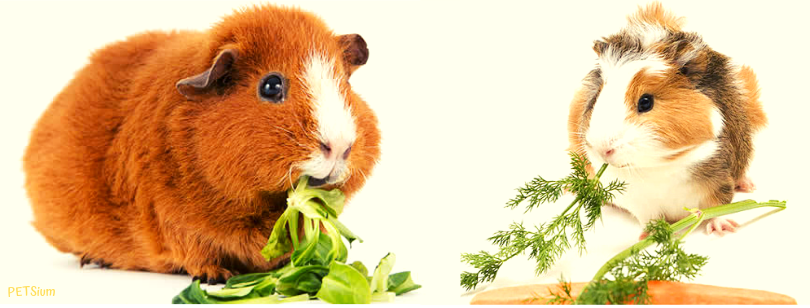
You can also feed your guinea pig organic fruits and vegetables such as: carrots, cucumbers, broccoli, green beans, red peppers, apples, grapes, oranges, bananas, parsley, leafy green lettuce, and romaine.

Spinach and cherry tomatoes can be given to guineas on a sparing basis.

Grooming

You might be wondering how much grooming responsibility there could possibly be to keeping a hairless guinea pig.

Although the guinea pig does not have hair to become matted or dirty, it does have an issue with keeping itself warm.

If you keep your home too cool or if you were to attempt to take the guinea outside then you could inflict a serious amount of discomfort and even endanger your guinea’s life.

If your guinea is brought into a room that is a little on the cool side then you may want to wrap the guinea in a fuzzy blanket to keep it warm.

You may also need to keep untreated tree branches, chew toys, and tough fresh vegetables such as broccoli in your guinea’s cage, as these items will entice your guinea to chew and gnaw, which in turn will file down his teeth and prevent them from growing too long and becoming uncomfortable or dangerous.

Категорије: Guinea Pig

Aggressive Cat Behavior

јун 10, 2019 By liv parmel

Cats are generally considered to be very independent animals. They can often safely be left to their own devices. However, it is also the case that they can provide their owners with a lot of love and affection. In order to have a good relationship with a pet cat is important to be able to understand cat body language, and to interpret cat behavior.

Despite the fact that cats are independent they can also be very territorial about where they live. They will rub themselves in their area to leave scent behind. This behavior is known in the animal world as marking territory, and is done when a cat wants to alert others to its presence. This territorial behavior can often lead to aggression as local cats fight for dominance.

Fighting between cats can also occur when a neighborhood female cat is in season. Male cats will fight to be the first to mate with her. Sometimes a cat’s general aggression can be directed towards humans. This is one of the main cat problems which owners must be aware of. The aggression usually stems from a cat having insufficient social stimulation as a kitten, both from other cats and in interactions with humans.

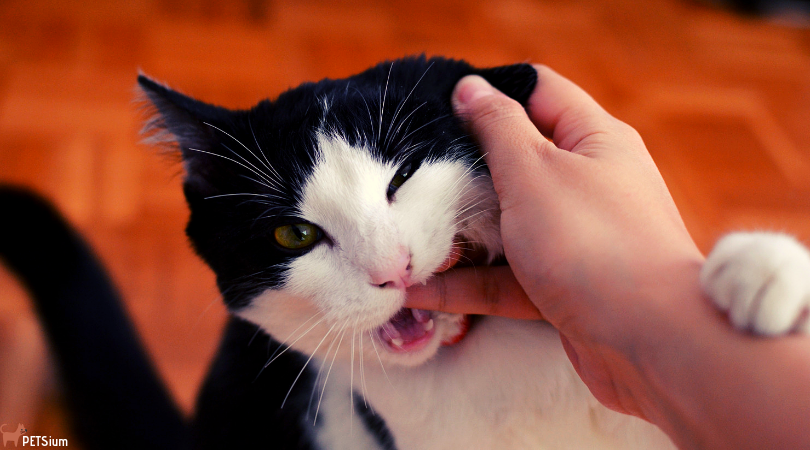
aggressive cat behavior towards humans

Aggressive Cat Behavior Towards Humans

People who do not know many facts about cats, often under-estimate the damage a cat can do against a human. A small dog that is the same size as a cat can do little damage, but the different is that the dog only has one weapon the mouth, while the cat has five, the mouth and four paws with sharp claws. This is why all cat owners should take aggressive cat behavior towards humans very seriously.

There are many different reasons for aggressive cat behavior towards humans. The most commons reasons are learned aggression, violent play, defensive aggression, offensive aggression, aggression associated with handling and redirected aggression. Aggressive cat behavior towards humans are often related to illness and pain. Especially if your nice and kind cats turns aggressive.

Just like humans will the cats tolerance become low when it is in pain or ill. It will often become aggressive if you touch it or it think you will, were it is in pain. You should always have your cat checked if you suspect it to be this. When the cat is healthy again, will the aggression often disappear.

Learned aggressive cat behavior towards humans

Learned aggression is that the cat has learned in some situation can it pay of to be aggressive. The cat has learned it can get its way if it is aggressive.

A classic example of aggressive:

Your cat does not like to be brushed, a day were the cat is in an extra bad mood, will it hiss and try to hit you. You will pull your hand back. The cat will then think “HEY, my lovely owner stopped, I will just do the same next time”. It has now learned that by being aggressive towards you, it won’t have to be brushed.

Solution to this aggressive cat behavior towards human

If you react the way the cats want on its aggressive cat behavior, will it use the same tactic the next time. If your cat react aggressively when you touch it, the most correct way will be not to move the hand, but no one want to be close to an angry cat.

This is why you have to be clever, you could use like stick or something and keep touching it and just let it go all out on that stick. At some point the cat realize that it does not help and you should be able to touch it. You can increase the effect by giving the cat a snack if it does not react aggressive.

how do make cat less aggressive

Violent play in cats

Aggression in the form of violent and uncontrolled play is very common, but also very easy to solve. The problem can be everything from the cat has its claws a little too far out when playing or the cat attacks the owner with biding and scratching.

Violent playing is mostly a problem for indoor cats, because they have to get of some energy. And they can’t run outside and hunt. It is a common problem when the cat is a kitten and a young cat, and it will often disappear when it grow up. But for some cats it does not disappear. There are two reasons for this behavior, under stimulating and learning and a lot of the times both.

Under stimulating:

Under stimulating is mostly indoor cats who are bored and because they can’t hunt birds and mice outside, they hunt humans to satisfy their hunting instinct.

Learning:

It is often the cat owner who “teaches” the cat to be violent, because it fun to let the small kitten attack the hand or foot. And owner does not stop it, because it does not really hurt that much. But when the cat gets older, it still think it is okay, but now it hurts, because its teeth and claws has grown out. It is also a matter of kitten development.

When the kitten is small it fight with its siblings, if the cat bites two hard the other cat will react. And none of the cats want that, that is why the kittens adjusts the power of their bite so the playing can continue without anyone getting angry. Single kittens or kittens that have been taken away from the mother to soon will often have a hard time playing “nice”.

The solution to this is to learn the cat to play nice or prevent it from beginning to play rough. It is easy to prevent the cat from becoming violent if you follow these rules:

  • Your hands are for caressing and not for playing.
  • Always use toys when playing. So the cat attacks the toys and not you.
  • Stop the playing if the cat begins to play rough.
  • If the cat attacks the foot when hunting a toy, stand still, it is not fun to attack a “dead” foot.
  • Make sure to play with your cat on a daily basis, especially with indoor cats.
  • Make sure to stimulate the cat in different ways

If the cat already is aggressive the problem is harder to deal with, but it can still be possible learn the cat to play nice with this six rules. But if it more seriously you could try to spray the cat with some water if it is too violent.

NEVER user any form of physical punishment, it will only make it worse and more personal for the cat. Another solution could be to find the kitten or young cat a playmate.

Defensive Aggressive Cat Behavior Towards Humans

This is probably the most common reason for aggressive cat behavior towards humans. The cat uses the aggression as a defense. The cat becomes aggressive when it feels threatened, if it can escape will it’s normally do that. Defensive aggression often happens when a cat it held or is forced up in a corner. Insecure cats will often use this form of aggression.

A bad socializing can develop this form of aggression. A cat that is use to being carried around and held will often be more likely to accept a lot more than a cat who has not been use to it. Its behavior will become worse and worse, because it is a combination of learned aggression and defensive aggression.

An example:

Your cat is scared of the neighbor’s 4 year old girl because she once pulled it by the tail. Next time she does your cat will turn around and scratch her, and she stops. The cat now knows that it helps (learned aggression).

Next time she does it, will it do the same, this become worse and worse, and next time the little girl come over to visit you, your cat will instantly attack the girl, because then it does not have to be pulled by the tail.

Solution to this cat behavior

Defensive aggression is easiest being avoided by socializing the cat from the beginning. If the cat is very anxious and react very aggressive on you touching should you use the techniques from learned aggression. It is important never to corner a cat. And if there are kids evolved, tell them how to handle the cat correctly.

aggressive cat behavior solutions

Offensive Aggressive Cat Behavior Towards Humans

This is the opposite of defensive aggression; this is where the cat uses aggression as a way of getting what it wants and to control certain situations. This cat behavior is normal with cats that are very confidence, and they know what they want and what they don’t, and they will not stand for anything.

The cat will often become aggressive in handling situation, like when it is getting brushed, it does not attack because it is scared like defensive aggression, but because it don’t want that right now. It only want to get petted when it is in the mood for it. It becomes worse if the owner accept this behavior, because it then becomes learned aggression.

Solution to this cat behavior

The keyword here is control. To take control you have to do following things. First you have to tell the cat that it gets nothing out of being aggressive, so if you are trying to get it down from the chair and it reacts aggressive, don’t stop, keep pushing it down.

To take control is it a good idea to use the approach “something for something”. The best things here is to take control over food.

First separate its daily portions in to small portions, ever time it’s time for food, you call after it. So it knows that it have to come to you to get food and not the other way around, you are not its waiter. When the cat comes try to touch it, start just by padding the back, if it reacts aggressive, you put the food away and wait for a bit and then try again.

Slowly increase the amount of handling and padding. The end result will be that the cat understands that it does not help to be aggressive.

Aggression Associated with Handling the Cat

Most cats love to get petted, and some even seek it. But it can suddenly change, and it bites and scratches and then run off. This is why many people who do not like cats say that they are unpredictable. It is hard to say what the reason for such behavior is, but it is most likely that the cat is in conflict with itself.

At one side it wants to get petted, but one the other hand it does not want the owner to get to close, or maybe there is some areas were the cat does not like to be petted. The cat has a line of how much and were it want to be petted, if the line is cross it becomes aggressive. The stomach is for some reason the place you don’t want to touch your cat.

Solution to this cat behavior

This problem can be prevented by socializing the kitten, if the kitten is use to being handled from it is a kitten, will most likely accept more handling when it grow up. But of course are all cats not the same, some cats love to be petted and someone does not.

It is also a great idea to learn the cats signals. Even though it looks like the cat just out of no where becomes aggressive does it actually show some signs, that indicate that you are soon crossing the line. First it will stop purring, and after that the tail will begin to swing from site to site, if that happens it is about time that you stop petting the cat.

You can also trough cat training make the cat love petting more. First you need to learn were the cats line is, when you do then stop before you cross it. For example if it likes to be petted in 1 min, then stop after 45 seconds. This should slowly increase the time of where the cats like to be petted.

There are 3 things you always should remember:

  • Make sure never to hold the cat to hard
  • Beware of the signs, that indicate that you should stop petting the cat.
  • Do not touch the sensitive places on the cat, such as the stomach before you have trained it to accept it.

how to stop aggressive cat behavior

Redirected Aggressive Cat Behavior Towards Humans

Redirected aggression is when aggressive reactions are taken out on a target, which did not trigger the behavior. This happens when it is not possible to react on the “real” thing. This is common with most animals and humans. This redirected aggression often happens when another cat triggers the behavior.

For example if the cat is sitting in the window hissing at a cat outside, because it cannot get to it, but it is agitated it attacks you instead because you are the closet and easiest target.

Solution to this cat behavior

To solve this problem you have to find the reason for it, because this cannot be solved like other “aggressive cat behavior towards humans”, because it is not really the humans fault. If the cats attacks you when you stand between the cat and a new cat in the house should try to solve the problem between the two cats.

If your cat becomes aggressive because of cats outside the house, should try to remove the cats outside.

Aggressive Cat Behavior Toward Other Cats

It often happens that the peace in the house is ruined by two cats fighting or bulling each other. And it can be very frustrated for the other, who might have bought two cats so they can enjoy each other’s company, but instead they are fighting.

The reason for aggressive cat behavior toward other cats

There are many reasons that can create the problems between the cats. The most common problem to this aggressive cat behavior is territorial aggression. Even though a cat is very flexible when it comes to socializing, you must remember that it is by nature a loner and it only socialize with other cats when it is time for mating and for female cats when it takes care for the kittens.

If there is enough food in one place it sometimes happens that cats gather in communities, were they live and raise kittens together. It is not like herd, more a lot of cats who tolerate each other’s presence.

why is cat aggressive towards other cats

There is a lot of cats who live perfect together and love each other’s company. But just like humans are their some cats who can’t together. It is totally normal that there are small arguments, with some wheezing and a couple of paw strokes. You first have to be worried if it turns in to frequent arguments which turn in to real fights.

The kittens development has a great impact on the cats social behavior towards other cats. Cats who has grown up with other cats are more social than cats who have not. Also, cat who have been taken away from the mother to soon, is often more antisocial.

It also happens that indoor cats that can see cats moving around outside the house become aggressive towards each other. If two cats who normally is great friends becomes aggressive towards each other can be because one of the cats has been some were else, like the vet, and is carrying smells of other cats.

A house with a lot of cats can give the cats stress and stress can lead to aggression. It is not unusually to see that there is one cat out of many in the house who will be the victim to the others cats bullying. This is not a problem with outdoor cats because they can just hide or runaway for a while. But for indoor cats there is no hiding places and the cat won’t have a good life.

How to solve aggressive cat behavior towards other cats?

If you haven’t done it, than sterilize or castrate your cats. Cats who are sterilized or castrated tend to fight less. But it doesn’t help every time.

Prevent aggressive cat behavior

It is always a great idea to prevent a problem before it happens. It is always a good idea to introduce two cats to each other slowly. Start by keeping them separated with only a door between them, so they can smell each other. After a couple of days, open the door a bit so they can see each other, but not touch. After a couple of days more, you can put them together.

Stay in the background and be passive and calm, your anxiety can be felt by the cats. If the cats begin to fight, take a blanket or spray them with water to keep them apart. If the cats do not begin to fight you can begin to play with together. Or try to give them some cat herbs, this will make them more playful and it can break the ice between the two cats.

Treatment:

If your cats already are together, it can help if the cat has its own food, water and sleeping spot. Try to feed the cats together in the same room, but with great distance. If you are lucky will they accept each other over some time, because they relate the presence of the other cat to something nice, food.

You can also try pheromones. It is not all cats who can live together, and sometimes you just have to accept that you have to find a new home for one of the cats.

Cat behavior which is deemed to be aggressive or destructive can often been corrected by training cats. As with dogs, training a cat will involve rewarding desired behavior and punishing behavior which is deemed to be wrong. Cats cannot be trained to the same level of obedience as dogs. But their behavior can be altered with consistent and repetitive training.

A lot of cat behavior can be explained by the fact that domesticated cats are closely related to, and descended from, wild animals. When pet owners are looking for a cat behavior meaning it is often that any actions are instinctive as a result of evolution. Despite this, cat training is always a viable option to attempt to address any behavior which is deemed to be destructive or dangerous.

Категорије: Cats

Digestive Problems with Kittens

јун 7, 2019 By liv parmel

If you own kittens, then you must be worried about their health. Cats can have serious illnesses that can eventually lead to their death. You do not want that to happen. For you to be prepared, you need to know the most common cat ailment like digestive problems and how to prevent and treat them.

What to Do About Kitten Constipation

Kitten constipation is pretty common, especially among hand-reared kittens and premature kittens. The reason is because mother cats stimulate the anal region of their kittens frequently. If something happened to the mother cat soon after her kittens were born, then this is something you will have to start doing. If you allow feces to build up inside the kittens’ anuses, it can turn toxic and kill them.

Premature kittens often have constipation because their organs and bodies are not fully developed. They need to be fed every hour or two with diluted kitten formula. Premature kittens, like other kittens, should have a bowel movement at least once every two days. They especially need to have their anus stimulated often to avoid kitten constipation.

To stimulate your kitten’s anus, you can try a warm wet cotton ball first, although it may be too rough for some kittens’ bottoms, especially the premature ones. The best way to stimulate your kitten’s bottom is with your index finger. Trim your nails and then start running warm water at the sink. When it’s the right temperature, put the kitten’s bottom in the stream and gently stimulate her anus. You’ll know you’re not doing it right if the kitten doesn’t have a bowel movement after you do it.

kitten constipation

So how do you know if kitten constipation is a problem?

Normal kitten feces is easily passed and looked similar to brown toothpaste. If the feces are small, hard lumps, then your kitten is starting to get constipated. You’ll also know your kitten is constipated if he strains to have a bowel movement. Constipated kittens also tend to have a hard abdomen that’s distended and may be tender to the touch.

If your kitten has not had a bowel movement for more than two days, then try a small dose of liquid paraffin or another feline laxative. Use only about a half milliliter of paraffin with each feeding for one to two days. Avoid paraffin if the kitten is especially young. Instead, rub some white petroleum jelly into the kitten’s anus. Be sure to warm it up in the microwave a tiny bit before you rub it in.

One important factor in keeping kitten constipation away is how much exercise your kittens get. Keeping them in a box or cage will prevent them from getting the exercise they need to help their digestive system function properly. Be sure you let them out plenty of times per day to play, romp, and work those digestive muscles.

Another thing to watch is how much water your kittens drink. We all think cats and kittens drink milk all the time, but it’s important not to forget the water. Water keeps the kitten’s bowels hydrated and helps them pass stool more easily.

If the kitten constipation keeps coming back or never seems to go away, then it could be a symptom of a more serious problem. You should seek the advice of a veterinarian if you can’t seem to get rid of your kitten’s constipation.

Is Kitten Diarrhea Dangerous?

It may be difficult to know how serious kitten diarrhea really is. While you don’t want to panic, you certainly don’t want to let a problem escalate out of control. Taking action though will prevent it from getting any worse than it already is. Important nutrients that the body does need are lost when diarrhea is present. Do what you can to keep that loss to a minimum.

Food for a kitten with diarrhea?

It makes sense not to give your kitten food to fuel the diarrhea so that it doesn’t continue. There are some items you can offer though what may help to reduce it. Yogurt is a great food product that can kill bacteria in the body. You need to use plain yogurt though, a type that has fruit or various flavors added to it.

Cottage cheese is a good option for kitten diarrhea too. This isn’t something you want to give very much of though. A tablespoon at a time to see how our kitten reacts to it is a good idea. You can mix it up with some cooked beef too if you want to encourage your kitten to consume it.

Cooked rice is filling so your kitten won’t be as hungry. It can help to absorb additional water that is in the body when those loose stools are being created. Rice is very good for kittens too as it contains large amounts of vitamins and nutrients that they need. It is never a good idea to deprive your kitten of all food while you wait for the diarrhea to pass.

What you do offer should be given in very small portions. You can offer it several times a day to give the body time to properly digest it. If your kitten doesn’t want to it you may need to fit it out of your hand and gently coax him or her to swallow it.

If kitten diarrhea doesn’t go away within 48 hours then it is time to kick it up a notch. Contact your vet so that they can examine your pet. Fecal testing can be done to find out if there are parasites or other factors present that can be causing it to continue. They can also do blood work to find out if there is any other type of health concern that needs to be explored in further detail.

kitten diarrhea

Diarrhea in kittens can be a symptom of serious health problems

There are some serious health problems where kitten diarrhea is a common symptom. In addition to parasites it could be an indicator of leukemia, consuming poison, or a type of bacteria that has found its way into the body. This is part of the reason why it is so important for them to get vaccinations on schedule.

Most of the time kitten diarrhea isn’t anything serious to worry about. Yet there are times when a kitten can become dehydrated because of it. Make sure you continue to get your kitten to drink some water during the day when this is all going on. If they won’t drink on their own then they use of a dropper may be necessary.

Kittens tend to become dehydrated as a result of diarrhea faster than dogs do. They can end up dying if you don’t take swift action to offset it. Sometimes kitten diarrhea is chronic which means the cat is continually suffering from it. This is often an indication that you need to make dietary changes for your kitten.

They may have an allergy to various types of ingredients found in cheap cat food. Canned food tends to create a problem less often than dry cat food. Look for foods that are high in protein and low in carbohydrates.

Kitten Vomiting

Kittens may experience vomiting for a number of reasons, but some kitten vomiting may be the result of a more serious condition. Knowing the facts about the signs and symptoms of your kitten’s vomiting problem can help you make a more informed decision about treatment.

There are many reasons that may cause a kitten to vomit. Digestive upset is very often the cause of vomiting in cats and may be the result of hairballs, changes in diet, food sensitivity or allergies. Even something as simple as stress can result in occasional vomiting.

Serious causes of kitten vomiting

More serious causes of vomiting may include intestinal parasites, nervous system problems, peritonitis, poisons, kidney or liver disease, chronic renal failure, acute metritis or uterus problems, hyperthyroidism, inflammatory bowel disease, cancer, bowel or intestinal obstructions and skin diseases.

The key to determining if your kitten’s vomiting is caused by a simple problem or a more serious condition requiring treatment is know your kitten’s overall health habits and note any changes accordingly. This will allow you to notice extreme changes in your kitten.

Occasional vomiting may occur with healthy cats. Look for changes such as persistent vomiting or vomiting over long periods of time. Other warning signs include blood or feces in the vomit, projectile vomiting or parasites that can be seen in the vomit. The composition of the kitten’s vomit may provide clues to its cause.

Blood in vomit may indicate stomach problems or bleeding, mucus may mean a problem with the upper intestines; food may indicate poisons or digestive upset and vomit containing bile may mean a bowel problem. With persistent vomiting it is also wise to keep track of your kitten’s overall appearance.

kitten vomiting

Your kitten’s behavior can tell you a lot about their health

Look for other warning signs that can accompany serious problems such as diarrhea, lack of appetite, lethargy, and weight loss. If your kitten is vomiting repeatedly or has anything abnormal about their vomit and their general demeanor is different, then a trip to the vet’s office is probably warranted.

To determine the cause of your kitten’s vomiting, your vet will most likely run diagnostic tests and procedures. They may perform a blood chemistry test, blood cell counts, x-rays, urinalysis or ultrasounds to check for signs of injury or disease. Once a proper diagnosis is obtained, you and your vet can discuss treatment options.

Intravenous fluids, medications or even surgery may be needed to cure serious health problems. Treatment at home for simple kitten vomiting problems means keeping a close watch to prevent dehydration, which can be extremely serious for young cats.

How to avoid kitten vomiting

You can help avoid kitten vomiting by keeping your pet up to date on vaccinations to prevent serious diseases and keeping him free of worms and fleas. Worming for kittens should be done three times during the kitten’s early life, every two weeks.

Then your kitten should be wormed every two months for the first six months after that. Once this stage is reached a kitten or cat will only need to be wormed every three to six months on a regular schedule. Keeping your cats skin healthy will prevent hairball and skin conditions that cause licking and hair ingestion.

Provide your kitten with a healthy and nutritious diet, and avoid sudden changes in diet that may cause stomach upset. Change your kitten’s food over a period of time and in small doses. Always feed fresh food, don’t refrigerate older food to serve again as it may grow bacteria in it.

Don’t give your kitten cow’s milk as it often causes stomach upset. Groom your kitten regularly to prevent the ingestion of hair. If hairballs are a consistent problem, you may wish to discuss medications or over the counter treatments for hairballs with your vet.

Like humans, kittens may occasionally vomit to rid their bodies of unwanted or harmful substances. By knowing your kitten’s behavior and overall health, you will be able to determine if vomiting is occurring too much or if you kitten is showing signs of more serious problems.
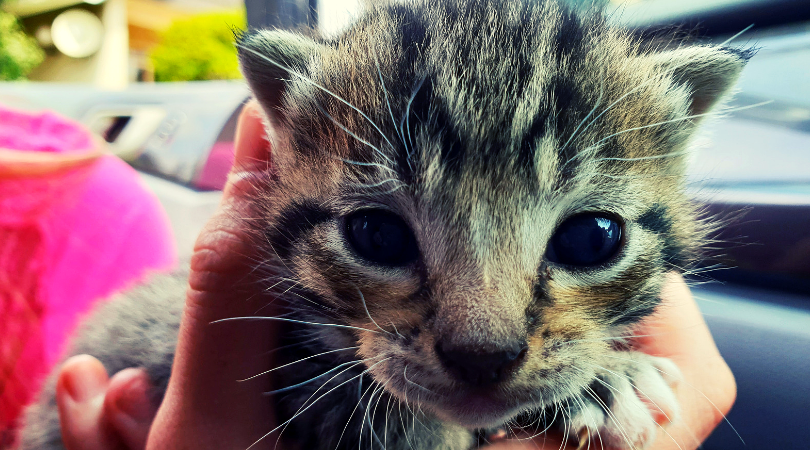
Категорије: Cats

Guinea Pigs Body Language, Noises and Sounds

јун 4, 2019 By liv parmel

Guinea pig body language and noises help to communicate their many gestures like happiness, sadness, hunger, etc. if understood properly by humans.

The Guinea pig sounds can be easily understood if heard carefully because they have a good vocabulary.

Some sounds and body language can have more than two meanings so one needs to carefully examine the exact feeling which a Guinea pig wants to convey.

A Guinea pig is special specie belonging to the family of rodents.

In contrary to their names they do not belong to a pig family nor are they coming from Guinea, they basically are from Andes and a case of hybridization.

This Caviidae family is an important food source for the folk culture of South America as well as medicine and a part of community religious ceremonies.

For the people of western society the Guinea pig enjoys the popularity of being a household pet.

This is so because they have a very passive nature and they respond well to feeding, handling and caring.

Guinea pigs have a face somewhat like that of a pig and spend long time in eating.

They are large and weigh about 1.5 to 2.5 pounds having an average life of four to five years.

When domesticated they live in a group of two or more and love to live quietly in cages.

Guinea pig sounds

Guinea Pig Noises

There are so many different Guinea Pig noises it’s difficult to accurately describe them with words.

Despite this, once you’ve listened to your guinea pig sounds I’m positive you’ll be able to classify it based on your pet’s situation and the guinea pig noises description below.

It’s important to note that various guinea pig noises can actually mean two completely separate things so keeping an eye on your cavies demeanour is an important aspect of identifying her vocabulary.

Guinea Pig Sounds Meanings

Some popular Guinea pig sounds and their meanings are as follows:

Guinea Pig Purring

Guinea pigs can also make a distinctive purring noise during petting, stroking or other pleasurable activities.

It sounds very similar to rumbling guinea pig noises heard during mating encounters.

Guinea pigs can also make a distinctive purring noise during petting, stroking or other pleasurable activities.

It sounds very similar to rumbling guinea pig noises heard during mating encounters.

Sometimes while petting or pampering a Guinea pig one may be able to hear a purring sound which is an indication that the Guinea pig is enjoying the affection.

Purring can somewhat sound like a rumble but it can have a different meaning as well.

They can also purr when groomed or when brought to a new place which they are investigating.

Guinea Pig Wheeking

This is one of the most enjoyable guinea pig noises and generally means it’s time to eat.

It is a loud noise like that of a whistle which is generally heard when a Guinea pig sees its master or when it wants to be fed.

It is an expression of excitement or can be a situation when the Guinea pig is lost somewhere and is seeking for help in fear.

If a Guinea pig has a fixed time for feeding then at that point of time the wheeking sound will be the loudest and even if they find that food is being cooked or coming towards them then also their sound will be at a very high pitch.

Guinea pig body language

Guinea Pig Rumbling

The native mating rumble is another easy to identify guinea pig sound.

If you’ve ever bred or housed opposite sex cavies together you’ll already be able to identify this noise.

On occasion this rumble will be accompanied by the male swaying his hips in what’s known collectively as the mating dance!

This sound is usually heard when a male Guinea pig is romancing with the other Guinea pig.

The sound has a vibrating effect and the Guinea pig will walk around other Guinea pig swaying their hips like doing a rumble strutting.

Female guinea pig can also make this sound if she is in season.

Guinea Pig Mutter

Muttering is low pitched sound when pigs are free in relaxation and feel contended.

They roam here and there on floor muttering and enjoying.

Cavies also make a contented muttering sound, often interspersed with purring.

This symbolizes happiness and contentment.

My animals make these kinds of noises when they’re resting in a ball of hay or snuggling up to me on the sofa.

Guinea Pig Whining

Such sounds are made when pig is resting and does not like to be disturbed.

It is a moaning or complaining sound.

Its volume increases if mischief maker goes on repeating his acts.

Sometimes Guinea pig makes this sound when they desire that their particular body part should not be touched.

My cavies have been known to whine, both inside and outside of the cage or hutch.

Usually if one is resting peacefully and another guinea pig wanders up and disturbs her she’ll have a quick moan.

The whining can gain volume if the intruder doesn’t leave followed by head pushing and shoving.

guinea pig noises

Guinea Pig Shrieking

Squeaking or shrieking sounds are sharp high pitched and indicative of pain feelings in body due to injury or internal body problems.
If your pet is alarmed, frightened or experiences sudden pain you’ll hear the piercing shrieking sound.

Any sudden noises can also lead to this distressed bellow.

I’ve also noticed this particular sound when two cage sharing guinea pigs are separated.

Guinea Pig Chirping

I’d like t briefly comment on the rarest of guinea pig noises.

Chirping. I’m yet to experience this seemingly wonderful guinea pig sound but I’m informed by people that it resembles bird singing.

Other guinea pigs in the area are said to remain still and listen intently as the vocalist sings her notes.

Guinea Pig Chutting

This refers to a series of short staccato “chut” sounds. Like purring, this tells you your pig is feeling happy or relaxed.

You might sometimes hear a few chuts mixed in with purring while you are petting your pig, but don’t be worried if you never hear your pet chutting.

Not all guinea pigs make this sound.

Guinea Pig Teeth Chattering

It is a warning signal in which the Guinea pigs gnash their teeth, raise their heads high sometimes even stamp their foot to show their anger.

This shows that they are angry or upset so they warn their enemy to get away before they attack.

Guinea Pig Body Language

When you think about the way your guinea pigs communicate with you and with each other, vocalizations such as wheeking, purring/“durring“, cooing ( specific to guinea pig sows when calming their offspring), and even chirping most likely come to your mind first.

But non-vocal communication is just as important in delivering certain messages i.e. emotions to you and other guinea pigs.

Being aware of the various non-vocal cues, signals and bodily actions that make up guinea pig body language enables you to better understand the particular messages that your piggies are trying to convey.

Take heed and see what your cavies are trying to „tell“ you using distinctive body movements, gestures, and postures.

Recognizing and learning how to interpret guinea pig body language will help you „read“ your pets’ underlying emotions and ultimately help strengthen your bond with your guinea pig.

Guinea Pig Popcorning

Just the mere sight of guinea pigs popcorning is cuteness galore!

This distinctive and easily recognizable body movement is very specific to guinea pigs, especially young(er) ones, but older guinea pigs may occasionally popcorn too ( not as spectacularly high as young cavies though).

Just like popcorn popping, guinea pigs repeatedly hop up and down, and this piggy-style dance is, more often than not, accompanied by intense wheeking.

It’s their way of telling you that they are excited, happy, or simply want to engage in social play, which plays ( no pun intended) an essential role in healthy behavioral development.

Guinea Pig Rumblestrutting – Strutting

Love is in the air! You can easily recognize this guinea pig body language, part of courtship behavior, by the guinea pig boar’s swaying, rather slow walk around a piggy sow, a low-key mating dance accompanied by a rumble.

If your piggy is doing a strut without a rumbling sound and this repeated move from side to side is accompanied by hissing and teeth chattering, then it’s a sign of dominant or even aggressive behavior.

Guinea Pig Nose Touching, Bumping And Sniffing

It takes two ( or more) piggies for this move, but it’s all good. A nose touch is just their way of greeting each other in a friendly manner.

Your guinea pig may even greet you in the same way. Sniffing each other’s nose, ears, chin, and back end when greeting is guinea pigs’ way of gathering more information.

In keeping with their inquisitiveness, sniffing all sorts of objects satisfies their need to discover and explore new things.

Guinea Pig Nose and Head Tossing

When your guinea pig gives you the head or nose tossing cue, you should know that, for some reason, she is feeling uncomfortable or annoyed and wants to be left alone.

Your piggy is essentially saying „back off!“ If this gesture is followed by one or more nips, be aware that a fight may start soon.

Guinea Pig Freezing

When your guinea pig freezes i.e. stands motionless, then your pet is trying to tell you that she is too startled to be able to move. Something may have surprised or even frightened her.

If your piggy senses that there’s danger such as a predator lurking around, she will freeze in an attempt to become invisible to it.

Your guinea pig will typically remain motionless until she feels that the predator or whatever has startled her is no longer an imminent danger. A low vibration usually accompanies a freeze.

Guinea Pig Standing On Hind Legs

When your piggy behaves like a bunny ( this body posture is as cute as it gets) but without showing signals of dominance or aggressiveness, this is indicative of the fact that she craves some attention and TLC or just begs for a snack.

This posture could also be part of a face-off when accompanied by other signs of anger and a possible attack such as hissing, head tossed back, and teeth-baring & chattering.

Guinea Pig Yawning and Hackles Raised

A wide yawn is by no means a sign of your piggy being tired, sleepy, or bored, especially if accompanied by raised hackles.

Be sure to keep an eye on those angry piggies and do intervene to separate them before the situation gets messy.

To avoid getting accidentally bitten, use a towel, a plastic bottle, or another lightweight object instead of your bare hands.

Guinea Pig Running Away

New guinea pig owners should also keep in mind that running away when trying to pick her up, part of guinea pig body language at first is simply a natural defense mechanism and she will come out of her shell with time and patience.

Your guinea pig (s) may even engage in licking your skin which may be her way of showing affection toward you when cuddling her or just an affinity for the salt on your skin – feel free to interpret the licking cue any way you want.

Conclusion

Guinea pig sounds and body language are the expressions of their feelings like human beings.

Just as humans talk to each other, communicate horror, sorrow, pleasure and curiosity in their language these little creatures too unfurl emotions through indicative sounds found common in almost all species.

They share their feelings of being hungry, lonely, curious, stressed, happy, chirpy, angry, merry making and kept away with other guinea pigs or their owners.

Well that concludes my brief introduction to the various guinea pig body language and noises you’ll hear from day to day.

Категорије: Guinea Pig Тагови: Body Language, Guinea Pig, Sounds

Will Hypoallergenic Dog Food Help Keep My Pet Healthy?

јун 3, 2019 By liv parmel

Just like humans, dogs can suffer from allergies.

Symptoms in dogs may include gastrointestinal upset, itchy skin (ears, face, feet and underbellies), hot spots, and chronic ear infections.

Obviously these symptoms can cause your dog a great deal of discomfort so it’s important to isolate the cause.

As a first course of action, your veterinarian may recommended that you switch to a hypoallergenic dog food.

Everything You Need To Know about Hypoallergenic Dog Food

While some food allergy symptoms are the same as those caused by atopy (flea bite allergy) and inhalant allergies.

Changing to a hypoallergenic dog food may help you determine if something in your dog’s diet is causing the problem.

There are many potential allergens in normal dog food.

Any of the chemicals, preservatives, or other ingredients used in the making of the food could be to blame for dog food allergy symptoms.

Studies show that certain food substances are more likely to cause problems than others. Beef, chicken, lamb and fish are some of the more common culprits.

If you suspect that your dog’s food is responsible for your dog’s allergy symptoms, the good news is that you have plenty of hypoallergenic dog food brands to choose from.

Your veterinarian should be able to recommend a good brand but they tend to mark up the price these foods by as much as 40%. You may find it cheaper to purchase the food online after doing some comparison shopping.

what exactly is hypoallergenic dog food

How to Switch to a Hypoallergenic Dog Food

If you are planning to switch your dog’s diet to a hypoallergenic dog food, do so gradually to avoid upsetting your dog’s stomach.

However, if your dog currently eats a wet dog food, switch to a wet hypoallergenic dog food.

Also, if your dog eats dry food, switch them to a dry hypoallergenic dog food.

Ideally you should make the switch over the course of about a week by mixing ¼ new food with ¾ old food at first.

Then, after the first three days of this, change the the mixture to ½ new and ½ old and so on.

Be sure to monitor your dog’s reaction to the change in diet.

After this, if you don’t notice any changes in your dog’s digestion, the switch was a success.

If you do notice problems like vomiting or diarrhea, contact your veterinarian.

If you have successfully eliminated the component of your dog’s diet that was triggering the food allergies, your dog’s symptoms will be relieved.

A True Hypoallergenic Dog Food

If you suspect your dog may have food allergies, then you have probably heard of hypoallergenic dog food.

This is food that is specially designed to reduce your dog’s chance of having an allergic reaction to food.

If you search on google for hypoallergenic dog food, you will find numerous brands of foods that claim to be hypoallergenic.

Most of these foods contain unusual protein sources such as duck, salmon, bison and lamb.

This is combined with some form of starch, usually rice or sweet potato.

While these foods can be useful in a food trial to diagnose food allergy, these foods are not hypoallergenic.

A true hypoallergenic dog food is a diet that has a hydrolysed protein source.

This means that the proteins are partially pre-digested which reduces the size of the protein molecule.

The size of these molecules is reduced so small that your dog’s immune system cannot actually recognise the protein, which means that it is virtually impossible for food allergy to develop.

what does hypoallergenic mean in dog food

Does Your Pet Require Dog Food That Is Hypoallergenic?

Dog food allergies make about 10% of all types of allergic reactions to which these animals are susceptible.

But it is almost impossible to identify this disorder at its early stage without serious clinical procedures.

The main external symptom is skin itch which leads to skin reddening, scratching and local coming out of hair.

And it is hypoallergenic dog food that will help to get rid of all the symptoms and restore your pet’s health.

It is necessary to distinguish between food allergy and food intolerance (dietary hypersensitivity) – the sum total of physiologic reactions which develop as a result the organism’s reaction to this or that substance which is contained in dog food.

Clinically it can be revealed as the reaction of the dog’s immune system (allergy itself) or as a chemical or toxic reaction (intolerance).

A number of scientific studies have shown that that there are several products that are most likely to cause food allergy.

The most dangerous types of dog food:

beef;
dairy products;
chicken;
wheat;
chicken eggs;
corn;
soy.

It’s these allergy incitants that are most frequent in ready-made pet food.

Proteins, lipoproteins, liposaccharides can provoke an allergic reaction.

The reaction to food ingredients is conditioned by their size.

Allergy can be caused by the molecules with mass more than 10 kDa.

In order to select dog food for allergies and to identify to which ingredient the pet’s organism reacts it is necessary to place it on a diet with minimal number of components – to determine those which do not cause any reactions.

You can start with a mono-diet and gradually extend the number of consumed products.

How to Prevent Dog Food Allergy

It is possible to prevent dog allergy by balancing its diet.

The best hypoallergenic dog food is the one that consists of components that rarely occur in daily food.

It is proved by the combinations which are used in producing food for dogs suffering from allergy.

Hypoallergenic dog food reviews often feature unusual combinations of potatoes with meat (venison or mutton, rabbit or duck) and fish (salmon and carp), rice with eggs, duck with peas.

These dietary and rare combinations can be used for preparing dog food at home.

In this case you risk to worsen the situation by depriving your dog of useful substances that are needed for maintaining activity and keeping your pet healthy.

The majority of diets that pet owners prepare at home contain excessive proteins but lack calcium, irreplaceable fatty acids, many vitamins and other microelements.

But you can use special hypoallergenic food brands for dogs with food allergy: Hill’s, Purina, Exclude and so on.

For the production of hypoallergenic foods the method of hydrolysis is used, which allows to split proteins into subcomponents that do not cause any harmful reactions.

Food can be selected depending on dog’s preferences (dry or canned food), as well as its size and breed.

A veterinarian will provide you with all necessary information about hypoallergenic dog food.

So remember: using hypoallergenic dog food you will not only prevent the development of allergic reactions but also avoid many diseases connected with decrease in immunity.

does my dog need hypoallergenic food

Signs of Food Intolerance

The most typical food intolerance’s among dogs include beef, milk, chicken, and eggs.

The majority of these foods is found in dog foods and is proven to be healthy.

Other food allergies can also be found in chemical preservatives which aren’t common in dog’s food but it may be present in different brands where they use other chemical preservatives.

Dogs may go through signs and symptoms for example diarrhea along with other bloating if they’re intolerant towards the food they’re consuming vomiting could also occur.

Skin problems may develop consequently of the food intolerance.

Dogs which are intolerant for their food frequently experience excessive licking and itchiness.

Search for these signs to find out whether you’re pet includes a food intolerance problem.

What can be done about food intolerance?

If left without treatment, your pet could be at serious risk with food intolerance.

This is also true in case your dog is going through bloating for example vomiting and diarrhea.

Losing key nutrition is harmful for you dogs health. Most proprietors don’t realize the food allergy is available.

If you think that the dog is allergic or intolerant to his food, you have to tackle the issue as quickly as possible.

  • Start by monitoring his diet.
  • Try to determine which food he’s battling with.
  • Select a hypoallergenic dog food that’s careful in making use of chemical preservatives, artificial tastes, and food coloring.

Lots of people begin to see the problem disappear once they eliminate these aspects.

When the problem doesn’t disappear, continue monitoring his diet by excluding the important elements that create most allergic reactions for example beef, dairy, chicken and eggs.

When the problem continues, you will know you haven’t determined the issue.

If after several weeks of attempting new hypoallergenic dog dog meals and getting rid of key elements, speak to your dog’s veterinarian.

He will help you determine whether your pet is struggling with food hypersensitivity and how to handle it if he’s suffering.

He might have the ability to recommend the very best hypo-allergenic pet food available.

In case your dog is going through the signs and symptoms pointed out above, the meals that he’s eating isn’t saying yes with him.

Purchasing hypoallergenic dog food might be the solution.

Most pet food brands currently have an array of items which are considered hypo-allergenic.

The cost from the hypo-allergenic pet food might be more costly, but it’s worthwhile.

The healthiness of your pet will improve considerably once you receive his diet in check.

Hypo-allergenic pet food might be the way to go.

What are the Dog Food Allergies?

Allergic reactions really are a serious issue for most people and therefore are frequently difficult to identify.

Allergic reactions are even harder to identify once the allergy sufferer can’t communicate what it’s they’re feeling.

That is actually the situation when our dogs are afflicted by allergic reactions.

Dog food allergic reactions tend to be more prevalent than people think but frequently go undiscovered because the animal can’t inform us there is a problem.

If you think that you have a trouble with something your pet is eating you need to suspect an allergic reaction.

Systems in dogs could be much like humans and can include:

  • Sneezing
  • Runny eyes
  • Scratching or licking
  • Itchiness
  • Chronic diarrhea or vomiting
  • Chronic ear infections
  • Behavioral changes

Just like with humans, severe dog allergic reactions can result in respiratory system failure and dying.

Vets can conduct some tests to determine what meals your pet is allergic to and may prescribe medication for mild cases.

More serious cases will need that you simply monitor your canine’s intake of food carefully to prevent the allergen.

what is the best dog food for dogs with allergies

Why Dogs Suffers Allergies?

Like humans, dogs could be allergic to nearly anything.

Certain meals are dangerous to just about most dogs.

Two good examples are chocolate and let’s eat some onions. Just a little of chocolate could be enough to kill some dogs.

You will find many such meals that will not be provided to any dog and lists are available online or acquired out of your vet.

Other allergies to meals are not as easy to prevent.

Many dogs are allergic to wheat or grains in general.

This could present an issue since just about all pet food consists of grains in certain form as additives.

Grain is particularly common.

In case your dog is identified having a grain allergy, you will need to be cautious when purchasing out of the box pet food, though you will find grain free versions available.

Surprisingly, some dogs are even allergic to meat and chicken.

Frequently people discover that cooked meat present much more of an issue than raw meat.

Once more, commercial pet food more often than not consists of some form of meat product whether it’s beef, chicken, poultry or perhaps equine meat.

In case your dog is identified having a meat allergy, be cautious from the food he has to consume.

Diet for Dogs that Have Allergies

Increasingly more dog breeders have found their creatures do far better on the raw food diet.

The dog breeders frequently feed the dogs only raw meat and bones.

This can be a diet a lot more much like exactly what a dog would eat whether it were within the wild and appears to operate better for his or her digestion.

Lots of people often hear tales about bones seriously hurting your dog if digested.

The fact is that large, raw bones present hardly any danger and therefore are really quite great for your dog.

The issue comes when dogs receive cooked bones, especially individuals from chicken.

Cooking bones causes these to become brittle and splinter.

The splinters can certainly get caught inside a dogs throat and become existence threatening.

Once more, in character your dog wouldn’t be eating cooked bone but would dine frequently on raw meat and bones.

Many dog allergic reactions would be the outcomes of a poor, abnormal diet, much like many human allergic reactions.

In case your pet is getting health issues, a great starting point searching for an underlying cause may be within their diet.

Dog Breeds Susceptible to Allergies

There are some dog breeds that are more susceptible to allergies than others.

This is important to know in case you are wanting a dog that has less of a chance of having medical problems.
Any dog can attract fleas and have the same problems these dogs do, but they are less likely to have the extra problems that come with allergies.

  • Bulldog breeds
  • Labrador Retriever
  • Golden Retriever
  • Dalmatian
  • Rottweiler
  • Boxer
  • Schnauzer
  • Irish Setter
  • German Shepherd
  • Dachshund
  • Soft-Coated Wheaten Terrier
  • West-Highland White Terrier
  • Collie
  • Lhasa Apso
  • Shar Pei
  • Springer Spaniel
  • Cocker Spaniel

Категорије: Dogs

What is the Best Kitten Nutrition?

јун 1, 2019 By liv parmel

Cats are carnivores and rely on the nutrients, vitamins and minerals contained in animal tissues to ensure that their specific nutritional requirements are met. Cats living in their natural habitat consume prey that is rich in protein and with a moderate amount of fat and low concentrations of carbohydrates. Their bodies are naturally adapted to need fewer carbohydrates and to metabolise protein faster than dogs and other omnivores.

Consequently, it’s important that kittens get the correct balance of proteins, carbohydrates, fats, minerals, vitamins, and water in their diet. During the first few months and years of your cats life their body is busily growing and developing, without good nutrition they risk severe health issues later in life. By ensuring that all the dietary components are well balanced, your kitten can develop and mature into a happy, healthy cat.

Commercial Kitten Food

The most convenient way to make sure that your kitten is getting a well balanced diet is through commercial kitten food. Pet food manufacturers produce food that will meet the nutritional needs of kittens without any additional supplements. When you’re selecting a commercial kitten food product, check the labelling to ensure that it states that it’s a ‘balanced and complete nutrition’. These declarations are regulated by state and federal agencies to guarantee their accuracy.

Balanced and complete kitten food is sold in three main forms: canned, dry and soft-moist. They will all contain the same essential nutrients; the main difference is in the amount of water they contain. Generally, dry foods are more economical, while canned foods are often more palatable.

Unless directed by your veterinarian, it’s important not to add any additional vitamins or mineral supplements into your kitten’s diet if you are feeding them commercial food that guarantees a balanced and complete diet. Excess minerals and vitamins can lead to skeletal problems, kidney stones and other serious ailments.

how to feed a kitten

How Often do You Feed a Kitten?

As your kitten grows the amount of food required will also alter. Commercial pet food labels will typically provide guidelines on how much to feed your kitten as it matures. These labels will include estimates based on several different weight ranges. It’s a good idea to follow these guidelines when you first start using a certain brand of food and you can adjust it accordingly once you better understand your cat’s individual energy requirements.

Kittens have steep growing curves and their energy demands increase rapidly and its necessary adjust their daily food intake accordingly.

Free-choice Method of Feeding Kittens

If you have a kitten that is struggling to gain weight or is growing slowly you should use the free-choice method of feeding. This helps to reduce gastric distension that can occur when a kitten eats too rapidly. Free choice feeding is not recommended for kittens that are overweight or obese. Also, it’s important to bear in mind that neutered cats are at a higher risk of obesity and free choice feeding should be done cautiously.

The feeding frequency for meal-fed kittens six months old or younger should be three to four times a day. Once your kitten reaches six months old they are generally happy to be feed only twice a day. Most commonly, the transition towards an adult diet should start when your kitten is twelve months old. Kittens should always have access to fresh, clean drinking water. Often kittens prefer shallow water and food dishes, especially breeds that have ‘flat faces’, such as Persian cat.

If you do change your kitten’s diet, make sure that you do so using a slow transition over a period of approximately a week. Immediately replacing one diet with another can create gastrointestinal upsets or the refusal to eat. Start by replacing a small portion of the meal with the new food and gradually build this up until the new diet is introduced.

Always store unused can food in the refrigerator to maintain quality and try to bring it to room temperature before feeding it to your kitten as this will help to prevent stomach upsets. Dry food should be kept in a dry, cool location and any food that hasn’t been eaten within six months should be discarded.

what can kittens eat

Homemade Kitten Food

You can feed you kitten homemade diets if you prefer. However, ensure that the meals are prepared based on recipes that have been designed by a nutritionist to ensure that they are complete and well balanced. Be cautious of raw meat as it’s a potential source of pathogenic bacteria and parasites.

Also, while eggs are a great protein source, raw eggs can reduce the absorption of vitamin B and lead to coat and skin problems. Regular meals of raw fish should be avoided as can create a deficiency in thiamine (a B vitamin) and lead to a reduction in appetite and can cause seizures; in some extreme cases it can cause death.

Investing in good nutrition from the start of your kitten’s life will reduce the likelihood of your beloved pet developing obesity problems and other debilitating ailments that can be easily avoided with the correct diet. Ensuring that your kitten has a complete and balanced diet will set them up for a long and healthy life.

Best Kitten Food

Kitten food is obviously an product that we would want to choose wisely for the benefit of our little friend’s health and happiness. The fact is that choosing the right food is not easy as there are several brands for different types of kittens as well as having different nutritional values. There are many important factors to consider when choosing the best kitten food.
When you purchase kitten food, you most DEFINITELY want to avoid buying adult cat food. You wouldn’t feed you 5 or 6 month old child some spicy spaghetti that you made; instead you’d feed her baby food, according to her age. Just like human, a kitten’s digestive system is not developed well enough to be able to handle harsher foods that older cats would be eating.

Also, avoid any foods that contain any types of byproducts, for the same reason — digestion.

which food is best for feeding your kitten

Kittens Nutritional Needs

Kitten food has a lot more nutrients that a growing kitten needs to develop properly. You should always read the ingredients and look for the first ingredient that has to be some sort of meat product, such as chicken or veal. Kittens need a lot of protein to help them develop their organs and muscles. It’s important to choose the food that made from good protein sources and avoid cheap protein sources that may not be digested by your kitten.

In addition, the best kitten food should contain complete vitamin and mineral profile as they are essential part of helping a kitten to grow into a strong, healthy adult feline. Make sure there is no artificial ingredients, colors and preservatives in the food.

Dry or Canned Food for Kittens

There is a common misconception that dry food is better for ANY animal’s digestive system, but quite the contrary, canned food holds better nutritional value.

Allow me to explain: All foods for kittens contain a percentage of moisture (empty calories). Let’s imagine taking all of the moisture or water out of dry food. Say there is 10% moisture that we omit, leaving the “dry matter” at 90%. If the most important ingredient, protein, is 20%, then you can divide that 20% by the 90% to get 22%, protein per pound of dry matter.

Now with canned kitten food, there’s obviously more moisture or water than dry matter. If there is 80% moisture or water and 20% dry matter and 5% protein, calculate the canned food the same way; 5% protein divided by 20% would be 25% protein per dry matter.

Since the canned food provides more protein per pound of dry matter than does the dry food, the canned food although better in nutritional quality, is actually less expensive, per pound as well. So, “getting what you pay for” isn’t always bad!

dry kitten food

Here are some recommended food brands for your kitten:

KMR Kitten Milk Replacer — For orphaned or rejected kittens. This is much similar to the human infant formulas that we give to the children when they’re not nursing from their mothers.

BLUE Healthy Growth — For extra pleasurable flavor. This product offers a very nutritional “Chicken and Brown Rice” flavored formula.

Royal Canin Babycat Instinctive — If you’d prefer to give your kitten canned (moist) food as opposed to dry food.

You should compare different products and choose kitten food only from trusted company. Do not forget to browse for more information and reviews from other kitten owners. So you will be able to find the food that least expensive and still the best in nutritional value for your kitten.

Dry Kitten Food

Dry kitten food should be high in protein and fat to help meet the needs of your growing pet. You will find that many of the value brands are high in grains and other fillers that may not be beneficial to your pet’s health. Some whole grains and vegetables are okay for your kitten to eat but cats are carnivorous making quality meats the ingredient of choice.

Ash content is another issue and too much of this in your kitten’s food may result in urinary tract infections. Ash is a byproduct of the cooking process but higher quality meats will not contain as much ash from cooking as the lower quality meats often found in value foods.

is wet or dry food best for kittens

Organic Kitten Food

You can even find organic dry kitten food for those who want to give their cats the best possible dry foods. You may choose to supplement their dry food with a small serving of moist food once a day but the wet food should not be left out as it may go bad. Dry cat food is the most convenient choice for many families that are constantly on the go and it may be left out for your cat or kitten to eat whenever they are hungry.

Turkey, chicken, beef, and assorted fish ingredients are all popular choices and some brands use several of these in their dry food recipes.

You may also want to look for dry kitten food that does not contain high amounts of chemicals that may be used for preserving the cat food. Quality brands may not have any unnatural preservatives making them a great option for those who want to keep their cat food as natural as possible.

Most organic brands will fall into this category while keeping additives out of the meat and vegetable products that are being raised to make these foods as well. Antibiotics, hormones, growth supplements, and other chemicals may be used to raise livestock or grow crops and there is much speculation at the health risks associated with these additives.

Talk to Your Vet

Taking some time to talk to your vet about his or her recommendations regarding healthy or organic cat and kitten food is always a good idea. Your vet may also be able to tell you what ingredients you should avoid at all costs. This can be helpful when you are researching the different brands available.

High quality ingredients may cost more but you will also not be paying for fillers and chemicals that are used for many value brands. You should look for the dry kitten food that has the highest quality ingredients while still falling within your budget restrictions.

Категорије: Cats

Common Parrot Behavior

мај 29, 2019 By liv parmel

Parrot behavior is the subject of a great deal of study and research. Just as parrots in the wild have a social structure and behaviors that communicate their feelings, desires, and moods, companion parrots use behaviors to communicate their needs to their human flocks. You simply have to learn how to read parrot behavior to “speak parrot”.

A large part of a parrot’s behavior has to do with taking care of its physical needs each day. The parrot will wake up about the time daylight begins and, with short naps along the way, continue its day until darkness. Many parrots adjust this pattern because of artificial lighting, but parrots need quite a bit of sleep time to be healthy.

During waking hours that are not spent interacting with the human flock, a parrot will spend time eating and grooming. A great deal of time is spent each day preening feathers so that every feather is in perfect condition. Play is another parrot behavior you’ll see daily.

If you have a companion parrot in your home, you may notice that your parrot eats when it sees humans eating. This parrot behavior is because in the wild parrots eat as a flock frequently. Your parrot will probably love it if you include it in mealtimes, serving some healthy human foods to the bird and introducing new foods at this time. It is much more likely to try new foods when it sees its owner eating them.

parrot behavior problems

Good and Bad Parrot Behavior

Generally, a parrot makes noise in the mornings shortly after waking and during the late afternoon. This is the parrot’s way of saying it is glad to be alive. It can also be a means of attempting to attract a mate and you may hear special sounds that are indicative of sexual calls.

A parrot behavior that simply can’t be changed is the fact that every parrot that is a companion parrot will make contact calls with its humans from time to time. Your parrot can be expected to call to you when you return home after being away for any length of time, from a few minutes to a few hours. It is telling you how happy it is to see you return.

Some parrots also call when their humans leave them. It is not normal for a happy, healthy parrot to scream all the time, however. This can result from boredom, lack of attention, improper training or socialization, behavioral problems due to improper hand feeding or weaning, or illness.

Another parrot behavior that can’t and shouldn’t be changed is the desire to chew on wood and engage in other forms of play with its beak. Parrots in the wild chew wood to wear down their beaks, to create nesting cavities in trees, and as a form of play. Do not expect to teach a parrot not to chew on its toy. In fact, this parrot behavior should be encouraged because busy beaks are happy beaks.

Changes in Parrot’s Behavior

If you notice your parrot’s behavior changes significantly suddenly, you should watch closely to be sure your parrot is not ill. A parrot that stops playing, grooming, interacting with humans, eating, or begins to sleep an abnormal amount is probably ill and medical attention must be sought quickly to ensure the illness is treated before the parrot becomes so ill it can not be saved.

Parrot behavior is a complex issue and if you watch your parrot closely, you’ll begin to understand the meaning of the parrot behaviors it exhibits. You’ll understand your parrot much more if you watch behaviors, keeping in mind what has just occurred that elicited the action on the parrot’s part.

how to stop parrot screaming

Stop Parrot Screaming

Have you ever been awaken by your parrot screaming early in the morning? Does your parrot scream when you leave the room, come home from work or scream for what seems, “just the fun of it”? Why do parrots scream and what can be done about bad parrot behavior? Parrot training is essential to help Stop a Screaming Parrot.

Remember, parrots are social creatures and vocalization is normal for all birds because that’s their primary way of communicating. So there is going to be a certain amount of squeaks and chatter from your parrot. You have to understand this but also be able to determine normal chatter from distress screaming.

Normal Screaming Parrot

It’s normal for parrots to scream a little bit first thing in the morning. I once owned a Cockatiel who was notorious for waking me up every morning and wouldn’t let up. He refused to be ignored until he got his morning neck rub. Parrots will typically scream when you get home from work also.

These are normal screams and usually will subside once you greet your bird, spend a minute with them to let them know you’re there by simply responding to their way of saying “hello flock member”.

Of course if your bird is hungry or without water you can bet he is going to let you know about it.

Bad Screaming Parrot

Bad may not be the best way to describe this but your parrot will also scream if he is bored, lonely and continually isolated. Don’t forget, parrots are very intelligent and social birds and they need interaction from the flock; this means you. The worst thing you can do is ignore your parrot and throw a sheet over his cage to make him shut up when all he wants to do is talk to you.

Parrots need something to do. You can help by first of all making sure you have a large enough cage so your bird isn’t cramped up. Make sure there are plenty of toys for your bird to play with. Leave the T.V. on when you go to work so he gets some sort of stimulus when no one is home. Try sitting in a room all day by yourself and see how you like it.

Always remember that parrots communicate through vocalization and you will never completely stop all screaming. Birds do this naturally in nature and you don’t want to totally deny them of their natural expression. But there are a few things you can do to alleviate some of the birds screaming.

how to quiet a screaming parrot

Train Your Parrot

A trained parrot is a happy and more controllable parrot. Spend time with your bird and teach him bird tricks. You are the dominant flock member so take charge. Start out by teaching your bird the “step up/step down” command and move on from there.

This is the most important thing you can do. Stop unwanted behavior before it progresses by imposing dominance over your bird. When you “make” your bird step up you are showing him who is in control. You exert your dominance by insisting your parrot “do” what you want him to do, not what he wants to do.

A noisy house will also contribute to a loud bird because parrots tend to emulate their environment. If the T.V. is loud and the kids are screaming your bird will naturally ramp up the volume and “communicate” likewise.

Don’t yell or scream back at your bird and tell him to shut up. That’s a positive response for the parrot and he thinks he did the right thing. You’re giving him the attention he wants but it will backfire on you.

Of course you never want to hit your parrot or shake the cage violently because now you’re only making the situation worse and producing a bird that’s fearful and a scared bird won’t trust you and can be dangerous.

It takes a little time and a little patience but you can get your parrot under control and make your bird a happy family member. If you would like to get free parrot video training you can right here.

Stop Parrot Biting

As beautiful and affectionate as your parrot can be there’s nothing worse then a parrot that bites. Parrot training is the answer. There are a lot of reasons your bird may bite and the biggest reason is most likely a test of dominance. How you respond to a biting parrot will determine how quickly you can bring the situation under control.

Understanding Parrot Behavior

In the wild birds use their beaks for eating, playing, display and defense; not for biting. But they will use the beak when necessary for dominance against other birds. The natural instinct for all animals is to try and be the dominant member of the group, pack, or in this case the flock.

Young birds may bite as they mature but this is natural and is simply the result of them teething and discovering the abilities they have with their beaks. But older birds may very well be testing you and attempting to gain control of you.

Of course fear is a primary consideration which we don’t want to leave out. But if you have established a relationship of trust with your bird then you can rule this out altogether. So if you have a bird from a previous owner then the first thing you are going to have to do of course is start out slow and gain your birds trust.

Don’t rush it, you have to take things slow in the beginning. Remember, your bird doesn’t know you don’t want to hurt him.

how to get rid of parrot biting

Don’t Let Your Bird Punk You

If you got your bird when he was a baby chances are he was hand fed and you may not have had any issues with challenge biting. But after about six months or so even a sweet baby bird may bite you. If you have an older bird and he/she starts to bite you in an attempt to gain dominance you have to let your lovable friend know who is in charge.

Parrots are among the most intelligent of birds and they can, and will, push the limits of your patience. It’s up to you to make sure you stay in control and remain dominant.

How To Stop Parrot Biting

  • Parrot Dont’s

Don’t pull your hand away in fear. I know this is a hard one but don’t do it. Birds can sense the fear and when you pull away quickly you are yielding to the bird and that puts them in a position of authority. You have to stand your ground and be the leader.

Never yell at the bird in a loud voice when you get bitten. Birds communicate through loud verbal exchanges and in fact they actually enjoy being loud. So when you scream in pain you’re actually responding in a positive way as far as your bird is concerned and therefore reinforcing a negative behavior, and this will not help stop parrot biting.

  • Parrot Do’s

Put yourself in a position of dominance by placing your birds perch below you. Never put your bird up high in a cage or perch so that they look down on you (literally). You’re giving your best friend the high ground; Don’t do it!

Do you want your bird to look down on you? Of course not, you want him to look up to you as the dominate member. It is as much psychological as it is physical for you and for your bird it becomes instinctive to submit to dominance.

Stop Your Bird from Biting

Make your biting parrot submit by commanding him to step onto your hand with the “up” command. Instead of backing away place your hand up high against his chest and make him step up. By imposing your force you are displaying dominance once again.

Do this over and over again, at least five times after a bite so that you end the session on a positive note but most of all with you in control.

One last thing, and this may sound a little crazy, but make sure you use facial expressions when disciplining your parrot. Did you know parrots actually do recognize expressions of happiness, anger and disgust.

Use these techniques to stop your bird from biting. Be patient and take it slow. Find out more by getting free video training on the best way to stop parrot biting.

why do parrots plucking feather

How to Stop Parrots Feather Plucking Problems

Some parrots are great pluckers like the African Grey. The reason behind the plucking is almost always due to behavioral problems like parrot boredom, parrot physical problems or disinterest on its surroundings or its owners.

Because plucking is a cycle behavior, once a parrot starts to self-mutilate, it is very hard to stop him from doing it. So, you must know how to stop the cycle.

But why do parrots pluck in the first place?

There are a variety of reasons for a parrot to be a feather plucker, and I will just name a few below…

Feather Plucking

Your parrot is not receiving enough human interaction – if you don’t give proper attention to your parrot he may turn into a feather picking parrot!

Your parrot is receiving too much attention – parrots are like small babies who need your beloved and dedicated attention. But like a spoiled child, if you manage to give them too much attention, your parrot will probably behave on a feather plucking manner!

Someone hit or screamed to the parrot and he got emotionally abused or there was a single frightening experience in his life.

Dietary and nutritional imbalances.

Environmental problems – this can be the air being too dry or smoking around your parrot.

To end a parrot feather plucking behavior, you must consider to spend quality time with your parrot, for his psychological health and well being, as activities help him to avoid distress and prevent some of the most common feather picking and screeching problems parrots face. For instance, rotate its parrot toys on a consistent basis.

Parrot feather plucking tips to consider:

Place tree branches around your parrot – this is to remove attention from his feathers to the branches, and he will probably start to chew them instead of his feathers.

Get your parrot natural vitamins and minerals – these are crucial to the natural feather condition of your parrot.

Provide daily fresh eucalyptus branches and also fresh water – this helps prevent boredom.

Категорије: Birds, Parrot Pet

  • « Go to Previous Page
  • Страница 1
  • Interim pages omitted …
  • Страница 14
  • Страница 15
  • Страница 16
  • Страница 17
  • Страница 18
  • Interim pages omitted …
  • Страница 22
  • Go to Next Page »

Primary Sidebar

Small Fish Tank

Glass Fish Tank

Категорије

  • Animals
  • Birds
  • Cats
  • Dogs
  • Fish
  • Goldfish
  • Guinea Pig
  • Hamster
  • Horses
  • Name Inspiration
  • Parrot Pet
  • Rabbits
  • Reptile Names

Скорашњи чланци

  • Hoppy Naming! Adorable and Funny Easter-Inspired Guinea Pig Names
  • Purr-fectly Adorable: Valentine’s Day Cat Names for Your Feline Friend
  • Astronomy Inspired Cat Names
  • James Bond Cat Names: Purr-fectly Suave Options for Your Feline 007
  • 170 Authentic Greek Names For Cats
  • Hippie Cat Names
  • Ladybug Facts For Kids
  • Unique White Horse Names with Meanings: From Majestic to Mystical
  • Disney Turtle Names: 160+ Names For Turtles From Disney Movies
  • 100+ Names For Black Horses With Meanings

Guinea Pig Cage

Large cage for your guinea pig

Ознаке

Best family parrots Best Gifts for Cat Lovers Best Hamster Toys Best parrot for beginners Best parrot for kids Best Small Dogs For Kids Boy Cat Names Can Guinea Pigs Eat Celery Cat Names Cat names for pairs Dog Behavior Dog Throwing up Dog Vomiting eat Female Bengal Cat Names Female guinea pig names Funny goldfish names Goldfish aquarium Goldfish names Gold Fish Names Goldfish tank Goldfish varieties Guinea Pig Guinea pig names Guinea pigs Male guinea pig names Manx Cat Names Names for Goldfish Names for guinea pigs Names for pink fish persian cat personality Siamese cats Small curly haired dogs Small dog breeds Sounds Twin cat names Types of goldfish Undigested food Unique guinea pig names What can guinea pigs eat Winter White Hamster Care Winter White Hamster Colors Winter White Hamster Diet Winter White Hamster Facts Winter White Hamster Life Span

Disclaimer:

This website „PETSIUM“ is not liable for any outcome or damage resulting from information obtained from these articles.

The articles provided here are for information and entertainment purposes only. The decision to use, or not to use, any of this information is the sole responsibility of the reader.

Any medical related content in any articles is not intended as diagnosis, treatment or prescription. It is not intended to be a medical advice and is not a substitute for professional medical advice. Please consult with a licensed health care practitioner if you are dealing with a serious medical problem.

Hamster Cage

Hamster Cage

Footer

Petsium – Veštačka Inteligencija

Dobrodošli na Petsium, vašeg novog saputnika za brzo, precizno i potpuno besplatno AI iskustvo. Ovde možete da postavite bilo koje pitanje – od pisanja eseja, preko tehničkih izazova u kodiranju, do saveta za svakodnevne zadatke – i dobićete odgovor prilagođen upravo vama. Sve to bez registracije, bez komplikovanih menija i bez skrivenih troškova.


© 2026 Petsium · Privacy Policy